Which Tyumen Data Center Wastewater Streams Need Treatment?
A Tyumen data center needs a site-specific treatment train for cooling-tower blowdown and other wastewater, selected after measuring makeup-water chemistry, blowdown flow, target cycles of concentration and available discharge routes. The usual starting point is self-cleaning filtration or multi-media filtration, then UF for RO/NF protection, followed by RO for cooling-tower makeup reuse when silica and scaling control it. At 4 cycles of concentration, about 25% of makeup water becomes blowdown; the cited blowdown envelope includes 1,200–6,000 mg/L TDS and 10–50 mg/L suspended solids. Tyumen facilities also need freeze-protected, enclosed equipment and must obtain current Irtysh-basin permit criteria from the relevant Russian authorities rather than assume generic discharge limits.
Do not combine all site wastewater into one nominal “data-center wastewater” stream. The treatment boundary should begin with the cooling architecture and operating mode selected for the campus.
- Cooling-tower blowdown: collect separately and meter every stream that leaves the cooling loop through intentional purge, overflow and controlled dump.
- Domestic sewage: assess separately, with its own sanitary discharge or reuse route.
- Process wastewater: evaluate generators, water-treatment regeneration, laboratory drains and other process-specific discharges individually.
- Equipment washwater: identify the detergents, oils, metals and cleaning chemicals used before deciding whether segregation or local treatment is needed.
- Construction fill-and-flush water: identify separately, especially for closed-loop coolant piping, because its contamination status and acceptance by the receiving utility are not established by the supplied research.
Evaporation removes water while leaving salts and treatment chemicals behind. Cooling-tower blowdown can therefore contain concentrated dissolved solids, suspended matter, corrosion products, biological material and residual biocides, corrosion inhibitors, antiscalants or dispersants. The Water Utility Report describes blowdown as concentrated wastewater that may contain elevated salts, heavy metals, biocides, corrosion inhibitors and altered pH, depending on source water and the chemical program; its February 2026 TNFD case-study reference likewise warns that evaporative-cooling wastewater can contain high salt and pollutant concentrations when mismanaged (Water Utility Report, 2026-04-14).
The preferred process map is: segregated collection → flow measurement → equalization → representative analysis → source-specific pretreatment → separation → reuse or concentrate routing → monitoring and permit verification. A general overview of cooling-blowdown treatment and reuse is useful for comparison, but the Tyumen design basis must still be built from measured streams.
| Stream | Minimum information required | Pre-feasibility decision |
|---|---|---|
| Cooling-tower blowdown | Measured flow, makeup-water analysis, cycles of concentration, chemical program | Reuse, compliant discharge, partial ZLD or full ZLD |
| Domestic sewage | Flow, loads, separate sewer route and acceptance terms | Keep outside the blowdown treatment train |
| Process wastewater | Source chemistry, flow variability and disposal route | Segregate, pretreat or exclude |
| Equipment washwater | Cleaning chemicals, metals and oils | Local treatment and controlled discharge |
| Construction fill-and-flush water | Fluid chemistry, flushing protocol and collector acceptance | Treatment and disposal plan before connection |
What Chemistry Should Be Confirmed Before Equipment Is Sized?
The blowdown chemistry envelope most useful for preliminary screening is 1,200–6,000 mg/L TDS and 10–50 mg/L suspended solids, with dissolved solids concentrated to 4–8 times makeup-water levels; these are literature-oriented sizing ranges, not confirmed Tyumen values (HydropureWater, 2026 Krasnoyarsk guide). They should be replaced by site data before final equipment selection.
The decisive relationship is between source-water chemistry and the target cooling-tower cycles of concentration. Genesis Water Tech gives the theoretical blowdown ratio as 1/(CoC−1): 25% of makeup at 4 CoC and 20% at 6 CoC (Genesis Water Tech, “Why Cooling Tower Blowdown Is Your Hidden Opportunity”). That calculation is a mass-balance starting point, not a flow guarantee. The same source reports actual blowdown can exceed the theoretical value by 15–30% because of unmeasured losses and emergency dumps; seasonal metering should therefore control preliminary flow sizing.
The minimum analytical program should cover:
- conductivity or TDS, calcium, magnesium, silica, alkalinity and pH;
- suspended solids, turbidity and, where membrane design requires it, SDI;
- residual chlorine or other oxidant;
- biocide, antiscalant, dispersant and corrosion-inhibitor residuals;
- relevant metals where the cooling system or makeup source warrants them;
- the composition and destination of filter backwash and chemical-cleaning waste.
Silica, hardness and alkalinity determine scaling pressure; the target CoC determines how far those constituents concentrate. A source-water analysis cannot be replaced by the published blowdown envelope, and a high CoC cannot be justified by the blowdown formula alone because biological and scaling risks also rise. Genesis Water Tech specifically warns that biological and scaling risks increase above 5–6 CoC without advanced treatment (Genesis Water Tech, “Why Cooling Tower Blowdown Is Your Hidden Opportunity”).
Permit inputs are equally important. The supplied research contains no verified numeric Tyumen or Irtysh-basin discharge limits. The project team must obtain the current receiving-segment criteria from the competent Russian authorities and establish whether the municipal or industrial collector will accept the treated concentrate. Until that acceptance is documented, discharge and ZLD routes remain conditional rather than bankable.
| Design input | Status for Tyumen pre-feasibility | Decision use |
|---|---|---|
| Makeup-water analysis | Site measurement required | Defines scaling load and membrane recovery |
| Measured blowdown flow | Seasonal metering required | Controls all flow capacities |
| Target cycles of concentration | Operator decision required | Sets concentrate quantity and chemistry |
| Current chemical program | Operator data required | Sets residual and membrane-compatibility constraints |
| Tyumen and Irtysh-basin limits | No verified numeric limits in the research | Must be obtained from the competent authorities |
| Collector concentrate acceptance | Not established | Determines whether partial or full ZLD is needed |
Related treatment parts, valves and filter media can support later train definition, but they should not be selected before the analytical dataset is complete.
Which Treatment Route Fits Tyumen’s Discharge and Reuse Conditions?
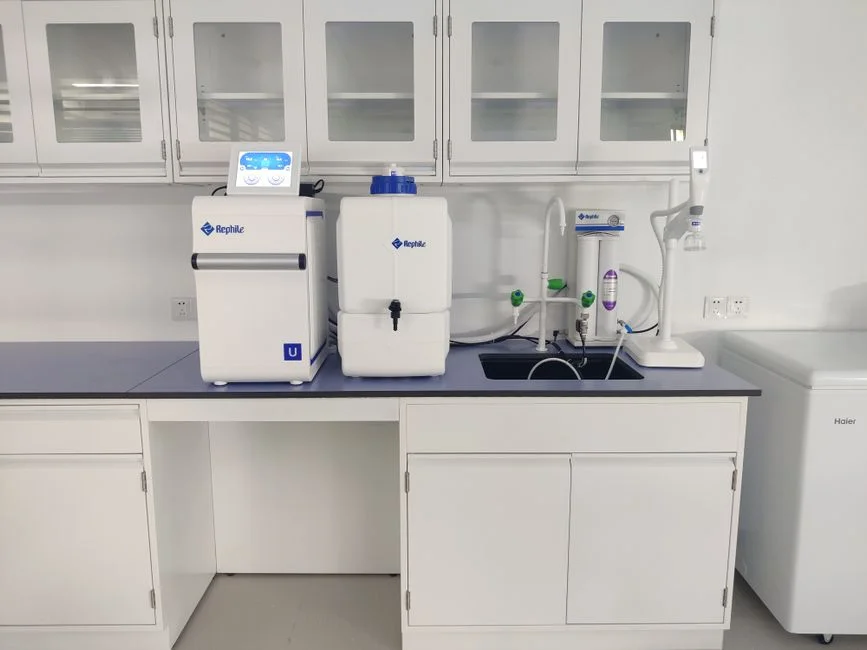
Cooling-tower makeup reuse is the preferred starting route when concentrate can be permitted and freshwater has material value, because literature-oriented performance for blowdown recovery is 60–85% (HydropureWater, 2026 Krasnoyarsk guide). Compliant discharge is attractive only where the receiving system accepts the concentrate; partial ZLD suits a constrained but non-zero discharge route; full ZLD is reserved for effectively prohibited discharge or unavailable freshwater.
| Route | Performance anchor | Tyumen decision condition | Principal risk |
|---|---|---|---|
| Cooling-tower makeup reuse | 60–85% recovery from blowdown | Permitted concentrate route and worthwhile freshwater savings | Silica scaling and biological fouling |
| Lower-grade process-water reuse | Application-specific quality requirement | Washdown or another non-critical use has an identified demand | Residual chemicals may make the stream unsuitable |
| NF treatment | 70–85% recovery; permeate TDS is 30–50% of feed TDS | Hardness, rather than total TDS, is the principal constraint | Does not provide RO-level solids removal |
| RO treatment | 95–99% dissolved-solids removal; 10–50 mg/L permeate TDS; 50–85% blowdown recovery | Cooling-tower makeup or stringent discharge quality is required | Concentrate disposal and pretreatment demand |
| Permitted discharge | Discharge quality depends on the selected treatment train | The receiving collector accepts the concentrate under current rules | Unverified permit and receiving-capacity conditions |
| Partial ZLD with MVC | 95–98% MVC recovery; distillate below 10 mg/L TDS | A small brine stream remains disposable | Heat demand, crystallization and solids handling |
| Full ZLD | 95–99% overall recovery; 1–3% solid waste | Liquid discharge is effectively unavailable or prohibited | Capital, energy and salt-disposal burden |
The source for the performance anchors is HydropureWater’s 2026 Krasnoyarsk guide, which cites Genesis Water Tech. It supports comparison, not a Tyumen guarantee. The Tyumen Irtysh basin discharge requirements must be obtained directly; Krasnoyarsk, Ufa and generic limits cannot be transferred to the site.
Tyumen’s municipal-heating infrastructure may create an opportunity to use district-heating return-line water or generator waste heat in an MVC or other thermal stage. That opportunity must be verified at the individual campus through a temperature, flow and heat-balance review. It is not assumed to be available merely because the city has a heating network.
Do not assume that closed-loop or hybrid cooling removes the need for treatment. First establish the selected cooling architecture, then calculate the wastewater actually generated. A regional data-center wastewater treatment guide offers a useful route-selection structure, but the Russian permit and heat-integration checks remain site-specific.
For an industrial RO system for cooling-tower makeup reuse, the preferred sequence is normally UF followed by RO where silica and scaling require high-quality permeate. NF is a conditional alternative when hardness dominates. A partial-ZLD branch should be retained as an option until the collector’s acceptance of RO concentrate is confirmed; full ZLD should remain a fallback rather than the default concept.
What Pretreatment Protects the Membrane and Recovery Equipment?
Filtration, UF and controlled chemical conditioning protect the downstream separation equipment; they do not eliminate the need to manage biological load, chemical residuals and concentrate.
A typical sequence is:
- flow measurement and equalization;
- self-cleaning or multi-media filtration;
- optional chemical conditioning;
- UF, NF or RO as required by the endpoint;
- post-treatment where required;
- permeate storage and concentrate management.
The cited side-stream filtration basis is 1–5% of circulation flow with a 10–25 μm rating. This is an equipment-selection reference, not a Tyumen flow calculation (HydropureWater, 2026 Krasnoyarsk guide). A self-cleaning filter removes suspended solids and helps limit biological loading; multi-media filtration can provide further solids removal before membranes.
The cited UF specification is 0.01–0.1 μm pores, 10–30 psi operating pressure and 90–95% recovery. UF primarily protects downstream RO or NF; its role is feed-quality control rather than maximizing the overall water yield. The UF pretreatment for the blowdown membrane train should therefore be specified around membrane protection, backwash, integrity monitoring and chemical compatibility.
The pretreatment targets stated in the research are filtration below 10–15 μm, antiscalant matched to the measured scaling chemistry and pH adjustment for membrane compatibility (HydropureWater, 2026 Krasnoyarsk guide). The cited Ufa reference also identifies an UF outlet SDI below 3 as an RO-feed objective, but that value belongs to the Ufa reference and should be confirmed against the selected membranes and Tyumen feed chemistry.
| Block | Reference specification | Procurement requirement |
|---|---|---|
| Side-stream filtration | 1–5% of circulation flow; 10–25 μm rating | Confirm against measured blowdown and cooling-loop data |
| UF | 0.01–0.1 μm; 10–30 psi; 90–95% recovery | Specify backwash, integrity monitoring and membrane materials |
| Chemical conditioning | Antiscalant matched to scaling chemistry; pH adjustment as required | Provide a chemical compatibility statement and dosing curves |
| Feed polishing | Filtration below 10–15 μm | Define particle acceptance and verification method |
| Concentrate handling | Depends on discharge or ZLD route | State destination, chemistry, flow and solids-management method |
Residual chemistry requires explicit review. Phosphate, chrome, biocide, corrosion-inhibitor and antiscalant residuals must be assessed against the selected reuse endpoint and local permit conditions. The literature blowdown envelope also includes planktonic bacteria and biofilm-formers, so the plant needs a defined biocide-control, cleaning and membrane-fouling response rather than a train designed only around mineral scaling. Chemical dosing should use an automatic chemical dosing system with storage compatibility, containment and winter protection.
How Should the System Be Engineered for Tyumen’s Winter?
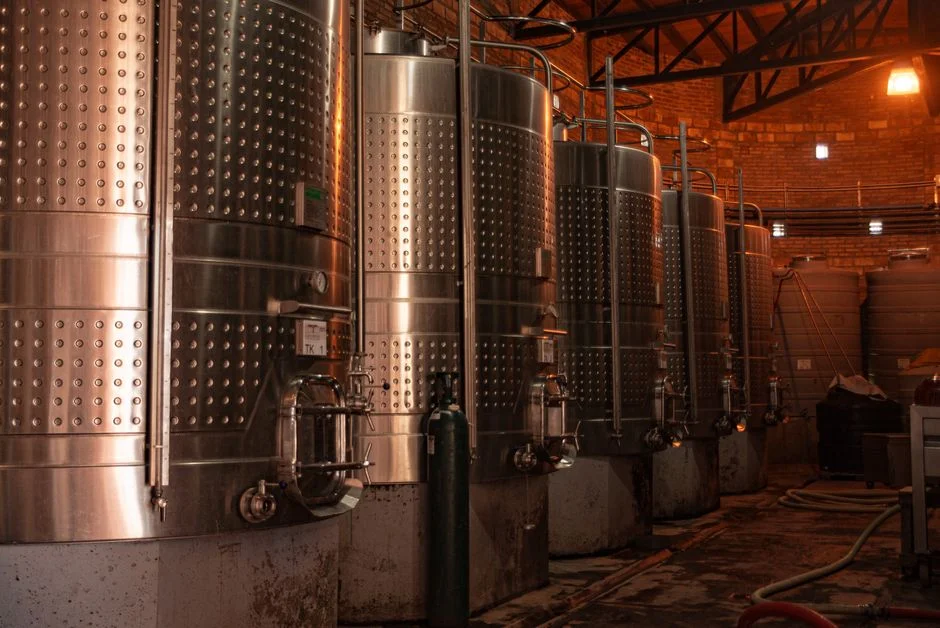
Tyumen winter design must use the campus-specific ambient design temperature supplied by the operator; the supplied research does not provide a verified numeric Tyumen design temperature.
Outdoor membrane skids, RO vessels, chemical tanks and dosing lines should be enclosed. Heat tracing, freeze-safe valves, instruments and drains are required. Thermal stages should normally be integrated into a building or heated enclosure rather than left as unprotected pad-mounted equipment. The 2026 Ufa reference documents the same cold-climate arrangement for Russian conditions, including enclosed, heat-traced or containerized modules (HydropureWater, 2026 Ufa guide).
District-heating return water or generator waste heat may reduce the energy burden of MVC, but bidders must provide a site-specific heat balance. The design must reconcile available flow and temperature, heat-exchanger fouling, freeze protection and year-round demand. Generic energy-consumption claims do not establish that a Tyumen thermal stage will work.
| Discipline | Bidder requirement | Operator verification |
|---|---|---|
| Mechanical | Enclosures, heat tracing, freeze-safe drains, valves and instruments | Winter functional test against the agreed design conditions |
| Thermal | District-heating or generator waste-heat heat balance | Validate flow, temperature and available heat |
| Controls | PLC or SCADA with alarms and local controls | Verify signals, interlocks and fail-safe states |
| Utilities | Electrical load, drain, vent and chemical-supply requirements | Confirm capacity, redundancy and maintenance access |
| Materials | Documentation for the site’s winter environment | Inspect materials, insulation and trace circuits |
| Logistics | Russian installation references, spares and membrane replacement plan | Review lead-time assumptions and local support |
One PLC or SCADA interface should present conductivity, pressure, differential pressure, permeate quality, concentrate flow, temperature and freeze-protection status. Freeze alarms should be visible before they lead to membrane or piping damage. Bidders should also document cold-climate references, winter commissioning, backup power, critical spares and membrane replacement logistics; the cited Russian guidance requires a winter-operability narrative tied to the site’s own ambient design temperature.
MVC energy is given as 15–25 kWh per 1,000 gallons of distillate in the 2026 Krasnoyarsk guide. That benchmark makes local waste-heat availability, Russian electricity prices and thermal-season operation central to the commercial comparison. Use RO and UF membrane elements only after confirming cold-temperature operating limits and replacement logistics.
What Should the Bidder Guarantee and the Operator Verify?
Performance guarantees must use the project’s actual feed flow, makeup-water chemistry, target cycles, permeate quality, recovery and concentrate route; generic equipment recovery figures are not acceptance criteria.
Require a documented water and salt mass balance covering makeup, evaporation, blowdown, permeate reuse, final discharge and consumption. Genesis Water Tech notes that WUE does not distinguish consumed water from recycled water, so WUE alone is insufficient (Genesis Water Tech, “Why Cooling Tower Blowdown Is Your Hidden Opportunity”).
| Area | Contractual requirement | Acceptance evidence |
|---|---|---|
| Feed and blowdown | Stated flow and chemistry design basis | Measured data and calibration records |
| Permeate | TDS and silica targets appropriate to the selected reuse | Representative test results and trend records |
| Recovery | Normalized recovery at the guaranteed feed condition | Steady-state test with corrections stated |
| Energy | Unit energy consumption under defined conditions | Electrical metering and heat-balance data |
| Membranes | Cleaning baseline and recovery after cleaning | Start-up normalization and cleaning report |
| Monitoring | Flow, conductivity, pressure, pH, turbidity or SDI, temperature, differential pressure, dosing and levels | Cause-and-effect test and alarm record |
| Chemicals | Storage compatibility, containment, dosing controls and freeze protection | Material certificates and winter inspection |
| Concentrate | Named destination, flow and chemistry | Permit or collector-acceptance evidence |
Start-up acceptance should include the membrane-cleaning baseline, permeate quality, normalized recovery and energy consumption, rather than relying only on instantaneous nameplate flow. Instrument commissioning should prove alarms, interlocks, data logging and fail-safe responses.
The available cost anchors are external U.S.-reference benchmarks, not quotations for Tyumen:
- $50,000–$200,000 for side-stream filtration;
- $250,000–$500,000 for a 50,000 GPD RO skid;
- $1–3 million for MVC at 10,000–30,000 GPD;
- $3–8 million for data-center-scale full ZLD.
These figures come from the 2026 Krasnoyarsk guide and its cited Genesis Water Tech benchmarks. They must be repriced for Russian fabrication, logistics to Tyumen, ruble electricity, labor, chemicals and local solids handling before entering a project budget. A data-center treatment guide for a constrained water and discharge environment provides a useful procurement comparison, but it does not replace a Tyumen-specific quotation or mass balance.
Frequently Asked Questions
What treatment route should a Tyumen data center use first?
Use cooling-tower blowdown treatment for makeup reuse as the pre-feasibility starting case, provided the measured source-water chemistry supports RO and the concentrate route is permitted. The literature-oriented recovery anchor is 60–85% for this application (HydropureWater, 2026 Krasnoyarsk guide). If the municipal or industrial collector cannot accept concentrate, retain partial ZLD for evaluation; use full ZLD only when liquid discharge is effectively unavailable or prohibited.
What measurements are needed before a treatment train can be sized?
Request measured seasonal flows, makeup-water chemistry, blowdown chemistry, target cycles of concentration, current chemical program and the confirmed discharge or reuse destination. At 4 CoC, the theoretical blowdown ratio is 25%, while Genesis Water Tech reports actual blowdown can exceed the theoretical value by 15–30%. Metering and operating records therefore need to support the final flow basis.
How should the project establish a cost and budget range?
Ask each bidder for a priced mass balance using the site’s feed flow, recovery, concentrate route and energy assumptions. The U.S.-reference benchmarks are $50,000–$200,000 for side-stream filtration, $250,000–$500,000 for a 50,000 GPD RO skid, $1–3 million for 10,000–30,000 GPD MVC and $3–8 million for data-center-scale full ZLD. Require Russian-fabrication, logistics, ruble electricity, labor and chemical repricing; these figures are not Tyumen quotations.
What should procurement check before selecting a cold-climate supplier?
Require references for the actual winter service condition, an enclosure and heat-tracing design, freeze-safe chemical handling, winter commissioning, backup power, local spares and membrane-replacement logistics. For MVC or other thermal equipment, require a campus-specific heat balance confirming whether district-heating return water or generator waste heat is actually available. No delivery lead time or Tyumen ambient design temperature should be accepted without supplier evidence and operator confirmation.