What treatment does a Nampula data center actually need?
A Nampula data center needs a modular, source-separated treatment train governed by a measured water balance and a defined discharge or reuse endpoint. Cooling tower blowdown, sanitary sewage, process wastewater, and potential direct-liquid cooling streams have different contaminants and should not share an assumed treatment target. Cooling blowdown normally receives physical separation, filtration, and membranes only where the reuse specification requires them; sanitary sewage requires biological treatment and disinfection. The supplied evidence gives general cooling-water benchmarks but no Nampula-specific discharge limits, source-water chemistry, sewer conditions, or authority requirements, so those items must be verified before equipment selection and pricing.
Commercial Water Lab, citing Saha’s June 2026 University of Georgia Extension publication, identifies cooling blowdown as a concentrated stream that may contain salts, minerals, biocides, corrosion inhibitors, and heavy metals. Genesis Water Technologies presents general cooling-water design benchmarks of 500–1,500 mg/L TDS and 10–25 mg/L suspended solids. These are preliminary suitability screens, not Mozambican legal limits.
The recommended basis of design therefore includes four separate deliverables: a stream-by-stream water balance, a treatment train for each stream, an equipment shortlist with feed-water and treated-water envelopes, and a compliance-risk register covering discharge, sewer acceptance, monitoring, chemical handling, and operating controls. The illustrates the broader methodology, while the shows why regional assumptions should not be transferred without local verification.
Build the Nampula water balance before selecting equipment
Cooling-system sizing should begin with measurement, because the theoretical blowdown calculation does not capture emergency dumps, unmeasured losses, or operating variability. Genesis Water Technologies presents monitoring of makeup water, blowdown, evaporation, conductivity, pH, and suspended solids as Stage 1 of an effective water-management program. The same source reports that actual blowdown can exceed theoretical calculations by 15–30% because of unmeasured losses and emergency dumps.
The theoretical blowdown ratio is:
Blowdown ratio = 1/(CoC−1), expressed as a fraction of cooling tower makeup water.
At 4 cycles of concentration, the theoretical blowdown is 25% of makeup volume; at 6 CoC, it is 20%. Moving from 4 to 6 CoC therefore reduces blowdown by five percentage points, or 20%, rather than the often-claimed 50%, according to Genesis Water Technologies. Any design margin should come from measured variability at the Nampula site, not from an assumed percentage. The site team should also distinguish consumption from usage: Genesis defines consumption as water permanently removed through evaporation or incorporation, while usage includes consumption plus water withdrawn, used, and returned to the source, potentially after treatment.
| Design input | Method or definition | Procurement use |
|---|---|---|
| Cooling tower makeup | Install flow measurement before the cooling system | Establishes the base water demand and theoretical blowdown denominator. |
| Blowdown | Measure continuously and record emergency dumps separately | Determines treatment flow, equalization, storage, and peak-equipment needs. |
| Evaporation | Calculate from the water balance and reconcile against metered flows | Separates irreversible consumption from recoverable return flow. |
| Water quality | Measure conductivity, pH, and suspended solids; add TDS, hardness, calcium, silica, and temperature where relevant | Defines pretreatment, polishing, reuse suitability, and membrane feed limits. |
| Cooling tower CoC | Use 1/(CoC−1) for theoretical blowdown | At 4 CoC, theoretical blowdown is 25% of makeup; at 6 CoC, 20%. |
| Actual blowdown | Compare metered results with theoretical values | Genesis reports actual blowdown can exceed theory by 15–30% because of unmeasured losses and emergency dumps. |
| WUE | Annual site water usage divided by IT equipment energy | Use as a facility-level metric, not proof that a specific reuse train works. |
Genesis gives an illustrative WUE range of 0.47–0.65 gallons per kWh, or 1.8–2.5 L/kWh. That metric does not distinguish discharge quality or reuse potential. For a Nampula pre-FEED, the useful outputs are therefore average and peak flow for every stream, measured blowdown at normal and emergency operation, water-quality envelopes, and the planned reuse profile.
Match each wastewater stream to its treatment objective
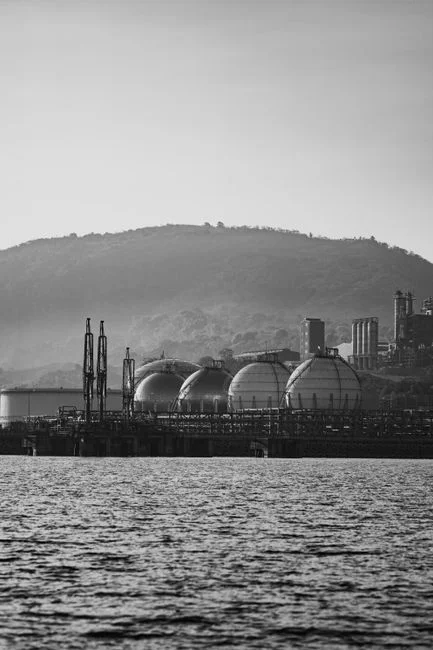
Each source should have its own treatment objective because mixing a dilute sanitary flow with concentrated cooling blowdown can change both hydraulic loading and contaminant chemistry. The treatment map should identify contaminants, intended destination, required pretreatment, concentrate route, and operating control before technology is selected.
| Stream | Principal treatment objective | Minimum information to establish |
|---|---|---|
| Cooling tower blowdown | Remove suspended matter and floatable material; reduce dissolved salts, hardness, or silica only as required by the selected reuse endpoint | Conductivity or TDS, pH, suspended solids, hardness, calcium, silica, temperature, and the complete cooling-water chemical program |
| Sanitary sewage | Biological treatment, solids separation, and disinfection appropriate to sewer discharge or reuse | Flow, load, treatment objectives, public-health requirements, and reuse destination |
| Process wastewater | Remove contaminants associated with the producing process rather than applying cooling-water assumptions | Source process, constituents, generation rate, batch or continuous discharge pattern, and treatment target |
| Direct-liquid or immersion-cooling stream | Contain and manage coolant-specific risks | Coolant chemistry, possible PFAS or refrigerant content, and the selected recovery or disposal route |
Commercial Water Lab lists salts, minerals, biocides, corrosion inhibitors, and heavy metals among possible blowdown constituents. Testing should therefore cover both physical and chemical contaminants, including residual treatment chemicals. The chemical inventory matters because additional dissolved solids can make downstream treatment more difficult, as noted by Genesis Water Technologies.
Sanitary sewage follows a different path. The supplied equipment catalog includes a for 1–80 m³/h and a for 10–2,000 m³/day. These are supplier specifications, not evidence that either system meets Nampula requirements; sizing still depends on measured sanitary flow and load.
Process wastewater should remain separate unless a detailed mixing study shows compatible contaminants and hydraulics. Future direct-liquid or immersion cooling also needs its own design risk register because the supplied Nampula evidence does not establish coolant chemistry or PFAS and refrigerant handling requirements. Where water quality permits, lower-demand uses such as toilet flushing, equipment washing, or landscape irrigation should precede cooling-tower makeup, because they usually justify a less complex treatment target.
Choose the pretreatment and polishing sequence
DAF, UF, and RO occupy different positions in the treatment train and should not be treated as interchangeable equipment. Physical separation protects downstream equipment, UF produces low-turbidity permeate without adding chemical solids, and RO removes dissolved salts when the reuse specification requires it.
| Technology | Use when | Relevant specification or limitation |
|---|---|---|
| DAF | The wastewater contains suspended solids, oil and grease, colloids, or floatable material | The supplied HydropureWater range is 4–300 m³/h across 13 models. |
| Multi-media filtration | Suspended-solids removal and downstream membrane protection are required | Should remove turbidity and colloids before UF or RO. |
| UF | Low-turbidity, low-colloid permeate is required after adequate solids removal | The supplied HydropureWater range is 2,000–40,000 L/h, with 0.03-micron PVDF membranes, automatic backwash, and air scour. |
| RO | Cooling makeup requires lower dissolved solids or controlled silica | The supplied industrial RO system is specified at recovery rates up to 95%. |
| Automatic chemical dosing | Water chemistry and the cooling program demonstrate a treatment need | The supplied system supports coagulants, flocculants, pH adjusters, and specialty chemicals through PLC-controlled injection. |
The belongs at the front of a train handling suspended solids, oil, grease, colloids, or floatables. The is appropriate when particulate, colloid, or microbiological barriers must remain low after solids have been removed. Multi-media filtration should precede either UF or RO where the feed requires further protection.
IDE’s industrial desalter case operated at around 95% recovery and produced permeate containing about 1 mg/L silica, but it blended multiple challenging streams and used a controlled salt-removal architecture. That case cannot be treated as default performance for Nampula blowdown. Feed-specific scaling analysis, conservative recovery, membrane-flux testing, and a defined concentrate route remain necessary. Automatic dosing should likewise follow the actual chemistry program rather than add chemicals simply because dosing hardware is available.
Decide where the treated water should go
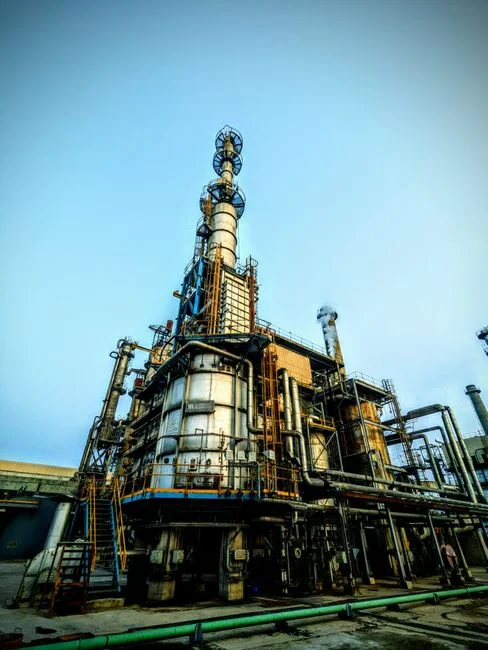
The reuse endpoint should determine the treatment target, with lower-demand non-potable applications considered before advanced cooling-makeup reuse. Genesis identifies irrigation, toilet flushing, outdoor equipment washing, and cooling-tower makeup as potential uses of treated blowdown. For each candidate, the water chemistry, chemical program, seasonal demand, storage needs, and public-health implications must be checked rather than inferred from the waste stream name alone.
Genesis’s general screening values of 500–1,500 mg/L TDS and 10–25 mg/L suspended solids can support an initial comparison with cooling-water requirements. They are not Nampula discharge standards and do not establish compatibility with a specific cooling tower. The project needs a water-treatment specification covering the selected reuse, then a confirmation test against the actual chemical program.
Advanced blowdown-to-makeup reuse also requires a complete mass balance. RO transfers dissolved salts into a smaller reject stream, so the design must identify where that concentrate will go and whether its salinity and temperature are acceptable at the receiving location. If there is no lawful or technically viable concentrate route, high-recovery reuse may be less defensible than lower-grade reuse or improved cooling-system control.
Residual biocides, corrosion inhibitors, scale inhibitors, and dispersants must be evaluated for reuse compatibility. Genesis recommends a progression from physical separation to targeted contaminant treatment, reserving advanced integration for sites with sufficient scale and operating expertise. Pilot or side-stream testing is warranted where silica, hardness, conductivity, or unidentified additives create uncertainty. The provides additional context on comparing reuse pathways.
Confirm permits, sewer acceptance and operating risk before ordering
The project should obtain written confirmation of the lawful discharge route and applicable conditions from the competent Mozambique environmental authority and the receiving Nampula utility or sewer authority. The supplied research contains no Nampula-specific permit limits, sewer acceptance criteria, monitoring conditions, or public-health requirements. They must remain open items in the compliance-risk register.
Commercial Water Lab describes U.S. NPDES permits for direct discharge and municipal industrial-pretreatment requirements for sewer discharge. Those systems provide an international comparison only; they should not be represented as Mozambican law. The buyer should request confirmation of discharge route, applicable limits, monitoring, reporting, permit conditions, chemical controls, and any acceptance testing required by the relevant authority.
| Procurement check | Information required before order | Decision enabled |
|---|---|---|
| Design basis | Average, peak, and minimum flow for each stream; measured blowdown; emergency-dump allowance; reuse profile | Equipment sizing and equalization |
| Feed-water envelope | Actual Nampula analysis plus representative worst-case operating samples | DAF loading, UF flux, RO recovery, and dosing selection |
| Performance guarantees | Treated-water quality, availability, recovery, reject quantity, and acceptance-test conditions | Comparable supplier offers |
| Reject management | Discharge route, chemistry, temperature, handling, and authority acceptance | Whether advanced reuse is feasible |
| Controls and resilience | PLC philosophy, backup power, emergency bypass, chemical storage, alarms, and fail-safe response | Operational and maintenance risk |
| Service capability | Local response time, spare-parts plan, operator support, and commissioning responsibilities | Long-term operating readiness |
| Total cost | Water, disposal, chemicals, energy, membrane replacement, operator effort, and downtime | Investment comparison beyond purchase price |
Cooling-system risk should be addressed in parallel. Commercial Water Lab notes that concentration can increase scaling, fouling, and microbiologically influenced corrosion, while emergency dumping can change hydraulic loads. Final guarantees should therefore be verified using the actual Nampula water analysis and representative worst-case conditions.
Frequently Asked Questions
Can cooling tower blowdown and sanitary wastewater be treated in one plant at a Nampula data center?
Source separation is generally preferable because cooling blowdown is a concentrated cooling-water stream while sanitary sewage requires biological treatment and disinfection. A combined plant may be technically feasible only after a detailed process review establishes compatible treatment objectives, hydraulic capacity, chemical effects, sludge handling, and separate sampling or monitoring.
What does a data-center blowdown treatment system cost?
The supplied evidence provides no defensible Nampula price. A supplier quotation should be based on measured stream flows, TDS, silica, hardness, suspended solids, temperature, the reuse target, concentrate route, utility costs, equipment redundancy, local service requirements, and commissioning scope. Request a total-cost comparison rather than a generic price per cubic metre.
Should the project select DAF, UF, or RO?
Use DAF where floatable material and suspended solids require physical separation, UF where low solids, colloids, and microbes justify a membrane barrier after adequate pretreatment, and RO where the cooling-makeup specification requires desalination. The choice should be confirmed against the measured feed chemistry and a validated reuse target.
What flow capacity should equipment be specified for?
Require average and peak wastewater flows, measured blowdown at the operating CoC, an emergency-dump allowance, and the selected reuse profile. As preliminary catalog boundaries, the supplied DAF range is 4–300 m³/h and the UF range is 2,000–40,000 L/h; neither range determines the Nampula duty without site data.
What compliance information must be obtained before ordering?
Obtain confirmation from the relevant Mozambique environmental authority and any receiving sewer or utility about the lawful discharge route, applicable limits, monitoring, permit conditions, chemical acceptance, and commissioning or acceptance tests. The scraped research supplies no Nampula-specific limits, so a foreign permit framework should not be used as the design basis.