Why a Mwanza Data Center Is a Different Water Story
A 100 MW data center can use up to 2 million liters of water per day, with cooling systems accounting for 80-90% of that demand (IDE, 2026). At a Mwanza, Tanzania site, the same facility is not a Phoenix or Loudoun County story: the makeup source is Lake Victoria rather than reclaimed municipal supply, the discharge permit is governed by Tanzania's National Environment Management Council (NEMC) rather than the U.S.
NPDES framework, and the regional grid plus chemical logistics dictate which treatment steps can be operated reliably day after day. Lake water is high-volume and biologically active but seasonally variable in algae, organics, and microbial load, so the design must defend against biofouling before it defends against hardness. Mwanza's tropical climate — moderate-to-high wet-bulb temperatures and high humidity — pushes tower evaporation up, while constrained grid reliability and the limited footprint of chemical resupply on Lake Zone roads limit how much thermal concentration and aggressive chemistry a Mwanza design can carry. The numeric NEMC effluent limits, receiving-water standards, and discharge-fee structure for Mwanza are not in the supplied research and must be obtained directly from NEMC and the Mwanza Urban Water Supply and Sanitation Authority before the design basis is frozen.
Makeup Water Source: Lake Victoria and What It Does to Your Cycles
Cooling-tower blowdown at 4 cycles of concentration is 25-30% of makeup water and typically carries 1,200-6,000 mg/L TDS, 4-8 times the makeup concentration (Genesis Water Technologies, blowdown recovery guide, 2026). That single ratio sets the entire downstream design: a 100 MW site using ~2 million L/day of makeup will discharge roughly 500,000-600,000 L/day of blowdown at 4 cycles, and the treatment train must be sized for that volume, not for an average. The cooling-system spec targets that drive those cycles are TDS 500-1,500 mg/L, hardness below 200-400 mg/L as CaCO3, pH 6.5-8.5, alkalinity 50-200 mg/L as CaCO3, suspended solids 10-25 mg/L, and heterotrophic plate count below 10,000 CFU/mL (Genesis Water Technologies, treated wastewater guide, 2026).
Lake Victoria surface water is generally low in TDS but variable in algae, organics, and microbial load, so a self-cleaning spiral filter or multimedia filter is needed ahead of the tower basin to hit the 10-25 mg/L suspended-solids target. A multi-media filter sized for the Mwanza intake handles the baseline turbidity and organic load that swings with rainfall and wind-driven turnover on the lake. Alternative sources — blended supply from the Mwanza Urban Water Supply and Sanitation Authority, or recovered municipal/industrial wastewater such as the treated effluent from the Mwanza City Slaughterhouse facility described by the Nelson Mandela African Institution of Science and Technology (2022) — are feasibility questions that the operator must confirm with the utility and NEMC, not design assumptions.
| Parameter | Cooling system spec target | Lake Victoria raw surface water (typical) | Implication for Mwanza design |
|---|---|---|---|
| TDS | 500-1,500 mg/L | Generally low (value not in supplied research) | Confirm at intake; controls cycle ceiling |
| Hardness (as CaCO3) | < 200-400 mg/L | Variable; confirm by sampling | Drives softener sizing or NF |
| Suspended solids | 10-25 mg/L | Elevated after algae blooms/storms | Multimedia or spiral filtration required |
| HPC bacteria | < 10,000 CFU/mL | Biologically active lake water | Non-oxidising biocide or UV/ClO2 step |
| pH | 6.5-8.5 | Confirm by sampling | Set dosing control band |
| Alkalinity (as CaCO3) | 50-200 mg/L | Confirm by sampling | Defines acid feed for scale control |
Cooling Tower and Side-Stream Filtration: Pushing Cycles Up Safely
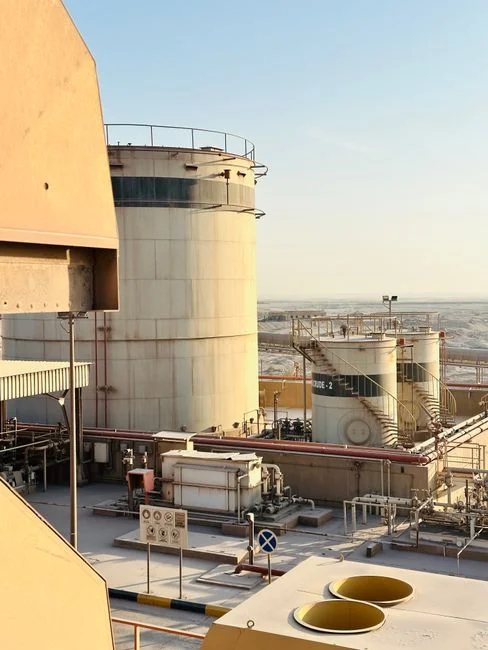
Side-stream filtration at 1-5% of circulation flow and 10-25 micron cuts blowdown suspended solids to membrane-friendly levels and lifts cycles of concentration without manual backwash, with CAPEX of $50,000-200,000 for typical data center installations (Genesis Water Technologies, blowdown recovery guide, 2026). The trade-off is mechanical: pushing cycles higher shrinks blowdown volume but pushes blowdown TDS toward the upper end of the 1,200-6,000 mg/L range, so the next stage — UF, RO, or MVC — must be sized for the worst-case concentrate, not the design-average case. For biologically active Lake Victoria makeup, the cooling-water chemistry must avoid free chlorine reaching the RO membranes; a non-oxidising biocide fed by a PLC-controlled chemical dosing system, paired with a UV steriliser for planktonic control, prevents the oxidiser–membrane conflicts that destroy thin-film composite elements. The tablet biocide chemistry described for biologically loaded cooling systems in the Genesis Water Technologies treated wastewater guide (2026) is a useful reference pattern for Mwanza, where reliable liquid-chlorine logistics on Lake Zone roads cannot be assumed.
Blowdown Recovery Train: UF → RO for Mwanza
The workhorse of a Mwanza water-positive design is a UF → RO train that turns blowdown back into high-purity tower makeup. UF at 0.01-0.1 micron removes suspended solids, bacteria, and biofilm fragments at 90-95% recovery and 10-30 psi, and is the standard pretreatment ahead of RO on cooling-tower blowdown (Genesis Water Technologies, blowdown recovery guide, 2026). RO removes 95-99% of dissolved solids and produces permeate at 10-50 mg/L TDS suitable for direct return as tower makeup, with blowdown RO recovery at 50-85% limited by scaling potential (Genesis Water Technologies, 2026). A 50,000 GPD RO unit costs $250,000-500,000 installed with OPEX of $1.50-3.00 per thousand gallons, covering energy, antiscalant, membrane replacement, and maintenance.
NF sits between UF and RO when partial softening — not full demineralisation — is the goal: 70-85% recovery at 75-150 psi with permeate TDS at about 30-50% of feed (Genesis Water Technologies, 2026), useful if hardness rather than total TDS is the discharge or reuse driver. RO concentrate must then be managed: further concentrated in MVC, sent to an evaporation pond (feasible in Mwanza's climate but land-intensive and ruled out for most urban sites), or discharged under an NEMC permit whose limits the operator must obtain from the regulator. If concentrate disposal is constrained, a downstream MVC stage adds 95-98% recovery at distillate TDS below 10 mg/L, with CAPEX of $1-3M for 10,000-30,000 GPD and 15-25 kWh per 1,000 US gallons of distillate (Genesis Water Technologies, 2026). On Mwanza's grid, that 15-25 kWh/kgal figure must be reconciled against the local tariff and outage profile before MVC is committed. A hollow-fiber ultrafiltration system feeding an industrial reverse osmosis system is the standard Mwanza flow path; the concentrate line is where the real cost sits, not the membrane skid.
Discharge Path: NEMC Permit, Sewer, or On-Site Reuse
Where reuse is infeasible, treatment focuses on meeting municipal or NEMC discharge limits for TDS, nutrients, and any residual treatment chemistry, with permit approval timelines of 6-18 months for the U.S. jurisdictions described in the Genesis Water Technologies treated wastewater guide (2026); Mwanza timelines must be confirmed locally because they are not in the supplied research. The specific NEMC numeric limits for Mwanza discharge, and whether the regulator caps effluent TDS below 1,500 mg/L as some water-stressed jurisdictions do, are not in the supplied research and must be confirmed with NEMC. Discharge directly to Lake Victoria carries transboundary and ecological scrutiny because of the lake's status, so a permit-only discharge with no reuse is the highest regulatory-risk path and should be avoided by maximising reuse first. ZLD (95-99% overall recovery, $3-8M CAPEX, $5-15/kgal OPEX per Genesis Water Technologies, 2026) is technically feasible but is rarely the lowest-cost first step at a Mwanza site — it is the fallback when reuse, sewer discharge, and surface discharge are all blocked. A data center effluent compliance guide walks the regulatory frame in more detail.
Mwanza Treatment Train: Recommended Configuration and Parameters
The recommended Mwanza train is intake screening → multi-media filter → softener (if hardness exceeds 200-400 mg/L as CaCO3) → cooling tower with side-stream spiral filtration at 1-5% of circulation → UF (0.01-0.1 micron) on blowdown → RO (95-99% rejection) → permeate to tower, concentrate to MVC or NEMC-permitted discharge. Cooling-tower blowdown at 4 cycles equals 25-30% of makeup (Genesis Water Technologies, blowdown recovery guide, 2026), and the cycle target must be confirmed with NEMC and the utility before it is locked. Where Lake Victoria algae and organic load are high, place a chlorine dioxide generator or UV disinfection step ahead of the tower basin to protect downstream membranes from biofouling without the oxidiser–membrane conflict of free chlorine. Softening ahead of the tower uses an industrial water softener sized to the Lake Victoria hardness band confirmed at intake, and the sludge it generates is dewatered on a plate and frame filter press before off-site disposal.
| Stage | Equipment | Design parameter | Mwanza-specific note |
|---|---|---|---|
| Intake | Coarse screen, drum filter | Match to lake intake design | Account for algae biomass in wet season |
| Multimedia filtration | Sand/anthracite/garnet | < 10-15 micron effluent | Pre-treatment for RO and tower |
| Softening | Ion exchange | Hardness < 200-400 mg/L as CaCO3 | Skip if Lake hardness is already in spec |
| Cooling tower | Evaporative | 4 cycles typical (confirm) | 25-30% of makeup to blowdown |
| Side-stream filtration | Self-cleaning spiral | 1-5% of circulation, 10-25 micron | CAPEX $50,000-200,000 |
| UF on blowdown | Hollow-fiber UF | 0.01-0.1 micron, 90-95% recovery, 10-30 psi | Protects RO from biofouling |
| RO on UF permeate | BWRO | 95-99% rejection, 50-85% recovery | Permeate 10-50 mg/L TDS to tower |
| Concentrate handling | MVC or NEMC discharge | 95-98% MVC recovery; CAPEX $1-3M | Confirm NEMC TDS limits locally |
| Sludge dewatering | Plate-and-frame press | Cake for off-site disposal | Handles softener and clarifier sludge |
CAPEX and OPEX Bands for a Mwanza Build
The planning bands a Mwanza budget review can defend are: RO blowdown train (50,000 GPD class) at $250,000-500,000 installed with OPEX of $1.50-3.00 per thousand gallons treated; self-cleaning side-stream spiral filtration at $50,000-200,000; MVC evaporator at $1-3M for 10,000-30,000 GPD with 15-25 kWh per 1,000 US gallons; and full ZLD at $3-8M CAPEX with $5-15 per thousand gallons OPEX (Genesis Water Technologies, blowdown recovery guide, 2026). A useful order-of-magnitude benchmark is the Texas hyperscale facility that recovered 2.5 million gallons monthly of blowdown and reduced municipal water consumption by 35% (Genesis Water Technologies, treated wastewater guide, 2026) — a defensible water-positive target for a Mwanza build once grid reliability and chemical logistics are validated. The sizing reclaimed water capacity guide provides a parallel methodology for matching recovery capacity to makeup demand. A peer reference for a tropical, high-humidity site is the Amritsar data center blowdown guide.
Frequently Asked Questions
Is RO blowdown reuse economically defensible at the scale a Mwanza data center actually runs at?
For a 50,000 GPD-class RO blowdown train, CAPEX of $250,000-500,000 installed and OPEX of $1.50-3.00 per thousand gallons treated (Genesis Water Technologies, blowdown recovery guide, 2026) is the planning band to use. The defensibility test is whether the avoided NEMC discharge fee and avoided municipal makeup cost together exceed $1.50-3.00/kgal; the operator must obtain the NEMC fee schedule and the Mwanza Urban Water Supply and Sanitation Authority potable tariff before that test can be completed, because neither value is in the supplied research.
What permits and lead time should the operator expect from NEMC and the Mwanza Water Board?
U.S. reuse permit timelines of 6-18 months are documented in the Genesis Water Technologies treated wastewater guide (2026) for reference, but the actual NEMC and Mwanza Water Board timelines are jurisdiction-specific and must be confirmed directly with both bodies. The operator should request, in writing, the NEMC effluent TDS and nutrient limits, the Mwanza Water Board discharge-fee schedule, and any pretreatment requirements for sewer discharge, before the design basis is frozen.
Is ZLD justified in Mwanza, or is reuse-first enough?
ZLD carries CAPEX of $3-8M and OPEX of $5-15 per thousand gallons (Genesis Water Technologies, blowdown recovery guide, 2026), which is justified only when reuse, sewer discharge, and surface discharge are all blocked. For a Mwanza site with access to either evaporation pond area or NEMC-permitted discharge, reuse-first plus membrane concentration is the lower-cost path; ZLD is a regulatory-forced option, not a default.
How do I choose between UF-only and UF+RO for Lake Victoria makeup?
UF alone reaches 90-95% recovery and removes suspended solids, bacteria, and biofilm fragments but leaves dissolved solids untouched (Genesis Water Technologies, 2026); it is the right answer when the discharge driver is suspended solids or biology. UF+RO is required when the discharge driver is dissolved solids — the RO permeate of 10-50 mg/L TDS at 50-85% recovery is what unlocks the higher cycles of concentration a water-positive Mwanza design targets. The decision should be made on measured Lake Victoria TDS and hardness at intake, not on catalogue assumptions.
What performance guarantees should a Mwanza project require from a packaged skid supplier?
The buyer should require documented recovery, permeate TDS, and energy-per-cubic-metre guarantees tied to a feed-water specification the supplier has actually tested, plus named membrane models, reference installations in tropical or grid-constrained sites, and a spares-and-chemicals logistics plan covering Mwanza and the Lake Zone. The supplier should also commit to performance verification after commissioning using the same parameter table in the recommended configuration above, and provide remote-monitoring capability that does not depend on a continuous grid connection.