Why Amritsar Data Centers Need a Dedicated Blowdown Treatment Package
A 100 MW data center can use up to 2 million litres of water per day, and cooling typically accounts for 80–90% of that demand, with evaporative systems doing most of the heat rejection (IDE Tech, 2026; Genesis Water Tech, 2026). At 4 cycles of concentration, roughly 25–30% of cooling-tower makeup is lost as blowdown; a facility on 10 million US gal/month of makeup therefore discharges 2.5–3 million US gal/month, making blowdown the single largest water handle on an Amritsar site, not the smaller facility drains (Genesis Water Tech, 2026). Punjab's hot, humid April–June wet-bulb conditions push operators toward lower cycles of concentration, which simultaneously increases blowdown volume and worsens the salinity of the discharge stream, raising both the consent risk and the cost of any non-reuse pathway.
Reuse has also moved from a voluntary ESG gesture to a procurement expectation. Under the Climate Neutral Data Centre Pact (2025 revision), new data centres using potable water must be designed to meet a Water Usage Effectiveness (WUE) of no more than 0.4 L/kWh from 1 January 2025 onward (Climate Neutral Data Centre Pact, 2025 revision, cited via Arup/LinkedIn, 2026), a benchmark Indian hyperscalers and EPCs are increasingly asked to reference in tender responses. Combined with Punjab Pollution Control Board (Punjab PCB) consent conditions and Amritsar Municipal Corporation (AMC) sewer acceptance limits on TDS, chloride, biocide residuals and treatment chemicals, this regulatory package makes a dedicated blowdown treatment train the 2026 baseline for any Amritsar facility above roughly 2 MW IT load.
What Is in Amritsar Cooling-Tower Blowdown?
Blowdown chemistry is not a guess; it is determined by the cycles of concentration, the makeup source, and the cooling-water treatment programme, and each of those has to be characterised before a treatment train is sized. The table below summarises the parameter ranges an Amritsar engineer should expect; the numbers are drawn from Genesis Water Tech (2026) and are conservative envelopes for blowdown derived from typical Punjab groundwater and Upper Bari Doab Canal makeup.
| Parameter | Typical blowdown range | Driver in an Amritsar context |
|---|---|---|
| Total Dissolved Solids (TDS) | 1,200–6,000 mg/L (4–8× makeup) | UBD canal and groundwater commonly sit in higher half of range |
| Hardness (Ca²⁺, Mg²⁺) | Scales with cycles of concentration | Drives RO recovery limit; favours NF where hardness, not total TDS, is the constraint |
| Silica (SiO₂) | Concentrates with cycles | Limits RO recovery; requires tailored antiscalant and possibly ZLD |
| Alkalinity | Concentrates with cycles | Controls Langelier Saturation Index; affects blowdown pH and biocide efficacy |
| Suspended Solids | 10–50 mg/L | Corrosion products, biofilm fragments, dust; sets side-stream filter sizing |
| Treatment chemicals | Biocides, corrosion/scale inhibitors, dispersants | Legacy chromate or high-phosphate chemistry creates membrane and discharge issues |
| Biological content | Planktonic bacteria, biofilm-formers | Drives RO/NF biofouling risk and Legionella control on the cooling side |
| Iron and manganese | Site-specific; elevated in many Punjab borewells | Foul RO membranes rapidly without oxidation pretreatment; test before specifying |
Scaling minerals (calcium, magnesium, silica and alkalinity) concentrate in proportion to the cycles of concentration, which is what ultimately caps RO recovery and forces either a higher antiscalant dose or a thermal concentration stage (Genesis Water Tech, 2026). Treatment chemicals — biocides, corrosion and scale inhibitors, and dispersants — accumulate alongside the dissolved solids, and any legacy chromate or high-phosphate programme will create both membrane-fouling and discharge-compliance problems that a 2026 site must avoid (Genesis Water Tech, 2026). Suspended solids in the 10–50 mg/L range are typical, comprising corrosion products, biofilm fragments and airborne dust that pass through the cooling-tower basin screens (Genesis Water Tech, 2026). On Punjab sites specifically, iron and manganese from corroding carbon-steel piping should be tested early; both foul RO membranes rapidly without oxidation pretreatment, and either will force an additional unit operation into the train.
Discharge vs Reuse vs ZLD: Picking the Right 2026 Strategy for an Amritsar Site
Selecting equipment before deciding the end-use objective is the most common mistake on Indian data-centre water packages; the three end-use strategies, namely cooling-tower makeup reuse, sewer discharge compliance, and zero liquid discharge, each demand a different train and a different cost profile, so the choice should be made first. Cooling-tower makeup reuse achieves 60–85% recovery and is the highest-value option because it directly displaces freshwater and shrinks the discharge envelope (Genesis Water Tech, 2026). Direct discharge, by contrast, is becoming more expensive and more constrained: discharge fees in water-stressed regions have moved above $5–$15 per 1,000 US gal, and some jurisdictions cap discharge TDS below 1,500 mg/L, effectively forcing treatment before sewer release (Genesis Water Tech, 2026). Where Punjab PCB consent conditions and AMC sewer limits converge on a tight envelope, that envelope — not the engineering — will dictate the train.
| Strategy | Overall recovery | Indicative capex (typical data center) | Indicative opex | 2026 fit for an Amritsar site |
|---|---|---|---|---|
| Cooling-tower makeup reuse (RO) | 60–85% | RO skid $250,000–$500,000 for ~50,000 GPD | $1.50–$3.00 per 1,000 US gal treated | Default for sites above ~2 MW with sewer consent |
| Discharge compliance (RO + polishing) | 60–85% | Similar RO capex; adds neutralisation / polishing | Adds discharge fees of $5–$15 per 1,000 US gal | Use only if reuse is not feasible; verify AMC limits |
| Partial ZLD (RO + MVC, 80–90% volume reduction) | 85–95% | RO plus MVC at $1–$3M for 10,000–30,000 GPD | MVC energy 15–25 kWh per 1,000 US gal distillate | Middle ground where sewer consent is denied or restricted |
| Full ZLD (RO + MVC/brine concentrator + crystallizer) | 95–99% | $3–$8M for data-center-scale package | $5–$15 per 1,000 US gal treated | Reserve for sites with denied sewer consent or acute freshwater scarcity |
Full zero liquid discharge is technically feasible, achieves 95–99% overall recovery through RO, an MVC or brine concentrator, and a crystallizer, but its $3–$8M capex and $5–$15 per 1,000 US gal opex confine it to sites where discharge is effectively prohibited (Genesis Water Tech, 2026). Partial ZLD, which concentrates blowdown to an 80–90% volume reduction, captures most of the reuse benefit at a fraction of the cost, with the remaining brine sent to deep-well injection, hauling, or a special-permit batch discharge (Genesis Water Tech, 2026). For most Amritsar facilities above roughly 2 MW, reuse-to-cooling-tower-makeup remains the 2026 default, and ZLD is reserved for the subset of sites where Punjab PCB or AMC denies a sewer consent or where freshwater draw would otherwise be unworkable.
The 2026 Treatment Train: Side-Stream Filtration, UF, RO and Optional MVC
Once reuse is the chosen objective, the train is best specified as four discrete stages, each with its own sizing logic and its own vendor question set. Stage 1 is side-stream filtration on 1–5% of circulation flow, using self-cleaning spiral or multimedia filters at 10–25 µm, which drops blowdown suspended solids to a level manageable for downstream membranes; reported capex for this stage is $50,000–$200,000 for typical data-centre installations (Genesis Water Tech, 2026). Stage 2 is ultrafiltration at 0.01–0.1 µm pore size in PVDF, which acts as RO pretreatment by removing bacteria, colloids and high-molecular-weight organics at 90–95% recovery and a low 10–30 psi operating pressure, with chemical cleaning expected every 1–3 months (Genesis Water Tech, 2026); a HydropureWater hollow-fiber ultrafiltration system sized on the verified SDI₁₅ of the side-stream filter outlet is the usual starting point for an Amritsar spec.
Stage 3 is reverse osmosis, which removes 95–99% of dissolved solids at 150–400 psi and produces a 10–50 mg/L TDS permeate that is suitable for direct return to the cooling tower as high-quality makeup; a 50,000 GPD RO treating blowdown is reported at $250,000–$500,000 installed with opex of $1.50–$3.00 per 1,000 US gal, and recovery is capped at 50–85% by scaling potential (Genesis Water Tech, 2026). Where hardness rather than total TDS drives the discharge envelope, nanofiltration is a defensible Stage 3 alternative, operating at 75–150 psi with 70–85% recovery and a permeate that is roughly 30–50% of feed TDS, which is often enough to meet the local consent condition at lower energy cost. A HydropureWater industrial RO system paired with a multi-media filter upstream covers the bulk of the membrane train for most hyperscale and edge builds in Punjab.
| Stage | Unit operation | Key performance parameters | Indicative cost envelope |
|---|---|---|---|
| 1 | Side-stream filtration (1–5% of circulation) | 10–25 µm, continuous self-cleaning | $50,000–$200,000 capex (typical data center) |
| 2 | Ultrafiltration (PVDF, 0.01–0.1 µm) | 90–95% recovery, 10–30 psi, CIP every 1–3 months | Rolled into RO package |
| 3 | Reverse osmosis | 95–99% salt rejection, 10–50 mg/L permeate TDS, 150–400 psi, 50–85% recovery | $250,000–$500,000 for ~50,000 GPD; opex $1.50–$3.00 per 1,000 US gal |
| 3 alt. | Nanofiltration | 75–150 psi, 70–85% recovery, permeate 30–50% of feed TDS | Lower than RO where hardness-only reduction is acceptable |
| 4 (optional) | Mechanical Vapor Compression | 95–98% recovery of RO concentrate, distillate <10 mg/L TDS, 15–25 kWh per 1,000 US gal | $1–$3M for 10,000–30,000 GPD |
| — | Antiscalant and biocide chemistry | Mandatory before RO; tablet-based programmes reduce phosphate and biocide carry-over | See chemical programme pricing |
Stage 4 is mechanical vapor compression and is only added where the site is moving toward partial or full ZLD; an MVC at 95–98% recovery of RO concentrate produces a distillate below 10 mg/L TDS at an energy cost of 15–25 kWh per 1,000 US gal, with capex of $1–$3M for 10,000–30,000 GPD (Genesis Water Tech, 2026). Across the train, antiscalant injection is mandatory before RO, and a PLC-controlled antiscalant dosing skid tied to the RO feed flow is the simplest way to defend the dosing curve in front of a Punjab PCB auditor; tablet-based cooling-water chemistry such as Genclean-S is preferred over liquid programmes because it reduces phosphate and biocide carry-over into the blowdown and therefore into either the RO feed or the sewer (Genesis Water Tech, 2026).
Sizing the Package for an Amritsar Hyperscale or Edge Facility
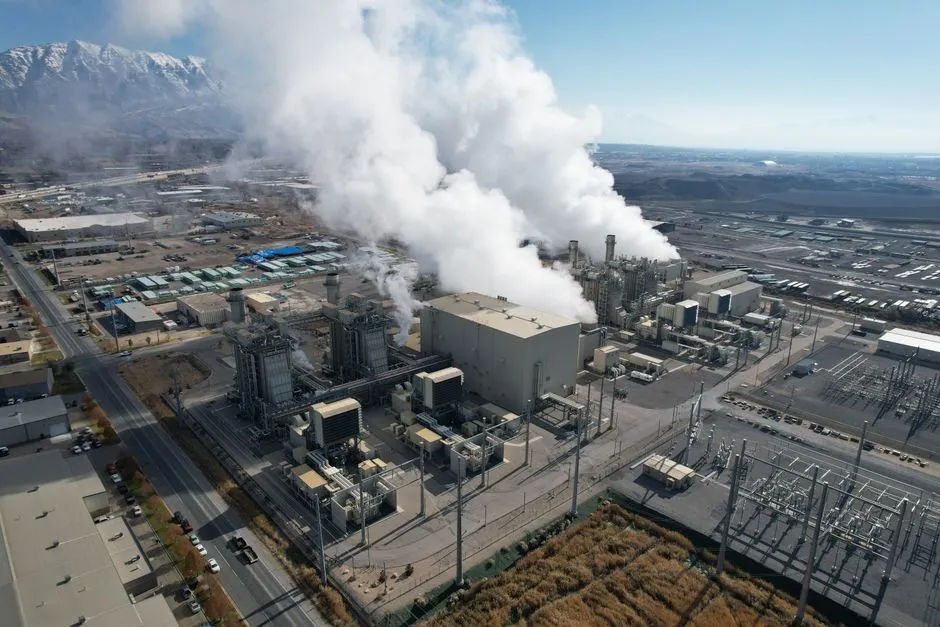
Sizing should start from four deterministic inputs, not from a vendor's catalogue number: the cooling-tower makeup flow in m³/h, the target cycles of concentration, the planned IT load in MW, and the site's peak ambient wet-bulb temperature during April–June. With those fixed, blowdown is computed as makeup ÷ (cycles − 1); an Amritsar 2 MW edge data centre on roughly 150 m³/day of makeup running at 4 cycles of concentration therefore generates about 50 m³/day of blowdown, which is small enough for a single containerised UF/RO skid but still large enough to require an explicit discharge envelope.
The next sizing decision is where the RO permeate is sent, because each end use has a different TDS, chlorine residual and microbiology envelope. Blending back into the cooling-tower makeup is the most forgiving route and the default 2026 configuration; horticulture, toilet flushing and chiller makeup each demand a different downstream polishing step and should not be assumed interchangeable. Finally, before the equipment list is frozen, the engineer must validate the ambient design wet-bulb temperature at the specific Amritsar site at peak, because that value sets the realistic cycles-of-concentration ceiling and therefore the blowdown volume, and must check the actual Punjab PCB consent conditions and AMC sewer acceptance limits for TDS, chloride, sulphate and biocide residuals against the modelled discharge profile, since consent is granted on the modelled envelope, not the design intent.
Cost, Compliance and Vendor-Selection Considerations for 2026
The capex drivers on an Amritsar blowdown package are not mysterious: an RO skid at recoveries above roughly 80% needs concentrate recirculation and a stronger antiscalant programme, an MVC is only justified when the concentrate volume justifies the thermal energy, and a crystallizer only enters the picture when the sewer is denied. Opex is dominated by antiscalant and biocide consumption, RO membrane replacement on a 3–5 year cycle, MVC energy at 15–25 kWh per 1,000 US gal of distillate, and the discharge fees the AMC may levy where sewer acceptance is granted (Genesis Water Tech, 2026). The compliance evidence to demand from any 2026 vendor is specific and testable: prior experience with Punjab PCB consent applications, prior installations on borewell or canal makeup similar to the Upper Bari Doab Canal profile, and documented permeate TDS below 50 mg/L on comparable feedwater; for design rigour, an RO Membrane System Design Criteria: 2026 Engineering Guide for Industrial Wastewater is the right reference document to put on the table during vendor discussions, and the broader Circular Water Economy Industrial Implementation Guide 2026 helps frame the business case for reuse.
Lead time in India in 2026 is the constraint that quietly breaks delivery programmes. Containerised UF and RO skids are typically 8–14 weeks ex-works, while MVC and crystalliser packages run 6–9 months, so any ZLD decision has to be taken at concept stage, not at commissioning, or the project will land on a storage pond. A useful sizing benchmark is the hyperscale on-site treatment system in Texas that processes 2.5 million US gal/month of blowdown and reduces municipal water consumption by 35% (Genesis Water Tech, 2026); translated into an Amritsar context, the same order-of-magnitude recovery is what an EPC should be defending to Punjab PCB and the AMC, alongside a comparable WUE number for the climate-neutral data-centre audit trail.
Frequently Asked Questions
What budget envelope should an Amritsar EPC expect for a blowdown reuse package in 2026?
The 2026 research reports a 50,000 GPD RO treating cooling-tower blowdown at $250,000–$500,000 installed, with operating cost of $1.50–$3.00 per 1,000 US gal treated (Genesis Water Tech, 2026). Translate that to INR using the agreed project FX rate, add the side-stream filtration capex of $50,000–$200,000 reported by the same source, and request a separate INR line for antiscalant, membrane replacement and discharge fees, since those recur annually. Without a confirmed makeup flow, cycles target and consent envelope, no quotation will be defensible; the action for the buyer is to lock those three inputs before asking for a number.
How should an Amritsar EPC shortlist blowdown treatment vendors in 2026?
Shortlist on three pieces of evidence: documented experience with Punjab PCB consent applications, prior installations on borewell or Upper Bari Doab Canal makeup, and measured permeate TDS below 50 mg/L on comparable feedwater (Genesis Water Tech, 2026). A vendor without at least two of those three should not be in the final list, regardless of capex competitiveness. Also ask for a reference list of Indian containerised UF/RO deliveries in the last 12 months and confirm whether the RO is sized at conservative or aggressive recovery, because that single decision drives the antiscalant and membrane-replacement opex for the next decade.
What is the realistic Indian lead time for an MVC or full ZLD crystalliser in 2026?
MVC and crystalliser packages run 6–9 months ex-works in the 2026 Indian market, against 8–14 weeks for a containerised UF/RO skid. The action for an Amritsar EPC is therefore to fix the ZLD scope, if any, at the concept stage of the project and to release the long-lead PO ahead of the membrane skid, not alongside it. Sequencing these procurements in the wrong order is the most common reason a 2026 Indian data-centre water package misses its COD.
Does an Amritsar hyperscale facility need full ZLD, or is reuse enough?
For most Amritsar sites above roughly 2 MW, reuse-to-cooling-tower-makeup is the 2026 default, achieving 60–85% recovery (Genesis Water Tech, 2026) and removing the discharge-volume driver from the consent application. Full ZLD, at $3–$8M capex and $5–$15 per 1,000 US gal opex (Genesis Water Tech, 2026), is reserved for sites where Punjab PCB or AMC denies a sewer consent or where the freshwater source cannot meet the design WUE of 0.4 L/kWh referenced under the Climate Neutral Data Centre Pact (2025 revision). The decision input a buyer must obtain is the actual AMC sewer acceptance letter, not an assumption.
Related Equipment
- HydropureWater hollow-fiber ultrafiltration system — specifications, capacity range, and technical data