Which Rules Control Sewer Discharge Near Cross?
A mining or metals plant near Cross, United States, must comply with the limits imposed by the receiving publicly owned treatment works (POTW), federal categorical pretreatment standards, any applicable NPDES permit, and state requirements. A sewer permit is not a single universal metal limit: it is a site-specific combination of discharge parameters, monitoring requirements, best management practices, and waste-handling conditions. The supplied research does not identify the exact Cross-area POTW, its current sewer-use ordinance, the applicable industrial discharge permit, or enforceable numerical limits; those documents must be obtained from the actual receiving authority. The source material also distinguishes ore mining and dressing under 40 CFR Part 430 from metal finishing under 40 CFR Part 433, so classification must precede equipment sizing.
Under the federal framework described in HydropureWater’s 2026 guide, pretreatment is additional to—not a replacement for—an NPDES permit. Indirect sewer discharge is regulated through the pretreatment program at 40 CFR Part 403, with the POTW generally enforcing local limits, monitoring requirements, and best management practices. NPDES requirements remain relevant where the facility has a regulated discharge to surface waters, while the sewer-use ordinance controls what may enter the collection system.
For an ore-processing facility, Part 430 is the starting point for identifying the applicable categorical subcategory. For electroplating, printed-circuit, or surface-finishing operations, Part 433 may govern instead. Neither part supplies the complete Cross site acceptance envelope. The receiving POTW’s current limits and the plant’s industrial discharge permit must also be reviewed, together with state permits and hazardous-waste requirements for treatment residuals.
| Control document | What it determines | Procurement implication |
|---|---|---|
| Current sewer-use ordinance and industrial discharge permit | Site-specific numerical limits, monitoring, reporting, BMPs, and authorized discharge points | Define the performance envelope and controls before selecting equipment |
| 40 CFR Part 403 pretreatment requirements | Industrial-user and significant-industrial-user obligations | Establish sampling, reporting, spill control, and permit responsibilities |
| 40 CFR Part 430 or Part 433, as applicable | Categorical pretreatment standards for the actual operation | Confirm the subcategory and pollutant basis rather than borrowing another site’s limits |
| NPDES permit, if applicable | Requirements associated with regulated wastewater discharges | Keep surface-water and sewer obligations separate in the permit matrix |
| State permits and waste rules | Additional operating restrictions and metals-bearing sludge management | Assign disposal, sampling, and reporting responsibilities |
The regulatory structure should be checked against current agency and POTW records rather than inferred from a neighboring Price-area narrative. For related permit context, see how wastewater requirements apply to an Arizona metals acquisition. No limit, fee, sampling frequency, or sludge acceptance criterion in this article should be represented as a Cross POTW requirement unless it appears in the current local documents.
Characterize Every Wastewater Stream Before Choosing Equipment
Wastewater characterization must define the design envelope before equipment selection because mining, milling and finishing streams have different pollutant fingerprints and discharge schedules. HydropureWater’s 2026 US guide separates pit dewatering, concentrator slurry water, contact stormwater, acid mine drainage, and finishing-shop rinsate, and identifies flow and load variability as the primary design driver. The same guide recommends a 12-month influent characterization, a 24-hour composite sampler, and online pH and conductivity monitoring at the headworks as the minimum defensible design basis.
Build the sampling plan around maximum flow, seasonal change, ore-grade effects, mill campaigns, and storm events. A single laboratory average will understate batch discharges or dilute the worst-case blend that a precipitation and clarification system must handle. Ask the plant for operating history, production schedules, storm-runoff controls, and the most recent mining plants’ sewer-limit compliance workflow.
Acid mine drainage requires particular attention. HydropureWater’s 2026 guide describes AMD as often having pH from 2 to 4, high dissolved iron, sulfate commonly from 1,000 to 5,000 mg/L, and elevated total dissolved solids. These are source-characterization ranges, not Cross permit limits. They identify the chemistry that equalization and pH control may need to address; the current POTW documents determine the required effluent performance.
| Stream or parameter | Characterization question | Bid-package deliverable |
|---|---|---|
| Pit dewatering and contact stormwater | What are the storm-event flow, pH, metals, solids, and diversion limits? | Peak-flow basis, equalization volume calculation, and stormwater-control narrative |
| Concentrator slurry water | How do mill campaigns, ore grade, and flotation reagents change the discharge? | Composite data set, chemical-demand bench work, and solids-loading envelope |
| Acid mine drainage | What acidity, dissolved metals, sulfate, and TDS must be neutralized? | Alkalinity demand and staged pH-control calculations |
| Finishing-shop rinsate | Are copper, nickel, cadmium, chromium, cyanide, oil and grease, or other process chemicals present? | Separate sampling plan, compatible piping and materials, and stream-specific chemistry |
| Headworks monitoring | Can pH, conductivity, and flow be measured continuously? | Online instruments, composite sampler, calibration plan, and data-recording scope |
Include oil and grease, cyanide, flotation reagents, and microbial constituents only when they occur in the relevant discharge stream. Confirm them through representative sampling rather than adding treatment by default. Jar tests and the 12-month record should establish chemical demand, precipitation behavior, solids separability, and whether polishing is needed before a purchase order.
Build a Treatment Train That Maps to Each Permit Limit
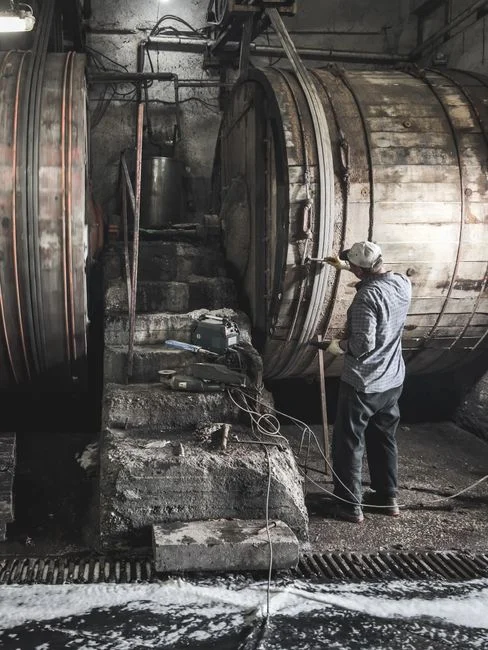
A defensible treatment train starts with equalization because variable flow and load—not average flow—set the hydraulic and chemical loading on every downstream unit. Equalization also provides a controlled feed to the pH and solids-removal equipment and gives operators time to respond to an upset. The required volume must be calculated from actual campaign, production, and storm data.
Next, use PLC-controlled pH adjustment before metal hydroxide precipitation. Genesis Water Technologies’ “Mining Water Treatment: How to Meet Stricter Standards” identifies pH correction as the first treatment step because it both restores a usable pH and helps dissolved iron, arsenic, and manganese precipitate as hydroxides. A PLC-controlled chemical dosing skid should define acid and alkali storage, dosing range, probe location, control logic, and fail-safe response.
Coagulation and flocculation follow pH control. Coagulants destabilize small particles, while flocculants aggregate suspended solids and precipitated metal particles into larger flocs for separation. Genesis Water Technologies identifies this sequence as necessary for effective clarification and post-filtration, but it does not establish a universal dose or removal efficiency.
Solids separation then depends on the actual floc. A DAF system for mining wastewater solids removal is suited to low-density metal-hydroxide flocs that can be difficult to settle. Lamella clarification is an alternative where floc density, available footprint, hydraulic variation, and existing equipment justify it. A useful engineering step is to compare DAF and clarifiers for mining wastewater against the measured solids characteristics rather than preselecting a technology.
Filtration polishes the clarified stream and reduces residual suspended solids before discharge or advanced treatment. Genesis Water Technologies identifies backwash media filtration and centrifugal systems for larger particles up to 2,000 microns; the stated particle size does not convert the filter into a dissolved-metals removal device. Multi-media filtration is relevant where the local limit requires further solids reduction or where the water must protect a downstream membrane.
| Process function | Primary unit operation | Verification point | Residual design issue |
|---|---|---|---|
| Flow and load stabilization | Equalization tank | Headworks flow, level, and composite characterization | Overflow, mixing, and controlled return |
| Dissolved acidity and metal precipitation | PLC-controlled pH adjustment | Inline pH before precipitation | Overdosing, amphoteric-metal redissolution, and chemical storage |
| Particle aggregation | Coagulation and flocculation | Mixing energy and dose verification | Shear, chemical compatibility, and sludge production |
| Solids separation | DAF or lamella clarification | Stage effluent TSS and metal analysis | Hydraulic upset, carryover, and sludge withdrawal |
| Final suspended-solids polish | Backwash media filtration or qualified centrifugal system | Filtered-effluent TSS | Media loading, backwash waste, and filtrate routing |
| Residual dissolved metals | Ion exchange or specialty resin where justified | Resin-bed effluent metals | Fouling and media replacement |
| Asset protection and fouling control | Corrosion inhibitor or biocide, only as required | Equipment condition and site risk assessment | Residual-discharge restrictions |
| Microbial control | Disinfection only when locally required or risk-justified | POTW parameter or source-specific monitoring | Residual oxidant, contact time, and byproducts |
Do not specify disinfection universally. Add chlorine dioxide or ultraviolet disinfection only when the current permit, source stream, or site risk assessment requires microbial control. Similarly, require ion exchange or specialty resins only where jar testing or influent chemistry shows that precipitation and clarification cannot reliably meet the applicable dissolved-metal limit.
Use Operating Controls to Demonstrate Continuous Compliance
Continuous compliance requires an operating-control system that links measured process conditions to chemical dosing, alarms, and permit reporting. The supplied research does not provide a universal Cross sampling schedule. Use the frequency, sample type, preservation, and analytical methods stated in the current industrial discharge permit and POTW instructions.
At minimum, map online pH, flow, and conductivity to the treatment controls. Trend iron, manganese, arsenic, and other applicable metals after precipitation, clarification, and filtration so the operator can identify approaching breakthrough before a sewer exceedance. Also monitor suspended solids and every locally regulated constituent actually present, including organics, oil and grease, cyanide, pH, or microbial parameters where applicable.
The controls package should specify high-level alarms, fail-safe reagent dosing, tank-level interlocks, and a controlled response to high flow, abnormal pH, or instrument failure. A flow-diversion or shutdown plan should identify the destination and handling requirements for diverted wastewater; an uncontrolled dump is not a compliance response. Maintain an operator log that records alarm events, chemical adjustments, bypass decisions, sampling results, and corrective actions.
For pH-control chemistry and dosing-system selection, the 2025 guide to coagulant dosing and process efficiency provides a useful design framework. Tie acceptance testing to the supplier’s written scope and use representative blended influent. The supplier should demonstrate the proposed equipment against the current permit conditions, with final acceptance subject to POTW approval.
Treat Precipitation Sludge as Part of the Compliance Design
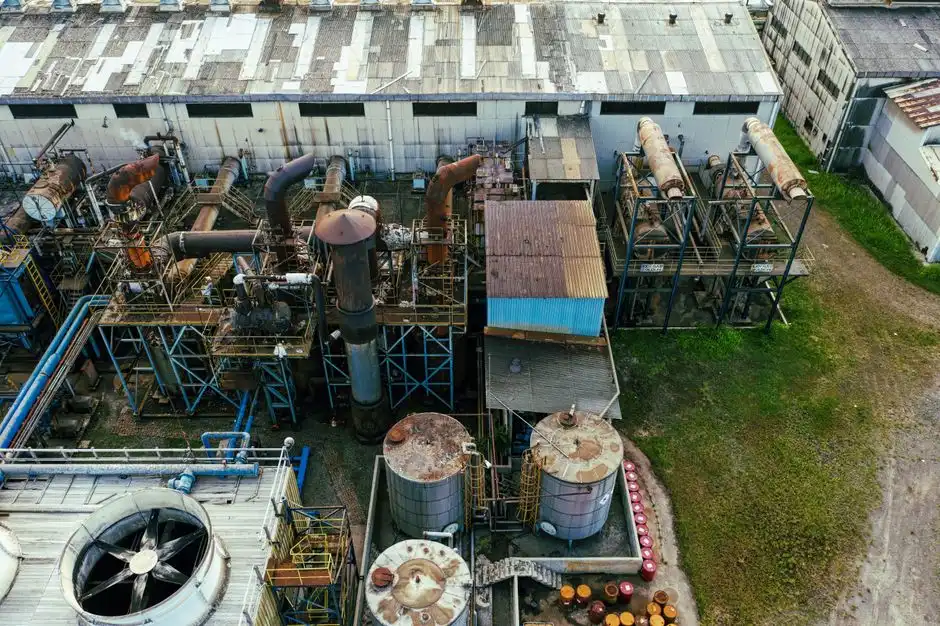
Metal hydroxide or sulfide precipitation creates a metals-bearing sludge that must be managed as a regulated residual, not treated as an incidental byproduct. HydropureWater’s 2026 guide identifies plate-and-frame filter pressing as the standard dewatering approach and reports that a well-run press can produce cake at 30–45% dry solids. The applicable disposal route and acceptance criteria still require confirmation for the site.
Require the equipment bidder to define sludge-conditioning chemicals, polymer preparation, filtrate-return routing, cake-transfer method, storage requirements, and responsibility for sampling and disposal documentation. Filtrate returned to the headworks must re-enter the treatment train rather than create an unreviewed metal load.
Do not assume the cake is nonhazardous. HydropureWater’s 2026 guide states that TCLP characterization can determine whether regulated metals make the residue hazardous. The disposal specification should therefore include representative sampling, laboratory coordination, destination qualification, and a cost contingency for characterization or a more restrictive waste code.
Sulfide precipitation requires a separate safety review. HydropureWater’s 2026 guide reports achievable sulfide residuals of 0.01–0.05 mg/L, but the process can generate hydrogen sulfide if pH falls and therefore requires sealed equipment and toxic-gas management. A plate-and-frame filter press for metals sludge dewatering should be scoped with the precipitating chemistry, expected solids production, and final waste-classification plan.
Decide Between Sewer Discharge and Water Reuse
The sewer-versus-reuse decision should be based on current local costs, available reuse demand, process-water quality needs, and the expected direction of local limits—not on a generic assumption that reuse is always superior. A sewer-discharge design minimizes the membrane and brine scope but leaves the plant exposed to POTW capacity charges, permit revisions, and discharge-volume charges. A reuse design adds treatment and energy demand but can reduce freshwater purchases and sewer volume.
Where reuse requires RO-quality water, add ultrafiltration ahead of RO. HydropureWater’s Price-area 2026 guide cites hollow-fiber UF at roughly 0.03 micron for removal of residual colloids that can foul RO membranes. That value is a cited system characteristic, not a Cross influent limit or universal design selection.
MBR is a reuse-enabling option rather than an automatic requirement. HydropureWater’s 2026 guide cites COD removal above 95%, ammonia-nitrogen removal above 90%, and TSS below 5 mg/L for an MBR system. Confirm those performance expectations against representative wastewater and the stated acceptance conditions before including MBR in the commercial scope.
| Decision path | Additional treatment scope> | Key commercial inputs | Principal residual |
|---|---|---|---|
| Pretreatment to sewer | Equalization, precipitation, clarification, filtration, sludge dewatering | Current POTW limits, flow and load envelope, fees, discharge monitoring report | Continued sewer dependence and exposure to tighter limits |
| Partial reuse | Base treatment plus UF and, where required, RO | Freshwater cost, reuse demand, membrane-feed chemistry, recovery target | Higher energy, media replacement, and brine management |
| Zero liquid discharge | Concentrated brine treatment and crystallization | Full water-balance model, climate, energy demand, waste-disposal route | High energy demand and additional solids-disposal obligations |
Keep reuse and zero liquid discharge separate. Partial reuse can reduce sewer volume and freshwater purchases; zero liquid discharge also requires brine concentration and crystallization considerations. The final commercial comparison requires current POTW fees, site freshwater cost, the local-limit trajectory, and a defined water-quality demand. For biological-treatment selection, compare MBR and activated sludge for mining wastewater reuse against the actual reuse targets.
Prepare the Equipment Purchase Without Guessing at Limits
A compliant equipment solicitation begins with the controlling documents, not a generic flow estimate. Obtain the current NPDES permit where applicable, receiving POTW discharge limits, sewer-use ordinance, industrial discharge permit, applicable 40 CFR subcategory, 2025–2026 discharge monitoring report data, and a 12-month influent characterization. If any item is missing, identify it as an open design input instead of substituting a limit from Price or another municipality.
Require each bidder to map every proposed unit operation to a specific permit parameter, treatment function, instrumentation point, power requirement, chemical demand, sludge output, control action, and maintenance task. A proposal that lists equipment without this traceability cannot show how the system will comply.
Evaluate documented competence in metal hydroxide precipitation, relevant mining or metal-finishing project evidence, and commissioning and after-sales support. Ask suppliers to state their design envelope and exclusions explicitly. HydropureWater’s Price-area 2026 guide warns that a vendor quoting before reviewing the NPDES permit, POTW limits, applicable categorical subcategory, 2025–2026 DMR data, and 12-month influent characterization is not positioned to deliver a compliant system.
| Bid document | Required content | Buyer check |
|---|---|---|
| Permit compliance matrix | Each permit parameter mapped to a process step, instrument, control, and sampling point | No unexplained parameter or untested assumption |
| Design basis | Flow and load envelope, stream characterization, jar-test results, and sizing calculations | Maximum conditions are explicit |
| Process and controls narrative | Equalization, dosing, precipitation, solids separation, filtration, alarms, diversion, and shutdown | Failure responses are documented |
| Residuals and site utilities | Sludge quantity, conditioning, dewatering, filtrate route, waste classification, power, water, and chemicals | Disposal assumptions are confirmed |
| Materials and consumables | Media, resin, liner, chemical compatibility, replacement intervals, and supply plan | Compatibility is supported in writing |
| Commissioning and acceptance | Test protocol, representative influent, instruments, performance records, training, and support | Acceptance is tied to the permit and approved protocol |
Require written confirmation of media and resin compatibility, chemicals, controls scope, spare-parts strategy, commissioning support, and acceptance criteria. The UF system for reuse polishing and related equipment should be quoted as optional alternatives with their own influent limits and exclusions. Do not let an equipment price conceal unresolved permit, chemistry, or residual-disposal risk.
Frequently Asked Questions
How should treatment equipment be sized near Cross?
Size against the 12-month influent envelope, including maximum flow, seasonal and campaign variation, and representative storm events. Use 24-hour composite sampling, online pH and conductivity, jar tests, and the current POTW limits to establish hydraulic loading, chemical demand, solids removal, and polishing requirements. A flow-only calculation is not a defensible basis of design.
How should a mining or metals wastewater supplier be selected?
Require a permit-to-equipment mapping, documented metal-hydroxide precipitation competence, relevant project evidence, a commissioning plan, and a consumables and spare-parts strategy. The bidder should also state design assumptions and exclusions, identify the monitoring point for each treatment function, and define acceptance testing under representative blended influent.
What are the exact sewer-discharge limits for a plant near Cross?
The supplied research does not establish them. Obtain the current sewer-use ordinance and industrial discharge permit from the actual receiving POTW, together with the applicable categorical subcategory and any NPDES or state requirements. No national standard, source-characterization range, or equipment performance value in this article is the exact Cross POTW limit unless the local permit expressly adopts it.
Should the plant select DAF, lamella clarification, filtration, or MBR?
DAF and lamella clarification serve different solids-separation roles; filtration provides suspended-solids polishing; MBR combines biological solids removal with membrane separation and can enable reuse. Select them by contaminant type, measured floc properties, hydraulic variation, footprint, current local limits, and reuse targets—not by treating them as interchangeable products.