
Start with the discharge route and receiving-water constraints
The discharge route determines whether a hotel needs a connection, an on-site treatment plant, or both. Uzbekistan’s reservoir-tourism rules require internal sewerage systems or local wastewater treatment facilities to prevent untreated sewage entering water bodies, according to HydropureWater’s October 2026 Uzbekistan reservoir tourism wastewater rules. For the Sea Breeze project, Times of Central Asia reported in July 2026 that wastewater must be conveyed outside the coastal zone to a centralized treatment system, with no discharge into Charvak Reservoir. That condition is project-specific; each resort must confirm its route with the relevant local and environmental authorities.
Before selecting equipment, separate three decisions: where treated water may be discharged, who owns and operates the receiving sewer or treatment system, and whether internal treatment is required before connection. These decisions establish the permit basis and prevent a package plant from being specified for an outlet that the project cannot legally use.
| Decision | Information to establish | Procurement consequence |
|---|---|---|
| Permitted discharge route | Authority-confirmed receiving point and any prohibition on reservoir discharge | Defines the required treatment objective and reuse or conveyance arrangement |
| Receiving-system responsibility | Ownership, capacity, connection conditions and operating responsibility | Separates network work from treatment-plant scope |
| Internal treatment | Whether pretreatment or complete treatment is required before connection | Sets the process train and performance guarantee |
For Sea Breeze specifically, the July 2026 Times of Central Asia report states that the plan envisages centralized collection and off-site treatment, with no discharge into the reservoir. That project requirement should not be generalized to every Uzbek hotel without confirmation from the responsible authorities.
Build a defensible resort wastewater design basis
A resort treatment plant must be sized based on average flow, peak daily flow, peak hourly flow, and the operating season rather than room count alone. The brief should also distinguish the wastewater streams that may require separate treatment or pretreatment: guest accommodation, kitchens and food service, laundry, housekeeping, swimming pools, spas, and any backwash or boiler-blowdown streams identified during survey work.
The Sea Breeze review demonstrates why provisional assumptions are risky. In July 2026, Times of Central Asia reported that final treatment capacity, definitive accommodation capacity, and final cottage and housing figures had not been provided to the State Center for Environmental Expertise. A supplier sizing equipment from an early master-plan room count could therefore size the hydraulic and biological systems around unresolved inputs.
| Design-basis item | Minimum information to request | Why it affects selection |
|---|---|---|
| Hydraulic load | Average flow, peak daily flow, peak hourly flow and seasonal operating profile | Sets pumping, equalization and biological-treatment capacity |
| Source characterization | Kitchen, laundry, pool, spa, housekeeping and specialist discharge data | Identifies separate pretreatment and water-quality controls |
| Effluent and reuse | Receiving-point criteria, reuse end use, disinfection needs and monitoring requirements | Determines the final treatment and disinfection stages |
| Site and residuals | Available footprint, utilities, installation constraints, odor limits and sludge-disposal route | Defines layout, service access and operating obligations |
Do not reproduce generic flow-per-guest factors unless the project designer or local authority supports them for this resort. The supplied research contains no defensible Uzbek hotel flow factor. Instead, request the method used to derive the flow, the occupancy basis, seasonal assumptions and the calculation connecting flow to treatment capacity.
The output specification should also identify sludge-disposal arrangements, sampling requirements, standby provisions and the authority conditions that will govern acceptance. These inputs turn a preliminary brief into a basis on which competing technical and commercial proposals can be evaluated consistently.
Compare central sewerage, package A/O and MBR treatment
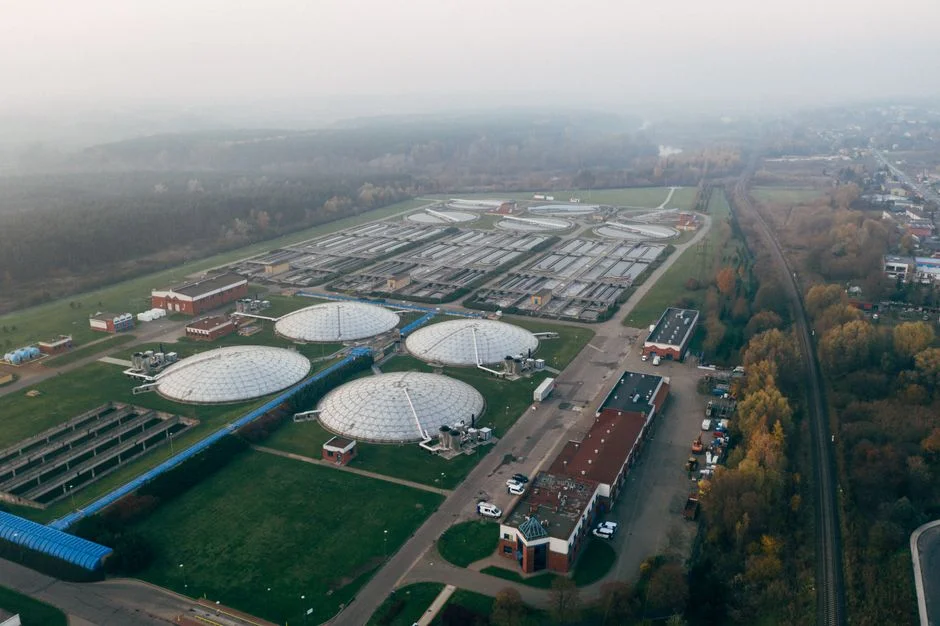
Central sewerage is the appropriate route where a compliant receiving network is available and the resort can convey wastewater outside any protected coastal or reservoir zone. The Sea Breeze plan explicitly envisages centralized collection and off-site treatment, as reported by Times of Central Asia in July 2026. Before relying on that route, confirm connection capacity, who pays for the network extension, the ownership boundary and the receiving authority’s treatment and discharge conditions.
For sites without a usable central connection, a packaged biological system can combine treatment stages within a defined installation. HydropureWater’s underground integrated sewage treatment plant has a published duty envelope of 1–80 m³/h for hotels, hospitals, factories and rural sites. Its process combines anoxic and aerobic contact oxidation, sedimentation and disinfection in a buried unit, with automated operation and no operator required.
An integrated MBR wastewater treatment system combines activated-sludge treatment with submerged PVDF membrane filtration. Its published capacity range is 10–2,000 m³/day, filtration performance is below 1 μm, and its reported footprint is 60% smaller than conventional systems. These are catalog specifications, not a statement that either technology is suitable for every resort.
| Criterion | Central sewerage | Package A/O | MBR |
|---|---|---|---|
| Route condition | Compliant network available and connection permitted | On-site treatment or pretreatment where required | On-site treatment where footprint and reuse objectives justify it |
| Documented capacity | Depends on the receiving authority’s system | WSZ: 1–80 m³/h | 10–2,000 m³/day |
| Treatment configuration | Off-site treatment; project scope may cover collection only | Anoxic/aerobic contact oxidation, sedimentation and disinfection in one package | Activated sludge with submerged PVDF membrane filtration |
| Key selection issues | Network extension, connection ownership and discharge conditions | Verified peak profile, footprint, installation and solids handling | Verified flow, reuse objective, membrane maintenance and operator involvement |
Compare verified flow, effluent objective, footprint, installation conditions, sludge handling, automation, operator involvement, reuse potential and approval pathway. For a remote or environmentally sensitive resort, the decisive question is whether the selected route complies with the receiving-water prohibition—not which package has the lowest equipment price.
Map the complete hotel treatment process
A complete hotel treatment train starts with source characterization and a verified hydraulic profile, not with a biological reactor alone. Identify high-solids and specialist streams during survey work, then route them to appropriate pretreatment. Kitchen wastewater can carry food solids and oil and grease; laundry wastewater can introduce detergents and fibers; pool, spa and backwash flows may require separate control or disposal arrangements.
The treatment sequence then moves through biological treatment, solids separation, disinfection and the authorized outlet or reuse system. HydropureWater’s WSZ train combines anoxic and aerobic contact oxidation, sedimentation and disinfection within one package for the 1–80 m³/h class. Larger MBR projects combine activated sludge with submerged PVDF membrane filtration across the published 10–2,000 m³/day range. These are alternative process routes, not stages that must all be added together.
- Characterize each source stream and confirm the verified hydraulic profile.
- Protect the downstream process with appropriate source separation and headworks.
- Apply the selected biological process at the verified duty condition.
- Provide solids separation, disinfection and the authority-required monitoring.
- Manage sludge, odor, maintenance access, standby arrangements and sampling points as part of the design.
Where reuse is required, define the end use before selecting the final treatment and disinfection stage. The supplied research establishes no universal reuse limit for Uzbek resorts. Irrigation, landscape watering, toilet flushing or another reuse purpose must therefore be assessed against the applicable authority criteria rather than assumed from the technology selected.
Use the GX rotary mechanical bar screen as a headworks option when incoming wastewater contains rags, plastics, fibrous debris or suspended solids that could overload downstream biological treatment, pumps and valves. Where the process includes settling, the high-efficiency sedimentation tank can form part of solids separation, subject to the selected process design.
Check compliance before equipment procurement
Environmental approval must be linked to a defined treatment system, rather than treated as a later administrative step. Public hearings for the Sea Breeze project were held on January 23, 2026. UzDaily reported that the consultation addressed preventing untreated wastewater discharge into Charvak Reservoir, implementing a centralized sewage system and establishing ongoing environmental monitoring.
The hearings did not complete the environmental review. Times of Central Asia reported in July 2026 that the second stage remained incomplete because technical documents specifying treatment-system capacity, accommodation capacity, cottages, houses and other facilities had not been submitted. Once the required second-stage documents are submitted, the State Center for Environmental Expertise has 25 working days to assess them.
Before ordering equipment, request the following in writing:
- The applicable discharge standard and permitted receiving point.
- Sewer-connection conditions and the boundary between project and receiving-system works.
- Any reuse criteria and required disinfection performance.
- Construction, operating and environmental-review permits.
- Third-party testing, monitoring and commissioning requirements.
- The capacity basis, approved master-plan assumptions and unresolved design data.
Treat every proposed concentration limit, reuse threshold and plant capacity as project-specific until it appears in the approved permit or authority-issued design conditions. HydropureWater’s Uzbekistan wastewater guidance can help locate the relevant source material, but it should not replace site-specific approval or a direct authority response.
Use a supplier selection and commercial due-diligence checklist
Comparable bids require the same capacity basis, treatment objective, interface assumptions and commercial boundaries. Ask each supplier to state its guaranteed design flow, daily and hourly peak assumptions, selected process, stage-by-stage equipment scope, duty points and the treatment objective used in the sizing calculation. Without those inputs, a lower quotation may simply reflect a narrower scope or different capacity assumption.
| Due-diligence area | Document or response to request | Reason for the check |
|---|---|---|
| Design basis | Guaranteed flow, peak profile, occupancy basis and sizing calculation | Confirms that all bids are priced for the same duty |
| Process scope | Stage-by-step equipment, duty points, performance basis and guarantees | Exposes omissions and differences in treatment objectives |
| MBR evidence | Membrane material, membrane area, aeration, controls, disinfection, sludge removal, commissioning and consumables | Tests whether the long-term operating scope is defined |
| Package A/O compatibility | WSZ duty envelope checked against the resort’s verified flow and peaks | Confirms suitability within the published 1–80 m³/h range |
| Responsibilities and exclusions | Civil works, inlet works, sludge disposal, network connections, utilities and operator training | Prevents gaps between supplier, contractor and authority scopes |
| Commercial comparison | Delivered scope, installation footprint, service capability, spares, controls and compliance evidence | Supports comparison beyond equipment price alone |
Use a dissolved air flotation machine only when source characterization shows enough oil, grease, food solids or other floatable material to justify dedicated flotation pretreatment. Its published duty range is 4–300 m³/h, but that range does not establish process necessity. Clarify whether treatment-plant valves, media and related parts are supplied, who owns spare-parts availability, and which consumables remain throughout the operating period.
Frequently Asked Questions
How much does hotel wastewater treatment cost in Uzbekistan?
The supplied research does not provide a resort-specific price for hotel wastewater treatment in Uzbekistan. Request itemized bids using the same verified flow, treatment objective, civil-work boundaries, installation conditions and sludge-handling assumptions. Compare initial capital cost with membrane replacement, aeration, chemicals, electricity, sludge disposal, operator support and other lifetime operating costs.
Should a hotel in Uzbekistan choose an MBR or a package A/O plant?
Choose the route that matches the verified wastewater flow, peak profile, footprint, reuse goals, effluent criteria and operating arrangements. The published MBR range is 10–2,000 m³/day, while the WSZ package range is 1–80 m³/h. Require each bidder to demonstrate that its proposed configuration falls within its documented duty envelope and satisfies the project’s
Frequently Asked Questions
How much does hotel resort wastewater treatment cost in Uzbekistan?
Capital expenditure for resort wastewater treatment systems in Uzbekistan typically ranges from $400 to $900 per cubic meter of daily treatment capacity, depending on the complexity of the effluent requirements and the level of automation. Operational costs, including energy consumption, membrane replacement, and chemical dosing, generally fall between $0.15 and $0.35 per cubic meter of treated water.
Should a hotel in Uzbekistan choose an MBR system or a package A/O plant?
An MBR (Membrane Bioreactor) system is recommended if the resort intends to reuse treated water for landscape irrigation or toilet flushing, as it achieves high-quality effluent with turbidity below 1 NTU and removes nearly all suspended solids. A package A/O (Anoxic/Oxic) plant is more suitable for remote locations with lower budget constraints where the primary goal is simple discharge compliance, though it requires a significantly larger footprint and larger polishing lagoons to meet stringent environmental standards.
Can a resort discharge treated wastewater into Charvak Reservoir?
Direct discharge into the Charvak Reservoir is strictly regulated by the State Committee for Ecology and Environmental Protection of Uzbekistan. Due to the reservoir’s status as a primary drinking water source for Tashkent, discharge is generally prohibited unless the facility achieves tertiary treatment levels, including advanced nutrient removal (nitrogen and phosphorus) and UV disinfection, ensuring effluent meets the most stringent "Fishery Category" water quality standards.
What information should I provide to a wastewater treatment equipment supplier in Uzbekistan?
To receive an accurate proposal, you must provide the design capacity in cubic meters per day (m³/day), the peak hourly flow rate, and the influent water quality characteristics, specifically BOD5, COD, TSS, and Total Nitrogen levels. Additionally, you must provide the local regulatory discharge requirements, the intended reuse application for the treated water, and a site survey map indicating the available footprint and elevation profile of the resort property.
When should wastewater treatment equipment be ordered for a hotel or resort project?
Wastewater treatment equipment should be ordered during the schematic design phase, typically 8 to 12 months before the scheduled soft opening. Early procurement is necessary to account for the 4 to 6-month manufacturing lead time, the logistical requirements for importing specialized components into Uzbekistan, and the critical need to integrate civil engineering requirements, such as concrete tank dimensions and piping elevations, into the primary construction blueprints.