Which Limits Govern Discharge to the De Pere Sewer?
Mining and metals plants near De Pere meet pretreatment limits by treating wastewater to the requirements of the receiving De Pere POTW before discharge at the point of connection. EPA defines local limits as site-specific pollutant discharge limits that address a POTW’s operational, sludge, and receiving-water concerns; they may be numeric, narrative, or best management practices. A defensible 2026 design begins with the current permit, limits, and approval documents, then characterizes separate wastewater streams before selecting pH adjustment, clarification, filtration, and other controls. No De Pere-area numeric limits were supplied in the research, so they must be confirmed directly rather than inferred from federal guidance.
The distinction between discharge routes determines the governing requirements. A direct surface-water discharge is evaluated under the facility’s NPDES permit and applicable state conditions. An indirect discharge to a municipal sewer makes the mine or metals plant an industrial user subject to the receiving POTW’s pretreatment requirements. The POTW, not a general mining guideline, establishes the enforceable discharge envelope at the connection point. EPA states that POTWs impose local limits at the industrial user’s end-of-pipe discharge, and it can enforce properly developed and approved local limits as pretreatment standards.
Before sizing equipment, obtain the current De Pere-area sewer-use or pretreatment requirements, the applicable industrial-user permit, the approved discharge location, sampling point, monitoring requirements, and any state or local approval governing the proposed connection. EPA’s Pretreatment Standards and Requirements—Local Limits page provides the controlling definition and enforcement point. The EPA’s Local Limits Development Guidance, published in 2021, is useful for understanding how local limits are developed, but it is guidance rather than a regulation. Permits, regulations, and adopted local controls control if they differ.
| Document or decision | What it establishes | Engineering action |
|---|---|---|
| Current POTW sewer-use and pretreatment requirements | Site-specific numeric or narrative local limits and best management practices | Use the approved limits as the primary design envelope |
| Industrial-user permit or equivalent control mechanism | Authorized discharge location, monitoring, reporting, and operating conditions | Confirm that the proposed treatment train and controls match the authorization |
| Point-of-connection sampling record | Compliance location and operating basis | Design monitoring and sample points around that location |
| State and local approvals | Requirements not contained in the federal pretreatment framework | Include approval conditions in design and commissioning |
| EPA Local Limits Development Guidance | Framework for pollutants of concern, data, MAHLs, implementation, and review | Use for design reasoning, not as a substitute for enforceable local documents |
For an orientation to the broader industrial-user pathway, see how mining plants meet sewer limits in 2026. The transferable principle is the decision chain; De Pere limits, approval procedures, and sampling requirements still require local confirmation.
Build the Compliance Basis Before Sizing Equipment
EPA’s five-step MAHL approach converts a mine’s wastewater characteristics into a traceable pretreatment design: determine pollutants of concern; collect and analyze data; calculate maximum allowable headworks loadings for each pollutant of concern; designate and implement local limits; and address collection-system concerns. For an industrial user, this is a verification framework rather than a license to calculate local limits independently. The POTW remains responsible for the limits imposed on the facility.
The pollutants-of-concern screen should combine the receiving POTW’s requirements, NPDES and permit conditions, treatment-plant capabilities, sludge considerations, collection-system risks, and actual site chemistry. For a mining operation, that review should address the parameters identified by the POTW rather than assume that every metal or ancillary chemical is controlled. EPA’s guidance also identifies industrial discharges, hauled waste, remediation waste, and hazardous waste as potential inputs to the decision. The operator should therefore disclose any contact water, truck-wash water, laboratory drain, or hauled waste entering the same authorization.
Characterize mine drainage, process water, tailings-related water, and contact or hauled waste separately where they are not continuously mixed. A blended sample can conceal an acidic dewatering slug, a reagent-bearing process discharge, or a high-solids tailings supernatant. EPA’s framework places sampling at the POTW, within the collection system, and at industrial users; request a site program that covers those relevant locations, defines sampling frequency and analytical methods, and links flow records to laboratory results.
| Input | Minimum buyer request | Why it affects the design |
|---|---|---|
| Flow record | Continuous or verified flow data, including peak, average, storm response, and discharge-duration information | Defines equalization, treatment capacity, chemical feed, and off-line storage needs |
| Stream chemistry | Representative results for each separately managed stream | Prevents a blended average from masking treatment or pass-through risk |
| Analytical quality | Parameter list, methods, detection limits, sampling dates, and laboratory chain of custody | Supports permit comparison and reproducible vendor sizing |
| Regulatory envelope | Current permit, POTW limits, prohibited-discharge provisions, and monitoring plan | Defines what the equipment must actually meet |
| Operational assumptions | Chemical-use restrictions, power and footprint constraints, access and maintenance requirements | Prevents a technically compliant bid from being operationally unusable |
Give every bidder the same permit and influent dataset. Require the supplier to state its design flow, removal targets, chemical assumptions, sizing margins, and compliance basis. A bid based on generic mining-water conditions is not comparable to one based on the mine’s stream-specific chemistry. EPA’s monitoring framework should connect sampling locations, frequencies, methods, records, and permit decisions; see the related mining-wastewater treatment comparison for a separate process-selection discussion.
Choose a Treatment Train That Responds to the Water Chemistry
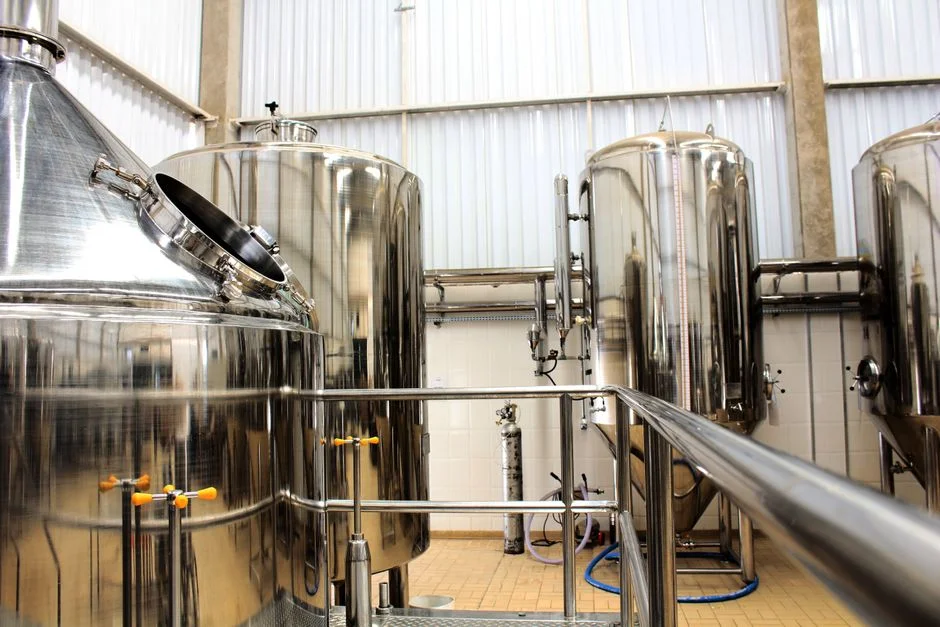
The treatment sequence should follow the contaminants and the discharge objective, not a fixed equipment recipe. Start with controlled pH adjustment because the approved discharge limit and site chemistry determine the target pH, while pH correction may also support precipitation of dissolved metals as hydroxides. Jar testing should establish the achievable metal removal and the chemical dose before the flow path is fixed.
Next, add coagulation and flocculation to aggregate suspended solids and fine metal-bearing particles into flocs that can be separated. Clarification choice then follows the resulting floc. A dissolved air flotation system for mining wastewater is suited to buoyant or floatable flocs and can also handle oil, grease, and floatable fines. A lamella clarifier is appropriate where dense metal-hydroxide sludge and a compact footprint drive the selection. Confirm both options with representative water rather than treating “mine water” as one category.
HydropureWater’s 2026 product information specifies 4–300 m³/h across 13 standard DAF models, using micro-bubble technology and automatic skimming for suspended solids, FOG, oil and grease, and colloidal matter. It specifies lamella surface-loading rates of 20–40 m/h and advertises chemical-consumption reductions of up to 30%. These are manufacturer specifications, not De Pere permit limits or guaranteed project outcomes.
Integrated treatment can reduce vessel count where the stream chemistry and operating objective support it. HydropureWater JY systems combine coagulation, flocculation, sedimentation, filtration, and automatic backwash; catalog capacities are 10–200 m³/h, with inlet turbidity up to 3,000 mg/L and treated turbidity below 3 mg/L. The buyer should still request a performance guarantee tied to the approved compliance envelope rather than accepting catalog conditions as sufficient design evidence.
Filtration removes residual suspended solids after clarification. The mining-water treatment source identifies backwash media filtration and centrifugal systems for larger particles up to 2,000 micron. Specialty controls—corrosion inhibitors, ion exchange, and biocides—should be included only where site chemistry or fouling risk demonstrates a need. A PLC-controlled chemical dosing system can coordinate pH, coagulant, and flocculant injection with flow and treatment-stage measurements.
| Process step | Primary function | Selection evidence required |
|---|---|---|
| pH adjustment | Meet the approved pH limit and establish conditions favorable to metal hydroxide precipitation | Site titration or jar-test dose range, flow-based control response, and discharge-limit check |
| Coagulation and flocculation | Convert suspended solids and fine metal-bearing particles into separable flocs | Representative-water testing, mixing data, and polymer compatibility |
| DAF clarification | Remove floatable or buoyant flocs and associated contaminants | Floc-rise behavior, air-to-solids demand, loading, skimming, and residual-solids tests |
| Lamella clarification | Settle dense metal-hydroxide flocs in a compact arrangement | Solids loading, sludge rheology, settling test, underflow capacity, and footprint |
| Integrated treatment | Combine coagulation, clarification, filtration, and backwash in a coordinated package | Stage-by-stage performance, bypass provisions, controls, and maintenance access |
| Filtration | Polish residual suspended solids before discharge or downstream reuse | Filtrate quality, backwash waste, loading, and media compatibility |
| Specialty controls | Address corrosion, residual dissolved contaminants, or biological fouling | Documented water chemistry and equipment-fouling risk |
Use the supplied DAF system process flow to check how equipment, controls, and sludge removal connect, not to bypass site-specific testing. The DAF-versus-clarifier comparison provides a useful hardware framework even though its wastewater context differs.
Decide Between Sewer, Reuse and Zero-Liquid-Discharge Configuration
Sewer discharge requires the least treatment only when the receiving POTW’s current limits are the controlling objective. Size pH control, clarification, filtration, monitoring, and sludge handling for the approved connection-point envelope. Add membranes only when reuse quality, downstream process protection, freshwater reduction, or a separate discharge objective requires additional polishing.
For process reuse, ultrafiltration may be needed to remove colloids or protect downstream reverse osmosis. HydropureWater’s 2026 specifications describe UF systems using 0.03 micron PVDF membranes, handling 2,000–40,000 L/h, accepting turbidity up to 300 ppm, and providing automatic backwash and air scour. These figures describe catalog equipment; the site must verify soluble loading, chemistry, temperature, and pretreatment needs before using them for sizing.
| Configuration | Typical functional scope | Acceptance focus | Unresolved input |
|---|---|---|---|
| Sewer discharge | pH control, clarification, filtration, monitoring, and sludge handling | Current POTW limits at the point of connection; prohibited-discharge compliance | Current local limits and approved discharge basis |
| Process reuse | Sewer-compatible treatment plus polishing selected for the reuse specification | Reuse quality, process compatibility, energy demand, and recovery | End-use water specification and site water balance |
| Zero liquid discharge | Treatment, membrane concentration, and thermal separation or another approved residual-management process | Complete site water and salt balance, brine or solids route, and energy demand | Recovery, concentrate fate, fouling data, and approved residual-disposal basis |
For ZLD, do not assume reverse-osmosis recovery without site testing. A complete water balance must account for every stream, concentrate volume, salt loading, residual solids, and disposal route. Compare options by receiving-water risk, reuse quality, freshwater reduction, disposal route, energy demand, and operator complexity—not merely by the number of treatment units. The mining-wastewater configuration comparison provides a separate reference for distinguishing biological and polishing objectives.
Plan Monitoring and Metal-Sludge Disposal Before Commissioning
Compliance equipment must be paired with a monitoring system that can demonstrate the approved envelope and support corrective action. Monitor pH, flow, metals, and total suspended solids at the locations required by the POTW permit or control mechanism. Add conductivity or other measurements where they are needed to operate treatment stages or protect membranes. EPA’s local-limit guidance requires records that connect analytical results with flow data and permit decisions, allowing actual loading to be compared with allowable loading.
Automatic chemical dosing should respond to measured flow and pH. Provide alarms for reagent failure, abnormal chemistry, high flow, and downstream-limit risk; define safe reagent handling, fail-safe response, and operator escalation. Commissioning should demonstrate not only steady-state concentration but also the plant’s response to flow and chemistry changes.
Metal-bearing sludge is a residual obligation, not an incidental by-product. Characterize the sludge generated by pH adjustment and clarification under applicable disposal requirements. Select thickening, dewatering, storage, and transport based on expected sludge volume, campaign frequency, and physical properties. HydropureWater’s 2026 product information states that its plate-and-frame filter presses cover 1–500 m² filtration areas, with manual, hydraulic, and fully automatic PLC-controlled configurations.
Performance tests should cover the approved parameters and operating envelope: flow, pH, metals, TSS, turbidity where applicable, chemical consumption, and sludge yield. The commissioning plan must also identify who owns sampling, laboratory reporting, instrument calibration, alarm response, and permit communications. EPA’s review and re-evaluation concepts provide a useful model for checking whether changing POTW performance, sludge conditions, or collection-system risks have altered the basis of design. The mining pretreatment sewer compliance guide provides another site-oriented reference for this compliance-to-monitoring transition.
Prepare a Site-Specific Request for Vendors and Quotes
Comparable bids require one controlled basis-of-design package, not separate assumptions from each supplier. Include the current POTW requirements, industrial-user permit, applicable federal and state standards, peak and average flows, stream-specific analytical results, analytical methods, chemical restrictions, monitoring points, approved discharge location, and the intended sewer, reuse, or ZLD objective.
Require each bidder to identify its design flow, treatment sequence, sizing basis, chemical assumptions, solids-handling method, control narrative, utility requirements, commissioning tests, and permit-compliance warranty language. Ask for references from mining, metals, or mineral-processing installations at comparable flow and chemistry, and verify operator training, chemical supply support, maintenance access, and spare-parts planning.
Also request a jar-test or pilot-test plan and a written excursion-response method. The objective is not merely to increase chemical consumption; the response should identify the likely cause, affected process stage, required isolation or diversion, and conditions for returning to service.
No defensible system price can be derived from the supplied research. Request quotations against the same scope and separate treatment equipment, installation, controls, chemical startup costs, sludge disposal, and downstream polishing. Use EPA’s allocation, safety-factor, best-management-practice, and control-mechanism concepts to ask the POTW how the proposed operating strategy will be incorporated into the industrial-user authorization. The industrial wastewater equipment scope guide can help structure the technical package, but the permit remains controlling.
Frequently Asked Questions
What De Pere-area permit documents are needed before a wastewater system is designed?
Obtain the current De Pere-area sewer-use and pretreatment requirements, the applicable industrial-user permit or equivalent control mechanism, the approved connection and sampling location, monitoring and reporting conditions, and any state or local approval. EPA’s 2021 Local Limits Development Guidance is a development framework, not a substitute for those enforceable documents.
How much should a mining pretreatment system cost for sewer discharge near De Pere?
No site-specific cost or standard price range is supported by the research. Require bidders to price the same documented scope, including treatment equipment, installation, controls, startup chemicals, sludge handling, monitoring, and any downstream polishing. A comparable quotation also needs peak and average flows, stream-specific chemistry, and current POTW limits.
How should a plant size pH control, DAF or clarification, and filtration for variable mine wastewater?
Size from representative flow and chemistry data rather than a generic average. Separate mine drainage, process water, tailings-related water, and contact or hauled waste where they are not continuously mixed, then test pH demand, floc behavior, clarification performance, filtrate quality, and backwash waste. Size equipment for verified peaks and excursions.
What evidence should a wastewater-equipment supplier provide to reduce compliance risk?
Require a permit-based design narrative, influent and treated-water data from representative testing, equipment sizing calculations, control and alarm descriptions, commissioning criteria, excursion procedures, and sludge-management assumptions. Request comparable mining or metals references and verify training, maintenance, and chemical supply support before award.
When is UF or RO justified for a De Pere-area mining operation?
UF is justified when the reuse specification requires colloidal removal or downstream RO protection. RO becomes relevant when dissolved salts or metals must be reduced for reuse or concentration into a ZLD train. If the controlling objective is only compliance with the sewer limit, adding membranes without a water-quality or reuse requirement is unnecessary scope.
Related Equipment
- dissolved air flotation system for mining wastewater — specifications, capacity range, and technical data