What makes Morristown plastics and rubber wastewater different
Plastics and rubber manufacturing facilities in the Morristown, Tennessee corridor generate effluent that mixes buoyant, oily contaminants with dense mineral fillers in the same shift. Total suspended solids (TSS) commonly run 500 to 3,000 mg/L, Chemical Oxygen Demand (COD) frequently exceeds 1,500 mg/L, and fats, oils, and grease (FOG) range from 150 to 400 mg/L, drawn from EPA industrial effluent guidelines and HydropureWater field data summarized in HydropureWater's 2026 Mansfield reference (HydropureWater, 2026).
These pollutants originate from molding, extrusion, contact cooling, and equipment wash steps, where plasticizers, mold-release agents, and synthetic polymers leach into the process water. Any choice between a DAF system for plastics and rubber wastewater and a clarifier requires a current wastewater characterization rather than assumed stream quality. Local discharge limits and Publicly Owned Treatment Works (POTW) surcharges should be confirmed against the Morristown POTW's specific sewer-use ordinance; the Mansfield Sewer Use Ordinance cited 250 mg/L TSS and 100 mg/L O&G (HydropureWater, 2026) functions as a working benchmark only, and Tennessee pretreatment limits will differ. Engineers new to compliance framing can review EPA pretreatment compliance for US chemical plants for the broader federal context under 40 CFR 403.
How a DAF system actually separates plastics and rubber contaminants
A dissolved air flotation (DAF) unit generates micro-bubbles 20 to 30 microns in diameter by releasing a pressurized recycle stream — typically 10% to 20% of clarified effluent held at 50 to 70 psi — into the flotation tank at atmospheric pressure (HydropureWater, 2026). These bubbles nucleate on oils, greases, polymer fines, and colloidal TSS, and the resulting bubble-particle agglomerates rise to form a thick, concentrated sludge blanket that a mechanical skimmer removes continuously. Chemical conditioning stabilizes the floc: polyaluminum chloride dosed at 20 to 150 mg/L destabilizes emulsified colloids, and anionic or cationic polymer at 2 to 5 mg/L binds particles into larger, shear-resistant flocs (HydropureWater, 2026). The standard operating window sits at pH 6.0 to 9.0, which aligns with Ohio EPA general permit conditions cited in the same reference and is a reasonable proxy for Tennessee permit ranges pending site confirmation. Advanced regenerative turbine aeration designs remove the need for an external compressed-air system, lowering energy draw on retrofit jobs. This combination of bubble attachment and chemical flocculation allows DAF to reach up to 95% FOG removal on streams that gravity cannot settle.
How a gravity clarifier separates heavy fillers and grit
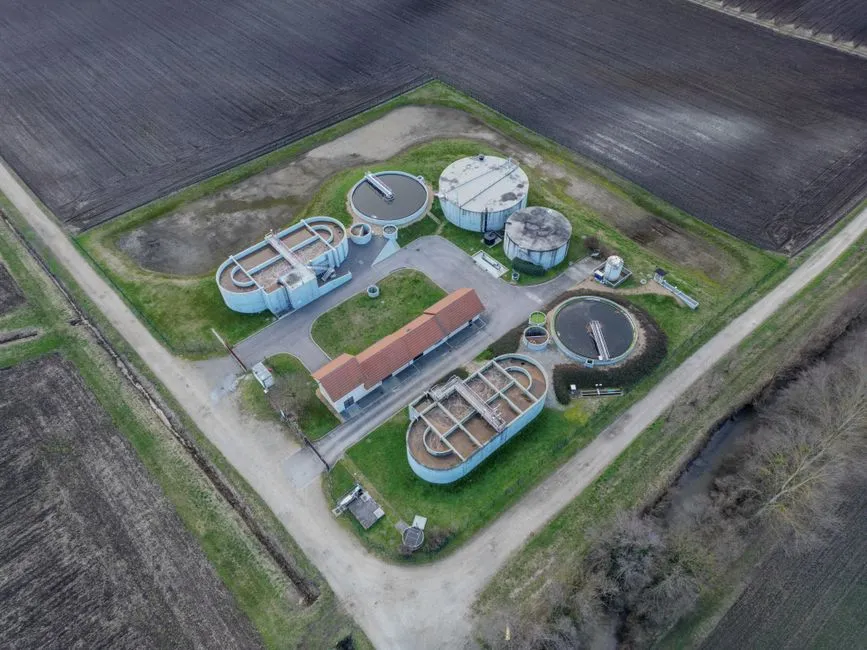
A gravity clarifier slows incoming wastewater to below 0.05 ft/s so particles with specific gravity above 1.0 settle to the tank floor, capturing vulcanization residues, carbon black, calcium carbonate, clay, and other dense rubber fillers (Ten States Standards, as cited in HydropureWater, 2026). Selecting the right separation technology requires understanding how these physical properties dictate equipment performance. Lamella designs pack inclined plates into a compact footprint, reaching surface loading rates of 20 to 40 m/h and cutting chemical consumption versus a conventional basin. Clarifier underflow is thin, only 1% to 3% dry solids, which translates into larger sludge volumes and a heavier lift for downstream dewatering. A clarifier also demands 4 to 5 times the footprint of an equivalent DAF, a real constraint inside existing Morristown plant utility rooms (HydropureWater, 2026). For plants whose effluent skews toward dense, settling-heavy solids, a lamella clarifier for heavy rubber fillers remains the lowest-CAPEX primary separator; the trade-off is what it leaves behind in the overflow.
Side-by-side DAF vs clarifier parameters for plastics and rubber
The table below consolidates the operating parameters a Morristown engineer needs to defend a primary-separator choice in front of procurement. All values come from HydropureWater's 2026 Mansfield reference and the Ecologix Systems selection guide (Ecologix Systems; HydropureWater, 2026).
| Parameter | DAF system | Gravity clarifier |
|---|---|---|
| Primary separation mechanism | Micro-bubble flotation (20–30 µm) | Gravity sedimentation |
| FOG removal efficiency | Up to 95% | ~70% |
| Heavy sediment removal | ~90% | ~90% |
| Hydraulic loading | 2–5 gpm/sq ft | 0.3–0.6 gpm/sq ft |
| Sludge dry solids | 4–12% | 1–3% |
| Footprint vs. equivalent unit | Compact (~25% of clarifier) | 4–5× larger than DAF |
| Chemical demand | Coagulant + flocculant required | Minimal when influent is settleable |
| Power demand | Pressurization pump, optional turbine aeration | Passive; sludge pump only |
| Typical 2026 CAPEX premium | 30–50% above clarifier | Baseline |
Morristown compliance, footprint and power considerations
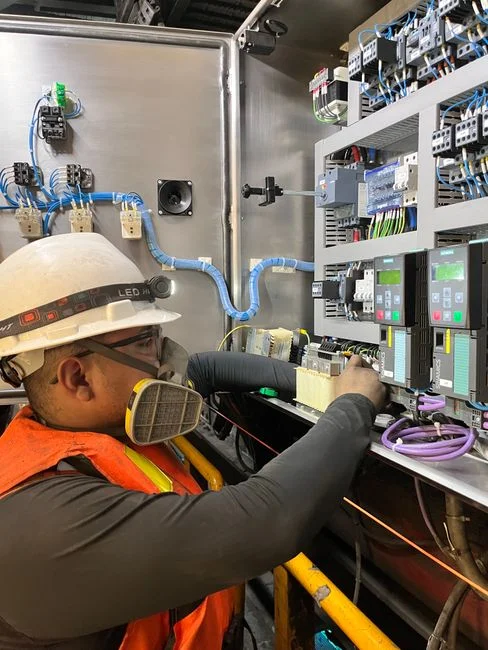
Request the local Morristown POTW's industrial pretreatment limits and surcharge schedule before specifying either separator. These limits dictate the required effluent quality and determine the feasibility of specific treatment technologies. Inside existing Morristown facilities, the up to 75% footprint reduction of a DAF often determines whether the unit fits inside an indoor retrofit (HydropureWater, 2026). A DAF needs reliable compressed-air or turbine-pump power plus a chemical dosing skid; a clarifier is passive but demands a structurally robust concrete or steel tank. In both cases, upstream screening prevents plastic strings and rubber debris from blinding the separator — plan for a rotary bar screen for plastics and rubber headworks ahead of either unit, and pair the DAF with an automatic chemical dosing for DAF conditioning skid sized to the expected flow and FOG load.
A five-step decision framework for Morristown plants in 2026
A Morristown engineer in 2026 should follow a defensible sequence rather than vendor preference when evaluating DAF versus clarifier options.
- Characterize the influent. Pull TSS, FOG, particle density, and the proportion of buoyant solids from current plant data; do not rely on historical averages.
- Apply the 20% buoyancy rule. Industrial pretreatment design guidelines indicate that facilities with more than 20% buoyant or emulsified solids in their TSS should select flotation-based separation to avoid downstream fouling (HydropureWater, 2026).
- Check footprint and headroom. A constrained indoor floor favors DAF; an outdoor pad with land available can host a lamella clarifier at lower CAPEX.
- Check chemical and power infrastructure. DAF needs dosing and pressurization; clarifiers need only sludge pumping and periodic sludge-bedding maintenance.
- Run a 10-year lifecycle cost. Fold in sludge hauling, POTW surcharges, energy, and chemical spend. For a 50,000 GPD high-strength plastics and rubber stream, avoided surcharges alone can yield $10,000 to $50,000 per year (HydropureWater, 2026).
When a hybrid clarifier-then-DAF train is the right answer
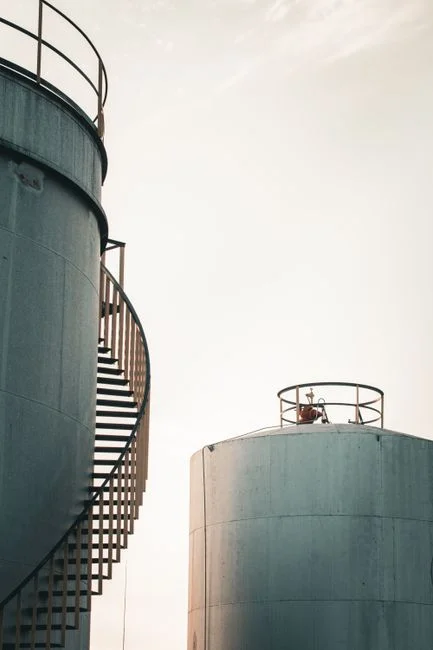
A hybrid train places a clarifier first to drop dense carbon black, calcium carbonate, and grit; the overflow then feeds a DAF system for plastics and rubber wastewater that targets emulsified FOG and fine polymer particulates (Ecologix Systems; HydropureWater, 2026). This configuration addresses streams with both heavy and buoyant contaminants. Pilot data on DAF combined with biological treatment shows up to 98% COD reduction on synthetic oily wastewater, supporting DAF as a pretreatment step before biological polishing (2024 SSRN study, cited in HydropureWater, 2026). Hybrid trains reduce the volume of sludge the DAF would otherwise have to float and protect it from abrasive grit, extending wear-part life. For plants whose stream is purely light and oily, a stand-alone DAF remains simpler and cheaper than a hybrid configuration. Operators maintaining either unit should also follow a 2026 preventive maintenance checklist for wastewater plants to keep both separators performing against the same influent swings. For buyers comparing this decision against a similar Tennessee-corridor plant, the parallel analysis in DAF vs clarifier for plastics and rubber wastewater in Cadillac walks through the same trigger logic in a different regulatory context.
2026 cost reality: CAPEX, OPEX and ROI for Morristown projects
A DAF system for a 50,000 GPD Morristown plant in 2026 carries a 30% to 50% CAPEX premium over an equivalent clarifier, but its 4% to 12% dry-solids sludge cuts total disposal volume by up to 60% (HydropureWater, 2026). Clarifier OPEX is structurally lower because gravity does the work, but the wetter 1% to 3% underflow makes sludge dewatering — typically a filter press for DAF and clarifier sludge — a much larger share of lifecycle cost. DAF return on investment, driven by avoided POTW surcharges and lower sludge hauling, is frequently under 18 months for high-strength plastics and rubber plants, and a 50,000 GPD facility avoiding surcharges can plausibly save $10,000 to $50,000 per year (HydropureWater, 2026). This savings potential serves as the ceiling against which the 30% to 50% CAPEX premium pays back. A request for proposal should require vendors to quote CAPEX, annual chemical and energy OPEX, and expected sludge volume to the same dewatering press, so the comparison stays consistent across clarifier, DAF, and hybrid options.
Frequently Asked Questions
What CAPEX premium should a Morristown plastics or rubber plant expect for a DAF versus a clarifier in 2026?
A fully integrated DAF system typically costs 30% to 50% more in CAPEX than a gravity clarifier of equivalent hydraulic capacity, according to HydropureWater's 2026 market analysis. The premium is offset when a 50,000 GPD high-strength stream can avoid $10,000 to $50,000 in annual POTW surcharges, which is the same order of magnitude that drives the under-18-month payback cited in the cost section above. Buyers should request itemized CAPEX, chemical, energy, and sludge-hauling line items so the comparison is consistent across clarifier, DAF, and hybrid bids.
How do I pick a supplier for a 50,000 GPD Morristown plastics and rubber DAF or clarifier project?
Shortlist vendors who can document influent-to-effluent performance on a plastics or rubber stream at or above your 50,000 GPD design point, provide a written chemical-consumption guarantee tied to your FOG and TSS characterization, and supply references for at least one operating Morristown-area or comparable Tennessee installation. Confirm that the proposal includes a downstream dewatering recommendation — typically a plate and frame filter press — because sludge density drives a large share of 10-year lifecycle cost. Ask for a lead-time commitment in writing, since compressor, skimmer, and lamella-package deliveries are the schedule items most likely to slip a 2026 CAPEX timeline.