When an SBR Fits a University Campus
An SBR can fit university campus wastewater when flows are low or intermittent, the biological feed is compatible with activated sludge, and the university can operate timed fill, react, settle and draw cycles. EPA notes that SBRs are particularly suited to low or intermittent flows, commonly serve flows of 5 MGD or less, and combine equalization, biological treatment and clarification in one reactor. For a campus, the decisive first step is separating sanitary sewage from laundry, kitchen, laboratory, cleaning-chemical and trades streams. Sizing must then use measured flow, BOD5, TSS, pH, alkalinity, temperature, TKN, ammonia-nitrogen and total phosphorus data plus the required effluent specification. A university-wide sewage plant should not be selected from generic reactor rules alone.
The U.S. Environmental Protection Agency defines the sequencing batch reactor as a fill-and-draw activated-sludge system in which equalization, aeration and clarification occur in one reactor. Two or more reactors normally operate in a predetermined sequence, although the final arrangement remains site-specific (EPA, 1999). Its built-in equalization is particularly relevant to dormitory wastewater, student housing sewage and other campus flows that vary with occupancy, class schedules, weekends and academic periods.
EPA identifies 5 MGD or less as a typical screening context, not a universal capacity limit or sizing rule. The agency also reports a relatively small footprint because an SBR often removes the need for a primary clarifier; final tank dimensions must still be calculated from campus flow, load, cycle and treatment objectives.
Before selection, verify that the university can provide continuous operator coverage, maintain aeration devices, automated valves and decanters, manage the SBR sludge stream, satisfy permit conditions and respond to occupancy-driven load changes. The agency’s installation case studies are explicitly site-specific and cannot be used to infer reactor volume or equipment capacity for a university. For comparison with another variable-flow process, see the SBR design guide for variable industrial wastewater.
Build a Campus-Specific Wastewater Profile
Carleton University found that wastewater characteristics from campus building sewers were more variable than those of the overall campus wastewater, supporting source-by-source and building-level sampling rather than reliance on one campus average (Carleton University, 2026). The procurement design basis should therefore begin with segregated datasets and a monitoring campaign that distinguishes dry weather from wet weather, residence-hall occupancy, weekdays from weekends, and academic or examination-cycle conditions. The supplied research does not establish a universal sampling frequency or occupancy multiplier, so the university must document its own monitoring plan.
| Campus source | Characterization and monitoring focus | Compatibility decision |
|---|---|---|
| Sanitary sewage | Flow continuity, hourly minimum and maximum, sanitary sewer inflow, infiltration conditions, BOD5, TSS, pH, alkalinity, temperature, TKN, ammonia-nitrogen and total phosphorus | Primary candidate feed for the SBR design basis |
| Laundry effluent | Separate flow and load dataset; solids and surfactants | Evaluate separately before inclusion |
| Kitchen and grease streams | Fats, oils, grease, solids and cleaning practices | Assess pretreatment, exclusion or controlled routing |
| Laboratory drains | Solvent, disinfectant and chemical constituents | Compatibility review or exclusion |
| Cleaning chemicals | Product type, concentration, discharge frequency and slug potential | Control at source; do not average into feed data |
| Industrial or trades effluent | Flow, organic load, toxicity indicators and discharge schedule | Treatability study and separate design if accepted |
Record whether each discharge is continuous, intermittent or slug-loaded, together with minimum and maximum hourly flow and seasonal occupancy changes. A 2026 HydropureWater MBBR guide identifies sanitary sewage, laundry, kitchens, laboratories, cleaning chemicals and trades wastewater as datasets that must be separated before biological selection (HydropureWater, 2026).
Solids content can also affect sampling and concentration methods. Carleton University reported more sensitive wastewater-surveillance results using centrifugation for high-solids wastewater and ultrafiltration for low-solids wastewater (Carleton University, 2026). That finding does not establish an SBR treatment method, but it demonstrates why solids content should be documented rather than treated as a nuisance parameter.
Laboratory drains, solvents, disinfectants, cleaning chemicals and high-strength trade streams require compatibility review or exclusion from the sanitary feed. Screening protects equipment but does not make incompatible wastewater biologically acceptable. The source-separation approach is also central to the MBBR design guide for university campus wastewater.
Select the SBR Process Train and Operating Sequence
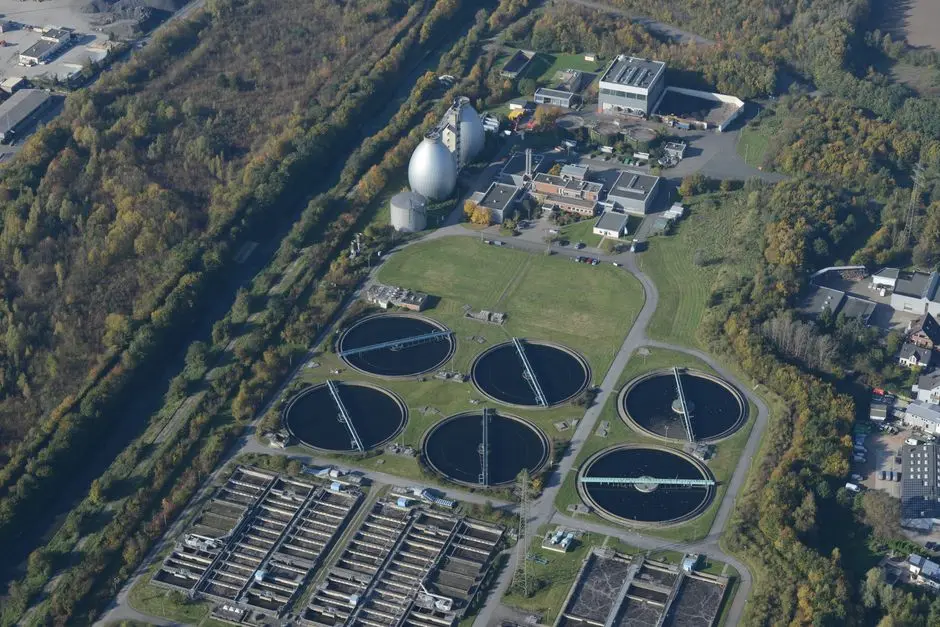
EPA defines the SBR operating sequence as Idle, Fill, React, Settle and Draw, with one or more reactors operating under timed controls (EPA, 1999). Influent passes through screening and grit removal before entering a reactor containing acclimated biomass. During Draw, a decanter removes treated supernatant; excess biomass is wasted during the cycle. The complete train should also account for downstream solids handling and the final effluent route.
The Fill strategy must follow the treatment objective. Static fill introduces influent without mixing or aeration and can favor organisms that store substrate internally, a mechanism relevant to biological phosphorus removal. Mixed fill mixes influent with biomass and can create anoxic conditions favorable to denitrification. Aerated fill starts aerobic reactions and can reduce the aeration time required during React (EPA, 1999).
Map permit requirements to biological phases. EPA states that an ammonia-nitrogen or TKN limit requires nitrification, while a total-nitrogen limit requires both nitrification and denitrification. Post-anoxic and pre-anoxic denitrification should both be evaluated. A pilot study published in 2020 found post-anoxic denitrification more efficient for higher-quality effluent than pre-anoxic operation (Suitability of SBR for Wastewater Treatment and Reuse, 2020), but that result does not establish a universal campus configuration.
Protect pumps, valves and biology with source-appropriate pretreatment. A rotary mechanical bar screen for campus wastewater pretreatment removes gross solids and fibrous material; it does not resolve chemical incompatibility. Where fats, oils and grease are present, evaluate the dissolved air flotation equipment against the measured waste stream rather than adding it by default.
Filtration and disinfection depend on the discharge or reuse path. EPA notes that equalization may be needed between the SBR and filtration because receiving the batch discharge directly can require an impractical filter surface area. The agency also describes one principal SBR sludge stream rather than the separate return-activated-sludge and primary-sludge systems of conventional plants. A plate-and-frame filter press may be evaluated for that solids-handling duty, but solids-production and dewatering data must come from the campus design basis.
Set the Design Basis Without Guessing Reactor Capacity
EPA’s design sequence begins with measured influent characteristics and a defined effluent requirement. The core dataset is design flow, maximum daily flow, BOD5, TSS, pH, alkalinity, wastewater temperature, TKN, ammonia-nitrogen and total phosphorus (EPA, 1999). Campus-specific hydraulic information should add minimum flow, the hourly diurnal curve, expected batch-discharge profile, occupancy periods, infiltration conditions, downstream equalization availability and the proposed number of basins.
| Design input | Information the RFQ should require | Buyer’s verification |
|---|---|---|
| Flow | Average, maximum daily and minimum hourly flow; diurnal profile; batch discharge profile | Identify measured records and assumed values |
| Organic and solids loading | BOD5 and TSS concentrations and loads | Check sampling periods, units and analytical methods |
| Nitrogen and phosphorus | TKN, ammonia-nitrogen and total phosphorus | Confirm compliance with the actual permit or reuse objective |
| Biological conditions | pH, alkalinity and wastewater temperature | Confirm whether values represent expected operating extremes |
| Reactor configuration | Basin count, dimensions, decant volume, hydraulic retention time, cycles per day and mixed-liquor suspended-solids target | Trace every dimension to the submitted flow, load and effluent calculation |
| Aeration and controls | Aeration demand, aeration concept, blower basis, decanter concept, alarms and control narrative | Reject generic equipment selections without site-specific calculations |
| Solids | Biomass inventory, wasting basis and sludge-production assumptions | Compare the assumed solids route with the university’s disposal capacity |
EPA’s illustrative municipal example lists a 4.0-hour treatment cycle and 6–14 hours hydraulic retention time, while also stating that actual cycles, detention times, basin count, decant volume, reactor size and aeration equipment are calculated after project-specific parameters are established (EPA, 1999). Those values are context, not campus sizing inputs.
Each bidder should show how the selected food-to-mass ratio, mixed-liquor suspended solids, hydraulic retention time, cycles per day, basin count, decant volume and aeration capacity satisfy the submitted influent loads and effluent objectives. Temperature and alkalinity must be checked because they affect nitrification performance; pilot-study results cannot substitute for campus data.
Require a treatability study for industrial or nonstandard discharges and for flows containing significant laboratory, trade or cleaning-chemical inputs, consistent with EPA’s guidance for industrial wastewater. For solids-handling scope, request the relevant plate-and-frame filter press for campus sludge dewatering and require the bidder to state which measured sludge properties support its selection.
Compare SBR With Competing Campus Treatment Options

EPA identifies equalization, a relatively small footprint, operating flexibility and the ability to modify cycles for nutrient removal as SBR advantages. The same fact sheet identifies greater control sophistication, maintenance of automated valves and controls, possible sludge discharge during Draw and possible aeration-device plugging as disadvantages (EPA, 1999). Selection should therefore test operating flexibility against staff capability, not focus only on tank footprint.
| Selection factor | SBR | MBR | Packaged A/O |
|---|---|---|---|
| Core treatment route | Timed fill-and-draw activated sludge with clarification in the reactor | Activated sludge combined with submerged PVDF membrane filtration | Anoxic/aerobic contact oxidation, sedimentation and disinfection in a buried package |
| Stated catalog capacity | No HydropureWater SBR product is listed | 10–2,000 cubic metres per day | 1–80 cubic metres per hour |
| Key procurement issue | Cycle controls, basin configuration, decanter, aeration and sludge route | Membrane maintenance, aeration and solids-handling changes | Verified campus flow, civil constraints, permit compliance and maintenance access |
| Source-qualified performance claim | EPA describes equalization, clarification and nutrient-control flexibility in one reactor | Catalog states filtration below 1 micrometer and a 60% smaller footprint than conventional systems | Catalog describes an integrated buried treatment train for smaller decentralized applications |
The MBR wastewater treatment alternative for campus reuse may be appropriate when membrane solids separation and reuse-oriented quality justify added membrane maintenance and aeration requirements. HydropureWater’s catalog states a 10–2,000 cubic-metre-per-day range, filtration below 1 micrometer and a 60% smaller footprint than conventional systems (HydropureWater, 2026).
The underground package sewage treatment plant for a campus combines anoxic/aerobic contact oxidation, sedimentation and disinfection in a buried package. Its stated range is 1–80 cubic metres per hour for smaller decentralized applications (HydropureWater, 2026). These catalog ranges still require reconciliation with measured flow, nutrient targets, reuse objectives, civil work and permits.
No supplied source establishes a universal campus SBR volume, aeration capacity, blower size, diffuser type or installed cost. The comparison should therefore be a scored design exercise, not a price-per-volume shortcut.
Write an RFQ and Performance-Test Protocol
A defensible RFQ must distinguish measured campus data from designer assumptions. Require each bidder to state its assumed flow, BOD5, TSS, temperature, pH, alkalinity, TKN, ammonia-nitrogen and total phosphorus basis, with measured values identified separately from assumptions. The submittal should include reactor configuration, cycle sequence, basin count, hydraulic retention time, mixed-liquor suspended-solids target, aeration concept, decanter concept, solids inventory and control narrative.
Define the acceptance basis against the actual permit or reuse specification. EPA lists flowrate, BOD5, TSS and Fecal Coliform as parameters typically permitted for municipal systems, while TN, TKN, ammonia-nitrogen or TP may also apply (EPA, 1999). Do not let a bidder substitute generic “SBR efficiency” claims for the applicable limits.
The commissioning protocol should cover startup, biomass acclimation, sludge wasting, decanting, aeration tuning, alarms and operation at the lowest and highest expected campus flows. Verification samples and operating periods should represent academic, residential and seasonal conditions rather than rely on one acceptance-day sample. Where disinfection is required, assess the application basis for a chlorine dioxide generator or UV sterilizer for wastewater disinfection; the selected method must meet the actual effluent objective.
Maintenance provisions should address the decanter, aeration devices, automated valves and controls because EPA identifies these as operational concerns. Also require alarm response, spare-parts strategy, operator training, sludge-disposal documentation and a clear process for handling low-flow or high-load events.
Frequently Asked Questions
How much does an SBR for university campus wastewater cost?
No supplied source establishes a generic SBR price, so a budget should not be based on an assumed reactor volume or a cost-per-cubic-metre rule. Request an itemized quotation tied to the measured flow and load basis, basin and decanter configuration, aeration, controls, pretreatment, solids handling, disinfection, civil work, commissioning and lifecycle service. Separately confirm that HydropureWater’s current catalog does not list an SBR product; its pretreatment, sludge-dewatering and disinfection equipment may be relevant supporting components rather than a complete SBR package.
How should a university size an SBR?
Size from measured campus flow and loads, the permit or reuse objective, temperature and alkalinity, diurnal and seasonal behavior, downstream equalization, site constraints and operator capability. EPA’s 5 MGD screening context, 4.0-hour municipal example and 6–14-hour hydraulic-retention example are not university sizing values. Require the designer to show the calculation chain from inputs to basin count, dimensions, cycles, decant capacity, aeration demand and sludge assumptions.
Which treatment option should be selected for a campus?
Choose SBR when variable flow, equalization value, footprint constraints and operating flexibility justify more complex timed controls and decanter maintenance. Consider MBR when membrane solids separation and reuse-oriented effluent justify the associated aeration and membrane-maintenance changes. Consider packaged A/O when the measured application fits its stated range and buried deployment, civil constraints and permits. The comparison should be tested against nutrient removal, polishing, reuse, operator capability and lifecycle procurement risk.
What should be checked before selecting an SBR supplier?
Require the supplier’s calculation package and performance protocol rather than accepting a reactor-volume or efficiency claim without its operating basis. Check that all influent assumptions are identified as measured or assumed, that cycle and equipment calculations trace to the submitted basis, and that commissioning tests cover representative campus conditions. Confirm maintenance support for decanters, aeration devices, automated valves and controls, including alarm response and training. Selection should be based on demonstrated compliance with the university’s actual permit or reuse specification.