
Why MBBR Fits Many University Campus Wastewater Systems
MBBR is a strong biological option for university campus wastewater when the main objectives are organic-load removal, nitrification and compact treatment. In a municipal feasibility study, MBBR with media achieved 96.84% COD removal and, at 24 hours, 99.20% ammonia-nitrogen and 92.98% phosphate removal. However, design must be based on campus flows, laundry, laboratory and other discharge characteristics; pretreatment, solids separation, disinfection and monitoring remain essential. Campus-specific MBBR-ZLD research also shows why synthetic and ancillary streams must be assessed during planning.
The moving bed biofilm reactor is an advanced attached-growth biological process. Plastic carrier elements retain a biofilm, distribute microorganisms through the reactor and allow greater biomass retention than conventional activated sludge. The carrier is a support and transport surface: biological oxidation, nitrification and denitrification occur through reactions in the surrounding water and within the attached biofilm, not because movement itself removes pollutants.
Aerobic MBBR uses aeration to provide oxygen and keep carriers moving. Anoxic or anaerobic stages use mechanical mixing because the treatment objective does not require aerobic conditions, although specific redox conditions must be maintained. This distinction matters when a university needs carbon removal, nitrification, denitrification or phosphorus removal rather than one generic biological reactor.
The best-performing evidence remains bounded. The University of the Aegean’s Guheshwori feasibility study used a 16 L pure-volume reactor with 5 L active working volume and municipal wastewater; its 96.84% COD result and 99.20% ammonia-nitrogen result at 24 hours were not measured at a full-scale university installation. A supplier should use the MBBR design and buying guide for domestic sewage and MBBR municipal sewage design and buying guide to frame preliminary design, not as substitutes for campus characterization.
Map the Campus Wastewater Before Selecting the Process
Campus wastewater characterization must separate compatible sanitary flows from streams that may inhibit biology or exceed the treatment objective. Request flow data for residence halls, teaching buildings, laboratories, dining operations, laundries, toilets, showers, kitchens, maintenance areas, stormwater ingress and other significant contributors. Sampling should cover ordinary weeks, examination periods, holidays, admissions events and seasonal changes rather than relying on an annual average.
Build separate datasets for sanitary sewage, laundry effluent, kitchen and grease streams, laboratory drains, cleaning chemicals, and industrial or trades wastewater. A single average COD value cannot represent surfactants, disinfectants, solvents, metals, nutrients or hydraulic peaks. Stormwater may also change both flow and solids loading, so its routing should be decided before equipment sizing.
| Campus stream | Information required before design | Engineering decision |
|---|---|---|
| Sanitary sewage | Flow, COD, BOD, nitrogen, phosphorus, pH, temperature and solids | Define the base biological load and seasonal peaks |
| Laundry effluent | Surfactants, carboxymethyl cellulose, calcium, phosphate, silicon species, bleach-related compounds and flow | Assess separately; consider equalization or dedicated pretreatment |
| Kitchen and grease | Fats, oils, grease, solids and cleaning chemicals | Exclude from direct MBBR entry until appropriate pretreatment is defined |
| Laboratory and cleaning drains | Disinfectants, solvents, metals, acids, bases and discharge restrictions | Apply stream-specific controls, segregation or dedicated treatment |
| Stormwater and trades flows | Peak flow, grit, debris, contamination and intended reuse route | Determine whether to divert, equalize or treat separately |
Laundry deserves particular attention because its constituents can alter foam formation, carrier wetting and biological treatment. The Tanjungpura University study of laundry FRESCO wastewater used Kaldnes K1 sticky media at 20% fill, with 15 days of seeding and processing at 6, 8 and 10 days; its best results occurred after 10 processing days. These are study-specific findings, not proof that every campus laundry stream can be treated at the same conditions.
The supplied research does not establish a universal treatment method for every campus discharge. Surfactants, disinfectants, solvents, heavy metals and other inhibitory constituents require stream-specific review and may require physical or chemical pretreatment. Screening equipment should be evaluated after this separation work; a rotary mechanical bar screen for pretreatment addresses gross solids and fibrous material but does not make incompatible wastewater biologically acceptable.
Academic occupancy should be part of the sampling plan. A 2026 study of an Indian institutional hybrid MBBR-ZLD system found a strong positive relationship between campus occupancy and monthly mean microplastic concentration in sewage sludge (Spearman ρ = 0.756, p = 0.049). The result supports seasonal monitoring of campus usage rather than assuming a constant wastewater composition.
Build a Pretreatment-to-Effluent Process Train
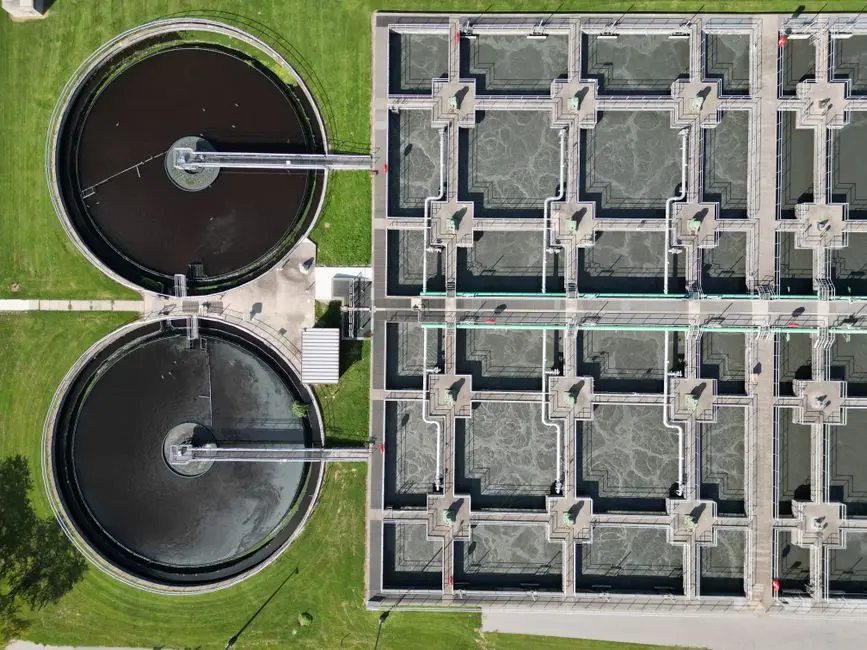
A complete MBBR train should be designed in this sequence: characterize and segregate incoming streams; remove screenings and gross solids; equalize flow and load; apply stream-specific pretreatment; treat biologically in MBBR stages; separate solids; disinfect; then monitor or polish for the intended discharge or reuse route.
Screening protects downstream pumps, valves, aeration distribution and biological media from rags, plastics, fibrous debris and suspended solids. A rotary mechanical bar screen for pretreatment can form the solids-exclusion stage, but its duty must reflect the measured solids and debris load rather than a generic flow figure.
Equalization should address both hydraulic surges and load fluctuations where seasonal occupancy, laundry or laboratory operations create peaks. Equalization does not correct chemical incompatibility, so surfactants, grease, metals, solvents and disinfectants still require appropriate upstream controls or exclusion.
Reactor configuration follows the treatment objectives. Aerobic MBBR uses aeration to support oxic reactions and carrier movement; anoxic or anaerobic MBBR requires mechanical mixing. An A/B configuration may assign carbon removal and nitrogen-removal functions to separate stages, while the appropriate balance must be established from the wastewater characterization and discharge requirements.
Solids separation must appear explicitly in the process flow. The 2022 review by Gupta and colleagues identifies an additional separation unit as an MBBR limitation when membrane separation is not incorporated, and also identifies high organic-flux limitations and possible stagnant zones. A integrated MBR wastewater treatment system may combine biological treatment and membrane solids separation, but it changes the aeration, solids-handling and membrane-maintenance requirements and should not be priced as an equivalent MBBR configuration.
Disinfection follows the required effluent path rather than the process name. A UV disinfection system can form part of the final treatment train, but neither MBBR nor the cited laboratory studies constitute a pathogen-control or reuse guarantee.
Set the MBBR Design Parameters From Real Data
Preliminary sizing for MBBR for university campus wastewater requires measured flows and loads, not a generic rule of thumb. The supplier should state average and peak flow, hydraulic retention time, organic and hydraulic loading rates, pH, temperature, biological reactor filling ratio, carrier geometry, reactor arrangement, aeration or mixing method, biomass startup strategy and downstream solids handling. For a conceptual design, use these inputs to compare reactor volumes and identify missing information before requesting a firm quotation.
| Design input | Why it controls performance | Evidence or required submission |
|---|---|---|
| Average and peak flow | Defines hydraulic demand and equalization | Campus-specific flow records and measured seasonal peaks |
| Organic and hydraulic loading | Tests whether the carrier area and reactor volume can meet treatment objectives | Characterization results plus supplier loading calculations |
| HRT and SRT | Controls contact time and biomass retention | Stated design values and startup/wasting strategy |
| pH and temperature | Affects biological reaction rates and available substrate | Site data, seasonal assumptions and limits of operation |
| Carrier type and filling fraction | Affects biofilm development, mixing, oxygen transfer and usable volume | Carrier specification, fill fraction and hydrodynamic arrangement |
| Mixing and aeration | Maintains carrier movement, oxygen transfer and intended redox conditions | Calculations, equipment selection and control narrative |
| Solids separation | Controls biomass loss and downstream solids loading | Clarifier or membrane duty, sludge inventory and wasting route |
The Gupta review of MBBR applications identifies hydraulic and organic loading rates, HRT, SRT, pH, temperature, carrier type, filling ratio, reactor configuration, microorganism type, biofilm thickness, adhered and suspended biomass, and aeration extent as interacting performance variables. A design that assigns the carrier volume but omits these conditions is incomplete.
The laundry study provides one bounded media example. With Kaldnes K1 sticky media at 20% fill, 15-day seeding and 10-day processing, the tested system reduced BOD from 441 to 39.67 mg/L, with 91% effectiveness, and COD from 910 to 56.3 mg/L, with 93.81% effectiveness. The feed, carrier arrangement and operating period were study-specific; these values cannot be transferred directly into a campus guarantee.
The Guheshwori study also demonstrates why a controlled comparison can be informative. At 72 hours, BOD removal was similar with and without media, at 89.68% and 88.97%, respectively, while media treatment achieved 96.84% COD removal. That reactor had a 16 L pure volume and 5 L active working volume and was tested from 0 to 72 hours. It supports MBBR feasibility but does not establish full-scale university reactor volume or loading.
Carrier selection must address more than polymer type. The 2019 review by di Biase and colleagues states that carrier shape, dimensions and physical properties influence biofilm development, mixing and oxygen transfer, and that filling fractions can be limited by hydrodynamics. Require bidders to identify the carrier, filling fraction, mixing or aeration arrangement, and expected operating sequence.
No supplied source establishes a universal campus reactor volume, media quantity, blower size, diffuser type or installed cost. Those outputs require project-specific design and testing. The MBBR design and buying guide for domestic sewage and MBBR municipal sewage design and buying guide provide useful design context, but the university’s own flow, load, temperature and treatment targets remain controlling.
Validate Performance With Campus-Relevant Evidence
Published performance supports feasibility only when its feed, reactor scale, operating time and test conditions remain visible. The evidence below should therefore support a performance protocol, not become an unqualified guarantee for a university installation.
| Evidence scope | Reported result | Procurement interpretation |
|---|---|---|
| Guheshwori municipal wastewater; 16 L pure-volume, 5 L active working volume | 96.84% COD removal with media | Laboratory feasibility evidence; not a campus-scale acceptance criterion |
| Same study | 99.20% ammonia-nitrogen and 92.98% phosphate removal at 24 hours with media | Requires confirmation under defined campus influent and operating conditions |
| Same study, 72 hours | BOD removal with and without media: 89.68% and 88.97% | Shows why the measured parameter and control condition must be stated |
| Tanjungpura laundry wastewater; Kaldnes K1 at 20% fill; 10 processing days | BOD 441 to 39.67 mg/L; COD 910 to 56.3 mg/L; phosphate 38.24 to 5.31 mg/L; surfactant 47.8 to 5.62 mg/L | Separate laundry-feed evidence, not mixed-campus performance |
For commercial laundry wastewater, the Gupta review summarizes BOD5 removal of 95–98% and COD removal of 89–94% under optimal conditions. This is a review-level range covering reported conditions, not a campus performance guarantee. It should not override measured campus loading or pretreatment requirements.
The 2026 institutional MBBR-ZLD study also adds a monitoring concern: microplastics were detected in all sludge samples at 120–1145 particles/kg dry weight. It supports examining campus-derived solids and documenting disposal routes, but it does not establish an MBBR effluent limit.
Commissioning should begin with agreed influent and effluent sampling, then verify carrier wetting, biofilm establishment, dissolved oxygen, mixing, solids inventory, wasting, alarms and controls. The acceptance protocol should define the analytical methods, influent basis, operating conditions, sampling frequency and acceptance period against the client’s discharge or reuse objectives. Performance percentages should not be invented before those objectives and test conditions are agreed.
Compare Equipment Packages Before Buying
Equipment proposals should be compared by complete treatment scope and verifiable acceptance criteria, not by headline removal rates. The moving bed biofilm reactor is only the biological core; a campus installation may also require screening, equalization, aeration or mixing, solids separation, disinfection, controls, sludge handling, instrumentation and civil works.
| Option | Primary role | Selection question | Main interface to verify |
|---|---|---|---|
| MBBR | Compact attached-growth biological treatment | Are biological objectives and loading suitable for carrier-based treatment? | Aeration or mixing, carrier suspension, solids separation and sludge wasting |
| MBR | Biological treatment with membrane solids separation | Does membrane solids retention and reduced footprint justify membrane operation? | Transmembrane pressure, cleaning, aeration, controls and replacement |
| Packaged biological treatment | Compact packaged route for deployment and automation | Does a packaged route meet campus flows, loading and treatment objectives? | Civil interface, offsite waste streams, controls, service and maintainability |
| UF polishing | Effluent polishing or reuse preparation | Is polishing required after biological treatment? | Feed quality, solids loading, cleaning and recovery |
An integrated MBR wastewater treatment system is not an MBBR system with a different label. It is an alternative or downstream solids-retention configuration. A packaged route may simplify deployment and controls, but the comparison of packaged sewage treatment configurations should be applied to the campus’s measured flows, effluent targets, civil constraints and maintenance capacity.
An ultrafiltration system for effluent polishing or reuse removes bacteria, colloids and suspended solids, but it does not replace biological organic-load treatment. It belongs downstream where the treatment objective requires additional separation.
Lifecycle questions belong in the supplier evaluation: carrier replacement strategy, biofilm startup support, aerator and diffuser maintenance, energy demand, controls, spare parts, operator training, remote monitoring and performance guarantees. Separate quoted line items should allow the university to identify omitted equipment, duplicated functions and assumptions about site labor or civil work.
Control Cost, Commissioning and Compliance Risk
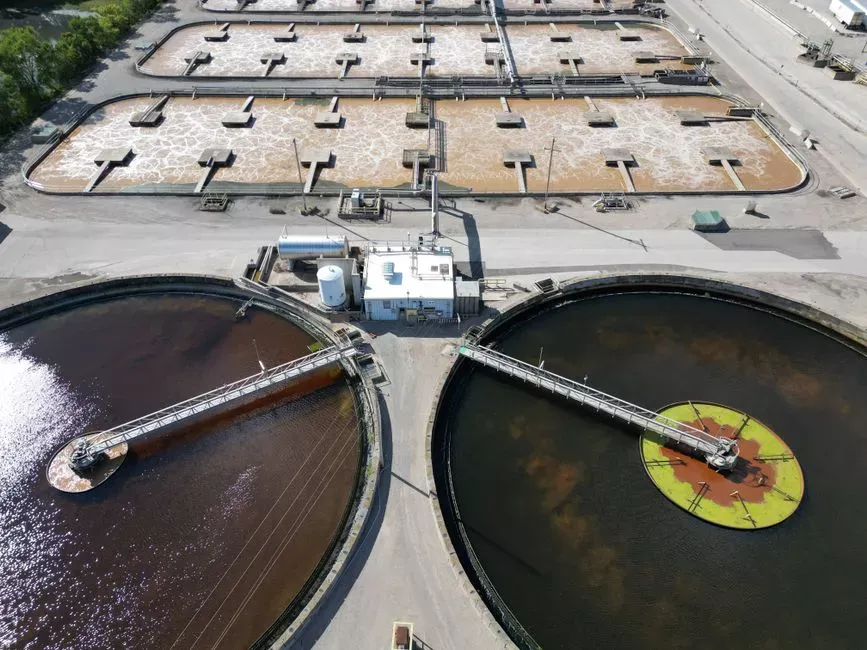
Capital and operating comparisons must cover the complete treatment train: reactor and carriers; aeration or mixing; pretreatment; equalization; solids separation; disinfection; sludge handling; controls; electrical works; building works; commissioning; and operating resources. A reactor-only price will not support an allocation decision, so require a scope schedule, exclusions, utility demand, replacement assumptions and lifecycle cost inputs.
The Gupta review identifies carrier-suspension energy, additional solids separation, less efficient performance at high organic flux, and possible stagnant zones as MBBR constraints. These are mandatory design-review questions: Where is energy consumed? How are solids removed? What loading creates stagnant zones? How will mixing be verified under every operating condition? Supplier clarification of water-treatment valves, filter media and related parts should therefore be tied to the proposed flow path and maintenance plan.
The di Biase review reports energy consumption on the order of 0.3–0.35 kWh/m³ in the wastewater-treatment process discussed in connection with energy-neutral operation. It is not a universal MBBR benchmark. Request project-specific blower and mixer calculations, measured duty assumptions, electrical losses and an energy-review method.
Commissioning documentation should cover influent and effluent sampling, carrier wetting and biofilm startup, dissolved-oxygen and mixing checks, solids inventory and wasting, alarm response, control narratives, operator training and performance testing. The protocol should also verify seasonal load response and the waste routes for screenings, excess solids and chemical pretreatment residues.
Ask each supplier to state every guarantee with its test method, influent basis, operating condition and acceptance period. Reject claims that omit source conditions or present laboratory results as universal field outcomes. Compliance risk is reduced when the permit, reuse objective, sampling plan and contractual acceptance test use the same terminology and measurement basis.
Frequently Asked Questions
How much does an MBBR system cost for a university campus?
The supplied research does not provide a universal campus price. Request a complete-scope quotation covering measured flow and loading, pretreatment, equalization, reactor and carriers, aeration or mixing, solids separation, disinfection, controls, civil and electrical works, commissioning, sludge handling, energy assumptions and exclusions. Compare bids using the same scope and lifecycle assumptions.
What size MBBR does a university campus need?
Size the reactor from measured average and peak flows, organic and hydraulic loading, treatment objectives, temperature, pH, carrier fill and downstream solids separation. The laboratory studies do not support a universal reactor volume. Ask each bidder for its design basis, loading calculations, redundancy proposal and sensitivity check against seasonal campus loads.
Should a campus buy MBBR, MBR or a packaged sewage plant?
Choose MBBR when compact attached-growth biological treatment is the priority, MBR when membrane solids separation and footprint reduction justify membrane operation, or a packaged biological route when compact deployment and automation dominate. Resolve the complete effluent objective first, including organics, nutrients, solids, disinfection and reuse, and then compare operating burden.
How do universities choose a reliable MBBR supplier?
Ask for carrier specifications, filling fraction, mixing or aeration calculations, solids-separation details, control narratives, comparable-flow references, commissioning protocol, project-specific energy estimates, local service capability and measurable acceptance criteria. The MBBR design and buying guide for domestic sewage can help structure those questions, while the MBBR municipal sewage design and buying guide supports comparison of biological design assumptions.