Can an SBR Treat Commercial Laundry Wastewater?
An SBR can treat commercial laundry wastewater, but it should normally follow characterization, equalization, and removal of grit, fibers, fats, oils, and excessive surfactants that could inhibit biology or foul equipment. The EPA defines the SBR as a fill-and-draw activated-sludge system; industrial projects normally require treatability studies. Commercial-laundry research identifies surfactants, detergents, fats, sand, soil dust, and excessive ammoniacal nitrogen as key concerns. Design the cycle around measured flow, COD, BOD, TSS, pH, alkalinity, temperature, nitrogen, and permit limits, then validate performance before full-scale installation.
The EPA’s 1999 sequencing batch reactor fact sheet describes equalization, biological treatment, and secondary clarification within one reactor, with two or more reactors sometimes operated in a predetermined sequence. This makes an SBR credible as the biological core for variable or intermittent laundry effluent. SBR design principles for industrial wastewater remain applicable, but laundry loading requires its own pretreatment and cycle strategy.
The scale of the problem depends on the laundry configuration. Research Square reported approximately 15 L of water used to wash 1 kg of clothing and approximately 400 m³ of daily wastewater in its cited commercial-laundry setting. Those values describe that setting; they are not universal design loads. A buyer still needs measured production volumes, extraction discharge, water consumption, and operating hours.
An SBR is not an automatic pretreatment system. Grit and textile fibers can obstruct transfer equipment or impair settling; FOG can interfere with biological treatment; and detergent chemistry may inhibit biomass or disrupt nitrification. Those constituents must be characterized and controlled before selecting reactor volume. EPA guidance also states that industrial wastewater normally requires treatability studies to establish the optimum operating sequence.
Characterize the Wastewater Before Selecting Equipment
Laundry wastewater characterization must cover a representative production day, because a single grab sample cannot establish whether an SBR cycle will tolerate wash-load changes. Sample wash cycles, extraction or spin discharge, downtime, peak loading, and any segregated dilute streams, while recording the laundry’s operating state at every interval.
Research Square identified surfactants, fats, detergents, sand, and soil dust in commercial laundry wastewater; it also discusses LAS and NPEOs as common detergent surfactants. The study characterized pH, turbidity, conductivity, suspended solids, total solids, COD, total nitrogen, total phosphorus, and NPEO. Its 100 L effluent sample was collected over 24 hours from the commercial laundry’s water outlet, illustrating the need to capture changing production conditions rather than rely on one instantaneous sample.
Use time-based composite sampling and repeat it under representative operating conditions. The following table separates the inputs that directly affect SBR design from those needed for downstream reuse evaluation.
| Parameter | Why the buyer needs it |
|---|---|
| Flow, maximum daily flow, peak hourly flow | Establishes batch volume, equalization, cycles per day, aeration, and decant capacity. |
| COD and BOD₅ | Defines organic loading, required reaction time, and food-to-mass considerations. |
| TSS and grit/fiber observations | Sets pretreatment requirements and protects settling and piping. |
| pH, alkalinity, and temperature | Controls chemical demand, nitrification potential, and biological reaction conditions. |
| TKN, ammonia nitrogen, and total nitrogen | Determines whether nitrification, denitrification, or additional nutrient treatment is needed. |
| Total phosphorus | Identifies whether biological or chemical phosphorus removal affects the design. |
| Oil and grease, surfactants, detergent indicators | Supports FOG and surfactant pretreatment decisions and biomass compatibility review. |
| Conductivity and dissolved solids | Important when evaluating reuse or RO; not substitutes for the biological design inputs above. |
EPA’s industrial design inputs include design flow, maximum daily flow, BOD₅, TSS, pH, alkalinity, temperature, TKN, ammonia nitrogen, and total phosphorus. These parameters influence the selected cycle and reactor configuration. For reuse, also request conductivity and dissolved-solids data, but keep those requirements separate from the SBR’s biological loading calculations.
A mechanical screening review should start with the wastewater’s actual debris. A rotary mechanical bar screen for textile wastewater pretreatment may be relevant if fibrous material is present, but the selected aperture and capacity must follow measured solids characteristics rather than equipment description alone.
Protect the SBR with Laundry-Specific Pretreatment
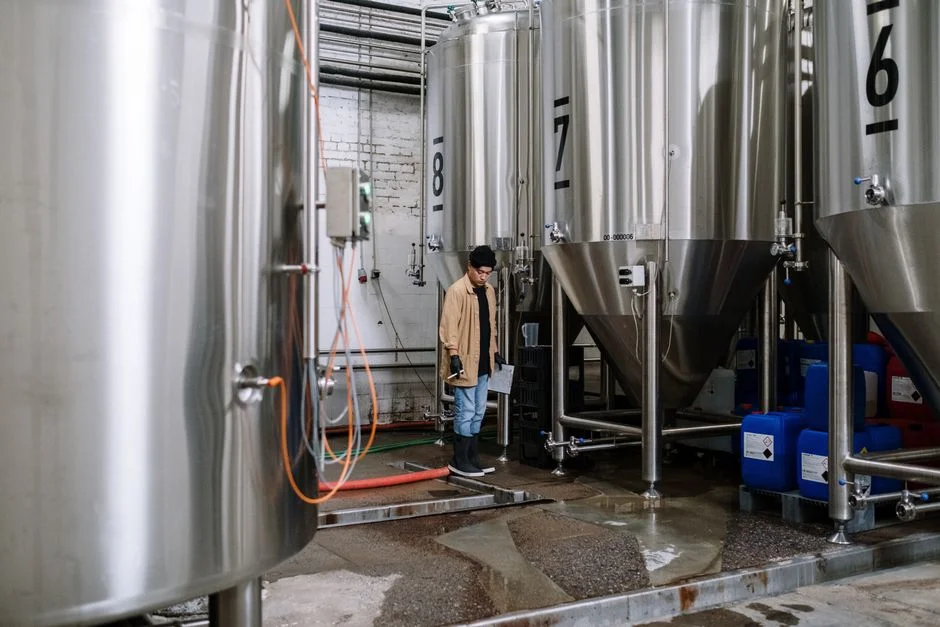
Each laundry contaminant needs a defined barrier before biological treatment, because the failure mode depends on whether the constituent obstructs equipment, interferes with settling, or changes microbial behavior. A single “pretreatment package” does not provide that protection.
| Laundry constituent | Risk to the SBR | Decision to establish |
|---|---|---|
| Grit, sand, soil dust | Abrasion, blocked transfer lines, damaged aeration devices, and poor sludge handling. | Confirm the need and location of mechanical screening and grit removal. |
| Textile fibers, rags, plastics | Entanglement around equipment, biomass shielding, and poor settling. | Specify a screen capable of retaining the observed debris without excessive head loss. |
| FOG and buoyant solids | Interference with biological uptake and settling; potential carryover during draw. | Use oil, grease, and free-oil measurements to determine whether DAF is justified. |
| Surfactants and detergents | Foaming, altered settling, toxicity, or disruption of biological reactions. | Quantify the surfactants in use and verify biomass compatibility through testing. |
| pH or alkalinity imbalance | Inhibition of biological activity and increased chemical demand. | Establish a site-specific pH correction and buffer requirement. |
| Excess ammoniacal nitrogen | Oxygen demand and potential permit noncompliance. | Confirm the required nitrogen treatment sequence from measured loads and permit limits. |
Use a DAF pretreatment for laundry wastewater where measured oil, grease, free oil, or buoyant solids justify flotation before biology. Its catalogued capacity range of 4–300 m³/h is a equipment-selection range, not a recommended laundry size; duty must be checked against actual flow and contaminant loading.
Textile fibers and other suspended debris should be addressed before the biological reactor. A rotary mechanical bar screen is one physical-barrier option to evaluate against the actual fiber and rag load. Its selection should reflect debris type, screen aperture, retained-solids handling, and peak flow rather than a generic solids-removal claim.
Use automatic chemical dosing only after testing establishes the required chemistry. Research Square reports optimized coagulation at pH 7 and a B-EPS-plus-alum combination of 0.6 g/L and 300 mg/L that removed 67.20% of COD from its sampled commercial laundry wastewater. That is site-specific evidence from a sampled wastewater, not an SBR performance claim or a universal operating recipe. Confirm automatic chemical dosing for laundry pretreatment through jar testing and biomass compatibility assessment.
Research Square warns that membrane clogging and excessive ammoniacal nitrogen can reduce the effectiveness of conventional treatment at industrial scale. It also states that coagulant dose depends on the wastewater properties. The engineering response is therefore a pretreatment and biological-design review, not an assumption that an SBR alone can handle detergents, FOG, fibers, and nutrients without controls.
Size and Sequence the SBR Around the Laundry Load
An SBR concept follows the EPA five-phase sequence—Idle, Fill, React, Settle, and Draw—because each phase has a distinct hydraulic and biological function. The durations cannot be selected from flow alone.
- Idle: Remove treated effluent, receive influent, and use variable idle time to equalize incoming flow and load.
- Fill: Add laundry effluent using static, mixed, or aerated conditions according to the biological strategy and incoming load.
- React: Provide mixed or aerated conditions for organic degradation, nitrification, denitrification, or other required reactions.
- Settle: Provide quiescent conditions so biomass separates from treated supernatant.
- Draw: Remove treated supernatant without drawing floating or settled sludge.
EPA’s industrial planning framework lists an F:M ratio of 0.15–0.6/day, a treatment cycle duration of 4.0–24 hours, and MLSS of 2,000–4,000 mg/L; hydraulic retention time varies by project. These are screening and concept-development values from the EPA’s 1999 fact sheet, not a commercial laundry guarantee. The selected cycle must reflect measured COD, BOD, flow variation, temperature, nutrient targets, and treatment objectives.
| Design input or output | Information required from the buyer |
|---|---|
| Average and peak hourly flow | Establishes equalization and hydraulic loading. |
| Batch volume and cycles per day | Links reactor working volume to the operating day. |
| Decant volume | Must be coordinated with basin geometry, draw depth, and settling conditions. |
| Biomass concentration | Supports the selected MLSS and F:M basis. |
| Reaction and settling times | Follow treatability results and the required reaction sequence. |
| Temperature | Influences biological rates and aeration conditions. |
| Downstream filtration flow | Determines whether equalization after the SBR is required. |
Multiple basins may be operated in a predetermined sequence, but the number of reactors, detention times, aeration equipment, decanters, piping, and controls must follow site-specific sizing. Industrial SBR sizing and cycle design provides the broader framework; the companion process-design guide illustrates how sequence selection must follow process conditions.
EPA states that SBRs are typically used at 5 MGD or less and are particularly suited to low or intermittent flow. That screening context does not establish commercial laundry suitability without actual flow and load data. The same EPA fact sheet advises consulting the manufacturer where TSS or BOD exceeds 400–500 mg/L to determine whether primary clarification or equalization should precede the SBR. Exceeding that screening note does not automatically disqualify an SBR.
Choose Between an SBR, MBR, and Pretreatment-Only Options
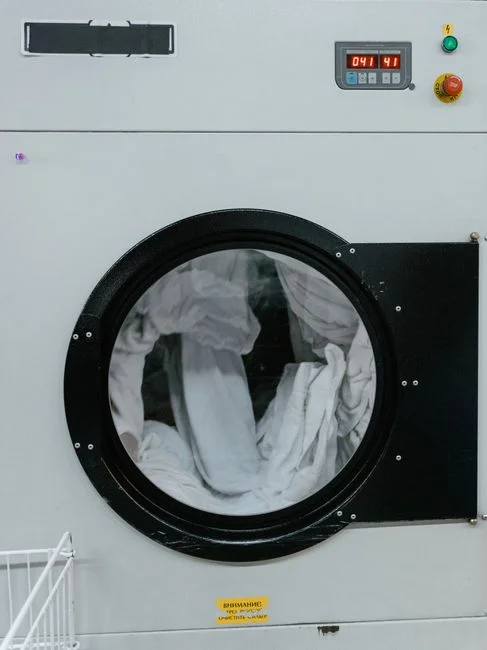
The correct process depends on whether the objective is biological treatment, solids separation, near-reuse quality, or treatment only for pretreatment-only disposal. An SBR is strongest when variable flow, equalization, biological treatment, and settling can be combined without requiring membrane separation.
| Option | Best-fit objective | Decision considerations |
|---|---|---|
| SBR | Variable or intermittent laundry flow requiring biological treatment and settling. | Requires pretreatment, disciplined cycle controls, sludge wasting, and protection against aeration plugging and decant carryover. |
| MBR | Near-reuse-quality effluent or a requirement for sub-micron membrane separation. | Combines biological treatment with membrane solids separation, but adds membrane maintenance and a higher control burden. |
| UF | Removal of bacteria, colloids, and suspended solids before another treatment step. | Does not replace biological degradation of soluble laundry organics. |
| Pretreatment-only | Discharge objective limited to contaminant removal without a biological treatment objective. | Screening, DAF, and coagulation may still require solids, sludge, and chemical-management systems. |
The catalogued MBR wastewater treatment system uses submerged PVDF membrane filtration and is offered from 10 to 2,000 m³/day. The catalogued UF filtration for treated laundry wastewater ranges from 2,000 to 40,000 L/h, accepts turbidity up to 300 ppm, and includes automatic backwash and air scour. These are equipment specifications, not recommended project capacities; wastewater characteristics and required quality determine selection.
For an industrial laundry reuse objective, the Materials study examined an MBBR followed by microfiltration and nanofiltration, with a second scheme adding UV/O3 after the MBBR. Its excerpt reports MBBR removal as “95–9” but does not provide the complete figure, so no value should be inferred from the truncated text. The defensible conclusion is that the study evaluated a combined biological, oxidation, and membrane train—not that it validated an SBR.
EPA identifies greater control sophistication and maintenance, aeration-device plugging, possible sludge loss during draw, and possible post-SBR equalization as SBR disadvantages. Compare installed cost and lifecycle cost across reactor and civil works, screening, DAF or coagulation, aeration, controls, decanter, filtration, sludge handling, energy, chemicals, and operator labor. Do not compare equipment prices without the same site-specific flow, duty, and disposal assumptions.
Plan Commissioning, Controls, and Sludge Handling
Commissioning should prove that the delivered SBR handles the actual laundry load, including its detergents, sanitizers, fibers, soil, temperature, and operating variability. Start with the EPA recommendation for an industrial treatability study, then translate the results into acceptance criteria and control logic.
Define acceptance monitoring around COD, BOD, TSS, and pH, adding nitrogen, phosphorus, surfactant, oil and grease, or reuse parameters where required. Permit-specific limits must come from the relevant authority; an SBR configuration does not automatically satisfy every discharge or reuse requirement.
- Verify process sequence: Test fill level, aeration and mixing commands, reaction timing, settling, decant start and stop, sludge wasting, and high-level interlocks.
- Verify solids protection: Inspect aeration devices for plugging and confirm that screening, grit removal, FOG control, and fiber management prevent debris transfer.
- Verify decant performance: Confirm that floating or settled sludge does not enter the discharge, as cautioned by EPA.
- Verify downstream compatibility: Confirm whether equalization is needed between the SBR and filtration, because EPA notes that filters otherwise may need to accept the full batch discharge.
- Verify solids handling: Test sludge collection, wasting, storage, and dewatering under the expected solids characteristics.
Where a compact post-SBR solids-separation stage is required, a lamella sedimentation tank is an option to evaluate. Its catalogued surface-loading rates are 20–40 m³/h, and its product description reports chemical-consumption reduction of up to 30%; both figures require project-specific verification rather than automatic acceptance.
For sludge dewatering, the catalogued plate and frame filter press ranges from 1 m² to 500 m² of filtration area and offers manual, hydraulic, or fully automatic PLC-controlled options. Actual selection depends on sludge volume, solids concentration, cake handling, operating hours, and disposal route.
The commissioning handover should include operator training, critical spares, chemical-storage safeguards, alarm-response procedures, aerator inspection, decanter checks, and a preventive maintenance schedule. If energy performance matters, the buyer can also review methods to reduce SBR aeration energy consumption, but savings claims should be tied to the selected blower, aeration system, and operating schedule.
Frequently Asked Questions
Can an SBR meet a commercial laundry reuse requirement?
Not by itself unless the required quality can be met by biological treatment and settling. The Materials study evaluated a combined MBBR, UV/O3, microfiltration, and nanofiltration train for industrial laundry reuse. A buyer should request the complete effluent dataset, membrane design basis, and applicable reuse criteria before selecting an SBR or adding MBR, UF, or another polishing step.
What information is required to size an SBR for commercial laundry wastewater?
Request average and peak flow, maximum daily flow, time-based COD and BOD₅ data, TSS, pH, alkalinity, temperature, TKN, ammonia nitrogen, total phosphorus, oil and grease, surfactant indicators, operating hours, and required effluent quality. The number of basins and batches follows those inputs plus the selected cycle; no defensible reactor size can be selected from flow alone.
How should a buyer select an SBR supplier?
Request industrial and laundry-relevant references, a proposed operating sequence based on the site’s wastewater data, decanter and controls details, aeration design, maintenance support, commissioning criteria, and a total-cost comparison covering civil works, pretreatment, aeration, controls, sludge handling, energy, chemicals, and labor. A generic package drawing without site data is not an adequate technical basis.
What should be included in an SBR project budget?
Include reactor and civil works, screening and grit removal, DAF or coagulation if justified, aeration and blowers, controls, decanters, downstream filtration, sludge handling, chemical storage, utilities, commissioning, operator training, maintenance, and disposal costs. Request treatability or pilot data before accepting a budget because chemical use, biological loading, cycle duration, and solids volume remain unverified until the actual laundry wastewater is tested.