Which Rules Control a Little Rock Sewer Discharge?
Mining and metals plants near Little Rock meet NLRW pretreatment limits through a three-layer compliance program: federal categorical requirements under 40 CFR Part 437, ADEE oversight, and enforceable local limits in the NLRW Sewer Use Ordinance. Facilities generally need a Significant Industrial User permit, a Baseline Monitoring Report and 90-day compliance sampling. The treatment train is sequential: equalization, pH conditioning, coagulation, hydroxide precipitation, clarification, sulfide polishing where required, and sludge dewatering. Final design must follow current permits, influent testing and jar or pilot evidence.
Federal categorical limits, Arkansas Department of Energy & Environment (ADEE) monitoring and toxicity requirements, and NLRW local limits are separate layers of the decision. A plant must satisfy the applicable requirements; it cannot size equipment from a generic federal value alone.
SIU status is triggered when a facility discharges more than 25,000 gpd of process wastewater or falls under a federal categorical standard under 40 CFR 403.3, according to the 2026 North Little Rock pretreatment framework. The regulated pollutant groups for this sector include TSS, pH, oil and grease, Pb, Cu, Zn, Ni, Cr, Cd, As, Hg, total cyanide, sulfides and ammonia.
| Control layer | Enforcement role | Equipment implication |
|---|---|---|
| 40 CFR Part 437 | Federal ore mining and dressing categorical pretreatment standards | Establishes the minimum categorical compliance basis |
| ADEE categorical program | State monitoring, toxicity and categorical oversight | Requires state-compliant monitoring and operating evidence |
| NLRW Sewer Use Ordinance and SIU permit | Enforceable local limits, monitoring schedule and surcharges | Often controls the residual required by the treatment train |
NLRW operates 733 miles of sewer lines, 72 pumping stations and four treatment plants, with 30.6 MGD average and 77 MGD peak treatment capacity, according to the 2026 commercial source cited above. Confirm the current NLRW ordinance, ADEE requirements and permit tables before freezing equipment size.
Turn the Permit into an Engineering Basis
The permit sequence converts a regulatory obligation into measurable design inputs, including the Baseline Monitoring Report, 90-day compliance sampling, and the local-limit tables. Monitoring is typically semi-annual for most parameters and more frequent for the most toxic or variable metals, according to the 2026 mining plant pretreatment compliance workflow.
- Map each permit limit to a sampling method, monitoring frequency and compliance record.
- Document source flows, peak flow, batch discharges, washdown and stormwater inputs, and equalization volume.
- Characterize TSS, particle-size distribution, settleability, oil and grease, pH, temperature and alkalinity.
- Test total and dissolved metals separately, and determine whether metals are dissolved, colloidal, precipitated or attached to oil.
These results establish the applicable limits and the actual fractions that equipment must remove. They do not, by themselves, establish an optimum chemical dose. That dose requires jar tests or pilot work on the characterized wastewater. This distinction prevents a supplier from using a generic metals-removal claim in place of site-specific evidence.
Build the Treatment Train in the Right Order
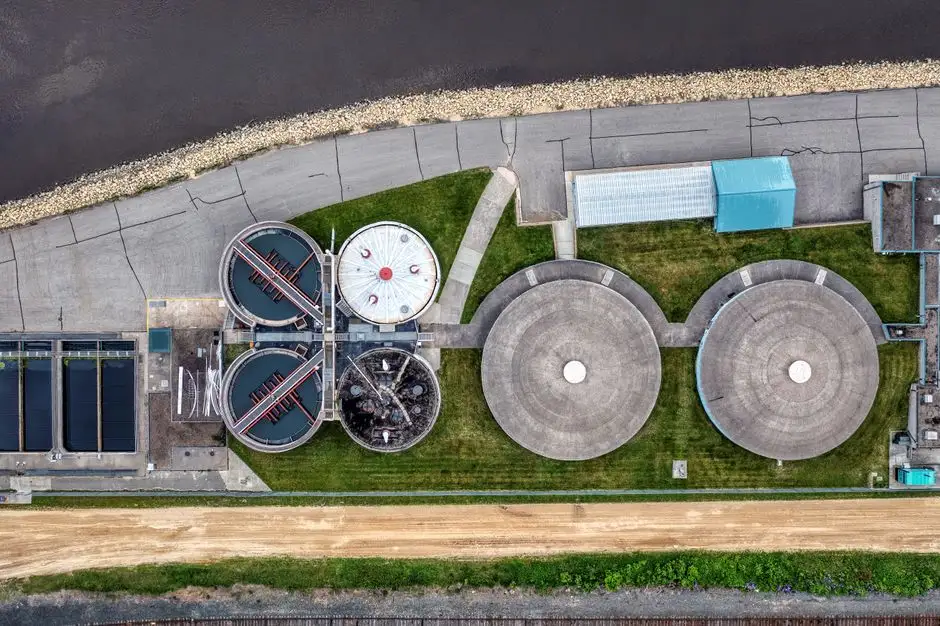
A defensible mining treatment train follows one sequence: equalize, condition pH, coagulate, precipitate, clarify, polish and dewater. Each stage controls a different failure mechanism, so deleting one stage shifts the compliance burden elsewhere rather than eliminating it.
| Stage | Engineering purpose | Acceptance evidence |
|---|---|---|
| Equalization | Buffers batch peaks and stabilizes downstream chemistry | Peak-flow and batch-discharge records; equalization volume |
| pH conditioning | Provides the reaction conditions needed for predictable metal precipitation | Dose-response data and pH control response |
| Coagulation and hydroxide precipitation | Removes the bulk metal load and creates separable solids | Total and dissolved residual metals, TSS and settleability |
| Clarification | Separates conditioned particulate or precipitated metals | Solids-removal performance at design and peak loads |
| Sulfide polishing | Controls the lowest achievable residuals for lead, cadmium and nickel | Permit-limit performance on characterized feed |
| Dewatering | Reduces sludge volume before downstream handling or disposal | Cycle performance, cake solids and handling condition |
Equalization prevents unstable downstream chemistry, while pH control is necessary for reliable precipitation stoichiometry. Hydroxide precipitation should provide bulk removal. The 2026 source states that hydroxide-only treatment can usually meet a 1.0 mg/L copper or zinc limit on a well-behaved feed, but may struggle to hold lead, cadmium and nickel consistently below 0.5 mg/L. Sulfide polishing is therefore the key control for those limits and should be evaluated during preliminary design, not added after startup.
Chromium requires a separate control sequence. Cr(VI) must first be reduced to Cr(III) with Fe(II) at pH approximately 2, then re-precipitated as Cr(OH)3 at pH 8–9. The source reports a typical 2026 local Cr(VI) limit of 0.3 mg/L; the current permit must be checked before this control sequence is specified.
Clarifier underflow at approximately 1–3% dry solids creates a disposal burden. The supplied 2026 source reports that a plate-and-frame sludge filter press can reduce sludge volume by 70–80% per cycle and produce stackable cake at 25–35% solids. If online monitoring is required, evaluate online monitoring for zinc wastewater compliance as a verification layer rather than as a substitute for treatment.
Choose DAF or Lamella Clarification from the Wastewater
The correct separator depends on the physical form and concentration of the solids. Dissolved metals remain dissolved unless chemistry changes their form; particulate-bound metals require conditioning and physical separation.
| Decision factor | DAF or conventional clarification is favored | Lamella or conventional clarification is favored |
|---|---|---|
| Wastewater fraction | Light floc following precipitation | Dense mineral fines and mill discharge |
| Operating objective | Fast startup with fine-light floc | Larger plan area and shorter-height clarification |
| Solids character | Conditioned solids suitable for flotation | Heavy or settleable solids |
| Chemical use | Evaluate against the supplier's dose-response evidence | Inclined-plate geometry can reduce chemical consumption by up to 30%, according to the 2026 source |
The 2026 DAF versus clarifier selection for Little Rock mining wastewater identifies tailings-thickener overflow and mill discharge dominated by dense mineral fines as lamella or conventional-clarification cases. Light floc after precipitation is the DAF case. That source also recommends a primary clarifier before DAF when TSS consistently exceeds 10,000 mg/L or the stream contains significant coarse, heavy grit.
Every bidder should receive the same flow, TSS, contaminant fractions, peak loads, seasonal variation, materials, controls, pretreatment and sludge-handling basis. Require jar-test records and comparable pilot data, but do not treat either as a guarantee for the site. Reject unqualified statements that one unit will “meet all limits”; tie each guarantee to the characterized wastewater, applicable permit limit, sampling method and design load.
For a standard mining application in 2026, the supplied source gives a DAF cost of $150,000–$450,000, depending on throughput and metallurgical construction. It also requires evidence that a proposed unit can handle suspended-solids concentrations exceeding 5,000 mg/L, because municipal DAF units may fail under high-solids mining loads.
Budget for Treatment and the Compliance Case
A complete treatment train must be budgeted as a system, not as a tank, pump and mixer package. The supplied 2026 estimate is $400,000–$1,200,000 for a full hydroxide train plus DAF serving 10–50 m³/hr. Adding sulfide polishing or Cr(VI) reduction carries a stated premium of $150,000–$300,000.
| Cost element | 2026 source value | Scope to confirm in the quotation |
|---|---|---|
| Hydroxide train plus DAF | $400,000–$1,200,000 at 10–50 m³/hr | Flow, peak load, materials, controls and installation |
| Sulfide polishing or Cr(VI) reduction | $150,000–$300,000 premium | Which metals require polishing and whether Cr(VI) reduction is needed |
| Standalone mining DAF | $150,000–$450,000 | Throughput and metallurgical construction |
| NaOH consumption | 0.5–2 kg per kg of metals removed | Actual dose from jar or pilot testing |
| Flocculant consumption | 1–10 mg/L | Product, dose, mixing and residual solids impact |
| Sludge disposal | $80–$200 per wet ton | Dewatered or undried basis, transport and destination |
The 2026 source states that ADEE and NLRW penalties can reach $25,000 per day per violation, with daily surcharges for chronic exceedances and possible permit revocation. That exposure belongs in the investment comparison, but it does not justify selecting equipment without demonstrated site performance.
Require every quotation to include pretreatment, pH control, chemicals, recycle equipment, controls, utilities, installation, maintenance and downstream sludge handling. A 2026 equipment and supplier decision framework provides the procurement structure; its wider mining wastewater DAF system price is not comparable until those items and the characterized design duty are attached.
Use a Site-Specific Acceptance Test
Acceptance should test the submitted treatment train against the site's actual wastewater, not against a supplier's generic removal table. Require jar-test records or comparable pilot evidence showing dose-versus-response performance for the characterized Little Rock wastewater.
Compare total and dissolved metals, pH, TSS, settleability and peak-load behavior. Pilot data or comparable-project references support equipment selection but do not guarantee performance at the site, according to the 2026 Little Rock DAF versus clarifier source.
Make final acceptance conditional on the applicable permit limit, sampling method, design flow, peak solids load and the submitted treatment-train scope. Document chemical consumption, sludge generation and failure responses as acceptance outputs. This creates a defensible record for the owner, regulator and commissioning team without implying that a generic performance guarantee is sufficient.
Frequently Asked Questions
What should a 2026 pretreatment budget include for a mining DAF system?
Request a complete installed scope, not a standalone DAF price. The supplied 2026 estimate is $150,000–$450,000 for a mining DAF and $400,000–$1,200,000 for a full hydroxide train plus DAF at 10–50 m³/hr. Require separate pricing for pretreatment, pH control, chemicals, recycle equipment, controls, utilities, installation, maintenance and downstream sludge handling.
How should DAF or lamella equipment be sized for Little Rock mining wastewater?
Size from characterized source flows, peak and batch discharges, TSS, particle-size distribution, metal fractions and peak solids loads, not from average flow alone. Require each bidder to use the same wastewater and design basis. The site-specific jar or pilot record must establish the chemical dose and separation performance.