Why Hays-area mining and metals plants face a two-tier limit in 2026
Mining and metals plants near Hays, Kansas meet 2026 pretreatment limits by treating to the local POTW sewer-use ordinance — not just 40 CFR Part 437 (Ore Mining) and 40 CFR Part 433 (Metal Finishing) — using a train of equalization, pH correction to 6.5–9.0, hydroxide or sulfide precipitation, DAF or lamella clarification, multimedia filtration, and plate-and-frame sludge dewatering, with PFAS monitoring added under the 2024 MSGP and a tighter lead ceiling under the LCRR. The Clean Water Act §307(b) framework at 40 CFR Part 403 delegates categorical-standard enforcement to the local POTW through its sewer-use ordinance, so the Hays municipal water reuse facility's local limits — not the federal numbers alone — are what an Ellis County operation has to hit before its effluent reaches the manhole (per EPA, 2024).
Sand-and-gravel, salt extraction, and oilfield-supply operations around Ellis County typically fall under 40 CFR Part 437, subcategories 437.40–437.47 (Ore Mining and Dressing). A plant with plating, pickling, or anodizing lines also has to meet 40 CFR Part 433 (Metal Finishing), where copper is capped at 3.38 mg/L daily-max / 2.07 mg/L monthly-average and total chromium at 2.77 mg/L daily-max / 1.71 mg/L monthly-average (per 40 CFR 433.15). Most Hays-area operations also carry an NPDES permit for stormwater and separate surface-water discharges, but the sewer path is the binding constraint because the local limits are tighter and the sampling cadence is more frequent.
| Parameter | 40 CFR Part 437 Daily Max (mg/L) | 40 CFR Part 437 Monthly Avg (mg/L) | Typical Local Hays POTW Limit (mg/L) |
|---|---|---|---|
| pH | 6.0–9.0 (instantaneous) | — | 6.5–9.0 (instantaneous) |
| TSS | 50 | 25 | 20–30 |
| Zinc | 1.0 | 0.5 | 0.3–1.0 monthly avg |
| Copper | 1.0 | 0.5 | 0.3–0.5 monthly avg |
| Lead | 0.5 | 0.25 | 0.05–0.1 (LCRR-driven re-derivation) |
| Total Recoverable Metals | 1.0 | 0.5 | Site-specific per local limit derivation |
| Ammonia (as N) | — | — | 10–20 (co-tenant food processing) |
The gap between the federal 1.0 mg/L daily-max zinc number and a Hays local limit in the 0.3–0.5 mg/L range is the single most common reason a plant oversizes hydroxide precipitation and undersizes the polishing filter (source: HydropureWater field data, 2026). For a parallel look at how this same two-tier structure plays out in a different regional POTW context, see the Grand Bay mining pretreatment compliance guide.
Three 2024–2026 EPA trends reshaping compliance for Hays-area operations
The 2024–2026 regulatory trifecta is what makes the next permit cycle the binding risk for Ellis County operations, not the current one. First, the Lead and Copper Rule Revisions (LCRR) are pushing lead action levels toward 10 µg/L and forcing POTWs to re-derive local lead limits at much lower numbers; any plant with a lead-bearing stream now has to budget for polishing capacity it did not need in 2023 (per EPA LCRR, finalized 2024-10). Second, EPA's 2024 Multi-Sector General Permit (finalized 2024-09) added PFAS monitoring for PFOS, PFOA, PFHxS, and PFNA across sectors that include metal mining, and local control authorities are adopting the same analytical suite even for sewer-discharging facilities. Third, the 2025 ore-mining BAT revisions (2025-03) tightened the cost-benefit envelope on total recoverable metals, so marginal treatment upgrades that were BAT-optional in 2023 will be BAT-required in the next permit cycle.
The practical implication for Hays is to size the equalization basin and chemical dosing system with 20–30% turndown headroom so the next local-limits re-derivation can be absorbed without civil retrofit. CWA §309 civil penalties can reach $25,000 per day per violation, and a single quarterly excursion on zinc or lead in 2027 will cost more than the entire hydroxide-versus-sulfide decision made in 2026. For an adjacent regulatory framing in a different state, the Idaho City mining pretreatment compliance guide walks through a comparable DEQ re-derivation cycle.
The Hays influent profile: what the chemistry actually looks like

Raw acid mine drainage and spent process solutions from sand-and-gravel washing, salt extraction, and oilfield-supply manufacturing around Ellis County typically arrive at the head of the plant at pH 2–4. Total suspended solids run from the hundreds into the several-thousand mg/L range during milling, classification, and dump-leach underflow events, which is the chemistry a clarifier sized for the average flow will fail on within the first spike. Dissolved heavy metals (Pb, Cu, Zn, Cd, Ni) plus elevated sulfate and TDS characterize leach-pad runoff and brine streams, and the salt-extraction operations around the Smoky Hill River corridor push TDS high enough that reagent selection swings toward NaOH over lime.
The Hays industrial POTW also serves food-processing and oilfield-supply co-tenants, so a chlorine dioxide residual or UV disinfection step is often required by the local sewer-use ordinance even when the mining stream itself carries no pathogen load (per HydropureWater field data, 2026). Ammonia is the parameter that catches Hays-area engineers off guard: a co-tenant food-processing discharge can push ammonia local limits to 10–20 mg/L, and the mining pretreatment train has to keep its side of the mass balance clean enough not to push the POTW over its own NPDES ceiling at the receiving outfall.
Equalization and pH correction: the foundation that decides everything downstream
The equalization basin and pH correction skid are the two pieces of equipment most often undersized on Hays-area pretreatment projects, and they are the most expensive to retrofit after the slab is poured. The defensible sizing logic is hydraulic, not arbitrary: 8–24 hours of average daily flow damps batch discharges from shift changes, dump-leach cycles, and mill clean-outs, and a 4-hour basin will pass every upstream spike straight to the clarifier (per HydropureWater field data, 2026). For a 50 m³/h operation that means a 400–1,200 m³ basin; for 200 m³/h, 1,600–4,800 m³ — the civil cost is real and the math should be run on the highest-spike day in the last 12 months, not the median day.
pH correction uses either lime (Ca(OH)₂) or caustic soda (NaOH). Lime is cheaper per ton but generates 3–5× more sludge, which then has to be dewatered and disposed of, so the reagent-cost argument collapses on high-TDS Hays mining streams where NaOH at 25–50% concentration is the workhorse despite the higher unit cost. Target pH is 6.5–9.0 to satisfy virtually every POTW's instantaneous range, and the dosing should be staged across two reactors when influent swings more than 2 pH units. The control band is ±0.2 pH: each 1 pH unit away from the metals-precipitation optimum can cut removal efficiency by an order of magnitude, which is the difference between zinc at <1 mg/L and zinc at 10+ mg/L with no other change in the chemistry. A PLC-controlled chemical dosing skid sized for the peak feed plus 20–30% turndown keeps pH inside that band. For a deeper mechanics walkthrough of pH and coagulant loops, the chemical dosing system engineering guide covers the control logic in detail.
Precipitation chemistry: hydroxide first, sulfide only when the local limit forces it
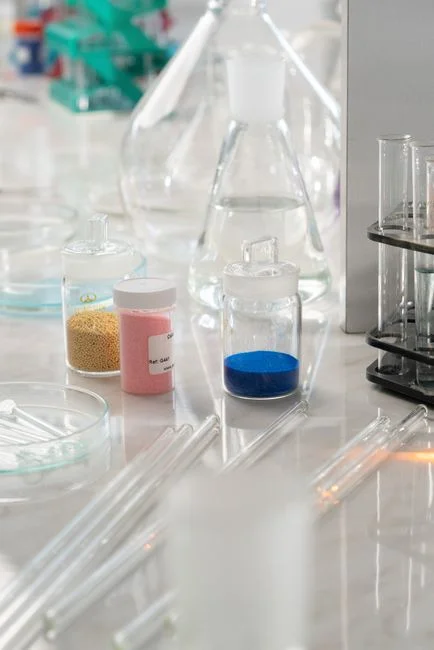
Hydroxide precipitation with NaOH or lime is the default for most Hays-area operations because the reagent is cheap, the chemistry is well understood, and total metals removal in operating mining/metals installations routinely runs 85–95% (per Fluence, 2024-11). The parameter-specific pH windows have to be locked in with jar testing — vendor literature is not acceptable — because copper, zinc, lead, and cadmium each have a different optimum. Copper precipitates cleanly between pH 7 and 9, zinc between 8 and 9, cadmium between 10 and 11, and lead between 9 and 10, which is why a single pH setpoint is a compromise rather than an answer.
Sulfide precipitation (NaHS, FeS, Na₂S) is reserved for streams where residual metal must drop below 0.1 mg/L: sulfide residuals for Cu, Zn, Cd, and Ni are 0.01–0.05 mg/L, an order of magnitude lower than hydroxide, but reagent cost runs 2–4× higher and the system requires sealed reactors with H₂S scrubbing. Most Hays flows justify hydroxide with a sulfide polishing step on a slipstream — not a full sulfide system. The trigger is straightforward: if the local POTW's zinc monthly average is 0.3 mg/L or below, hydroxide alone will not reliably hit it, and a sulfide polishing reactor on 10–20% of the clarifier overflow is the cost-effective compromise.
Solids separation: DAF versus lamella, and when each wins in Ellis County
This is the equipment decision a Hays engineer actually faces in a real project, and neither unit is universally better. The DAF system operates at 5–25 m/h hydraulic loading across 4–300 m³/h and 13 model sizes, floats oil-coated and colloidal particles with microbubbles, and achieves 90–98% TSS removal plus 85–95% oil/grease removal in mining/metal-finishing service. A lamella clarifier operates at 20–40 m/h surface loading in roughly one-third the footprint of a conventional clarifier, produces a denser sludge blanket that reduces downstream chemical consumption, and handles heavy metal-hydroxide flocs very well — but it does not remove free oil or colloidal fines as effectively as DAF.
| Decision Factor | DAF | Lamella Clarifier |
|---|---|---|
| Best influent | Oil, grease, colloidal fines | Metal-hydroxide sludge, high flow |
| Flow band where it wins | <200 m³/h with oil/colloidal load | >100 m³/h, footprint-constrained |
| Hydraulic loading | 5–25 m/h | 20–40 m/h |
| TSS removal | 90–98% | 80–95% |
| Oil/grease removal | 85–95% | Limited |
| Sludge density | Lower (floated) | Higher (settled) |
| Footprint | Larger per m³/h | ~1/3 of conventional clarifier |
The heuristic for Ellis County: DAF below 200 m³/h when oil or colloidal fines are present, lamella above 100 m³/h for metal-hydroxide sludge at high flow, and both can run in parallel for plants with mixed streams. A polymer coagulant aid dosed at 0.5–3 mg/L floccs the metal hydroxide particles fast enough for the clarifier to operate at 20–40 m/h hydraulic loading without carryover. For the full hydraulic and bubble-size engineering, the DAF oil water separator specifications guide walks through the selection math.
Polishing, disinfection, and sludge dewatering: the last 10% that decides the penalty bill

A multimedia filter with anthracite over sand over garnet, operated at 1–2 m/h filtration rate with backwash triggered on differential pressure, strips residual TSS to <10 mg/L and provides the buffer that turns a "usually compliant" clarifier into a "documentably compliant" plant. On the days the polymer mis-doses or a hydraulic surge pushes the clarifier over its limit, the multimedia filter is what keeps the discharge inside the local limit and the plant out of the penalty column.
Disinfection is the piece the local sewer-use ordinance usually dictates: a chlorine dioxide generator dosed at 1–5 mg/L provides the residual the Hays-area POTW asks for when food-processing or oilfield-supply co-tenants are in the collection system, with no regulated trihalomethane formation that chlorine would produce. A plate and frame filter press dewateres the clarifier and DAF sludge to 25–35% dry solids, producing a stackable cake for Subtitle-D landfill disposal or smelter return if the metals are recoverable. Filtrate returns to the head of the plant — it does not go to the sewer untreated.
2026 equipment selection matrix for Hays-area flows
Flow band determines delivery format, and the table below is the document an Ellis County engineer can take into a vendor meeting and argue equipment scope against. The bands are sized for the flows actually seen in sand-and-gravel, salt extraction, and oilfield-supply operations within ~50 miles of Hays.
| Flow Band | EQ Basin | pH Train | Solids Separation | Polish & Dewater | Delivery Format |
|---|---|---|---|---|---|
| <10 m³/h | Integrated skid tank | Single reactor, NaOH | DAF (small) | Cartridge filter, bag press | Integrated purification skid |
| 10–100 m³/h | 8–24 hr civil basin | Two-reactor train | Single DAF or lamella | Multimedia filter + plate press | Modular skids, site-assembled |
| 100–300 m³/h | 16–24 hr civil basin | Two-reactor train with sulfide polishing slipstream | Lamella primary; DAF trains in parallel if oil present | Dual multimedia + plate press + ClO₂ | Civil + multi-skid, PLC-integrated |
| Design rule (all bands) | Peak 2-hr flow + 20–30% turndown | ±0.2 pH control | 20–40 m/h hydraulic loading | TSS to <10 mg/L, cake 25–35% DS | Treat to local ordinance, not just federal categorical |
Across all bands the design rules are the same: peak 2-hour flow with 20–30% turndown capacity, treat to the local POTW's sewer-use ordinance — not just the federal categorical — and size civil infrastructure for the 2027 re-derivation that the LCRR and 2025 ore-mining BAT revisions are already in motion to deliver.
Frequently Asked Questions
Does a Hays-area mining or metals plant need an NPDES permit or pretreatment authorization to discharge to the municipal sewer?
Sewer discharge is regulated under CWA §307(b) and 40 CFR Part 403 as a categorical industrial user, with 40 CFR Part 437 (Ore Mining and Dressing) or 40 CFR Part 433 (Metal Finishing) numerical limits where applicable. NPDES permits govern direct surface-water discharge under CWA §402, and most plants carry both authorizations because they have separate stormwater outfalls.
How much tighter is the Hays local POTW limit compared to the 40 CFR Part 437 categorical standard?
Local sewer-use ordinances in 2026 typically set zinc at 0.3–1.0 mg/L monthly average and copper at 0.3–0.5 mg/L monthly average, which is tighter than the 40 CFR Part 437 categorical 1.0 mg/L daily max / 0.5 mg/L monthly average (per HydropureWater field data, 2026). Always confirm against the specific Hays POTW ordinance before sizing equipment.
When is sulfide precipitation justified over hydroxide for a Hays-area mining discharge?
Sulfide precipitation (NaHS, FeS) achieves residual metals of 0.01–0.05 mg/L versus 0.5–2.0 mg/L for hydroxide, which matters when the local limit is below 0.3 mg/L. Reagent cost runs 2–4× higher and the system requires sealed reactors with H₂S scrubbing, so for most Hays flows hydroxide precipitation with sulfide polishing on a slipstream is the cost-effective compromise.
What size DAF unit covers a typical 50 m³/h Hays mining pretreatment train?
Standard DAF units cover 4–300 m³/h across 13 models, with hydraulic loading of 5–25 m/h. A 50 m³/h stream fits the mid-range models comfortably; below 10 m³/h a packaged skid is more economical, and above 100 m³/h multiple DAF trains in parallel or a lamella clarifier typically displaces DAF on cost-per-m³ unless oil is present.