What Makes Ceramic Tile Wastewater Different?
An SBR can treat ceramic tile wastewater when the discharge objective is controlled sewer or surface-water discharge and the influent is stabilized upstream. Ceramic plants must first segregate polishing, glaze, scrubber and washing streams; use DAF to remove suspended solids, oil and glaze fragments; and provide 12–24 hours of equalization for batch loads. A typical SBR cycle is 4–8 hours, but cycle duration must be verified against hydraulic loading, settleability and permit criteria. MBR is generally preferable when near-reuse quality, a footprint constraint or consistently low turbidity is required.
Ceramic tile manufacturing produces wastewater streams with different contaminant mechanisms. Keep glaze-preparation slip, spray-dryer scrubber water, polishing and lapping effluent, and greenware washing water separate during characterization. A blended plant average can conceal the batch flow, abrasive solids and chemical load that will determine whether the reactor, decanter and sludge-handling system can operate reliably.
HydropureWater’s 2026 ceramic guide reports a representative blended influent of COD 400–2,500 mg/L, TSS 1,500–6,000 mg/L, turbidity 500–3,000 NTU, pH 7–11 and temperature 25–45°C. The same guide identifies polishing and lapping effluent as the most severe stream: abrasive SiC and Al₂O₃ slurries reach TSS of 2,000–8,000 mg/L and turbidity above 3,000 NTU. These figures are reference conditions, not a substitute for plant sampling.
Those streams create specific failure mechanisms. Abrasive particles can score rake and scraper mechanisms; high suspended solids can impair biological floc formation and settling; and release agents or cutting oils can produce persistent foaming, as reported in HydropureWater’s 2026 MBR alternatives for ceramic tile wastewater. The SBR response is therefore an upstream solids-control problem as much as a biological treatment problem.
| Stream or parameter | Reference evidence | Design implication |
|---|---|---|
| Representative blended influent | COD 400–2,500 mg/L; TSS 1,500–6,000 mg/L; turbidity 500–3,000 NTU; pH 7–11; temperature 25–45°C — HydropureWater, 2026 | Confirm all values against site data, production conditions and permit criteria. |
| Polishing and lapping effluent | TSS 2,000–8,000 mg/L; turbidity above 3,000 NTU — HydropureWater, 2026 | Prioritize solids, oil and foam control before biological treatment. |
| Required characterization | Stream flow timing, COD, TSS, turbidity, pH, temperature, oil and grease, fluoride and boron | Conduct representative sampling by stream and production condition. |
The Recommended SBR Treatment Train
A ceramic-specific SBR train should separate contaminants by physical behavior before combining them in a biological reactor:
- Stream segregation and screening: isolate glaze, scrubber, polishing and washing flows; remove coarse fragments before pumping and treatment.
- DAF pretreatment: remove suspended solids, oil and grease, and floating glaze fragments.
- Equalization: damp production batches and provide controlled withdrawal to the SBR.
- SBR biological treatment: apply fill, react, settle, decant and idle phases.
- Polishing, filtration and disinfection: meet the selected discharge or reuse route.
- Sludge handling: separate, thicken and dewater the waste sludge before disposal.
HydropureWater’s 2026 ceramic guide reports DAF removal of 70–85% of TSS, FOG and floating glaze fragments before membranes. For an SBR, that evidence supports ceramic wastewater DAF pretreatment, but the project should verify performance with its own solids and oil loads. DAF is not permission to omit solids controls: the biological stage still requires feed with characteristics compatible with floc formation, aeration and settling.
Provide 12–24 hours of equalization hydraulic retention time as the HydropureWater 2026 reference for batch industrial wastewater. Equalization should be screened, baffled, serviced and mixed, with level instrumentation and controlled withdrawal. It must also prevent settled grit and glaze solids from entering the reactor. Without drawdown controls, the SBR may receive the production peak after equalization rather than a stable feed.
The rotary mechanical bar screen protects downstream equipment, but it does not remove dissolved glaze components, fine abrasive particles or emulsified oil. DAF performance should therefore be defined against the combined polishing and washing loads that can reach the unit.
Evaluate filtration as part of the complete train rather than as an automatic SBR component. The Malibu SBR/MBR analysis notes that filters requiring continuous flow were not technically feasible for that batch SBR application because SBR discharge occurs in batches. If a polishing route needs continuous flow, evaluate storage or another compatible arrangement. Disinfection must follow solids reduction: the Malibu analysis states that turbidity above 5 NTU may interfere with effective disinfection because solids shield microorganisms.
How to Size and Operate the SBR
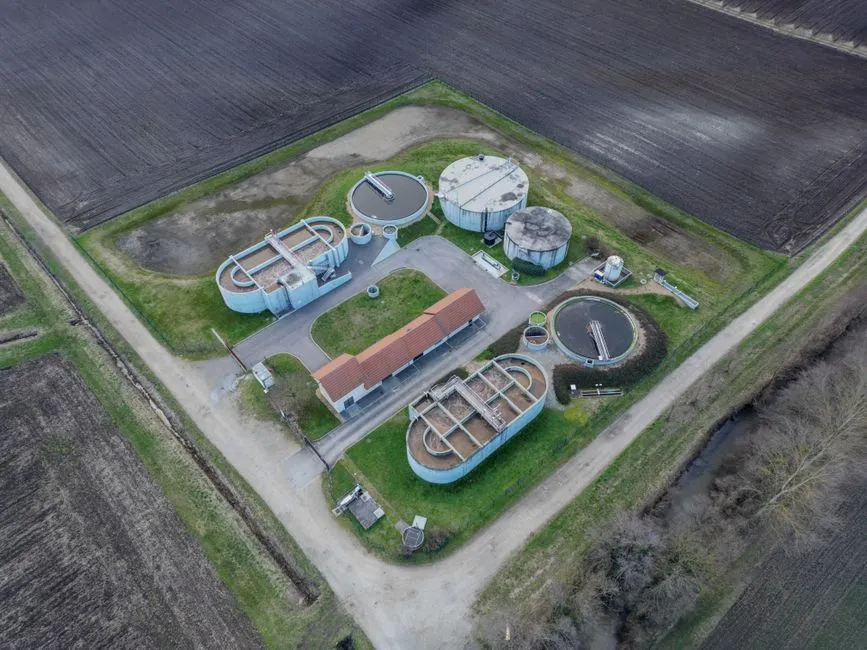
Working reactor volume must be calculated from measured average and peak flows, hydraulic retention time and the selected equalization-drawdown basis; daily wastewater volume alone is not a sufficient sizing parameter. The supplier should show how much feed can enter during each fill phase, what unused capacity remains, and how production downtime affects the cycle.
HydropureWater’s 2026 SBR cycle reference gives an initial control sequence: fill for 1–2 hours, react for 2–4 hours, settle for 1–1.5 hours, decant for 0.5–1 hour and idle for 0.5–1 hour. This reference is site-specific. The supplier must check cycle timing against hydraulic loading, selected mixed-liquor suspended solids, food-to-microorganism loading, solids retention time and actual settling behavior before offering a performance guarantee.
Divide the biological react phase into anoxic mixing where nitrogen removal is required and aerobic reaction where COD oxidation and nitrification are required. Require defined dissolved-oxygen setpoints, aeration-versus-mixer interlocks, blower control and the operating logic for each phase. A fixed timer without a controlled loading and settleability basis will not establish reliable effluent quality.
| Design item | Supplier must state | Buyer check |
|---|---|---|
| Reactor and cycle | Average flow, peak flow, working volume, HRT, selected MLSS, F/M loading, SRT and phase durations | Confirm that all values describe the same influent, equalization and discharge basis. |
| Settling and decanting | Expected settle-solids carryover, decant rate, sludge wasting strategy, sludge volume and operating basis | Do not accept an effluent guarantee without an explicit solids-carryover criterion. |
| Controls and safeguards | Level-based filling, reaction, settling, controlled decanting, idling, high-high shutdown and alarm functions | Review power-loss, blower-failure, mixer-failure, blocked-decant and overflow responses. |
| Sludge | Wet tons, cake mass, disposal route, polymer use, filtrate characteristics and operating labor | Compare the complete disposal chain, not only the dewatering machine. |
Decant quality is an operating result, not just a timer setting. Require the supplier to define expected settle-solids carryover and the test method used to verify it. If carryover is unacceptable, the corrective response may involve wasting, solids inventory, sludge-age control, upstream pretreatment or cycle adjustment; it should not simply be transferred to the operator as an operating risk.
Specify PLC functions for level-based filling, reaction, settling, controlled decanting and idling. High-high level shutdown, power-loss response, blower failure, mixer failure, blocked-decant detection, overflow protection and alarm annunciation should be documented functional requirements. For sludge handling, evaluate an SBR sludge dewatering filter press and require projected wet tons, cake mass, disposal route, polymer use, filtrate characteristics and operating labor.
SBR or MBR for Ceramic Tile Wastewater?
SBR is appropriate when the objective is controlled sewer or surface-water discharge, upstream DAF and equalization are included, and the plant accepts cyclic operation with settling and sludge-management obligations. MBR deserves priority when near-reuse quality, a compact footprint, very low turbidity or tighter nutrient targets is required.
HydropureWater’s 2026 ceramic MBR guide identifies reuse at turbidity at or below 1 NTU for glaze slip preparation, polishing water and spray-dryer scrubber absorption. Its framework gives SBR a screening range of approximately 50–500 m³/d, while the ceramic guide says packaged SBR with cartridge filtration is usually more cost-effective below 30–50 m³/day unless water scarcity creates a reuse case. These screening ranges do not determine the final technology; the discharge route and measured wastewater characteristics control that decision.
Do not infer MBR reuse performance from COD and turbidity alone. HydropureWater’s ceramic guide reports fluoride and boron in ceramic wastewater, and says CAS with a secondary clarifier typically requires tertiary filtration before direct reuse. Where a reuse route is sensitive to fluoride, boron or other specific constituents, require dedicated analytical limits and compatibility checks.
| Decision criterion | SBR | MBR |
|---|---|---|
| Primary duty | Controlled sewer or surface-water discharge with upstream solids and batch-load control | Near-reuse quality, compact footprint, very low turbidity or tighter nutrient targets |
| Biological separation | Settling and controlled decant within the cyclic reactor | Membrane separation replaces reliance on conventional clarification |
| Key obligations | Aeration, decanting, sludge inventory and settling verification | Additional membrane cleaning, replacement exposure and associated energy |
| Reuse evidence | Require route-specific filtration and analytical acceptance | HydropureWater, 2026: turbidity at or below 1 NTU for identified ceramic reuse streams |
| Scale screening | Approximately 50–500 m³/d framework; below 30–50 m³/day, cartridge-filtered packaged SBR may be more cost-effective — HydropureWater, 2026 | Evaluate when reuse, footprint or effluent constraints justify the membrane obligations |
Compare lifecycle obligations, not only tank equipment: aeration energy, membranes, cleaning chemicals, replacement exposure, sludge volume, operator attendance, redundancy, space and acceptance guarantees. The Malibu analysis reports expected SBR effluent suspended solids of 15–20 mg/L, compared with less than 5 mg/L and turbidity below 1 NTU for MBR; that comparison is from a municipal reclamation study, not a ceramic guarantee, but it shows why reuse quality can change the technology choice.
What to Require in an SBR Equipment Proposal
An equipment proposal should be itemized around screening, DAF, equalization, reactor tank, aeration, mixers, decanting, controls, polishing or filtration, disinfection, sludge dewatering, installation, commissioning, training, spares and permit support. An automatic chemical dosing system should be included only where pH, alkalinity, phosphorus, carbon or another identified process demand justifies it.
Require every bidder to state average flow, peak flow, design COD and TSS, hydraulic and solids-retention assumptions, selected MLSS, cycle durations, blower kW, operating hours, sludge wet tons and disposal cost. Separate included civils, electrical supply, chemical systems, buildings, commissioning, performance testing and permit support from optional items. A lower bid that omits pretreatment, controls or sludge handling is not comparable.
Performance criteria must identify the discharge or reuse route, analytical methods, sampling frequency, composite protocol and acceptance duration. The complete train should be tested under representative production conditions, including equalization drawdown, blower response, dissolved-oxygen control, decant clarity, sludge wasting, automatic controls and recovery from utility interruptions.
Do not permit a guarantee based only on average daily flow. The acceptance basis must name the same influent characterization, pretreatment performance, equalization, operating mode and effluent route used in the bid. If reuse is claimed, test that route separately rather than inferring compliance from a discharge permit.
Frequently Asked Questions
What is the minimum pretreatment needed before an SBR treats ceramic tile wastewater?
At minimum, segregate the production streams, screen coarse material, remove oil and floating solids through DAF, and equalize batch loads before SBR treatment. HydropureWater’s 2026 ceramic guide reports DAF removal of 70–85% of TSS, FOG and floating glaze fragments, but the plant must verify performance under its actual polishing, washing and glaze loads.
How much does an SBR system for ceramic tile wastewater cost?
There is no ceramic-specific quotation in the supplied research, so a buyer should not treat a generic SBR price as a plant estimate. Request an itemized quotation against measured average and peak flow, COD and TSS, DAF and equalization capacity, reactor volume, controls, filtration, disinfection, sludge dewatering, civils, commissioning, utilities and disposal. Also request separately identified OPEX assumptions for blower power, operating hours, chemicals, sludge hauling, labor and maintenance.
When should a ceramic tile plant choose MBR instead of SBR?
Choose MBR when the reuse specification requires consistently very low turbidity, the footprint is constrained, or the buyer cannot accept the SBR settling and solids-carryover risk. HydropureWater’s 2026 ceramic guide associates turbidity at or below 1 NTU with reuse for glaze slip preparation, polishing water and spray-dryer scrubber absorption. Require direct verification for the proposed reuse stream, including fluoride and boron where relevant.
How is SBR reactor volume sized for a ceramic tile plant?
Calculate working volume from measured average and peak flows, hydraulic retention time and equalization-drawdown conditions. Then verify the selected cycle against hydraulic loading, MLSS, food-to-microorganism loading, SRT and settling behavior. HydropureWater’s 2026 cycle reference—1–2 hours fill, 2–4 hours react, 1–1.5 hours settle, 0.5–1 hour decant and 0.5–1 hour idle—is an initial basis for checking, not a universal volume formula.
What performance testing should a buyer require from an SBR supplier?
Test the complete train under representative production conditions. Demonstrate level-based filling, anoxic or aerobic reaction, settling, decanting and idling; record equalization drawdown, blower response, dissolved-oxygen control, decant clarity, sludge wasting, alarm handling and utility-interruption recovery. Define analytical methods, sampling frequency, composite protocol and acceptance duration in advance, with separate acceptance criteria for the specified discharge or reuse route.
Related Equipment
- ceramic wastewater DAF pretreatment — specifications, capacity range, and technical data