Is an SBR the Right Fit for Meat Processing Wastewater?
An SBR is suitable for many slaughterhouse and further-processing wastewater streams, especially where discharge to sewer or standard surface water is the objective. It operates as a single-tank, time-based activated-sludge system using fill, react, settle, decant, and idle phases, which accommodates the batch loads associated with kill-floor and paunch-manure streams. HydropureWater’s 2026 framework selects SBR for approximately 50–500 m³/d, while MBR merits evaluation where near-reuse effluent or tighter nutrient requirements apply. An EPA-indexed laboratory study achieved total nitrogen below 10 mg/L and total phosphorus below 1.0 mg/L under specific beef-processing conditions at 22°C, but that result is not a full-scale performance guarantee.
The initial decision should follow the discharge objective before equipment selection. A conventional SBR is a credible option for a controlled sewer or surface-water discharge. Reuse for washdown, boiler feed, or landscape irrigation changes the technical requirement and warrants evaluation of an MBR. The detailed 2026 SBR pricing and design guide and meat-processing wastewater nitrogen-removal process guide provide the relevant selection and nutrient-removal context.
Batch operation is a functional advantage because slaughterhouse wastewater is not hydraulically uniform. Blood, washdown, and paunch-manure streams arrive according to production and dumping practices rather than a stable diurnal curve. A sequencing batch reactor can receive variable daily loads while maintaining a controlled sequence, but only if the upstream design controls solids, FOG, and equalization.
Build the Wastewater Design Basis Before Sizing the Reactor
The reactor design must begin with segregated streams and peak loads, not an average effluent flow. HydropureWater’s 2026 planning envelope gives COD of 3,000–10,000 mg/L for meat-processing wastewater and notes that undiluted blood reached 400,000 mg/L COD in the referenced low-volume characterization study. These values describe a planning envelope, not a plant-specific design load.
Prepare separate flow-duration and sampling records for kill-floor drainage, paunch-manure streams, rendering effluent, washdown, and blood. Record production schedules, batch-discharge timing, blood-recovery practices, peak-hour flow, temperature, and any future production changes. The buyer should also document whether the discharge permit covers water reclaimed from blood or rendering operations; excluding recovered streams from the sewer bill can improve the biological load without misrepresenting total water use.
The EPA-indexed study examined post-primary beef-processing effluent containing COD of 800–2,000 mg/L, nitrogen of 75–200 mg/L, and phosphorus of 20–40 mg/L, according to the EPA HERO record. Those conditions differ materially from raw high-strength plant effluent, demonstrating why stream segregation and primary treatment must be stated before comparing reactor bids.
- Identify every raw and segregated stream.
- Measure flow, COD, BOD, nitrogen, phosphorus, FOG, solids, and temperature across representative production periods.
- Define blood recovery, rendering separation, and pretreatment before establishing the design influent.
- Use the permitted discharge route and reuse assumptions to set the required effluent basis.
| Design-basis input | Evidence available | Why it changes the SBR proposal |
|---|---|---|
| Raw meat-processing COD | 3,000–10,000 mg/L planning envelope; undiluted blood cited up to 400,000 mg/L COD — HydropureWater, 2026 | Determines equalization, aeration, food-to-microorganism ratio, and FOG pretreatment |
| Post-primary beef-processing effluent | COD 800–2,000 mg/L; nitrogen 75–200 mg/L; phosphorus 20–40 mg/L — EPA HERO, undated indexed study | Provides a laboratory comparison basis, not a substitute for site sampling |
| Hydraulic load | Flow-duration, peak-hour, batch timing, and production schedule required | Determines equalization performance and peak aeration demand |
| Temperature | The EPA-indexed SBR study operated at 22°C | Winter design requires site-specific consideration rather than direct transfer of study results |
The pretreatment-limit guidance for food and beverage plants provides useful context for separating pretreatment obligations from biological reactor performance.
Protect the SBR with Screening, DAF, and Equalization

The recommended treatment sequence is screening, FOG removal by DAF, equalization, and then biological SBR treatment. Each stage removes a different constraint: the screen protects downstream equipment, DAF removes material that can impair settling and aeration, and equalization controls batch peaks before they reach the reactor.
Install a rotary bar screen for slaughterhouse headworks where rags, plastics, fibrous material, and suspended solids could foul pumps, valves, or biological equipment. Its duty should be based on the selected bar opening, peak flow, and extracted-solids handling rather than only the reactor flow.
A DAF system for meat-processing FOG pretreatment can remove suspended solids, free and emulsified oil, grease, and some colloidal material before biological treatment. Oil carryover can coat floc and degrade settleability. Vendor bids should therefore identify the DAF design flow, feed condition, recycle ratio, solids-loading basis, and performance responsibility at the specified blood and FOG loads.
HydropureWater’s 2026 slaughterhouse guidance specifies 12–24 hours of upstream equalization. This is more than a storage buffer: it flattens kill-floor and blood-dumping spikes, provides a stable feed for PLC-controlled filling, and reduces the peak oxygen and blower capacity required immediately after a batch discharge.
The EPA-indexed SBR study found no further soluble COD removal after prolonged aeration, indicating that the residual soluble fraction was non-biodegradable under its reported conditions. That finding supports testing and separating readily biodegradable and non-biodegradable fractions rather than assuming additional aeration will solve residual COD.
Size the SBR Around HRT, MLSS, SRT, and Peak Load
An auditable SBR proposal must connect hydraulic retention time, mixed-liquor suspended solids, solids retention time, and cycle timing to the same influent and effluent assumptions. Tank working volume is governed by HRT and flow; aeration is governed by organic loading and the food-to-microorganism ratio at the selected MLSS; biological retention is governed by the sludge inventory and SRT.
HydropureWater’s 2026 cycle-design reference gives a 4–8-hour cycle: fill for 1–2 hours, react for 2–4 hours, settle for 1–1.5 hours, decant for 0.5–1 hour, and idle for 0.5–1 hour. The SBR cycle and process-design reference explains the engineering relationships, but the cycle remains site-specific because hydraulic loading and settling behavior must be checked against the selected wastewater.
The EPA-indexed beef-processing study operated its laboratory SBR at a 15-day SRT, a 2.5-day HRT, and 22°C. Total nitrogen was reduced to below 10 mg/L and total phosphorus to below 1.0 mg/L. Removal of biodegradable soluble COD, ammonia nitrogen, and soluble phosphate phosphorus exceeded 99% under the reported laboratory conditions. These results demonstrate biological nutrient-removal potential; they do not establish the performance of a full-scale package receiving variable plant effluent.
Within the react phase, anoxic mixing can support denitrification using endogenous carbon, followed by aerobic reaction for nitrification and COD oxidation. The EPA-indexed study reported that a low final-stage DO supported complete ammonia removal and enhanced denitrification. The supplier should therefore specify phase durations, mixer and aeration interlocks, DO setpoints, and how low-DO operation is maintained without compromising settleability.
| Parameter | Basis to require in every bid | Evidence or decision rule |
|---|---|---|
| HRT | Design average flow, peak flow, working volume, and unused capacity | Must be calculated from the selected operating basis |
| MLSS | Selected concentration and rationale for settling and oxygen transfer | Must be consistent with F/M and SRT calculations |
| SRT | Sludge inventory, wasting rate, and waste characterization | EPA-indexed laboratory benchmark: 15 days |
| Cycle | Fill, react, settle, decant, and idle durations | HydropureWater, 2026: 4–8-hour total cycle |
| Nutrient performance | Target TN and TP, plus any nitrogen addition required | EPA-indexed laboratory result: TN below 10 mg/L and TP below 1.0 mg/L under specified conditions |
| Controls and guarantees | DO setpoints, decant rate, solids capture, blower redundancy, and discharge guarantees | Must use the same influent, discharge, and operating assumptions |
Control Cycle, Decant, Aeration, and Sludge Performance
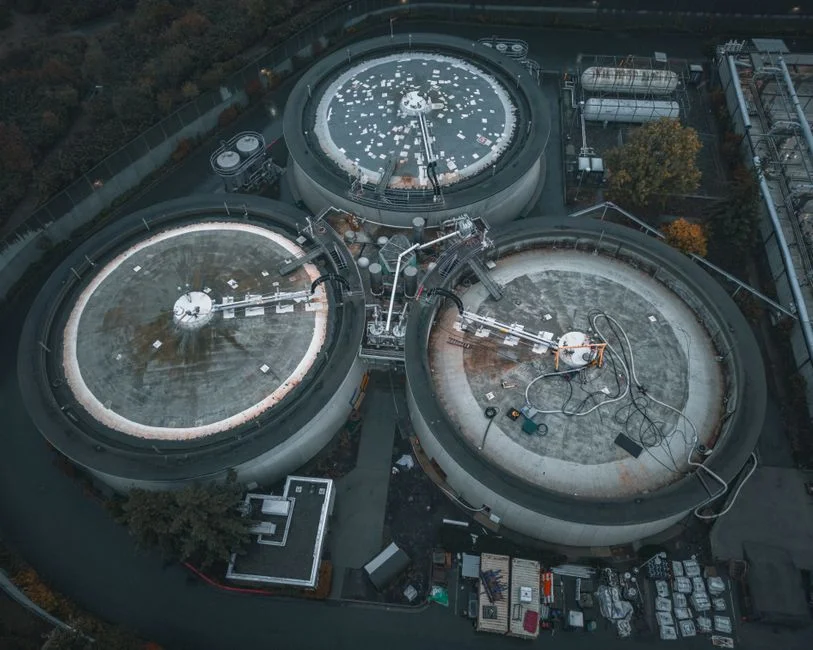
Operability depends on PLC interlocks, fail-safe instrumentation, and verified settling performance rather than cycle timing alone. The controller should execute level-based filling, anoxic or aerobic reaction, settling, controlled decanting, and idling. Procurement specifications should address high-high level shutdown, power-loss response, blower failure, mixer failure, blocked-decant detection, overflow protection, alarm annunciation, and manual recovery.
Shortening the cycle reduces required working volume but concentrates the organic load into a shorter aeration period. HydropureWater’s 2026 guide reports roughly 30–50% higher peak oxygen and blower demand for the shorter-cycle comparison. DO-controlled VFD blowers can reduce unnecessary air delivery, but the capital comparison must retain the peak-load case rather than rely only on average blower kW.
Decant performance links directly to solids inventory and sludge wasting. If final settling or turbidity is inadequate, inventory can accumulate, wasting becomes less predictable, and carryover can increase. Require vendors to state the expected settle-solids carryover, sludge volume, dry-solids yield, wasting strategy, and the operating basis for each value.
Evaluate a plate-and-frame filter press when waste-activated-sludge hauling costs are material. HydropureWater reports that sludge dewatering with this equipment can raise cake dryness from 0.8–1.5% to 22–28% for food-processing SBR waste sludge. The buyer should require projected wet tons, cake mass, disposal route, polymer use, filtrate characteristics, and operating labor rather than accepting only a theoretical dry-solids yield.
Chemical dosing may be required for pH, alkalinity, phosphorus, or carbon control, but the automatic chemical-dosing system should be selected against identified process demand. Include standby-power arrangements, blower redundancy, decanter or valve duty, maintenance access, and spare-parts availability in the commercial comparison.
Compare 2026 SBR, MBR, and Continuous-Flow Treatment
SBR and MBR should be compared by required effluent use, not by whether both can produce a compliant discharge. HydropureWater’s 2026 framework positions SBR for approximately 50–500 m³/d where simpler operation and discharge rather than reuse are the objectives. It identifies MBR where near-reuse-quality effluent or total nitrogen below 15 mg/L is required.
HydropureWater’s worked case places the MBR premium at 35–55% above the SBR five-year total-cost envelope. It also reports a 3–6-year payback at 150 m³/d under the stated reuse assumptions. These figures apply only to that case and should not be transferred to another plant without recalculating water value, reuse volume, membrane costs, and site constraints.
| Decision factor | SBR | MBR |
|---|---|---|
| Selection flow envelope | Approximately 50–500 m³/d — HydropureWater, 2026 | Selected according to reuse requirement, footprint, nutrient target, and site scale |
| Primary use | Controlled sewer or standard surface-water discharge | Near-reuse-quality effluent or tighter nutrient requirements |
| Process complexity | Single-tank cyclic activated sludge without membranes | Membrane biological reactor requiring additional control and maintenance obligations |
| Commercial effect in worked case | Five-year TCO approximately $290,000–$420,000 — HydropureWater, 2026 | 35–55% above the SBR TCO envelope; 3–6-year payback at 150 m³/d under stated assumptions |
| Required comparison items | Aeration, sludge, chemicals, labor, utilities, and disposal | All SBR items plus membrane cleaning, replacement, and associated energy |
Standard sewer or surface-water discharge, washdown reuse, boiler-feed use, and landscape reuse are different compliance and reuse categories. Every proposal should state the applicable BOD, TSS, TN, TP, turbidity, and reuse criteria, including who will verify each requirement. The integrated MBR treatment package is relevant where the project scope requires membrane-based reuse capability.
Build a 2026 Budget and RFQ That Vendors Can Price Equally
HydropureWater’s 2026 screening ranges are $180–$520 per m³ of daily capacity for CAPEX and $0.12–$0.31 per m³ treated for OPEX. These are planning ranges, not quotations; the detailed scope and exclusions must be stated before they are used in a budget comparison.
The worked case uses 150 m³/d average flow, COD of 6,000 mg/L, BOD of 3,000 mg/L, sewer discharge, one slaughter shift plus one processing shift, 12 hours of equalization, and a defined turnkey scope. HydropureWater reports turnkey CAPEX of $210,000–$330,000, annual OPEX of $6,570–$12,045, and five-year TCO of approximately $290,000–$420,000. The case excludes assumptions not stated in the source and should not be treated as a universal plant price.
| Budget element | 2026 case value | Source and scope |
|---|---|---|
| CAPEX screening range | $180–$520 per m³ of daily capacity | HydropureWater, 2026 planning range |
| OPEX screening range | $0.12–$0.31 per m³ treated | HydropureWater, 2026 planning range |
| 150 m³/d turnkey CAPEX | $210,000–$330,000 | HydropureWater, 2026 worked case |
| Annual OPEX | $6,570–$12,045 | HydropureWater, 2026 worked case |
| Five-year TCO | Approximately $290,000–$420,000 | HydropureWater, 2026 worked case |
| Energy share of OPEX | 45–60% | HydropureWater, 2026 SBR cost breakdown |
| Aeration reasonableness check | Approximately $88 per month | HydropureWater’s 2026 reference to one small US abattoir; not a universal quote |
The RFQ should place equivalent scope on every bidder: screen, DAF, equalization, SBR tank, aeration, decanting, controls, sludge dewatering, installation, commissioning, training, spares, performance testing, and permit support. Require prices and guarantees to be itemized against average flow, peak flow, design COD, cycle count, blower kW, operating hours, power tariff, sludge wet tons, labor rate, and disposal cost.
The 2026 wastewater operating-cost breakdown can help normalize energy, sludge, labor, and maintenance. A materially lower bid should be checked for excluded civils, building work, pretreatment, sludge disposal, controls, or performance guarantees rather than treated as an efficiency gain.
Commission Against Measurable Acceptance Criteria
Acceptance testing should verify the complete treatment train under representative production conditions, not merely demonstrate that the tank fills. Install sampling points for each segregated stream and composite loads across a representative production week. The test program should cover the agreed average and peak flow, design COD, production schedule, batch-discharge timing, and permitted discharge condition.
Verify every SBR phase: filling, anoxic or aerobic reaction, settling, decanting, and idling. Record equalization drawdown, blower response, mixer operation, DO control, level control, decant rate, and recovery from simulated or actual utility interruptions. A shortened production test may be used for equipment checks, but it cannot substitute for an agreed representative loading campaign.
Performance demonstrations should cover COD removal, nitrogen removal where included, TSS carryover, decant clarity, sludge wasting, automatic controls, power-failure response, and alarm handling. For any nutrient guarantee, identify the analytical methods, sampling frequency, composite protocol, and duration. If reuse is claimed, separately verify the specified reuse criteria rather than inferring them from a discharge permit.
The EPA-indexed study’s results below 10 mg/L TN and below 1.0 mg/L TP show that biological nutrient removal was achieved under its reported laboratory conditions. They should not be converted into blanket acceptance criteria. Final acceptance should be tied to the permitted discharge route and the same influent, pretreatment, equalization, operating, and analytical assumptions used in the accepted proposal.
Operational training should cover manual override, alarm diagnosis, sampling, blower and DO adjustment, sludge wasting, chemical preparation, power interruption, and recordkeeping. Deficiencies should be resolved before final acceptance, with any temporary operating restriction documented clearly.
Frequently Asked Questions
How much does an SBR for meat processing wastewater cost in 2026?
HydropureWater’s 2026 screening ranges are $180–$520 per m³ of daily capacity for CAPEX and $0.12–$0.31 per m³ treated for OPEX. Its worked 150 m³/d case reports turnkey CAPEX of $210,000–$330,000, annual OPEX of $6,570–$12,045, and five-year TCO of approximately $290,000–$420,000. Request a line-item quotation against the same flow, COD, pretreatment, equalization, automation, discharge route, civil works, and sludge-disposal scope.
What flow and load data are needed to size an industrial wastewater SBR?
Provide peak-hour and daily-average flow, flow-duration data, batch-discharge timing, production schedules, stream-level COD and BOD, nitrogen, phosphorus, FOG, solids, temperature, permitted effluent limits, and proposed blood-recovery practices. Require each bid to state HRT, working volume, MLSS, SRT, cycle duration, decant rate, peak blower load, and solids capture. Average flow alone cannot establish the biological or hydraulic design basis.
Should we select SBR or MBR for a slaughterhouse wastewater package?
Use SBR when the objective is controlled sewer or standard surface-water discharge and the project fits the approximately 50–500 m³/d framework in HydropureWater’s 2026 guidance. Evaluate MBR when near-reuse-quality effluent or total nitrogen below 15 mg/L is required. Ask bidders to state the membrane-system boundaries, cleaning and replacement assumptions, and the discharge or reuse criteria they will guarantee rather than comparing equipment price alone.
How can we verify that the SBR will meet the permitted discharge requirement?
Base acceptance on representative production loads and the same influent and operating assumptions in the accepted proposal. Test the full cycle, equalization response, blower performance, COD removal, applicable nitrogen performance, TSS carryover, decant clarity, sludge wasting, automatic controls, power-failure response, and alarms. The EPA-indexed study’s less-than-10 mg/L TN and less-than-1.0 mg/L TP results demonstrate laboratory potential under its specified beef-processing conditions; they are not blanket plant acceptance limits.