
Why Detergent Wastewater Is Hard for a Conventional Activated Sludge Plant
Detergent-manufacturing effluent combines high COD from fatty acids and alcohol ethoxylates with chronic surfactant toxicity and an unstable C/N/P ratio, causing conventional continuous-flow activated sludge (CAS) basins to foam, deflocculate, and lose solids during product changeovers. Linear alkylbenzene sulfonate (LAS) at typical plant concentrations is acutely toxic to unacclimated mixed liquor, and the alkaline silicate and phosphate builders carried over from the formulation line push effluent pH above the 7.6–8.6 band reported in a municipal pilot SBR study at 26.8 ± 0.8 °C (S4, PMC, Suitability of SBR for Wastewater Treatment and Reuse).
Foam washout strips floc from the clarifier, sludge inventory drops, and discharge consent limits on BOD, COD, and nitrogen become harder to hold. A sequencing batch reactor addresses this through a single-tank fill-and-draw architecture that is more prevalent in industrial wastewater treatment due to its compactness and the high efficiency of COD, BOD, and ammonia nitrogen removal (S4). The five timed phases (fill, react, settle, decant, idle) provide a static settle window with no inflow and no aeration shear, which is structurally better at retaining floc against foam washout than a continuously aerated CAS clarifier feed. The 15-day SRT reported in that pilot is a workable reference for municipal strength, but detergent matrices normally need longer SRT and seeded acclimation to absorb LAS shock without nitrification loss.
How the SBR Cycle Maps Onto Detergent Wastewater
The five-phase SBR cycle uses timed steps to treat surfactant-laden streams, and configuring the timers and aeration profile correctly on day one separates a working plant from a foaming one. The table below maps each phase to its detergent-specific objective; a DAF pretreatment stage for surfactant and oil removal upstream makes the fill phase behave predictably.
| Phase | Detergent-specific objective | Key control |
|---|---|---|
| Fill (static, mixed, or aerobic) | Slow or pulsed dosing to avoid LAS slug load; anoxic selector contact for denitrification | Fill duration, DO setpoint, return sludge ratio |
| React | Aerobic COD oxidation, nitrification, luxury phosphorus uptake; optional anoxic/anaerobic sub-phases for biological P removal | DO 1.5–2.5 mg/L, phase timer, mixed-liquor recycle |
| Settle | Quiescent clarification in the same tank; no hydraulic carry-over to a downstream clarifier | No aeration, no inflow, surface skimmer armed |
| Decant | Floating or adjustable weir draws off clarified supernatant; physically excludes surface foam from UV or chlorine polish | Weir type (floating vs fixed), decant depth, foam-skimmer interlock |
| Idle | Sludge wasting, equipment checks, hydraulic buffer against batch detergent campaign peaks | Wasted volume per cycle, idle length tied to upstream EQ tank level |
The fill phase can occupy up to 75% of the reactor volume before react begins (S4), allowing the same tank to function as both a bioreactor and a clarifier, which enables a properly sized SBR to outperform a CAS basin of the same volumetric capacity. The react phase generated the municipal-pilot removal figures—91% COD, 83% nitrogen, 90% phosphate, and a peak 92% TN removal in the post-anoxic configuration (S4)—which should be treated as upper-bound design values rather than detergent-specific guarantees. Cycle-time selection for surfactant streams requires tuning against actual LAS loading rather than copying figures from a municipal pilot.
Design Parameters and Performance Benchmarks for SBR

Engineers writing an SBR datasheet for a detergent plant require a defensible parameter sheet with verified provenance. The pilot-scale figures below come from the only fully retrievable SBR performance study in this research (S4), and the gaps represent design inputs the buyer must close with bench- or pilot-scale work on the actual wastewater. An SBR + MBR combined train for reuse-quality effluent provides one route to close the effluent-quality gap; if the recipe swings on N or P, an automated chemical dosing system serves as an effective add-on.
| Parameter | Pilot SBR value (S4) | Detergent-plant application |
|---|---|---|
| Operating temperature | 26.8 ± 0.8 °C (controlled) | Uncontrolled in most plants; nitrification rate drops sharply below ~15 °C |
| Sludge retention time (SRT) | 15 days (avg) | Detergent matrices with LAS toxicity normally need longer SRT and a seeded acclimation period — confirm with bench-scale respirometry before committing |
| COD removal | 91% (post-anoxic) | Upper-bound municipal figure; treat as design ceiling for synthetic detergent streams |
| Total nitrogen removal | 83% (avg), 92% (peak) | Use 83% as a conservative design value; nitrification is the most LAS-sensitive step |
| Phosphate (PO4³⁻) removal | 90% | Builder carry-over (silicate, phosphate, zeolite) will shift this; verify on-site |
| BOD5 removal | 84.9% (SC I) / 86.8% (SC II), peak 88% | Surfactant BOD is partly recalcitrant; expect lower than municipal until acclimated |
| TSS / turbidity / TS removal | 98.2% / 96.3% / 97.2% | Municipal reference; floc breakup under LAS shock will erode these |
| Effluent pH | 7.6–8.6 (avg 8.1) | Silicate builders push detergent effluent alkaline; confirm with titration curve, do not assume neutrality |
| MLSS, F/M, HRT for detergent wastewater | Not reported in supplied research | Calculate from influent COD and target MLSS; request from vendor as a sizing input |
Mixed-liquor suspended solids and the food-to-microorganism ratio are critical design points not numerically reported in the supplied research. Both must be calculated from the plant's actual influent COD and the target MLSS the operator is willing to hold against LAS toxicity, and they should be confirmed in a bench-scale respirometry test before any reactor is fabricated.
SBR vs MBR vs Conventional Activated Sludge for Detergent Plants
Procurement managers should evaluate these options based on their specific discharge consent, reuse targets, and influent LAS profile. The 16% COD, 17% TN, and 41% PO4³⁻ improvement over the conventional reference plant in the pilot study (S4) provides a clear head-to-head comparison, establishing SBR as the default first step for many detergent facilities. The MBR variant, using DF-series flat-sheet MBR modules, decouples SRT from hydraulic retention time and produces near-reuse effluent for CIP, boiler feed, or garden-line dilution, addressing requirements that SBR alone may miss.
| Decision metric | SBR | MBR | Conventional CAS |
|---|---|---|---|
| Footprint | Smallest (clarifier in-tank) | Small (membrane cassette adds height) | Largest (separate clarifier, RAS pump gallery) |
| LAS shock tolerance | High (long SRT, static settle, no clarifier washout) | Highest (membrane retains biomass under shock) | Lowest (continuous aeration + clarifier washout) |
| Foam control | Good (decant weir excludes surface foam; surface skimmer) | Good (membrane scours foam) | Poor (foam leaves with effluent) |
| Effluent reuse suitability | Sewer / surface water discharge | Reuse-grade (CIP, boiler, garden) | Sewer / surface water only |
| Relative removal vs CAS reference (S4) | +16% COD, +17% TN, +41% PO4³⁻ | Higher again on TSS and turbidity | Baseline (NSTP reference) |
| OPEX drivers | Blower, decanter, sludge hauling | Blower, membrane CIP/replacement, decanter | Blower, RAS pumps, polymer, clarifier maintenance |
| Best fit for 2026 detergent plant | Discharge-to-sewer with conventional BOD/COD/N limits | Plant needs reuse-quality effluent or tight consent | Legacy retrofit only; rarely specified new-build |
SBR is suitable when the discharge target is conventional BOD, COD, and N, while SBR plus MBR is necessary when the plant requires water reuse or must meet tighter consent limits than batch clarification can provide. Because cost and footprint specifics for individual sites are not in the supplied research, request a site-specific mass balance and OPEX model from the supplier before procurement.
Sizing, Pretreatment, and Polishing: Building a 2026-Ready Train
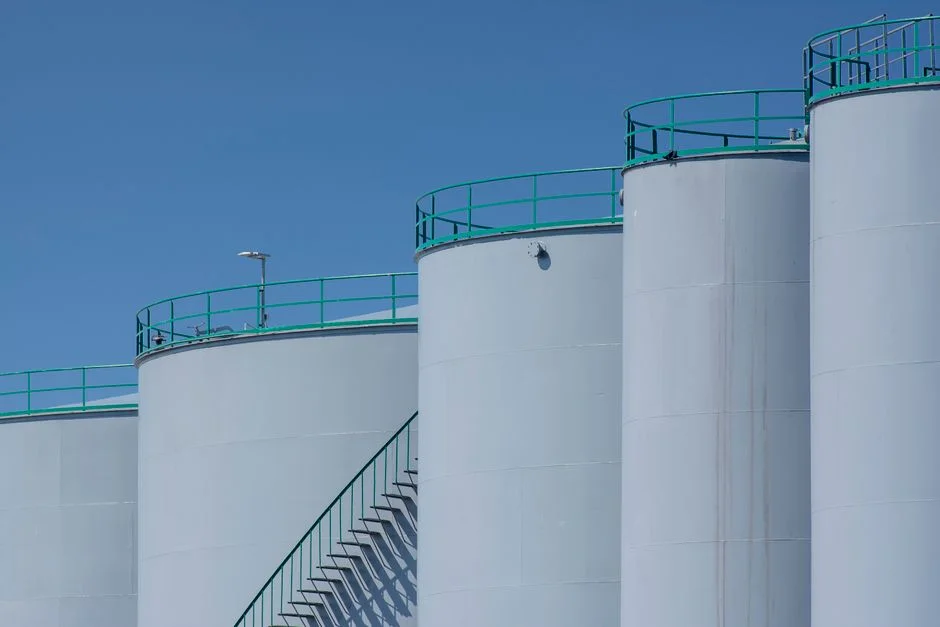
SBR performance relies on a well-integrated pretreatment and polishing train. A rotary bar screen for headworks protection removes packaging rags and fiber, while equalization tanks absorb the batch-wise pH and LAS swings that follow product changeovers. A DAF stage strips free oil and floats off surfactant foam before it reaches the biomass. The biological step is the SBR itself, paired with an automatic chemical dosing system for nutrient trim when the detergent recipe swings on N or P. Downstream, a lamella clarifier as a TSS safety net catches any floc that escapes the settle phase, followed by on-site chlorine dioxide disinfection before discharge or reuse. Wasted SBR sludge is routed to a plate-and-frame filter press for SBR sludge dewatering; because specific cake-dryness figures for detergent sludge are not in the supplied research, these should be requested from the vendor using a sample of wasted mixed liquor. Engineers must reconcile local authority limits and country compliance guides before freezing the P&ID.
2026 Procurement Checklist for an SBR-Based Detergent WWTP
The following questions should be presented to any vendor in 2026 to ensure engineering rigor. An automated dosing system tied to the SBR PLC is one of the few line items worth specifying by part number in the RFQ.
| Question to vendor | Why it matters | Acceptable evidence |
|---|---|---|
| Can you run a bench- or pilot-scale LAS shock test on our actual wastewater? | Generic SBR removal guarantees do not cover LAS toxicity kinetics. | Respirometry report, IC50 value, % nitrification loss vs LAS mg/L |
| Does the cycle support separate aerobic, anoxic, and anaerobic sub-phases under PLC recipe control? | Detergent recipes swing; one fixed cycle does not survive a product changeover. | PLC recipe screen, phase timer resolution, DO profile trace |
| How is foam excluded from the decant? | Foam carry-over poisons UV transmittance and chlorine demand downstream. | Floating weir, surface skimmer, top-foam sensor interlock |
| What redundancy is provided on blowers, valves, and decanters? | SBR downtime tolerance for detergent plants is not quantified in the literature. | N+1 blowers, duty/standby decant valves, hot-swap PLC I/O |
| Will you provide a site-specific mass balance, CAPEX, and OPEX for our 50–500 m³/day flow? | Budget ranges and lead times for 2026 detergent-plant SBR packages are not in the supplied research. | Line-item CAPEX, kWh/m³ OPEX, delivery in weeks from PO |
Conducting a bench-scale LAS shock test is the most important procurement step. Vendors offering generic SBR removal guarantees without such testing effectively require the buyer to underwrite the kinetic risk.
Frequently Asked Questions
What COD removal can an SBR achieve on detergent wastewater?
The fully retrievable pilot data reports 91% COD removal
Frequently Asked Questions
What COD removal can an SBR achieve on detergent wastewater?
An SBR system can typically achieve COD removal efficiencies between 85% and 95% for detergent wastewater, provided the influent is balanced with sufficient nitrogen and phosphorus. Advanced configurations utilizing internal selectors and optimized aeration cycles can reduce effluent COD levels to below 100–150 mg/L, depending on the biodegradability of the specific surfactants present in the stream.
How long should the SRT be for surfactant-rich wastewater?
For surfactant-rich wastewater, the Solids Retention Time (SRT) should typically be maintained between 15 and 25 days. This extended SRT is critical to support the growth of specialized slow-growing bacteria capable of breaking down complex synthetic surfactants and to ensure stable nitrification despite the potential inhibitory effects of anionic and non-ionic detergents on biomass.
Should I choose an SBR or an MBR for a new detergent plant in 2026?
In 2026, the choice depends on the final discharge requirements and space constraints. While SBRs offer a lower lifecycle cost and easier maintenance, an MBR (Membrane Bioreactor) is preferred if you require high-quality effluent for water reuse or if the plant footprint is severely restricted. MBRs consistently outperform SBRs in handling the high solids concentrations and potential foaming issues common in surfactant-heavy industrial streams.
What is the typical CAPEX range and lead time for a 50–500 m³/day SBR package?
For a standard 50–500 m³/day SBR package, the CAPEX typically ranges from $150,000 to $650,000 USD, depending on the level of automation, materials of construction, and the inclusion of tertiary treatment stages. Lead times for 2026 procurement generally range from 16 to 24 weeks, accounting for current supply chain lead times for specialized blowers, programmable logic controllers (PLCs), and decanter mechanisms.
Which discharge parameters should a detergent WWTP monitor most closely in 2026?
The most critical parameters to monitor in 2026 are Methylene Blue Active Substances (MBAS) to track residual surfactants, Total Phosphorus (TP) due to strict detergent-specific discharge limits, and Total Nitrogen (TN). Additionally, operators must monitor effluent toxicity and pH fluctuations, as detergent manufacturing processes often cause rapid shifts in wastewater composition that can disrupt downstream biological processes.