

Determine Which Rules Apply to the Lewiston Plant
Fabricated metals plants near Lewiston generally meet sewer pretreatment limits by identifying the applicable requirements, characterizing the wastewater, and routing it through equalization, oil and grease removal, chemical treatment, solids separation, pH control, and verification. Whether 40 CFR Part 433 applies depends on the plant’s operations: co-located plating or anodizing can bring forming, finishing, machining wash, forging, and foundry wastewater into the Metal Finishing category. The design must satisfy the stricter applicable requirement—40 CFR Part 433 or receiving-sewer limits developed under 40 CFR 403.5. No numerical Lewiston permit limits were supplied, so sizing and compliance require the current permit, representative sampling, and written sewer-authority acceptance.
40 CFR Part 433 covers the Metal Finishing point source category and includes forming, finishing, forging, foundry, metal spraying, and machining wash operations co-located with plating or anodizing lines (HydropureWater, 2026). A stamping operation that sends only dry parts to an off-site finisher presents a different applicability question from a plant operating plating or anodizing tanks on site. The permit authority must make that determination against the plant’s actual process inventory.
Existing sources are evaluated against Pretreatment Standards for Existing Sources, or PSES, while new sources are evaluated against Pretreatment Standards for New Sources, or PSNS (HydropureWater, 2026). The plant must also evaluate local limits issued under 40 CFR 403.5. The supplied research states that local limits are at least as stringent as applicable categorical standards and may address copper, nickel, zinc, lead, silver, oil and grease, total suspended solids, and pH. Compliance therefore requires a parameter-by-parameter comparison, not selection of one permit as a blanket requirement.
There is a material location mismatch in the supplied material. The official pretreatment page is for Lewiston, Idaho, whereas the cited USGS publication concerns Lewiston, Maine (USGS, 1995). This framework therefore does not establish verified permit limits for either location.
| Document or determination | Why it controls the next decision |
|---|---|
| Current industrial user permit and discharge point | Identifies the governing authorization and the route to the receiving sewer. |
| Local limits table | Provides parameter-specific limits that may govern equipment performance. |
| 40 CFR Part 433 applicability determination | Determines whether co-located metal-finishing operations require PSES or PSNS review. |
| Monitoring frequency and sampling method | Defines the evidence required for routine compliance and acceptance testing. |
| Operation and process inventory | Connects plating, anodizing, pickling, machining, forging, foundry, and cyanide operations to their waste streams. |
The same jurisdictional and categorical-screening logic used in how fabricated metals plants meet sewer limits applies, but the Lewiston plant must resolve its own permit and authority before adapting the design.
Characterize Batch Wastewater Before Sizing Equipment
HydropureWater’s 2026 field ranges for mixed floor drains entering pretreatment report oils at 50–500 mg/L, total dissolved metals at 5–200 mg/L, TSS at 100–1,000 mg/L, and pH swings between 2 and 12 across batch dumps (HydropureWater, 2026). These values are field context, not representative Lewiston wastewater data or permit assumptions.
Batch behavior can make a short composite unrepresentative. HydropureWater reports a hard-chrome-line condition in which Cr(VI) exceeded 50 mg/L and pH fell below 2 during a rinse dump (HydropureWater, 2026). A sample that misses that event will not characterize the peak chromium load or the most acidic discharge condition.
The design basis should therefore come from a full-week composite study, with flow, pH, oil and grease, TSS, metals, and any process-associated hexavalent chromium or cyanide evaluated against the operating calendar. Record batch timing as well as concentration so equalization volume and chemical demand reflect actual dump behavior.
| Plant operation | Principal wastewater concern | Information needed for design |
|---|---|---|
| Machining and drawing | Free or emulsified oils | Oil concentration, emulsion character, flow, and discharge timing. |
| Pickling and plating rinsewater | Dissolved metals | Metal species and concentrations, acidity, and batch volume. |
| Chromic-acid operation | Hexavalent chromium | Cr(VI), pH, ORP, and peak-dump information. |
| Casting and grinding | Suspended solids | TSS distribution and grit or swarf characteristics. |
| Alkaline cyanide plating | Cyanide | Cyanide concentration, pH, alkalinity, and oxidation demand. |
Separate streams as far as practical and map each to its process source. This prevents a low-concentration stamping rinse from being averaged against a plating dump, while identifying whether machining, pickling, plating, anodizing, casting, or cyanide operations are actually present. A rotary mechanical bar screen may protect downstream solids-handling equipment from rags, wipes, and tramp metal, but it does not replace wastewater characterization or any required regulatory screening.
Build a Treatment Train for the Actual Contaminants
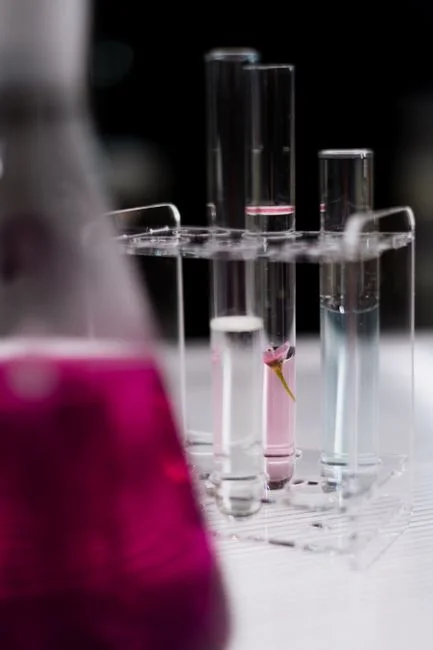
Equalization must precede the treatment chemistry because plating shops generate batch dumps, and HydropureWater identifies equalization as the unit operation that allows downstream chemistry to work consistently (HydropureWater, 2026). The basin must cover relevant batch dumps and provide usable freeboard and mixing; the supplied research does not provide Lewiston flow or volume data from which to calculate those dimensions.
The treatment train should follow operating order:
- Equalize flow. Mix batch dumps so pH, metal load, and chemical demand do not arrive as unbuffered shocks.
- Remove oil before precipitation. Use physical separation or chemical break for free and emulsified oils. A PLC-controlled automatic chemical dosing system can meter the selected treatment chemicals, but one reaction stage should not be expected to remove oils, metals, Cr(VI), cyanide, and TSS simultaneously.
- Reduce hexavalent chromium. Reduce Cr(VI) to trivalent chromium with sodium metabisulfite or ferrous sulfate at pH 2–3 and ORP of roughly 250–300 mV, then precipitate Cr(OH)3 at pH 8.5–9.5 (HydropureWater, 2026).
- Oxidize cyanide before metals precipitation. The supplied research states that cyanide can resolubilize downstream metal precipitates, so oxidation must precede the hydroxide stage.
- Precipitate dissolved metals. Adjust pH under controlled conditions to form metal hydroxide floc. Final pH must then be trimmed to the permit range.
- Separate the floc. Select DAF or lamella clarification according to oil content, floc behavior, solids loading, and available footprint.
- Dewater and route the solids. Send the separated sludge to the selected dewatering method and document its volume and water content.
| Treatment step | Primary function | Failure mode if omitted or miscontrolled |
|---|---|---|
| Equalization | Blends batch discharges | Unstable pH, chemical demand, and downstream loading. |
| Oil removal or chemical break | Separates free and emulsified oils | Oily sludge, poor floc formation, and interference with separation. |
| Chromium reduction | Converts Cr(VI) to trivalent chromium | Hexavalent chromium remains soluble. |
| Cyanide oxidation | Destroys cyanide | Downstream metal precipitates may resolubilize. |
| Metal hydroxide precipitation | Removes dissolved metals | Dissolved metals remain above the governing limit. |
| DAF or lamella clarification | Separates precipitated solids | Metal hydroxide floc passes into the discharge. |
| Final pH control | Meets the permitted pH range | Acidity or alkalinity violates the discharge condition. |
Use flow-paced dosing with pH or ORP feedback and route flow back to equalization when pH, ORP, or TSS indicates an upset. HydropureWater identifies stroke-count totalizers and calibration columns as controls that help prevent dosing blind, while a sedimentation tank or plate-and-frame filter press addresses the solids path rather than the chemical reactions.
Reserve UF, MBR, RO, anion exchange, or granular activated carbon for documented reuse needs, tighter local limits, or future PFAS requirements. The supplied material identifies no current numerical PFAS limit for chrome finishers, so polishing should not be represented as mandatory without a current permit requirement or an approved reuse specification.
Choose DAF or a Lamella Clarifier from the Solids Load
HydropureWater reports a dissolved air flotation capacity range of 4–300 m³/h across 13 standard models (HydropureWater, 2026). DAF is the more suitable starting point when the wastewater contains oil, FOG, colloids, or fragile metal-hydroxide floc that benefits from flotation. The same source cites hydraulic surface loading of 4–20 m/h, an air-to-solids ratio of 0.005–0.060 with 0.02 as a typical design point, and recycle of 10–30% of forward flow (HydropureWater, 2026).
Those operating variables affect performance and operating cost. Increasing the air-to-solids ratio can produce a drier float but raises blower demand and may damage fragile floc. Increasing recycle can improve TSS capture, but it also increases equalization demand and dilutes treatment chemistry. The selected combination must therefore follow DAF versus clarifier for fabricated metals wastewater using measured flow, solids, oil, and floc characteristics.
A lamella clarifier is more appropriate when compact inclined-plate separation, sludge recirculation, and flocculation fit the available solids and footprint constraints. HydropureWater cites a lamella surface-loading range of 20–40 m/h and claims up to 30% lower chemical consumption with lamella clarification (HydropureWater, 2026). That is a supplier-reported comparison, not a universal performance guarantee.
| Selection issue | Dissolved air flotation system for metalworking wastewater | Lamella clarifier |
|---|---|---|
| Best-fit concern | Oil, FOG, colloids, or fragile floc | Compact separation, sludge recirculation, and integrated flocculation |
| HydropureWater capacity evidence | 4–300 m³/h across 13 standard models | No capacity range supplied |
| HydropureWater separation loading | 4–20 m/h hydraulic surface loading | 20–40 m/h surface loading |
| Principal trade-off | Blower demand and recycle can increase; excessive air or recycle may affect floc | Supplier reports up to 30% lower chemical consumption, but requires site-specific verification |
No representative Lewiston influent values were supplied, so neither hydraulic capacity nor contaminant loading can be finalized from geographic information alone. The bid package should require both flow-capacity calculations and constituent-loading calculations based on representative sampling.
Verify Compliance Before and After Sewer Discharge
Compliance evidence should be organized by parameter because each limit has its own averaging basis, sampling frequency, and governing authority. HydropureWater identifies daily-maximum and monthly-average concepts for PSES and PSNS, but the final matrix must use the numerical values in the plant’s current permit and any stricter 40 CFR 403.5 local limit (HydropureWater, 2026).
| Parameter | Governing limit to enter | Monitoring and operating record |
|---|---|---|
| Each regulated metal | Local limit and applicable PSES or PSNS value, identified by averaging period | Representative sampling, analytical result, laboratory identification, and responsible operator |
| Hexavalent chromium and cyanide, if present | Applicable categorical and local requirements | Treatment-stage records, chemical dose, pH, ORP, and diversion events |
| Oil and grease, TSS, and pH | Current local limits and any categorical requirement | Daily records, automatic trends, alarms, and corrective-action log |
Calibrate dosing pumps and use flow-paced feed with pH or ORP feedback. HydropureWater states that stroke-count totalizers and calibration columns help prevent dosing blind (HydropureWater, 2026). High-TSS, pH-excursion, and ORP alarms should return upset flow to the equalization header rather than allowing a chemistry failure to become a discharge violation.
Track sludge volume and water content as operating evidence. HydropureWater reports floated metal-hydroxide sludge at 2–5% dry solids from DAF and 25–35% dry solids after plate-and-frame filtration (HydropureWater, 2026). These values describe the cited equipment sequence; they are not a substitute for waste characterization or hauling documentation.
The final equipment proposal and acceptance test should be checked against the current permit, representative influent testing, and written receiving-authority requirements. Optional UF water treatment system, MBR integrated wastewater treatment, or industrial RO water purification equipment should remain conditional on a defined water-quality or reuse requirement.
Frequently Asked Questions
How should treatment capacity be sized for a fabricated metals plant near Lewiston?
Size the system from representative flow, batch volume, oil, TSS, dissolved metals, pH, chromium, and cyanide data. Hydraulic treatment capacity alone does not establish chemical demand or solids capture, and no representative Lewiston values were supplied. Require bidders to show the influent basis and separate flow capacity from contaminant loading.
How can a buyer compare pretreatment equipment suppliers without creating compliance risk?
Require each bidder to disclose sizing assumptions, control interlocks, chemical compatibility, commissioning support, and permit-compliance documentation. Check that upset-flow diversion, pH/ORP control, sludge handling, and alarm functions match the proposed treatment train. Obtain confirmation from the receiving sewer authority before relying on the equipment proposal as the compliance basis.
What should be included in a budget and delivery request?
The supplied information contains no current equipment prices or lead times. Request a site-specific scope covering treatment capacity, tanks, controls, chemical storage, solids handling, installation, commissioning, training, and documentation, together with a delivery schedule and acceptance-test plan.
Which Lewiston jurisdiction and permit should be resolved before purchase?
Confirm the plant’s actual city and receiving sewer authority because the supplied official pretreatment page concerns Lewiston, Idaho, while the supplied USGS source concerns Lewiston, Maine (USGS, 1995). Obtain the current permit, local limits table, and written applicability determination before final equipment selection. The broader framework in how metals plants meet sewer limits can organize the review, but it cannot substitute for local written requirements.