Separate Data Center Wastewater Before Choosing Equipment
A Cheongju-si data center generally needs to characterize cooling-tower blowdown before designing treatment because evaporation leaves concentrated salts, corrosion inhibitors, biocides, scale-control chemicals and other residuals behind. The likely train begins with segregation and equalization, followed by cooling where needed, solids removal, pH adjustment and targeted treatment for metals, residual biocide or dissolved solids. The final choice depends on whether blowdown enters a municipal sewer, receives direct-discharge approval, or is treated for reuse. Cheongju-specific source-water chemistry, chemical dosing, flow variability and acceptance conditions must therefore be confirmed with the receiving authority before equipment is specified.
Cooling-tower blowdown is the residual water deliberately removed to control scale, corrosion and biological growth after evaporation concentrates nonvolatile constituents. It should not be combined with sanitary sewage or maintenance wastewater before their flows and chemistries are characterized. RSP Engineers identifies blowdown as the principal process-wastewater source in large-scale data centers and lists equipment cleaning, water-treatment backwash, softener regeneration waste and air-handling condensate as additional streams with distinct characteristics and permitting pathways.
Reuse changes the chemistry problem rather than eliminating it. Water Utility Report, updated 14 April 2026, states that reclaimed water can require additional pretreatment, corrosion control, scaling control and advanced monitoring before entering a cooling loop. For a Cheongju-si data center, the design basis should therefore be the complete cooling chemical package, source-water analysis, operating cycles of concentration, blowdown-control logic, emergency-dump practices and intended reuse application. A broader data-center wastewater treatment guide provides useful process context, but it is not a substitute for Cheongju site data.
| Stream | Engineering definition | Information required before treatment selection |
|---|---|---|
| Cooling-tower blowdown | Residual water removed after evaporation concentrates salts and treatment chemicals | Flow range, cycles of concentration, pH, conductivity, TDS, suspended solids, metals, biocide and inhibitor residuals |
| Sanitary sewage | Domestic wastewater from restrooms, kitchens and related facilities | Separate flow and load; no automatic assumption of common treatment |
| Equipment-cleaning wastewater | Wash water potentially containing detergents, oils or suspended residues | Cleaning products, batch volume and discharge frequency |
| Water-treatment backwash | Regeneration or backwash waste from filtration, softening or membrane systems | Regenerant type, salinity, residual chemicals and batch frequency |
| Softener regeneration waste | Brine or other regeneration discharge | Chloride, sodium and discharge route |
| Air-handling condensate | Condensate collected from air-handling equipment | Flow, chemistry and contamination controls |
Build a Cheongju Water Balance and Characterization Plan
Equipment sizing should follow measured site flows, not a generic data-center flow factor. Genesis Water Technologies gives the theoretical blowdown relationship as 1/(CoC−1): at 4 cycles of concentration, theoretical blowdown is 25% of makeup water, while at 6 cycles it is 20%. The same source warns that actual blowdown may exceed theoretical calculations by 15–30% because of unmeasured losses and emergency dumps. That warning is not a design multiplier; validate it against calibrated meters, operator logs and abnormal-event records.
Measure makeup water, evaporation where calculable, controlled blowdown, emergency dumps, chemical additions, filtration backwash, spent-media or sludge waste, and domestic flow separately. Establish normal, peak and upset conditions. A controlled blowdown meter is not a substitute for a total makeup meter if losses, flushing and undocumented dumps remain unresolved.
The sampling program should cover source water, circulating cooling water, each blowdown point, the combined blowdown stream and final treated effluent. Tests should include pH, conductivity, TDS, temperature, suspended solids, chloride, sulfate, phosphate, metals, residual biocide and corrosion-inhibitor residuals selected from the actual chemical program. This sequence turns the selected water-treatment parts, valves and media into a traceable treatment basis.
| Characterization activity | Required output | Design use |
|---|---|---|
| Makeup, blowdown and dump metering | Measured flow range and operating log reconciliation | Equalization and treatment capacity |
| Cycles-of-concentration review | Makeup, circulating and blowdown conductivity | Expected TDS concentration and control limits |
| Source and circulating-water analysis | Hardness, alkalinity, chloride, sulfate, phosphate and metals as applicable | Scaling, corrosion and pretreatment assessment |
| Chemical-package audit | Biocide, inhibitor, dispersant and scale-control ingredients | Residual-removal and discharge criteria |
| Final-effluent sampling | Quality against the confirmed discharge or reuse endpoint | Commissioning acceptance |
Do not import the illustrative 150°F temperature value in RSP Engineers’ material as a Korean limit. Obtain Cheongju’s receiving-system temperature requirement, or a reuse-application temperature and biological-control requirement, from the responsible authority or end user. The same rule applies to pH and pollutant limits: acceptance criteria must be written and site-specific.
Choose the Discharge Route Before the Treatment Train
The discharge route determines the treatment specification. Quarantine three pathways for site-specific review: discharge to a municipal sewer or other receiving wastewater system, direct discharge to a surface water, and on-site reuse. A Cheongju-si data center should not treat U.S. permit terminology as its legal answer. The available research describes NPDES and U.S. pretreatment structures; qualified Korean professionals must confirm applicable national rules, Cheongju-si authority requirements, sewer-connection conditions and any separate environmental approvals.
For sewer or receiving-system discharge, obtain written acceptance conditions covering flow, pH, temperature, suspended solids, metals, biocide residuals and other relevant parameters. Map each requirement to a treatment step and include sampling and reporting obligations. For reuse, identify whether the water enters the cooling loop, supports process use, irrigates, or controls construction dust; the most demanding intended use should set the endpoint.
A two-stage concept—physical separation followed by targeted contaminant removal—may suit non-critical reuse. Genesis Water Technologies reports potential makeup-water reductions of 15–25% for non-critical reuse applications; that figure is not a universal Cheongju saving guarantee. Physical treatment may include a DAF system for cooling-blowdown solids separation, while UF pretreatment for treated cooling blowdown is an option where a 0.03-micron barrier is justified. Chemical dosing should follow a controlled automatic dosing system where pH or residual concentrations require it.
| Decision | Primary endpoint | Indicative treatment logic | Decision evidence |
|---|---|---|---|
| Receiving-system discharge | Written sewer or receiving-system acceptance conditions | Equalization, cooling if required, pH control, solids removal and targeted treatment for identified pollutants | Authority confirmation, flow and chemistry data |
| Direct surface-water discharge | Applicable Korean environmental approval | Route-specific treatment determined from permit conditions and receiving-water assessment | Permit basis, receiving conditions and treatment-performance evidence |
| Non-critical reuse | Reuse specification for the intended application | Physical separation followed by targeted treatment where necessary | Use-specific quality tests and system recovery rate |
| Cooling-makeup reuse | Cooling-loop chemistry, scaling, corrosion and microbiological limits | Advanced pretreatment and dissolved-solids control where justified, with concentrate management | Water balance, pilot results, chemical compatibility and fallback route |
Match Each Contaminant to Its Treatment Step
Each unit operation should answer a defined contaminant or hydraulic problem. Equalization smooths variable blowdown, and cooling can reduce temperature effects on downstream biological processes when the receiving route requires it. Neither step removes dissolved contaminants.
RSP Engineers identifies a commonly encountered industrial blowdown pH range of 6.0–9.0, while stating that the local authority determines the actual limit. Use pH neutralization where the selected chemical program makes blowdown acidic or alkaline, but specify the required endpoint only after Cheongju review.
Filtration, DAF or UF addresses suspended solids or colloidal material according to the selected separation mechanism. HydropureWater’s DAF range is 4–300 m³/h across 13 standard models. Its UF systems provide 2,000–40,000 L/h, use 0.03-micron PVDF membranes, and include automatic backwash and air scour. These equipment specifications indicate available configurations, not the flow required at the Cheongju-si site.
Precipitation or ion exchange is justified only when project testing shows that metals or other specific dissolved constituents require removal. Do not install either merely because source water contains minerals. Where biocide residual is unacceptable except after controlled destruction or removal, evaluate dechlorination or a compatible non-persistent biocide program. RO belongs only where dissolved-solids reduction or high-quality reuse is justified; its design must include pretreatment, membrane fouling control and concentrate disposal. The cooling-blowdown treatment decision framework offers a useful cross-check, but local chemistry controls the selection.
| Problem or contaminant | Potential treatment step | Engineering condition |
|---|---|---|
| Variable flow | Equalization | Size from measured normal, peak and upset conditions |
| High temperature | Cooling or holding | Only when required by the receiving system or reuse specification |
| Acidic or alkaline blowdown | pH neutralization | Driven by the actual chemical package and written endpoint |
| Suspended solids or colloids | Filtration, DAF or UF | Selected from particle characteristics and required solids removal |
| Specific dissolved metals | Precipitation or ion exchange | Supported by project testing and residual-waste handling |
| Residual biocide | Dechlorination or chemical-control strategy | Based on residual identity, concentration and receiving criteria |
| High TDS | RO or another validated dissolved-solids process | Justified by reuse quality, pretreatment and concentrate management |
Design Reuse Around the Receiving Water Chemistry
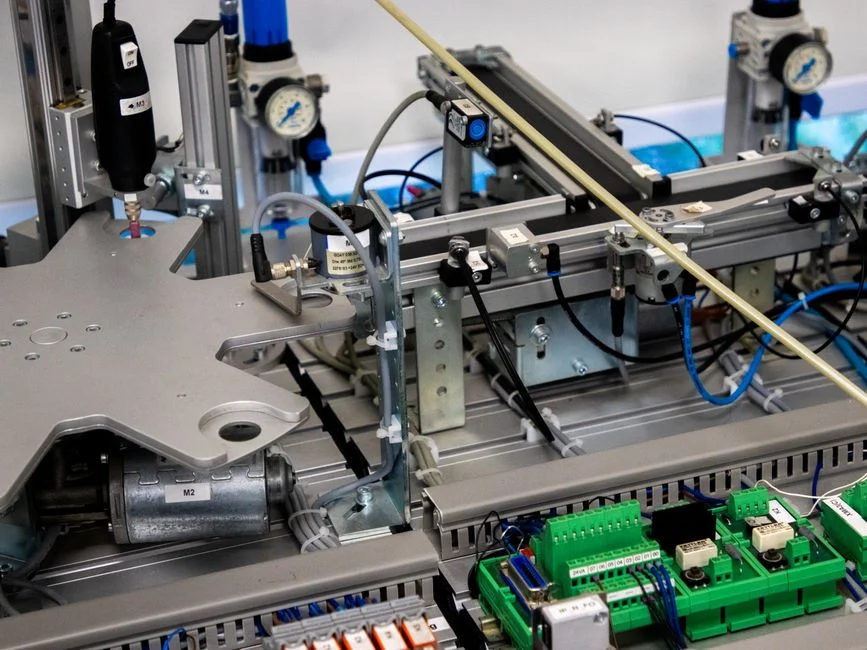
Non-potable reuse, such as construction dust control or landscape irrigation, has a different quality envelope from cooling-makeup reuse. Cooling makeup requires control of dissolved solids, hardness, alkalinity, scaling, corrosion risk and microbiological growth. The reuse assessment should therefore begin with the receiving process, not with the available treatment equipment.
Genesis Water Technologies reports that physical separation followed by targeted treatment can reduce makeup-water demand by 15–25% in non-critical reuse applications. Treat this as a source-backed context for a possible business case, not a Cheongju-si savings guarantee. Before approval, reconcile recovered water, evaporation, residual blowdown, membrane concentrate, chemical residuals and rejected water in one mass balance.
Include monitoring and a fallback discharge or storage route. A reuse system that cannot accept an upset, chemical-program change or failed quality result should not threaten cooling continuity. This also limits the risk of treating unverified reuse as a single point of failure.
Scale must match operating capability. Genesis Water Technologies reports that hyperscale treatment architectures using RO, ion exchange and multi-stage filtration may not suit smaller facilities because they require dedicated operators, substantial capital expenditure and economies of scale that do not transfer directly. An engineering guide to cooling-blowdown treatment can support that comparison, while a separate data-center treatment reference can help structure the reuse decision. For Cheongju, modular and operator-manageable equipment may be more defensible than a complex closed-loop plant if the site lacks the staff and maintenance infrastructure.
Plan Permitting, Monitoring and Site Infrastructure Early
Cheongju permitting must begin before equipment specification because the discharge route determines both the treatment scope and site infrastructure. Engage the responsible receiving authority early to confirm the permitted route, application documents, discharge capacity, connection conditions, monitoring frequency and sampling requirements. The supplied research supports early utility coordination, but it does not establish Cheongju’s exact rules or approval timetable.
Review the complete cooling chemical package with the treatment designer. Residual biocides, corrosion inhibitors, anti-scaling agents and dispersants can determine pretreatment needs, receiving limits and chemical compatibility. Design the footprint around tanks, skids, pumps, chemical storage, automatic controls, drainage, containment, vehicle access and maintenance clearance. RSP Engineers notes that simple pH neutralization may require a few hundred square feet, while filtration plus chemical precipitation may require several thousand square feet.
| Planning item | Required design action | Evidence to retain |
|---|---|---|
| Receiving-authority interface | Confirm route, documents, capacity and monitoring conditions | Written responses and approved assumptions |
| Chemical package | Audit biocide, inhibitor and scale-control constituents | Current datasheets and dosing records |
| Treatment footprint | Reserve skid, tank, pump, storage and maintenance areas | Approved site plan and utility interfaces |
| Monitoring | Provide sampling ports, flow and pH measurement and laboratory access | Monitoring plan and alarm philosophy |
| Operations | Train operators and define upset and emergency response | Training records and operating procedures |
Review treatment parts, instrumentation and media requirements against the complete chemical package using the water-treatment parts, valves and media reference. Space for future sampling and control modifications should remain explicit in the design.
Select, Procure and Commission the System
Issue a performance-based specification tied to the confirmed Cheongju discharge route, measured flow range, source-water variability, chemical program, required endpoints, automation, redundancy and local service capability. Require each bidder to submit proposal-level mass balances for water, chemicals, sludge or spent media, concentrate and final effluent. Capacity claims should be demonstrated under site conditions.
Factory-test pumps, controls, interlocks, dosing equipment and alarms. Site acceptance testing should then cover startup, normal operation, peak blowdown, chemical-program changeover, process upset and emergency shutdown. Verify sampling procedures, data recording, alarm response and operator response times.
The supply contract should cover operator training, preventive maintenance, membrane or media replacement, spare-parts strategy and compliance-reporting support. For any membrane-based package, define cleaning acceptance, normalized flux or permeability trends, and recovery expectations. The RO and UF membrane and filter-element reference can support consumables and replacement planning, but it does not establish the required recovery rate or membrane count for the Cheongju installation.
Frequently Asked Questions
What treatment package should be quoted first for a Cheongju-si data center?
Quote first for equalization, segregation and characterization support. The final treatment skid cannot be selected from blowdown chemistry alone: request makeup and blowdown flows, source-water analysis, the cooling chemical package, cycles of concentration, emergency-dump practices, the receiving route and the intended reuse endpoint. Without those inputs, a fixed equipment price would not be defensible.
What drives the cost of wastewater and cooling-blowdown treatment?
The main drivers are peak and equalization capacity, solids-removal equipment, dissolved-solids treatment, chemical neutralization or precipitation, storage and containment, monitoring, control systems, sludge or concentrate handling, and operator maintenance. Request a vendor quotation using the measured flow range, selected chemical package, required effluent endpoints, footprint and reuse or discharge route; the supplied research contains no Cheongju equipment price.
How should a treatment supplier be qualified?
Request evidence from comparable cooling-blowdown applications, a site-specific process proposal, guaranteed inlet and outlet conditions, chemical-compatibility data, redundancy, maintenance support and commissioning procedures. Check that the supplier sizes the proposed system from the Cheongju water balance rather than a generic data-center rule. Local service capability and delivery lead time should also be contractual items.
Can U.S. discharge-permit terminology be used for the Cheongju project?
No. The cited NPDES, Clean Water Act and U.S. pretreatment framework is useful only as a conceptual comparison. Qualified Korean professionals must confirm the applicable Korean national rules, Cheongju-si authority requirements, sewer-connection conditions, environmental approvals and monitoring obligations before the design is frozen.