What Petroleum Wastewater Should Decide Before Equipment Is Chosen
Elk City factories should generally choose DAF when petroleum wastewater contains emulsified oil, grease or fine low-density solids that are difficult to settle; a clarifier is usually more economical when the stream is dominated by heavy, readily settleable solids and free oil is removed upstream. HydropureWater's 2026 comparison reports DAF TSS removal of 92-97% versus 80-90% for clarifiers, but also higher CAPEX, energy and chemical use. The correct 2026 decision requires testing oil form, TSS, pH, temperature, salinity and local pretreatment limits before selecting equipment.
Free oil, emulsified oil and dissolved hydrocarbons are different separation problems. Free oil can be recovered with gravity or an oil-management stage; emulsified oil requires chemical conditioning and flotation; dissolved hydrocarbons generally cannot be removed effectively by either a DAF or gravity clarifier alone. A gravity clarifier is primarily a solids-settling device, while dissolved air flotation is better suited to floatable oil, grease, and conditioned fine solids.
Obtain representative samples across production, batch dumps, washdown, and upset conditions rather than relying on one composite sample. The characterization package should include TSS, FOG or oil and grease, COD, BOD, pH, temperature, salinity, particle-size distribution, and the presence of surfactants or dissolved hydrocarbons. Identify whether the plant has limited floor space, high peak-to-average flow, batch discharges, recovered-oil value, or a downstream biological or membrane process, because each changes the preferred configuration.
HydropureWater's 2026 comparison says DAF generally performs best at TSS of 50-500 mg/L, whereas gravity clarifiers suit higher TSS loads, often above 1,000 mg/L. Those are selection indicators, not universal design limits. For an initial equipment screen, compare an industrial dissolved air flotation system with a high-efficiency lamella clarifier, then require wastewater-specific testing before either becomes the selected train.
How DAF and Clarifier Separation Differ in Petroleum Service
Difference in separation mechanism determines whether dissolved air flotation can recover petroleum contaminants that a gravity clarifier would leave in the water. DAF uses pressurized air released as fine bubbles to attach to conditioned particles and float oil, grease, and solids for surface skimming; a clarifier depends on settling velocity and sludge withdrawal.
Clearwater Industries identifies 30-50 micron microbubbles in its DAF systems and explains that proper chemical coagulation and flocculation are needed to optimize contaminant removal. Conditioning enlarges particles and improves their contact with the bubbles. A gravity clarifier has no equivalent requirement for bubble attachment, but heavy solids must reach the bottom without short-circuiting or excessive carryover.
| Process consideration | Dissolved air flotation | Gravity clarifier |
|---|---|---|
| Primary mechanism | Bubble attachment followed by surface flotation and skimming | Gravity settling followed by sludge withdrawal |
| Best-fit contaminants | Free or emulsified oil, grease, and conditioned fine solids | Heavy, readily settleable solids |
| Chemical conditioning | Often required to create attachable flocs | May be required for difficult solids or emulsions |
| Residue | Surface float plus any settled solids | Bottom sludge |
| Main control risks | Dose errors, poor bubble quality, float carryover, and foam | Short-circuiting, sludge accumulation, and solids carryover |
Ecologix reports that a food-processing stream achieved 95% oil and grease removal with DAF versus 70% with a clarifier. It also reports that a mining stream with heavy sediment achieved 90% solids reduction with a clarifier at lower cost. These are contrasting application examples, not petroleum guarantees; the petroleum stream still requires characterization and pilot confirmation.
A practical train begins with equalization and sampling, followed by free-oil or emulsion management, chemical conditioning where required, DAF or clarification, and polishing or biological treatment where applicable. Float or sludge handling remains part of the process, not an afterthought. If conditioning is central to the selected duty, review the automatic chemical dosing system as part of the skid rather than as a loose accessory.
Performance and Design Parameters Side by Side
DAF's higher reported removal and smaller footprint come with additional air, chemical, and residue-handling requirements. HydropureWater's 2026 comparison reports DAF TSS removal of 92-97% and clarifier TSS removal of 80-90%; these are cited comparison ranges rather than guarantees for an Elk City petroleum stream.
For FOG, HydropureWater reports DAF at 95-99% versus sedimentation at 50-70%. Performance depends on influent quality and conditioning, particularly whether the oil is free, emulsified, or dissolved. The cited values should not be copied into a permit guarantee unless a pilot has demonstrated them under representative conditions.
| Parameter | DAF | Clarifier | Source and qualification |
|---|---|---|---|
| TSS removal | 92-97% | 80-90% | HydropureWater, 2026 comparison; not project guarantees |
| FOG removal | 95-99% | 50-70% for sedimentation | HydropureWater, 2026 comparison; conditioning and influent quality govern |
| Hydraulic loading | 5-15 m/h | 1-3 m/h | HydropureWater, 2026 comparison |
| Retention | 10-30 minutes | 2-4 hours | HydropureWater, 2026 comparison |
| Footprint | 0.2-0.5 m²/m³/h | 0.5-1.0 m²/m³/h | HydropureWater, 2026 comparison |
| Energy use | 0.2-0.5 kWh/m³ | 0.1-0.3 kWh/m³ | HydropureWater, 2026 comparison |
| Pressure saturation | 4-6 bar | Not applicable | HydropureWater, 2026 comparison |
| Bubble size | 30-50 microns | Not applicable | Clearwater Industries, April 2026; HydropureWater, 2026 comparison |
| Polymer dose | 2-10 mg/L | 1-5 mg/L | HydropureWater, 2026 comparison |
| Float-blanket target | 0.3-0.8 m before skimming | Not applicable | HydropureWater, 2026 comparison |
Clearwater Industries identifies separate DAF configurations for very high TSS and FOG loads, low-to-medium solids loads, and high-flow duties. The term DAF therefore does not identify one fixed vessel design. Surfactants, variable temperature, and salinity can change conditioning and flotation behavior, so direct extrapolation from a food-processing duty is not defensible.
Where the petroleum train feeds a membrane system, evaluate float carryover and residual chemicals during design rather than after installation. The ultrafiltration system scope should be coordinated with the upstream separator because upstream separator performance affects downstream loading and cleaning demand.
Operating Cost, Energy and Residue Disposal
Purchase price alone does not distinguish the lowest-cost petroleum wastewater treatment train. HydropureWater's 2026 comparison reports DAF CAPEX of $150-$400/m³ treated and clarifier CAPEX of $80-$200/m³ treated. It also reports five-year total cost of ownership of $1.50-$4.50/m³ for DAF and $0.80-$2.50/m³ for a clarifier.
DAF's five-year burden is higher in the cited comparison because it adds compression, stronger conditioning, and separate float handling. HydropureWater reports DAF chemical cost of $0.05-$0.20/m³ and clarifier chemical cost of $0.02-$0.10/m³; it also states that DAF generally requires 20-50% more coagulants and flocculants than sedimentation.
| Cost or residue item | DAF | Clarifier | Procurement treatment |
|---|---|---|---|
| CAPEX | $150-$400/m³ treated | $80-$200/m³ treated | HydropureWater, 2026 comparison; request a project quotation |
| Five-year TCO | $1.50-$4.50/m³ treated | $0.80-$2.50/m³ treated | HydropureWater, 2026 comparison; exclusions must be stated |
| Chemical cost | $0.05-$0.20/m³ | $0.02-$0.10/m³ | HydropureWater, 2026 comparison; chemical demand remains wastewater-specific |
| Residue solids | 2-5% float by weight | 0.5-2% underflow | HydropureWater, 2026 comparison; include disposal or recovery cost |
DAF float can still require sludge dewatering. Compare local electricity rates, compressor availability, chemical delivery, labor, float or sludge hauling, and the financial consequence of failing a local discharge limit. A more expensive DAF train may still be the lower-risk purchase if it avoids repeated exceedances, surcharge exposure, or unsuitable residue; the comparison must be made against the actual permit and residue-disposal terms.
For an Elk City purchase, request pricing on a treated-volume basis and require start-up chemicals, controls, foundations, electrical service, maintenance, spare parts, and residue disposal to appear in the written scope. When float handling requires further concentration, include a plate-and-frame filter press as a possible downstream option rather than assuming the separator itself completes dewatering.
Elk City Compliance and Pretreatment Requirements
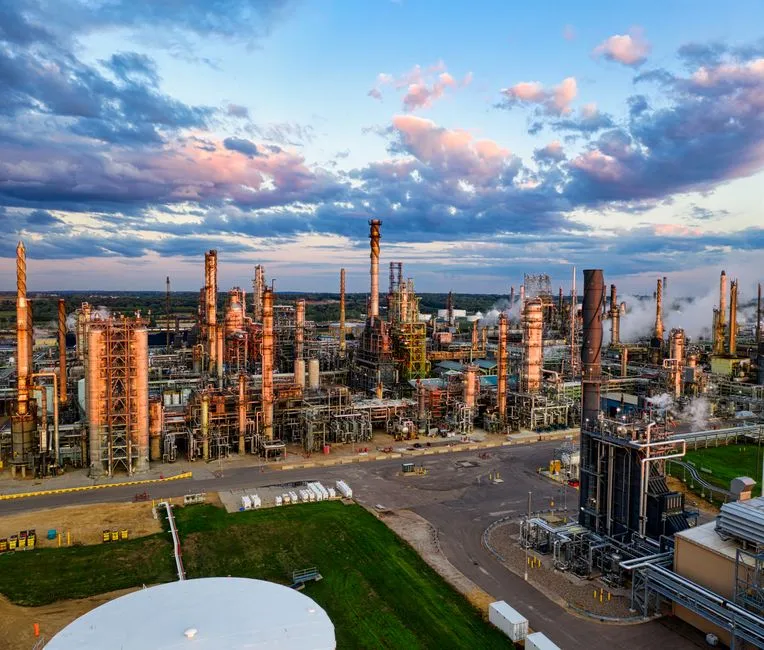
Federal pretreatment rules do not provide a single national FOG limit that can be inserted into an Elk City bid specification. HydropureWater's 2026 regulatory summary states that 40 CFR 403.5 sets no single national FOG concentration. The receiving POTW's written local limits and permit conditions must define the numerical acceptance criteria.
Under 40 CFR 403.5(b)(6), petroleum oil, nonbiodegradable cutting oil, and mineral-oil products must not be discharged in amounts that cause interference or pass through a POTW. The same section prohibits pH below 5.0 and addresses heat above 40°C where it causes a POTW to exceed 40°C, unless the approval authority allows otherwise, according to HydropureWater's 2026 regulatory summary.
Under 40 CFR 403.5(c), each POTW with a pretreatment program must establish local limits. The factory should therefore obtain the receiving authority's written limits rather than rely on an equipment article or another plant's permit. Specify which parameter the Elk City operation fails first—oil, FOG, TSS, pH, COD, or another regulated constituent—and match the treatment train to that parameter.
Procurement documents should require analytical monitoring, calibration records, chemical logs, float or sludge handling, and operating flexibility. If chemical addition is part of the train, consider how chlorine dioxide generation equipment might fit a broader treatment strategy, but do not include unrelated equipment unless the characterized wastewater requires it.
The compliance question is therefore not “Does the DAF remove enough percent?” It is “Which local parameter fails first, under which flow and batch condition, and can the selected train meet that limit while controlling oil carryover, sludge or float, and downstream impacts?”
A Decision Framework for Elk City Factories
The preferred train follows from the contaminants, permit limits, footprint, and residue pathway rather than the equipment label. Choose DAF when emulsified oil, fine low-density solids, or FOG are the primary compliance risk, space is constrained, or existing equalization and downstream treatment need a compact oil-removal stage. Choose a clarifier when heavy settleable solids dominate, free oil is removed upstream, and lower capital and operating cost are the dominant objectives.
Choose a hybrid train when the wastewater contains both heavy settleable solids and emulsified oil. Ecologix states that hybrid systems can combine DAF oil removal with clarifier sedimentation. The sequence is: characterize the wastewater, confirm permit parameters, test conditioning, verify hydraulic loading, compare five-year cost, then select materials and controls.
| Observed condition | Preferred direction | Required verification |
|---|---|---|
| Emulsified oil or FOG is the first permit failure | DAF, normally with chemical conditioning | Oil form, surfactant effects, float carryover, and pilot removal |
| Heavy settleable solids dominate and free oil is removed upstream | Clarifier | Settling rate, sludge withdrawal, carryover, and peak flow |
| Heavy solids and emulsified oil occur together | DAF and clarifier stages | Intermediate solids transfer, hydraulics, and residue handling |
| Floor space is constrained | DAF subject to plot verification | Footprint, access, controls, and utilities |
| Free oil has recovery value | Oil-management stage before primary separation | Recovered-oil quality, containment, and disposal pathway |
| Downstream biological or membrane treatment is planned | DAF or clarifier followed by coordinated polishing | Residual chemical, float carryover, and loading to the next process |
DAF Corp states that laboratory DAF feasibility analysis and on-site pilot studies are available as part of process development. This supports pilot testing as a recognized procurement step, not as a promise of a particular result. Require the industrial dissolved air flotation system, high-efficiency lamella clarifier, and automatic chemical dosing system to be evaluated as coordinated process elements.
Specify corrosion-resistant materials, oil-resistant skimming, odor control, high-low level controls, chemical-feed interlocks, freeze protection appropriate to Elk City's seasonal conditions, maintenance access, and local controls. If reverse osmosis is planned, evaluate float carryover and residual chemicals because they can increase membrane cleaning and replacement costs; the industrial reverse osmosis water purification system should therefore share the same process basis.
Pilot Testing and Supplier Bid Checklist
A defensible bid compares the same wastewater, the same design basis, and the same acceptance criteria. Require each bidder to submit the same wastewater characterization package and identify sizing assumptions, including flow range, hydraulic loading, retention, and chemical-demand basis.
For DAF bids, require the proposed recycle system, saturation pressure, bubble-generation method, expected solids loading, float-skimming arrangement, chemical feed points, and controls. For clarifier bids, require inlet distribution, settling area, sludge withdrawal, and short-circuit prevention. Ask bidders to explain how free oil, emulsified oil, surfactants, temperature variation, and high TSS loads affect performance.
| Bid package | Required information | Acceptance basis |
|---|---|---|
| Wastewater characterization | Representative sampling plan, laboratory results, and batch or upset data | Same analytical package submitted by every bidder |
| Design basis | Flow range, hydraulic loading, retention, TSS and FOG basis | Equipment capacity tied to characterized peak and average conditions |
| Pilot plan | Conditioning matrix, operating sequence, and monitoring method | Representative operation, not clean-water demonstration |
| Five-year cost | Electricity, chemicals, maintenance, residue treatment, labor, and parts | Common assumptions and clearly stated exclusions |
| Vendor execution | Oil recovery, odor control, containment, controls integration, training, service, and spares | Documented commitments in the commercial offer |
Request five-year cost inputs for electricity, chemicals, maintenance, sludge or float treatment, operator labor, and replacement parts. A supplier should not claim a guaranteed removal percentage without identifying the wastewater basis. Include oil-recovery potential, local service, operator training, controls integration, and documented spare-parts availability in vendor evaluation.
Tie final acceptance to verified permit-relevant performance under representative operation. The vendor should demonstrate the selected operating point, chemical setpoints, float or sludge behavior, and downstream response. Where biological treatment or membranes are part of the project, include the MBR-integrated wastewater treatment system interface in that review rather than treating it as an unrelated downstream package.
Frequently Asked Questions
Which has the lower five-year cost: DAF or a clarifier for an Elk City petroleum wastewater system?
HydropureWater's 2026 comparison reports five-year total cost of ownership of $1.50-$4.50/m³ for DAF and $0.80-$2.50/m³ for a clarifier, so the cited comparison favors the clarifier on cost. The factory should not select solely from that range: request project pricing and compare electricity, chemicals, labor, float or sludge treatment, and the cost of permit failures under the same flow and residue assumptions. The equipment quote alone is not a five-year cost comparison.
Should a petroleum wastewater skid be sized from the DAF or clarifier loading ranges?
No. HydropureWater's 2026 comparison reports DAF loading of 5-15 m/h with 10-30 minutes retention and clarifier loading of 1-3 m/h with 2-4 hours retention, but those cited ranges are screening values rather than a final Elk City design. Require wastewater-specific characterization, peak-flow analysis, conditioning tests, and pilot confirmation before fixing vessel area, hydraulic capacity, controls, or chemical demand.
How should a buyer qualify a DAF or clarifier supplier?
Require every bidder to use the same characterized wastewater and disclose flow, loading, retention, chemical, and residue assumptions. Evaluate pilot performance under representative conditions, local controls integration, maintenance access, operator training, service capability, and spare-parts documentation. Do not accept a guaranteed removal claim unless the supplier identifies the wastewater, operating conditions, and analytical method supporting it.
Does 40 CFR 403.5 provide the FOG limit for an Elk City factory?
No. HydropureWater's 2026 regulatory summary states that 40 CFR 403.5 sets no single national FOG concentration, while 40 CFR 403.5(c) requires POTWs with pretreatment programs to establish local limits. Obtain the receiving authority's written limits, identify which permit parameter fails first, and tie pilot and final acceptance to those requirements rather than to a generic percentage.