Which treatment should a Commerce factory choose?
For most Commerce-area plastics and rubber factories with variable, oily polymer washwater, choose DAF as the primary unit; add a lamella clarifier downstream when filler or carbon-black solids need polishing. DAF is the safer choice when FOG or plasticizer exceeds 50 mg/L, during product changeovers, or when emulsified latex is present. A lamella clarifier alone is more suitable when dense, settleable fillers dominate and free oil stays below 50 mg/L. The final choice should follow representative sampling, jar testing, peak-flow sizing, and confirmation of the plant’s current permit and local sewer requirements.
That is a screening rule, not a final equipment specification. HydropureWater’s 2026 plastics and rubber guidance recommends DAF when FOG and plasticizer exceed 50 mg/L or when effluent changes with production changeovers. It identifies a narrower lamella case: settled TSS from fillers or carbon black dominates, while free oil remains below 50 mg/L (HydropureWater, 2026).
Variable polymer effluent usually contains two separable fractions: floatable oils and emulsions that require flotation, plus denser filler particles that need clarification. In that case, the more defensible configuration is an industrial dissolved air flotation system followed by a lamella clarifier for polymer wastewater.
Commerce does not, by itself, establish the applicable limit. The buyer must verify the facility’s SIC classification, current permit, discharge route, monitoring requirements, and local sewer-use ordinance. The supplied research identifies 40 CFR 414 for certain plastics and rubber categories, but it does not establish that every Commerce facility falls within the same federal category or discharge arrangement.
How plastics and rubber wastewater differs from other industrial effluent
Polymer wastewater can change with the production schedule rather than following a stable daily concentration curve, so equipment selected from an average flow and one laboratory sample may fail during washdown or product changeover.
Wash streams from reactors, blenders, extruders, and molding equipment can carry polymer and latex carryover, plasticizer oils, release agents, suspended pellets, and surfactant-laden changeover water. HydropureWater reports plasticizer oils at 50–500 mg/L in compounding washwater, TSS reaching 800–3,000 mg/L during changeovers, and FOG exceeding 200 mg/L during the same operating window (HydropureWater, 2026). These ranges describe polymer-processing streams; they are not Commerce permit limits.
That variability changes the engineering problem. A production schedule may create concentrated washwater in a short interval, followed by dilution from equipment washdown. Sizing on average flow can leave the selected unit overloaded for 20–30% of operating hours, according to HydropureWater’s 2026 plastics and rubber guide. A procurement drawing therefore needs both sustained flow and peak or intermittent washdown capacity.
Process identity also matters. Plastics molding and extrusion streams may contain filler, regrind, polymer dust, hydraulic oil, and mold-release residue. Recyclers may generate streams dominated by dense calcium carbonate, label adhesive, ink, and regrind fines. Latex and polymer-emulsion production is different again: surfactant-stabilized colloidal particles may remain suspended rather than settling under gravity.
The regulatory framework must be handled with similar precision. The supplied plastics and rubber pretreatment compliance guide identifies 40 CFR 414 for relevant plastics and rubber SIC categories. A Commerce plant must determine whether that category applies to its actual operations, whether discharge is direct or indirect, and whether a different categorical rule or local ordinance controls. Do not transfer limits from another city or another manufacturer’s subcategory.
DAF and lamella clarifier remove different pollutants
DAF removes floatable material through bubble attachment, while a lamella clarifier removes sufficiently dense particles through shortened gravity-settling paths; neither mechanism performs the other unit’s primary separation reliably.
In a DAF system, a clarified side stream is pressurized with air at 4–6 bar in a saturation vessel. It is then released through a pressure-relief valve, producing microbubbles in the 30–50 micron range that attach to conditioned floc (Clearwater Industries, 2026). HydropureWater reports that the resulting floc-bubble aggregates rise in 3–5 minutes and are removed by a rotating or chain skimmer; heavier material can be scraped from the tank bottom (HydropureWater, 2026).
A lamella clarifier uses parallel plates inclined at 55–60 degrees. Dense particles settle against the plates, slide toward a hopper, and leave as thickened underflow, while clarified water exits through top launders. HydropureWater rates its lamella system at 20–40 m/h projected-plate surface loading and states that it can use up to 30% less chemical demand than a comparable DAF system because plate geometry performs much of the separation (HydropureWater, 2026). That comparison remains conditional on comparable duty and influent.
The failure modes are practical. A DAF may lift plasticizer and fine polymer floatables while leaving heavier carbon black, talc, or calcium carbonate in its bottom compartment, where resuspension can release it into the clarified stream. A lamella alone may settle those fillers but allow floating plasticizer and stable emulsions to pass over the outlet weir.
| Selection factor | DAF | Lamella clarifier |
|---|---|---|
| Primary mechanism | Conditioned particles attach to microbubbles, rise, and are skimmed | Dense particles settle on inclined plates and slide to a hopper |
| Best pollutant fit | Free oil, plasticizer, emulsified latex, and fine floatable solids | Dense filler, carbon black, regrind, and other settleable solids |
| Typical conditioning | Coagulant, flocculant, pH adjustment, and emulsion control where needed | Lower chemical demand; coagulant may still be required |
| Sludge streams | Float sludge plus possible heavier bottom sludge | Clarifier bottom sludge or lamella underflow |
| Principal limitation | Heavy settled material may require clarification downstream | Low-density oils and stable emulsions are unreliable standalone targets |
| Best application | Variable or oily polymer effluent requiring oil and emulsion control | Standalone for settleable solids with low free oil, or polishing after DAF |
The practical conclusion is not that DAF is always superior. It is that each unit should be assigned the separation duty its mechanism can actually perform. A broader DAF versus clarifier comparison provides useful context for other oily industrial streams, but the final selection still requires plastics and rubber wastewater data.
Performance, operating cost, and sludge differences
DAF generally fits oily and emulsified pollutants, while lamella clarification fits dense settleable solids; lifecycle cost depends on chemical demand, air and sludge handling, and the consequences of oil carryover.
DAF requires a more closely managed chemical train. Coagulation and flocculation create particles that bubbles can attach to, pH adjustment may be necessary, and saturation pressure, recycle flow, bubble quality, and skimming must remain stable. In polymer streams, a cationic polyamine may also be evaluated as an emulsion-breaking aid before polymer flocculant is selected.
Lamella clarification has a simpler mechanical duty and lower stated chemical demand, but its performance still depends on particle density, settling velocity, plate loading, and stable influent chemistry. It offers little protection against a changeover wash containing new release agents, emulsions, or plasticizer oils.
Sludge concentration changes downstream requirements. HydropureWater’s 2026 source lists DAF float sludge at 3–6%, clarifier bottom sludge at 1–2%, and downstream lamella underflow at 2–4% dry solids (HydropureWater, 2026). A thicker float generally reduces the water volume sent to dewatering, while the individual plant’s solids generation and water content must still determine pump and press capacity.
| Procurement factor | DAF | Lamella clarifier | Hybrid assessment |
|---|---|---|---|
| Pollutant fit | Oil and emulsion removal | Dense solids clarification | Broader fit to mixed polymer effluent |
| Chemical demand | Coagulant, flocculant, pH control, and possibly emulsion aid | Up to 30% less than a comparable DAF, according to HydropureWater’s 2026 specification | Evaluate each stage separately |
| Sludge | 3–6% float; possible bottom sludge | 1–2% bottom sludge; 2–4% lamella underflow when used downstream | Separate float and underflow handling paths |
| Footprint | Compact skid arrangements are available | Vertical plates reduce the required floor area | Compare installed area, not tank footprint alone |
| Main operating risk | Chemical drift, poor bubble attachment, or unstable skimming | Oil or emulsion pass-through and sensitivity to chemistry changes | More equipment, controls, and operating interfaces |
| Best-fit application | Variable oily or emulsified washwater | Low-oil, filler-dominated wastewater | Streams containing floatable oils and heavier solids |
No generic removal percentage should be used to justify the purchase. Require the supplier to use the plant’s representative influent and report residual FOG, TSS, float recovery, sludge solids, and chemical consumption. For sludge handling, ask whether an automatic coagulant and flocculant dosing system is included and how the selected float will reach a sludge filter press for DAF float.
Turn wastewater characterization into an equipment decision
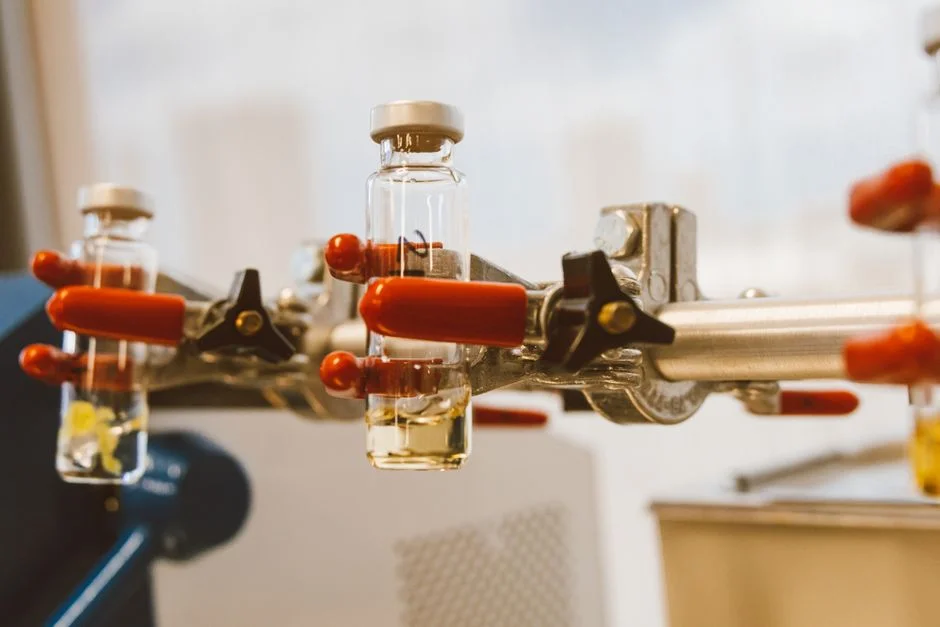
Representative sampling and jar testing convert a screening threshold into an enforceable equipment decision; the supplier should receive the same dataset used to select the duty point.
- Build a representative sample set. Obtain a 24-hour composite and separate samples covering normal production, washdown, and product-changeover conditions, following the recommendation in HydropureWater’s 2026 source. A composite can characterize typical discharge, but event samples may expose the peaks that control equipment loading.
- Characterize the pollutants. Measure TSS, FOG, oil-and-grease characteristics, pH, settleable solids, and the dominant polymer or production chemistry. Identify whether the oil is free, emulsified, or carried on polymer particles.
- Apply the screening rule. FOG and plasticizer above 50 mg/L, or loading that varies during changeovers, favors DAF. Free oil below 50 mg/L with dominant settled filler favors lamella clarification (HydropureWater, 2026).
- Run jar tests. WesTech recommends jar testing for oily polymer streams to optimize float separation and sludge concentration (WesTech, 2026). Test both DAF and lamella concepts using the same wastewater where practical.
- Evaluate the DAF conditioning train. HydropureWater identifies alum, PAC, or ferric chloride at 50–150 mg/L, anionic or cationic flocculant at 0.5–3 mg/L, and pH adjustment to 6.5–7.5 as a conditioning envelope (HydropureWater, 2026). These are test starting points, not guaranteed doses.
- Test latex emulsion control. Evaluate a cationic polyamine coagulant aid when jar results show that the emulsion must be broken before flotation or flocculation can proceed.
- Size for peak and intermittent flow. HydropureWater reports that average-flow sizing can leave a unit overloaded for 20–30% of operating hours (HydropureWater, 2026). Peak washdown and changeover flows must therefore appear in the selected duty point.
| Observed wastewater condition | Screening direction | Required verification |
|---|---|---|
| FOG or plasticizer above 50 mg/L; changeover spikes; stable emulsion | DAF first | Jar test, emulsion evaluation, float recovery, residual FOG |
| Free oil below 50 mg/L; settled filler or carbon black dominates | Lamella alone is plausible | Settling test, projected-plate loading, residual TSS |
| Floatable oils and dense solids both present | DAF followed by lamella | Stage-by-stage mass balance and separate sludge assessment |
| Results differ substantially among products or shifts | Do not finalize from one sample | Expanded event sampling and production-cycle review |
Before approval, the buyer should close each open item with a measured value or an explicit condition in the proposal. “Foam, oils, and suspended solids” is not a sufficient influent specification for equipment selection.
Size the system for peaks, chemistry, and sludge handling
The correct treatment train must handle the plant’s production-cycle flow profile and the resulting solids streams; selecting only a flotation or clarification tank leaves several interconnected costs unaccounted for.
Use actual production records to identify sustained flow, washdown peaks, changeover duration, and equalization available upstream. HydropureWater’s DAF range is 4–300 m³/h across 13 standard models. For flows up to 66 GPM, approximately 15 m³/h, the referenced configuration can be supplied as a single skid; above 66 GPM, HydropureWater describes a modular two-skid arrangement (HydropureWater, 2026). These figures describe the cited DAF range, not an automatic selection for a Commerce plant.
Compare installed systems, not isolated tank prices. Relevant line items include equalization, chemical storage and preparation, automatic dosing, pH control, DAF, lamella clarification, sludge pumping, thickened-sludge storage, and dewatering. If the selected DAF includes integrated chemical equipment, confirm what remains outside that scope and whether it is suitable for the proposed polymers.
Use the cited sludge concentrations to develop the downstream design basis: 3–6% DAF float, 1–2% clarifier bottom sludge, and 2–4% lamella underflow, each stated by HydropureWater in 2026. Confirm actual dry-solids production, hydraulic flow, polymer conditioning for the press, wash-water demand, and cake-disposal route. A float pump should not be selected from average sludge production alone.
Reliability requirements should name the selected model, peak-flow capacity, duty point, materials of construction, controls, instrumentation, sludge-removal method, chemical storage, and performance-test protocol. For variable chemistry, specify how pH, coagulant, and flocculant control will respond and what operating information the PLC will retain.
What to require before issuing a purchase order
A purchase order should convert test results, regulatory verification, and operating duties into written proposal requirements rather than leaving performance to interpretation.
- Regulatory responsibility: Require the proposal to identify the proposed federal category, local sewer-use ordinance, discharge point, monitoring frequency, and permit limits after facility-specific verification. Do not accept 40 CFR 414 as automatically applicable without checking SIC code and discharge route.
- Comparable basis: Give every supplier the same representative wastewater dataset, selected operating scenario, peak flow, and required effluent objectives. Ask for DAF, lamella, and hybrid alternatives where the comparison remains technically credible.
- Test evidence: Request jar-test or pilot results for FOG removal, float recovery, residual TSS, sludge solids concentration, and chemical consumption. Include the worst relevant changeover chemistry in the test plan.
- Guarantee boundaries: State whether each guarantee applies to average flow, peak flow, or a specified composite. Identify excluded changeover conditions, bypass provisions, and remedies for missed objectives.
- Scope and support: Confirm startup support, operator training, control integration, maintenance, spare parts, and site-service responsibilities. Do not infer delivery timing from the single-skid design alone.
The final acceptance test should use a mutually agreed representative wastewater, documented analytical methods, and a defined operating period. If a guarantee depends on a chemical dose that has not been demonstrated, keep that condition visible in the purchase order.
Frequently Asked Questions
Can a Commerce plastics or rubber factory use a clarifier alone?
Yes, when settled TSS dominates and free oil is below the cited 50 mg/L threshold. HydropureWater’s 2026 screening rule identifies that as the narrower lamella case. Variable washwater, emulsions, or FOG above the threshold generally calls for DAF or a DAF-lamella hybrid. Confirm that conclusion with settling tests, jar tests, and the facility’s permit.
How should a DAF system be sized for a plastics or rubber plant?
Size from representative sustained and peak flows, including washdown and product-changeover events, rather than average production flow alone. HydropureWater’s 2026 range is 4–300 m³/h across 13 models, with a single-skid configuration up to 66 GPM, approximately 15 m³/h. Request the proposed model and performance duty point tied to the plant’s measured peak conditions.
What drives the total cost of DAF versus clarifier treatment?
Request a lifecycle-cost breakdown rather than relying on an equipment quotation alone. The comparison must include coagulant and flocculant, compressed air, electricity, sludge pumping, dewatering, hauling, operator attention, and the cost of an oil-carryover event. No supported price was provided in the research, so request current budgetary and installed-cost quotations using the same design duty.
How should a buyer compare treatment suppliers?
Provide each supplier with the same wastewater dataset, production schedule, peak flow, chemistry, and required effluent objectives. Require jar-test or pilot evidence, define guarantee conditions, and verify the proposed train against the current permit and local sewer ordinance. Also confirm startup, controls integration, maintenance, spare parts, and technical support.
Can a DAF protect downstream biological or membrane treatment?
Potentially. HydropureWater’s Cincinnati guide, published in 2026, describes DAF upstream of MBR as a method for removing free and emulsified oil that could foul membranes. That does not establish a guaranteed protection level for a Commerce plant. Confirm the final duty through site-specific jar testing or pilot work and require residual oil and TSS performance tied to the proposed downstream system.