Why Plastics and Rubber Wastewater Needs a Different Treatment Choice
Polymer effluent does not behave like food-processing or metal-finishing wastewater, and treating it as if it does is the single most common reason a clarifier or DAF underperforms in a plastics plant. A typical stream leaving a Berryville reactor, blender, or extruder wash carries polymer and latex carryover, plasticizer oils (phthalate and adipate esters, often 50–500 mg/L in compounding washwater), release agents, suspended polymer pellets, and intermittent surfactant-laden washwater from product changeovers. Total suspended solids (TSS) routinely hit 800–3,000 mg/L during a changeover, and FOG can spike above 200 mg/L in the same window.
These streams are also intermittently high-strength. TSS and FOG swing with production schedule rather than holding a steady diurnal curve, which is why a unit sized on average flow will be overloaded 20–30% of operating hours (HydropureWater field data, 2026). The relevant U.S. EPA effluent guideline is 40 CFR 414 — Plastics, Synthetic Resins, and Cellulosic Man-Made Fibers — which covers SIC codes 2821, 2823, 2824, 2823, and rubber products (SIC 3011, 3021, 3052, 3061). Facilities discharging to the Carroll County POTW must meet the 40 CFR 414 limits plus any local sewer use ordinance; daily maximum BOD₅, TSS, and oil & grease limits under 40 CFR 414 subparts F–G govern the typical Berryville plant.
The consequence of choosing the wrong unit is concrete. A DAF alone will lift plasticizer oils and fine polymer floatables but leave heavier settled solids (carbon black, talc, calcium carbonate filler) in the bottom of the tank, where they resuspend and bleed through the clarified water. A lamella clarifier alone will settle those high-density fillers but completely miss the floating plasticizer layer sitting on top, sending FOG over the weir. Selecting the right technology requires balancing these distinct separation needs.
How a DAF Clarifier Treats Polymer Effluent
DAF pressurizes a side-stream of clarified water with air at 4–6 bar in a saturation vessel, then releases it through a pressure-relief valve into the flotation tank. The dissolved air comes out of solution as micro-bubbles in the 30–50 micron range, which attach to flocculated particles and float them to the surface (per Clearwater Industries, 2026). For polymer streams, the flotation tank is preceded by a coagulation and flocculation stage — typical conditioning is a metal coagulant (alum, PAC, or ferric chloride at 50–150 mg/L) followed by an anionic or cationic flocculant (0.5–3 mg/L), with pH adjusted to 6.5–7.5 using caustic or sulfuric acid. Latex streams often need a cationic polyamine coagulant aid to break the emulsion before the polymer flocculant can bridge the flocs.
Once conditioned, the wastewater enters the flotation cell. Micro-bubbles nucleate on floc surfaces, the floc-buoyancy aggregate rises in 3–5 minutes, and a rotating or chain skimmer sweeps the float blanket into a sludge trough. Clarified water exits through a submerged launder below the float layer but above the sediment compartment. Most DAF designs include a bottom sludge scraper to handle the heavier settled fraction, since polymer streams produce both float and settled solids in the same tank.
WesTech notes that jar testing is recommended for oily polymer streams to optimize float separation and sludge concentration (WesTech, 2026). For a Berryville plant, the right reference unit is the dissolved air flotation system, which covers 4–300 m³/h across 13 standard models and is proven in petrochemical and similar oily/greasy applications (HydropureWater, 2026).
How a Lamella Clarifier Handles Polymer Effluent
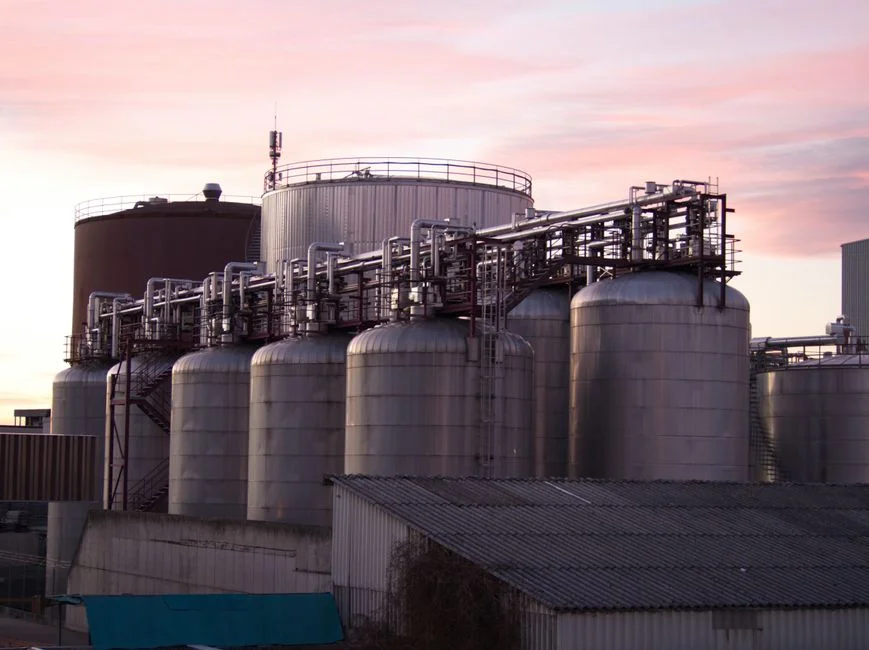
A lamella clarifier — also called an inclined plate settler — uses a stack of parallel plates inclined at 55–60° to shorten the settling distance for suspended solids. Feed enters a reaction zone where coagulant is dosed, then flows upward through the plate pack. Solids settle on the plate surfaces against the counter-current flow, slide down to a hopper, and are discharged as thickened sludge; clarified water exits through top outlet launders. The compact plate geometry delivers a high effective surface area in a small footprint — typical surface loading rates are 20–40 m/h on the projected plate area, compared with 1–2 m/h for a conventional clarifier of the same floor area.
The HydropureWater lamella clarifier is rated for 20–40 m/h surface loading with up to 30% less chemical demand than a comparable DAF system, because the inclined plates do most of the separation work without the coagulant-plus-flocculant pair a DAF needs (HydropureWater, 2026). The trade-off is mechanism: a lamella works only on particles with specific gravity greater than water that will actually settle. Floating plasticizer oils, latex emulsions, and low-density polymer residues pass straight through the plate pack and over the outlet weir. These limitations necessitate careful consideration of the effluent's physical characteristics.
In practice, the HydropureWater lamella clarifier is most often deployed as a polishing step after a DAF, not as a standalone for polymer effluent. It catches the fine TSS and slow-settling filler that escapes the DAF float zone, and it concentrates the underflow sludge to 2–4% dry solids, which is a useful feed for downstream sludge dewatering design for polymer-rich sludge.
DAF vs Clarifier for Berryville Plastics and Rubber Factories
For a Berryville plant, the decision is rarely "DAF or clarifier" in the abstract — it is "which configuration matches this specific effluent." The matrix below ranks the two units on the parameters a small-to-mid plastics or rubber factory will actually care about.
| Parameter | DAF | Lamella Clarifier |
|---|---|---|
| Typical flow range | 4–300 m³/h, 13 models | 5–200 m³/h, modular |
| Footprint | Compact, single skid up to 66 GPM (~15 m³/h) | Smaller for same flow; vertical plate pack saves floor area |
| FOG / plasticizer removal | 85–95% (primary mechanism) | <20% (floatables pass through) |
| Fine polymer residue removal | 70–90% (with chemical conditioning) | 30–50% (only the heavier fraction) |
| Settled TSS removal (fillers, carbon black) | 50–70% (sediment compartment) | 80–95% (primary mechanism) |
| Chemical demand | Coagulant + flocculant + pH adjust | Coagulant only, up to 30% less |
| Sludge concentration | 3–6% float sludge; 1–2% bottom | 2–4% underflow |
| CAPEX direction (skid-mounted, small plant) | Moderate | Lower |
| OPEX direction (chemicals, power, hauling) | Higher (chemical-driven) | Lower |
| Best fit | Oily, variable polymer effluent | Settled TSS, low FOG streams |
For a typical Berryville plastics plant running 10–80 m³/h with intermittent oily washwater and product-changeover spikes, a DAF-first configuration is the safer pick because the failure mode of a missed FOG event is an oil sheen on the receiving POTW and a 40 CFR 414 oil & grease violation. For a rubber compounding line with high-density filler carryover (carbon black, silica) and little free oil, a lamella clarifier alone may suffice — but in most cases the hybrid (DAF upstream, lamella downstream) is the most robust configuration. The hybrid handles the variable polymer effluent that defines plastics and rubber production, and it lines up directly with the modularity of the dissolved air flotation system paired with the HydropureWater lamella clarifier. For broader context on selecting between these two for oily industrial streams, see the comparison in DAF vs clarifier for oily industrial wastewater.
Matching the System to Your Berryville Plant Profile
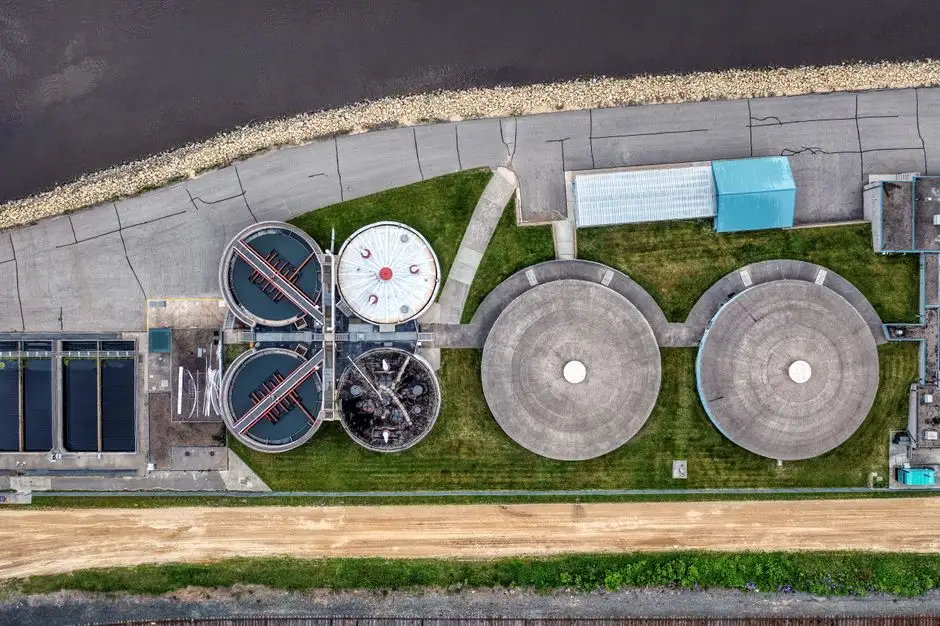
The decision rule below is the one we use when a Berryville plant sends a wastewater characterization. It assumes discharge to the Carroll County POTW and compliance with 40 CFR 414 daily maximum limits.
- Choose DAF alone if FOG + plasticizer is greater than 50 mg/L, or if effluent composition is variable across product changeovers. The DAF will handle the floatables; if settled TSS bleed-through is an issue, add a polishing stage later.
- Choose lamella clarifier alone if settled TSS is high (above 500 mg/L), FOG is below 50 mg/L, and the plant is not running plasticizer-rich extrusion washwater. Typical rubber compounding with carbon black and no free oil fits here.
- Choose DAF + lamella hybrid for variable polymer streams and to gain compliance headroom on 40 CFR 414. This is the most defensible configuration for a small plant that cannot afford a permit excursion.
Most Berryville plastics and rubber plants fall in the 4–50 m³/h flow range, which is exactly what the DAF's smaller standard models (DAF-1 through DAF-5) cover. For flows up to 66 GPM (~15 m³/h), a single skid-mounted plug-and-play unit handles the full DAF chemistry train in one footprint, with a PLC-controlled screen, integrated coagulant and flocculant dosing, and a chemical mix train. Pair the skid with a HydropureWater automatic chemical dosing system for polymer and pH adjustment, and a downstream lamella for the settled fraction. Before final selection, run jar tests on a representative 24-hour composite — DAF float performance can swing 20–30% on polymer type, and a 2-day bench test will save months of operational adjustment.
Frequently Asked Questions
Should a plastics or rubber plant in Berryville choose a DAF or a clarifier?
Choose a DAF when FOG and plasticizer exceed 50 mg/L or when the effluent swings with product changeovers. Choose a lamella clarifier when the dominant load is settled TSS from fillers and carbon black, and free oil is below 50 mg/L. For variable polymer effluent where 40 CFR 414 compliance headroom is needed, the DAF + lamella hybrid is the most robust configuration.
What flow rate does the DAF cover for Berryville plants?
The DAF line spans 4–300 m³/h across 13 standard models. For flows up to 66 GPM (~15 m³/h) the system ships as a single skid; above 66 GPM it is built as a modular two-skid configuration (HydropureWater, 2026). Most Berryville plastics and rubber plants fall in the lower end of that range, covered by the DAF-1 through DAF-5 models.
What chemicals are used to condition polymer effluent for DAF?
A typical conditioning train uses a metal coagulant (alum, PAC, or ferric chloride at 50–150 mg/L), a polymer flocculant (anionic or cationic polyacrylamide at 0.5–3 mg/L), and pH adjustment to 6.5–7.5 with caustic or sulfuric acid. Latex streams often need a cationic coagulant aid to break the emulsion. Final selection should be set by