Why Plastics and Rubber Wastewater in Easley Is Hard to Settle
Plastics wash lines and extrusion cooling streams in the Easley, SC area discharge a contaminant mix that defeats plain gravity settling. Low-density polymer fines, silicone or hydrocarbon-based mold-release oils, and surfactant residues from wash tanks stay suspended because their effective density is close to water and their surface charge keeps particles dispersed. Energycle notes that streams with light suspended solids, emulsified oils, and biological flocs "will not settle reliably" in settling tanks, which is why the source positions micro-bubble flotation as the default for plastic-recycling and similar feeds. A rectangular or circular clarifier sized only on flow rate will overflow with floatable scum and discharge TSS that fails local pretreatment limits.
Rubber compounding and latex goods operations make the problem harder. Compounding washdowns carry zinc stearate release agents and dense carbon-black fines that do settle, but the same line also discharges emulsified process oils and sticky latex solids that coat scraper blades and bridge lamella plate packs. Batch discharge from mold-release baths and mold-cooling surges sends temperature and load spikes through the system. Without a properly sized equalization tank, those swings push sludge blankets and skimmate into the clarifier overflow. A separator that actively lifts contaminants—rather than waiting for them to fall—is the appropriate unit operation for these streams. Screening upstream with a mechanical bar screen is the first protective step; the broader context is covered in a mechanical screen in wastewater treatment guide that covers rag, label, and fiber removal before primary separation.
How DAF and Clarifiers Actually Separate Solids
A dissolved air flotation (DAF) unit works by pressurizing a recycle side-stream of clarified water to 400–600 kPa and saturating it with compressed air in a pressurization vessel. When that saturated recycle is released into the flotation tank through nozzles, the pressure drop nucleates millions of micro-bubbles in the 20–70 µm size range; Clearwater/SigmaDAF cites a 30–50 µm band for its units. Those bubbles attach to coagulated and flocculated particles and lift them to the surface as a float blanket that a paddle skimmer removes. Heavier settleable solids drop into a bottom collection zone and are augered out separately. The mechanism is active flotation, not sedimentation.
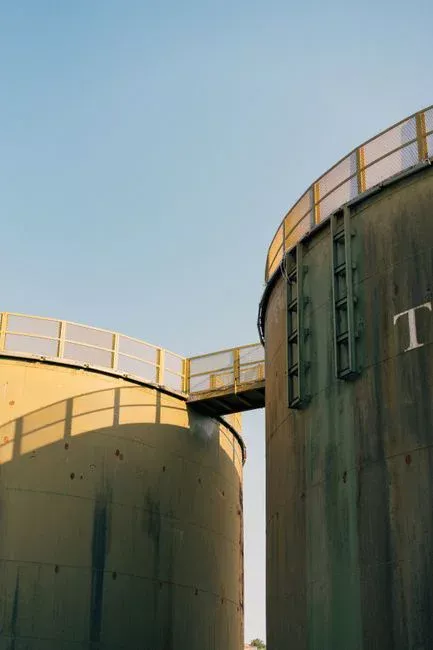
Conventional or lamella clarifiers rely on Stokes-law settling where particles denser than water fall through a quiescent zone under gravity. Inclined lamella plates increase the effective settling surface area inside a compact footprint, which raises the hydraulic loading rate a clarifier can accept, but they do not change particle density. Energycle's technology comparison is direct on this point: DAF is "strong" on emulsified oil because micro-bubbles lift it, gravity settling is "weak" on emulsified FOG because it does not settle, and lamella plates offer only "limited" performance on emulsified oil because the plates address footprint, not buoyancy. The same source states that DAF systems "typically achieve 95–99% TSS removal and similar FOG removal efficiency" when paired with coagulation and flocculation chemistry suited to the wastewater. The lift-versus-settle mechanism gap is the single largest predictor of which technology will hold up under variable plastics and rubber loads. For a unit built around this mechanism, see the HydropureWater DAF system range.
DAF vs Clarifier for Easley Plants: Side-by-Side Comparison
The trade-off an Easley engineer needs to defend to procurement can be scanned in one table. The table below aligns target contaminant, removal efficiency, hydraulic loading rate, footprint, sludge dryness, and OPEX sensitivity to chemistry for DAF, conventional gravity clarifier, and lamella clarifier, drawing on the qualitative columns from Energycle's technology comparison and the DAF operating data that the same source publishes.
| Parameter | DAF (micro-bubble flotation) | Conventional gravity clarifier | Lamella clarifier (inclined plates) |
|---|---|---|---|
| Target contaminant | Light fines, emulsified oil, FOG, biological floc | Dense grit and heavy sludge | Medium-density suspended solids at high flow |
| Removal efficiency (TSS / FOG) | Up to 95–99% with matched chemistry (Energycle) | Weak on emulsified FOG; depends on settleability | Limited on emulsified oil; depends on plate spacing |
| Hydraulic / surface loading | High; Energycle cites 10–30 m³/(m²·h) on standard ERM-DAF models | Low; long residence time required | Compact; inclined plates raise effective area vs. rectangular |
| Footprint | Compact for the throughput | Largest plan area of the three | Compact vs. conventional; plates pack area in |
| Sludge dryness | Drier float sludge, easier to dewater | Wet settled sludge, higher haul volume | Similar to conventional settling, chemistry-dependent |
| OPEX sensitivity to chemistry | Higher; performance tied to coagulant/flocculant dose | Lower; often no chemistry on dense grit | Lower than DAF, higher than a raw grit basin |
| Best fit | Primary solids–FOG removal on plastics and rubber streams | Coarse grit removal as pretreatment only | Polishing after DAF or as primary on stable, denser feeds |
For sizing, the standard DAF range published by Energycle covers 2–100 m³/h on packaged models, with higher-capacity and custom configurations matched to specific loads. The HydropureWater DAF system spans 4–300 m³/h across its standard model line, and the HydropureWater lamella clarifier is positioned as a polishing or compact-clarifier option. DAF outperforms on emulsified FOG and footprint, while the conventional clarifier is limited to coarse grit and the lamella sits in the middle as a compact settler that does not address buoyancy.
When a Lamella Clarifier Still Wins in 2026
Dense inorganic grit from rubber-compounding pre-wash, fines from regrind and pellet-cooling lines, and heavy mineral fillers all settle reliably under gravity. For those streams, a lamella clarifier delivers acceptable TSS reduction with a lower chemical bill than DAF, because coagulation and flocculation are not required to make the particles floatable.
The second strong case is polishing. A lamella clarifier downstream of a DAF catches fine floc carryover and protects a subsequent UF or RO membrane stage from fouling. Plants with no chemical dosing budget and a very stable, low-FOG influent—for example, a closed-loop cooling-water bleed with consistent TSS—can justify a clarifier-only train, but they should plan for a larger equalization volume to dampen batch swings. Where a lamella clarifier is selected, the HydropureWater lamella clarifier is one option to evaluate against the same DAF-plus-lamella polishing train that most Easley plastics and rubber plants will end up specifying.
Sizing, Footprint, and Pretreatment Fit for Easley Facilities
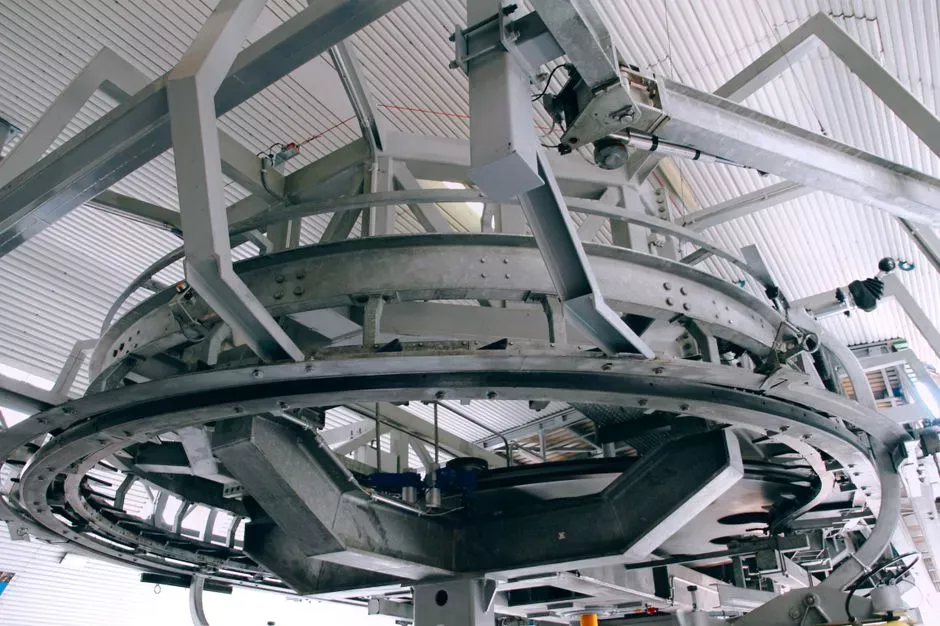
Standard packaged DAF units can be delivered and commissioned within a few weeks according to Energycle; larger or custom-engineered systems designed around specific influent conditions, flow rates, and integration requirements carry longer lead times confirmed during the engineering phase. The sizing inputs remain the same: peak and average wastewater flow rate, influent TSS, FOG, and BOD concentrations, pH and temperature range, the SCDHEC or local pretreatment discharge target, and the available footprint. A jar test with the actual wastewater sample is the standard way to confirm coagulant and flocculant type, dose, and expected removal efficiency before final equipment selection.
A rotary mechanical bar screen upstream protects both DAF and clarifier trains from rags, labels, fibrous debris, and pellet fragments that jam skimmers, plug lamella packs, and accumulate in the DAF recycle loop. Pair the DAF with a HydropureWater automatic chemical dosing system so coagulant and flocculant respond to influent swings in real time, keeping TSS and FOG removal inside the 95–99% band when batch discharges hit. An upstream rotary mechanical bar screen is the standard first guard. Equalization, screening, chemistry, and primary separation should be specified as one train rather than four independent purchases, because the sizing of each block depends on the others.
2026 Selection Framework: Choose DAF or Choose Clarifier
The decision reduces to a five-minute check against the actual stream. Choose DAF if the influent carries light plastic fines, mold-release oil, or emulsified latex; if footprint is constrained on an existing concrete pad; if consistent TSS and FOG removal under variable batch loads matters for SCDHEC pretreatment compliance; and if drier float sludge will reduce hauling and disposal cost. Energycle's 95–99% removal range with matched chemistry is the quantitative guardrail here.
Choose a clarifier—typically a lamella design—if contaminants are dense and fast-settling, if the plant prefers minimal chemical use, or if the unit is being added as a polishing step downstream of an existing DAF or biological stage. The qualitative guardrail is that inclined plates raise effective area but do not change particle density, so emulsified FOG will still pass through. For most Easley plastics and rubber plants the answer is DAF primary plus lamella polishing, sized against the 20–70 µm micro-bubble band, the 95–99% DAF removal target, and the lamella surface-loading rate appropriate to the polishing duty. A related reference for a different stream signature is the DAF or clarifier for chemicals wastewater in Florence guide, which applies the same framework to a different influent profile.
Frequently Asked Questions
What capital budget should an Easley plastics or rubber plant plan for a DAF system in 2026?
No public source provides a current DAF unit price, so the budget must be built from project inputs. Request a budgetary quote that itemizes the tank, the recycle pump package, the saturation vessel, the skimmer drive, the control panel, and the chemical dosing skid as separate line items, then add installation, freight to Easley, and a 10–15% engineering contingency. Ask the supplier to size the quote against your peak hourly flow and the 95–99% DAF removal target, not against a generic model number.
How do I pick a DAF or lamella clarifier supplier that will still be around in 2027?
Confirm the manufacturer has documented standard models in the flow range you need (Energycle publishes 2–100 m³/h on standard packaged units, with custom configurations above that), ask for at least two reference installations on plastics or rubber streams with similar TSS and FOG loadings, and require a written warranty that names the major mechanical and electrical components and the coverage period rather than a generic one-year statement. Verify service response time for a site in the Easley, SC area before signing.
What SCDHEC pretreatment risks should I flag before I commit to a clarifier-only train?
The research does not quote a specific SCDHEC numeric limit, so the defensible move is to identify the inputs you need to obtain. Pull your facility's industrial pretreatment permit, list the TSS, FOG, and BOD limits it imposes, and compare them against the documented performance of gravity settling on emulsified oil—which Energycle rates as "weak" because emulsified FOG does not settle by gravity. If your permit limit is tighter than what a clarifier-only train can demonstrate on your jar-test results, a DAF primary stage is the lower-risk choice. Submit the jar-test data with your permit compliance documentation.
Can a packaged DAF unit be delivered and commissioned in time for a 2026 plant shutdown?
Energycle states that standard packaged DAF units "can be delivered and commissioned within a few weeks," while larger or custom-engineered systems have longer lead times confirmed during the engineering phase. For a fixed shutdown date, request a written schedule from the supplier that locks the engineering submittal, fabrication, ship, and commissioning windows separately, and confirm the saturator vessel and recycle pump lead times against your required on-air date before you sign the purchase order.