Which treatment should a Newark petroleum factory choose?
Newark petroleum bulk wastewater facilities should generally choose DAF when the stream contains free or emulsified oil, FOG, neutral-buoyancy solids or floc that resists settling; a clarifier is usually preferable when dense, settleable inorganic solids dominate. Neither device is a universal answer. A mixed stream may require equalization, grit removal, chemical conditioning, DAF and downstream clarification or biological treatment. Final selection should follow site-specific characterization and pilot testing because the EPA states that technology performance and cost information should be checked against current information.
The decision begins with the physical behavior of the contaminants. DAF uses microbubbles to lift oil and low-density solids to the surface, while a clarifier relies on gravity to separate particles that settle under their own weight. Ecologix identifies emulsified oils, suspended solids and dissolved organic matter in produced water, and notes that refinery wastewater can contain oil, grease and COD. A 2026 petroleum wastewater DAF versus clarifier guide provides a broader comparison, but the Newark decision must remain tied to the actual stream.
Ecologix reports that one food-processing plant achieved 95% oil-and-grease removal with DAF, compared with 70% for a clarifier treating the same stream. That is a labeled commercial food-processing example, not a performance guarantee for petroleum bulk wastewater. The relevant comparison for a refinery-support or chemical plant is whether the proposed mechanism matches the measured oil distribution, particle density and flow variability.
EPA guidance also cautions against relying on historical technology costs and performance without current information (U.S. EPA, March 2013). Characterization, pilot work and a site-specific lifecycle comparison should therefore precede a purchase order.
Characterize the petroleum wastewater before selecting equipment
Wastewater characterization should define both the separation target and the hydraulic basis before equipment is sized. A New Jersey industrial wastewater pretreatment and DAF system guide provides useful context, but Newark procurement must use plant data rather than generic assumptions.
Request oil and grease, separate free oil from emulsified oil, TSS, particle-size distribution, particle specific gravity, COD, pH, temperature and chemical-conditioning results. Include representative composite and event samples, and define whether the proposed performance is based on oil and grease, TSS, COD or a combined permit/reuse requirement.
Obtain hourly flow and batch-discharge records. WX Water Tech lists DAF retention of 15–30 minutes and warns that an abrupt doubling of influent flow can reduce the bubble-to-solids ratio and produce solids carryover. Equalization may therefore be part of the process design rather than optional civil work.
| Design input | Information to obtain | Procurement consequence |
|---|---|---|
| Oil and solids | Free versus emulsified oil, oil and grease, TSS, particle-size distribution and specific gravity | Determines whether flotation, gravity separation or sequential treatment is technically credible |
| Bulk chemistry | COD, pH, temperature and chemical-conditioning response | Defines coagulant and polymer demand and downstream biological compatibility |
| Hydraulics | Average, peak, minimum, batch and emergency flow data | Sets equalization, retention time, hydraulic loading and skimming capacity |
| Solids origin | Grit, metal scale and other dense solids separated from oily process water | May require a separate grit-removal step before DAF or lamella clarification |
| Final destination | Sewer discharge, reuse, biological treatment and residual handling requirements | Sets effluent targets and determines float-cake or sludge handling requirements |
Separate streams carrying dense grit or metal scale from oily process water where practical. Mixed streams should be evaluated for sequential treatment, not forced into one primary unit. Pilot testing should then verify separation efficiency, chemical demand, residual properties and performance under variable flow.
How DAF and clarifiers separate petroleum pollutants
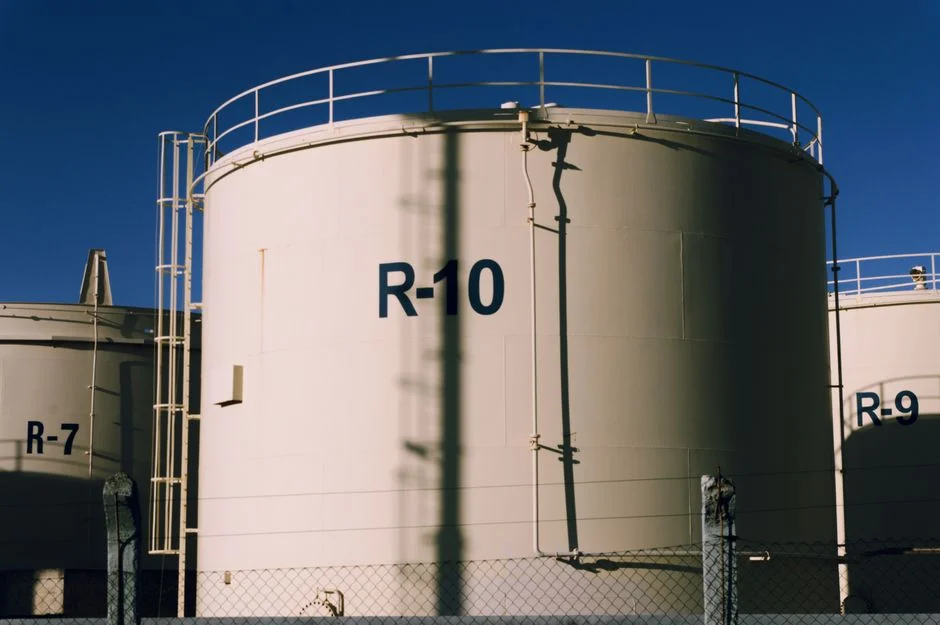
DAF and clarifiers separate opposite fractions of the same wastewater: flotation targets contaminants that rise, while gravity clarification targets particles that settle. WX Water Tech describes DAF as pressurizing a recycled clarified stream, dissolving air and releasing microbubbles measuring 20–50 microns in the flotation zone. Conditioned floc attaches to the bubbles and rises to a surface skimmer.
WX Water Tech lists DAF recycle at 10%–30% and saturation pressure at 4–6 bar. These are source-specific design ranges, not universal procurement defaults. The bidder must show how recycle, pressure, retention, solids loading and skimming duty relate to the Newark plant’s measured wastewater.
Conventional clarifiers provide downward settling area. Lamella or slant-plate clarifiers add inclined separation area, increasing effective settling surface without requiring the same plan area as a conventional basin. The basic physics remains unchanged: dense material moves to a bottom sludge collection zone. Slant plates cannot make neutral-buoyancy oil or poorly settling floc settle reliably.
Both technologies can require chemical conditioning. Coagulants neutralize particle surface charge; polymers bind micro-flocs into larger structures that can be separated more effectively. Neither device is a complete petroleum wastewater plant. Dissolved contaminants and residual oil may require biological treatment, filtration, adsorption or another polishing process.
| Feature | DAF | Clarifier or lamella clarifier |
|---|---|---|
| Separation mechanism | Microbubble buoyancy lifts conditioned material | Gravity settling moves dense particles downward |
| Best-fit contaminants | Free or emulsified oil, FOG, neutral-buoyancy solids and floc that resists settling | Dense inorganic solids, metal scale and reliably settleable particles |
| Reported design ranges | Recycle 10%–30%; pressure 4–6 bar; microbubbles 20–50 microns | Conventional and lamella options offer different hydraulic loading rates |
| Residual handling | Float cake requires recovery or dewatering | Bottom sludge requires pumping and dewatering |
| Key limitation | Sensitive to unbuffered hydraulic surges and upstream heavy solids | Oil and neutral-buoyancy floc may remain, float or pass through |
Where a controlled chemical dose is needed, an automatic chemical dosing system should be evaluated as part of the complete treatment train. The relevant downstream context for residual contaminants is covered in the 2026 MBBR design and buying guide.
Compare footprint, energy, operating cost and sludge handling
DAF generally exchanges greater mechanical complexity and energy demand for a smaller tank footprint. WX Water Tech lists surface hydraulic loading rates of 0.5–1.5 m³/m²/h for conventional clarifiers, 1.5–3.0 m³/m²/h for lamella clarifiers and 5.0–15.0 m³/m²/h for DAF. These are comparative design rates from that source; final loading must be validated against the pilot and the selected equipment.
For the DAF application described by WX Water Tech, energy use is listed as 0.05–0.12 kWh/m³. A gravity clarifier has fewer powered process components, but its larger civil footprint may carry construction, excavation and site-access costs. The lifecycle comparison should therefore include civil works, electrical infrastructure, chemical consumption, pumps, compressor load, operator attention, maintenance and carryover risk.
Residual solids must be compared as treatment residuals, not simply as “DAF sludge” and “clarifier sludge.” WX Water Tech lists DAF float cake at 3.0%–8.0% dry solids and gravity-clarifier sludge at 1%–3%. Higher dry solids can reduce dewatering volume, but float cake may contain recoverable oil and behave differently from mineral sludge. The downstream route must be selected from bench or pilot results.
| Comparison dimension | DAF | Clarifier or lamella clarifier |
|---|---|---|
| Surface hydraulic loading listed by WX Water Tech | 5.0–15.0 m³/m²/h | 0.5–1.5 m³/m²/h conventional; 1.5–3.0 m³/m²/h lamella |
| Footprint | Generally smaller | Conventional generally larger; lamella reduces the gap |
| Mechanical complexity | Higher | Lower for passive conventional clarification |
| Energy | 0.05–0.12 kWh/m³ for the application described by WX Water Tech | No equivalent figure was supplied by the research |
| Residual dry solids | 3.0%–8.0% float cake | 1%–3% gravity-clarifier sludge |
| Cost tendency | May be cost-effective for specific oil and grease contaminants, according to Ecologix | Generally lower operating costs, according to Ecologix |
Ecologix states that clarifiers generally have lower operating costs, while DAF may be more cost-effective for specific oil and grease contaminants. Neither statement establishes a Newark lifecycle total. Request current vendor quotations using the same flow basis and include sludge transport, recovered-oil disposal or reuse, filter-press capacity and the consequences of untreated carryover. Downstream equipment can change the comparison; a plate-and-frame filter press should be checked against measured residual solids rather than selected from dry-solids percentage alone.
Use a decision framework for mixed petroleum waste streams
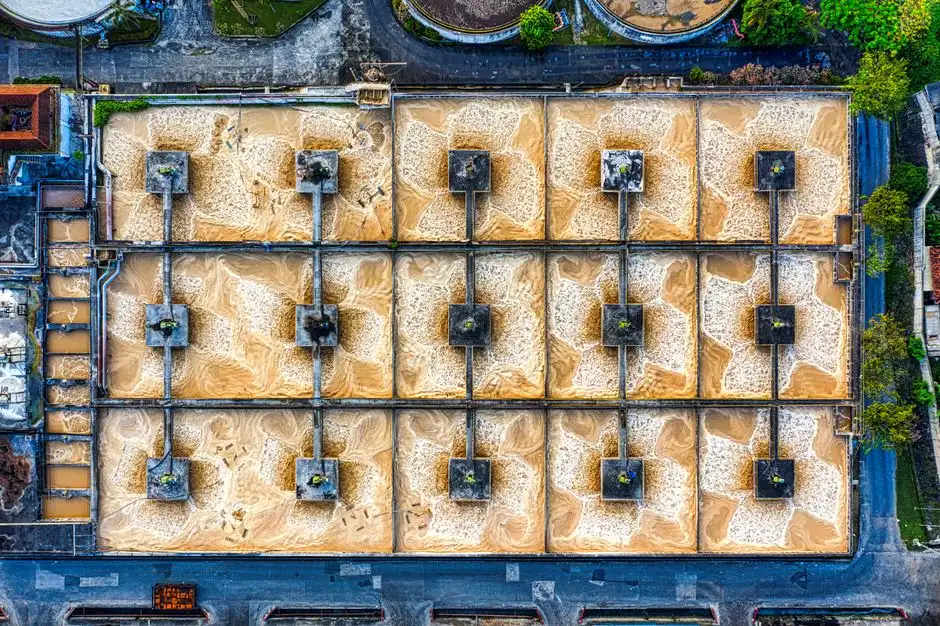
A defensible Newark decision follows the stream from characterization to pilot validation rather than selecting from equipment descriptions alone.
- Characterize the stream: establish oil and grease, free versus emulsified oil, TSS, COD, particle density, pH, temperature and the flow profile.
- Control heavy solids: remove or separately manage grit and metal scale before they enter sensitive separation equipment.
- Select the primary mechanism: evaluate DAF for oil and low-density solids; evaluate a lamella clarifier for dense petroleum solids.
- Add required downstream processes: include biological or polishing treatment where the discharge or reuse objective requires it.
- Validate with a pilot: verify performance, chemical demand, residual properties and recovery after flow disturbances before final sizing.
For a stream containing heavy solids and light oils, WX Water Tech supports a dual-stage logic: protect the DAF inlet from settled solids and prevent light oils from passing through to downstream biological basins. Where heavy solids exceed 500 mg/L, the source recommends upstream grit removal because high grit concentrations can cause wear on DAF saturation nozzles.
| Observed condition | Engineering response | Procurement requirement |
|---|---|---|
| Heavy solids exceed 500 mg/L | Provide upstream grit removal or screen | Include protected removal, solids disposal and nozzle-wear provisions in the scope |
| Flow is variable or batch-dominated | Provide upstream equalization where required | Define volume, turndown, mixing and controlled-feed duty |
| Heavy grit and light oil are both present | Evaluate sequential solids removal and DAF | Define each unit’s inlet protection and residual route |
| High-rate performance is required | Evaluate hybrid DAF with integrated lamella plates only after pilot work | Require chemistry-specific evidence and acceptance criteria |
Where the wastewater supports flotation, an industrial DAF system for petroleum wastewater should be specified against measured loading, not simply catalog capacity. A rotary mechanical bar screen may form part of a grit-control train when the characterization identifies a separable solids problem.
What to require from suppliers before purchasing in 2026
Supplier bids should be traceable to one measured design basis and one set of acceptance criteria. A general equipment list is not enough to compare Newark proposals.
- Design basis: measured flow range, oil and grease, TSS, particle density, COD, pH, temperature, operating hours and required effluent or reuse targets.
- Calculations: recycle rate, saturation pressure, flotation retention time, hydraulic loading, skimming capacity, sludge or float removal and chemical demand.
- Supplier scope: footprint, utilities, materials of construction, controls, residual-removal method, installation boundary, spares and local service support.
- Verification: pilot or site-representative evidence tied to acceptance criteria for removal, carryover, chemical consumption and residual handling.
- End use: confirmed disposal or reuse route for recovered oil, float cake and sludge, including compatibility with downstream dewatering.
Reject removal percentages from unrelated food-processing, mining or other streams as guarantees. The Ecologix 95% and 70% oil-and-grease comparison is useful only as a commercial example because its application differs from Newark petroleum wastewater. Require the bidder to explain which results are transferable, which require a pilot and which remain unverified.
Compliance should also be treated separately from equipment selection. Confirm the Newark facility’s permit, sewer-discharge terms, reuse requirements and residual-disposal constraints. An industrial treatment system comparison can help structure the evaluation, but the final award should follow site-specific evidence and documented acceptance criteria.
Frequently Asked Questions
How should a Newark factory compare the cost of DAF and a clarifier?
Request a lifecycle quotation for both options using the same measured flow, water-quality basis and residual-disposal assumptions. Include civil works, chemicals, electrical use, operator labor, maintenance, float-cake or sludge handling, and carryover consequences. Ecologix states that clarifiers generally have lower operating costs, while DAF may be more cost-effective for specific oil and grease contaminants; it does not supply a universal Newark cost comparison.
Does a DAF catalog capacity prove that a unit is correctly sized?
No. The supplied catalog covers 4–300 m³/h, but that is a supplier offering rather than a sizing recommendation for every Newark petroleum plant. Require the bidder to demonstrate that recycle, retention, hydraulic loading, skimming and chemical demand suit the measured stream and peak flow.
When is upstream grit removal necessary for a petroleum wastewater DAF?
WX Water Tech identifies heavy solids above 500 mg/L as a condition requiring upstream grit removal or screening to protect DAF saturation nozzles. Confirm the threshold against current site data and pilot results rather than applying it without characterization.
Does choosing DAF or a clarifier establish regulatory compliance?
No. Neither equipment choice alone establishes compliance; the Newark facility must confirm its permit, sewer-discharge and reuse requirements. Pilot testing is the final sizing check because wastewater characteristics and operating conditions determine separation performance, chemical demand and residual behavior.