Determine Whether the Discharge Enters Sioux City's Pretreatment Program
Food and beverage plants near Sioux City meet pretreatment requirements by confirming their status under the city’s Industrial Pretreatment Program, obtaining the required authorization, and controlling waste at the source before discharge. Sioux City regulates non-domestic wastewater under the Clean Water Act and 40 CFR Part 403. A significant industrial user (SIU) may discharge at least 25,000 gallons per day of process wastewater, contribute a process stream representing 5% or more of the treatment plant’s average dry-weather hydraulic or organic capacity, or adversely affect treatment-plant operations. The plant then characterizes representative wastewater and designs source control, equalization, treatment, monitoring, and documentation around its permit. The published SIU thresholds are screening criteria—not discharge limits.
Sioux City defines an industrial user as any non-residential user discharging non-domestic wastewater to the city’s sanitary sewer system. An industrial user may be designated an SIU when it meets either numerical criterion or has the potential to adversely affect wastewater-plant operations (City of Sioux City, Pretreatment Program). That third pathway matters: a plant need not recognize itself as an SIU before the city identifies the discharge as subject to permitting and compliance requirements.
Before issuing an equipment bid, obtain written confirmation of connection status, industrial-user classification, discharge authorization, monitoring obligations, and hauled-waste acceptance requirements. For SIU status, the city requires a completed application returned to the Pretreatment Program at 3100 S. Lewis Blvd, Sioux City, IA 51106. Questions can be directed to the listed department number, 712-279-698. A new hauler or facility requesting acceptance of industrial waste, septic waste, or grease-trap material must also complete the city’s Hauled Waste Application before bringing loads to the wastewater treatment plant (City of Sioux City, Pretreatment Program).
| Decision item | What the plant must establish | Procurement consequence |
|---|---|---|
| Regulatory status | Industrial-user and SIU classification | Do not assume a generic industrial-wastewater specification covers the site’s obligations. |
| Authorization | Permit or other written discharge authorization | Base treatment scope and monitoring on issued requirements, not proposed equipment. |
| Connection and streams | Sanitary-sewer connection, process flows, and hauled-waste route | Exclude or separately manage streams not authorized for discharge. |
| Agency contact | Confirmation from the Pretreatment Department | Record the reviewer, date, conditions, and approved monitoring plan. |
Sioux City’s industrial pretreatment requirements also provide a useful regional reference for food and beverage pretreatment limits near Rembrandt, but the governing document for each facility remains its own permit and written program requirements.
Characterize the Wastewater Before Choosing Treatment
A representative wastewater dataset—not a single clean production sample—must determine whether treatment should focus on suspended solids, FOG, pH, or intermittent chemical demand. The city’s SIU screening values are 25,000 gallons per day and 5% of average dry-weather hydraulic or organic capacity, with potential adverse impact independently sufficient for designation (City of Sioux City, Pretreatment Program). These are regulatory classification thresholds, not acceptable pollutant concentrations.
Build the sampling plan around normal production, peak cleaning, product changeovers, and upset conditions. Request flow, pH, suspended solids, oil and grease, and every additional parameter specified by the permit or pretreatment staff. Identify high-strength cleaning chemicals, sanitizers, dissolved ingredients, food solids, and colloidal material. These streams can vary substantially with the product mix and operating schedule, so a favorable sample from one production run may not represent the discharge design condition.
Separate process wastewater from domestic sewage, stormwater, cooling water, and hauled-waste streams before calculating hydraulic or organic loading. Misclassified dilution can mask a high-strength process stream; conversely, including an unauthorized flow in the design basis can produce unnecessary equipment capacity without establishing compliance. Confirm which streams enter the sanitary sewer and how they are metered.
Use the characterization results to define three separate design questions: how much flow needs treatment, which contaminants control treatment performance, and what operating variation the equipment must absorb. For a broader treatment-method overview, see the industrial effluent treatment guide, while keeping all local limits tied to Sioux City’s written requirements.
| Design input | Evidence to request | Decision supported |
|---|---|---|
| Flow | Representative production, cleaning, and peak-flow measurements | Equalization and treatment sizing |
| pH | Time-series results across production and cleaning | Adjustment, equalization, and monitoring requirements |
| Suspended solids | Results separated by dominant waste stream | DAF or clarification need |
| Oil and grease/FOG | Representative samples and cleaning-cycle characterization | FOG removal and source-control strategy |
| Chemical constituents | Product and cleaner inventory with wastewater observations | Segregation and chemical-control design |
| Permit parameters | Issued permit and written pretreatment instructions | Final performance and compliance scope |
Build a Source-Control and Equalization Strategy
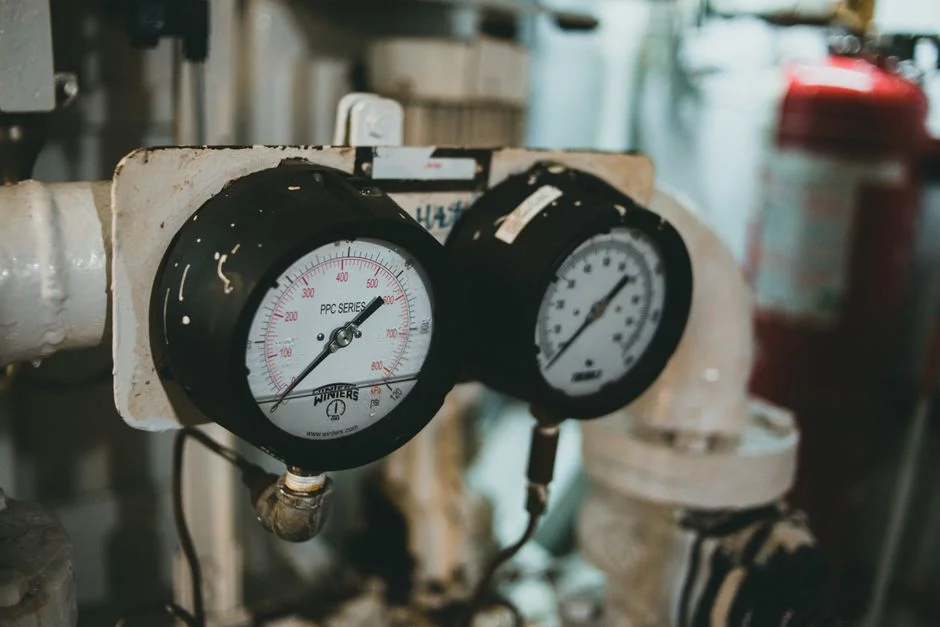
Source control should prevent concentrated or incompatible waste streams from overloading the treatment train, and equalization should moderate the flow, concentration, pH, and solids variation that characterize food-processing production. The required equalization basis must come from the plant’s actual production cycle and permit conditions; no supplied research establishes a universal detention time or basin volume for Sioux City food-and-beverage facilities.
Start at the plant floor. Segregate high-strength process streams, cleaning rinses, and incompatible chemical wastes by origin, then define where each stream goes. This reduces the load reaching physical treatment and prevents local chemical or temperature conditions from disrupting coagulation, flotation, or downstream biological treatment. Where a waste stream cannot lawfully enter the sewer, route it through an approved disposal process rather than relying on dilution.
Equalization then serves as the buffer between batch production, cleaning cycles, and continuous discharge. Its controls should respond to measured flow and pollutant-related variables rather than assume every release has the same strength. Evaluate the wastewater in a representative DAF system for food-processing wastewater trial to determine whether suspended solids, FOG, oil and grease, and colloidal material are the principal removal targets. A favorable removal result does not establish pH compliance; that parameter requires its own assessment.
Connect chemical dosing to measured demand and automatic control. Food-and-beverage wastewater composition changes with products and schedules, so a fixed recipe can under-treat one period and over-dose another. An automatic chemical dosing system should be evaluated against the chemicals actually required, their control logic, the available utilities, and the operating response when feed quality changes.
Retain segregation decisions, equalization levels, chemical adjustments, and upstream operating records as operating evidence. These records help demonstrate why the plant’s discharge changed, support troubleshooting, and answer permit-review questions without reconstructing conditions from memory.
Select a Treatment Train Based on the Permit and Pollutant Load
DAF is the primary physical-removal option when representative wastewater shows that suspended solids, FOG, oil and grease, or colloidal material control the treatment objective. The published product range covers 4–300 m³/h across 13 standard models (HydropureWater, Dissolved Air Flotation System). That range provides a catalog boundary for initial screening; it is not a recommendation for any food plant’s unit size.
Use automatic chemical dosing where treatment requires controlled coagulant, flocculant, pH adjustment, or specialty-chemical addition. The described dosing systems are PLC-controlled, skid-mounted, pre-wired, and factory-tested (HydropureWater, Automatic Chemical Dosing System). Factory testing verifies equipment function, not removal performance on the plant’s wastewater. Chemical demand and control strategy still need to be established through representative testing.
Treat pH as a permit-controlled parameter. Where required, provide independent pH verification and adjustment before discharge; do not assume physical flotation substitutes for separate pH-compliance controls. The applicable concentration range and monitoring frequency must come from the facility’s permit and written program requirements because the supplied research contains no food-and-beverage-specific numeric discharge limit for Sioux City.
Evaluate a lamella clarifier when compact solids separation, sludge recirculation, and clarification are appropriate. The published surface-loading range is 20–40 m/h, and chemical consumption may be reduced by up to 30% (HydropureWater, High-Efficiency Sedimentation Tank). Those figures describe the published equipment basis, not a guaranteed outcome at a specific plant; actual performance depends on wastewater characteristics, floc behavior, and operating conditions.
For higher-quality reuse or water-recovery objectives, evaluate MBR or RO only after upstream treatment has established the required feed quality. These processes should not be substituted for pretreatment without resolving solids, FOG, colloidal material, and chemical demand upstream. The DAF unit selection and sizing framework provides a useful method for separating equipment capacity from treatment performance.
| Process need | Primary evaluation | Key design questions |
|---|---|---|
| Suspended solids, FOG, oil and grease, and colloid removal | DAF | Does representative wastewater confirm the target contaminants, and what flow and loading variation must it handle? |
| Controlled coagulant, flocculant, or specialty-chemical addition | Automatic chemical dosing | Which measured variables control dose, and how will underdose and overdose be detected? |
| pH adjustment and verification | Dedicated pH-control stage | What permit condition applies, and what independent verification is required? |
| Compact clarification with sludge recirculation | Lamella clarifier | Do feed characteristics and site constraints support the published operating basis? |
| Higher-quality reuse or recovery | MBR or RO after pretreatment | Has upstream treatment consistently produced the required feed quality? |
Tie final sizing to peak flow, pollutant loading, operating hours, footprint, utilities, sludge handling, redundancy, and permit conditions—not unit capacity alone. Request a sizing calculation that identifies each design input and separates assumed values from measured data.
Create a Monitoring and Compliance-Record System
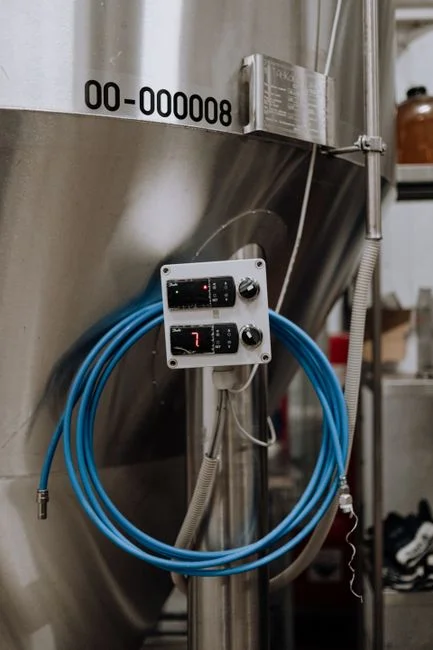
A compliant treatment train requires a documented chain from sampling point to laboratory result, review, corrective action, and record retention. Identify sampling points, parameters, frequencies, and reporting obligations in the permit and written instructions from Sioux City’s Pretreatment Department. The available research does not provide food-and-beverage-specific numeric limits for these parameters, so those values must be confirmed from the applicable plant documents.
Assign responsibility for each step. Plant operators should document sampling conditions and process readings; laboratory personnel should maintain analytical traceability; the compliance owner should review results against permit conditions; and responsible managers should initiate and document corrective action. The record should identify the sample, stream, operating condition, result, review decision, and any resulting change.
Real-time or local instrumentation can support process control for variables such as flow and pH where appropriate, but it does not replace required compliance samples or laboratory evidence. Preserve calibration records, laboratory reports, chain-of-custody documentation, review comments, and corrective-action records for the retention period required by the permit and written program instructions.
Define the operating response before an excursion occurs. Depending on the condition, response may include isolating or diverting a stream, troubleshooting equipment, reviewing chemical dose, adjusting operations, and notifying plant personnel. The trigger and decision authority should be written into the operating procedure rather than left to a shift-by-shift judgment call.
The City of Sioux City’s February 25, 2024 update stated that the EPA audit of the Industrial Pretreatment Program concluded with no violations. The audit consisted of a four-day review of files, data, practices, and enforcement, and the audit cycle occurs twice every five years (City of Sioux City, February 25, 2024). This describes program oversight; it does not replace the plant’s own monitoring obligations. Related service and maintenance responsibilities can be coordinated through treatment-system valves and filter media records.
| Control step | Required record | Operational use |
|---|---|---|
| Sampling | Location, time, stream, operating condition, and sample identification | Establish what was sampled and under which conditions. |
| Analysis | Laboratory report and applicable analytical traceability | Substantiate the reported result. |
| Review | Comparison with permit conditions and responsible-person sign-off | Determine whether corrective action is needed. |
| Correction | Alarm, isolation, diversion, dose adjustment, repair, or notification record | Show how excursions were controlled and resolved. |
| Retention | Monitoring, calibration, maintenance, and reporting records | Support permit reviews and operating audits. |
Plan Permitting, Installation, and Commissioning
Pretreatment should be treated as an engineered compliance project, not an off-the-shelf equipment purchase. Open the engineering and permitting workstream with Sioux City before committing to a process that may conflict with permit limits, monitoring requirements, or sewer-use conditions. Record the city’s responses in the design basis so later procurement changes do not create an unapproved gap.
When SIU status applies, complete the city’s industrial-user application and return it to the Pretreatment Program (City of Sioux City, Pretreatment Program). If the facility hauls industrial waste, septic waste, or grease-trap material to the wastewater treatment plant, obtain the city’s determination through the Hauled Waste Application before accepting loads. The program uses application information to decide whether the hauled waste is acceptable.
Develop performance tests around actual wastewater and written acceptance criteria. Clean-water equipment tests establish function, not whether the plant will consistently meet its permit conditions. The test protocol should identify the wastewater source, operating condition, analytical method, acceptance criterion, and response to an unsuccessful result. Where a criterion depends on a discharge limit, use the limit in the issued permit or written program requirements.
Before handover, confirm operator training, preventive maintenance, spare-parts availability, chemical supply, sludge disposal, emergency response, and responsibility for each record. Update the operating manual with actual set points, isolation steps, sampling instructions, and corrective-action pathways. The broader US industrial wastewater treatment compliance guide provides a useful implementation sequence, but Sioux City’s permit remains controlling.
- Confirm jurisdiction, connection status, industrial-user classification, and hauled-waste requirements.
- Obtain representative wastewater data across production, cleaning, changeover, and upset conditions.
- Develop source control and equalization requirements from measured flows and concentrations.
- Select and size treatment using the permit, pollutant loads, site constraints, and sludge-handling needs.
- Perform wastewater-based performance testing and document acceptance results.
- Train operators, transfer records and procedures, and establish the monitoring and corrective-action system.
Frequently Asked Questions
What pretreatment limit applies to a food-and-beverage plant near Sioux City?
The supplied research does not provide food-and-beverage-specific numeric discharge limits. Obtain the plant’s permit and written requirements from Sioux City’s Pretreatment Department, then map each applicable limit to a treatment objective, sampling point, frequency, and record. The city’s SIU thresholds are classification tests, not discharge limits and not proof of noncompliance.
Does a plant below 25,000 gallons per day avoid the significant-industrial-user requirements?
Not necessarily. Sioux City also screens for process-waste contributions of 5% or more of average dry-weather hydraulic or organic capacity, and it may designate an industrial user as an SIU when the discharge has the potential to adversely affect treatment-plant operations (City of Sioux City, Pretreatment Program). Obtain the city’s written classification rather than making that determination internally.
What should a buyer request when pricing a food-processing DAF and chemical dosing system?
Request an itemized quotation tied to the representative wastewater dataset and issued permit: flow basis, pollutant loading, treatment objectives, unit size, chemical scope, controls, utilities, foundations, sludge handling, installation, commissioning, training, spares, warranty, and delivery schedule. Because the research contains no applicable price range or project quotation, require a vendor to show which inputs drive each cost rather than accepting an unqualified equipment price. For related DAF and clarifier comparisons, see the industrial treatment decision guide and DAF-versus-clarifier guide.
How should a supplier demonstrate that its equipment meets the plant’s requirements?
Ask for a written sizing calculation, control narrative, materials information, utilities demand, commissioning protocol, and performance-test plan tied to the plant’s wastewater and acceptance criteria. During startup, require documented results from representative wastewater rather than only a clean-water functional test. Also verify operator training, maintenance support, spare-parts availability, sludge disposition, and responsibility for performance results before accepting the equipment.