Which treatment principle fits each EV wastewater stream?
For EV and auto factory wastewater in Morristown, neither DAF nor a clarifier is automatically best in 2026. Choose DAF as the leading candidate for flotation-responsive material such as oil, FOG, buoyant paint solids and some conditioned fine solids; choose a lamella clarifier when the stream contains predominantly gravity-settleable solids. Mixed streams often require both. EPA’s Process Design Manual identifies flotation and gravity separation as complementary processes and gives DAF design references of 20–60 minutes hydraulic retention and 0.01–0.05 lb air/lb solids, while conventional primary clarifier references are 24–48 m/d overflow and 1.5–2.5 hours detention. Final selection should follow EV-specific wastewater characterization, jar testing or pilot work, permit review and vendor comparison.
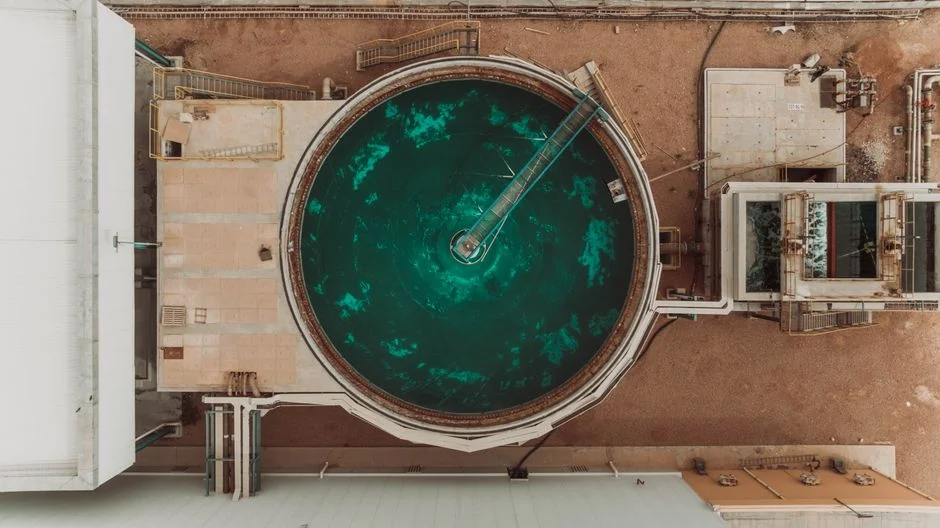
DAF is a flotation process: microbubbles attach to suspended particles, the resulting float rises, and surface material is skimmed. A clarifier uses gravity separation: settleable solids move into a bottom sludge zone and are withdrawn. A lamella clarifier adds inclined plates to create a compact settling arrangement.
EPA’s January 1975 Process Design Manual for Suspended Solids Removal divides wastewater solids into soluble, colloidal, supracolloidal and settleable fractions. That framework matters because an EV plant’s streams do not behave alike. Paint and coating overspray may carry oily or buoyant material; body-shop and vehicle-wash wastewater may contain FOG; casting and machining streams may contain dense TSS; cleaning wastewater can include mixtures with variable solids and chemistry. Colloidal material may not separate cleanly by either mechanism until coagulation and flocculation are tested.
| EV manufacturing stream | Initial treatment candidate | Decision basis |
|---|---|---|
| Paint and coating overspray | DAF | Test for oily, buoyant and flotation-responsive paint solids. |
| Body-shop and vehicle-wash wastewater | DAF | Test FOG response and free oil; verify solids capture. |
| Casting and machining wastewater | Lamella clarifier | Determine whether dense TSS settles effectively. |
| Cleaning or mixed process wastewater | Jar test both routes | Identify size distribution, conditioning needs and variable responses. |
The supplied research does not establish a current Morristown discharge limit or the composition of a particular EV plant’s wastewater. Use the Morristown DAF and clarifier process comparison for separation context, then obtain the site permit, sewer-acceptance conditions and approved characterization before selecting equipment.
DAF versus clarifier: a 2026 EV procurement matrix
DAF is the leading candidate when oil, FOG, buoyant paint material or conditioned fine particles are the treatment target. A lamella clarifier is the leading candidate when gravity-settleable solids dominate; the supplier’s catalog describes a unit that combines sludge recirculation, flocculation and inclined-plate separation in one compact structure.
HydropureWater’s 2026 DAF catalog covers 4–300 m³/h across 13 models, while its lamella clarifier catalog states surface-loading rates of 20–40 m/h and up to 30% lower chemical consumption. These are supplier catalog references for preliminary comparison, not project sizing or guaranteed operating results.
| Procurement factor | DAF | Lamella clarifier |
|---|---|---|
| Primary mechanism | Bubble attachment and surface skimming | Gravity settling on inclined plates |
| Strongest EV application | Oily, FOG-bearing and buoyant material | Dense, gravity-settleable TSS |
| Catalog reference | 4–300 m³/h across 13 models | 20–40 m/h surface loading |
| Chemical requirement | Conditioning may be needed for attachment | Flocculation may be needed for capture |
| Utility burden | Compressed air and recycle-pump package | Typically avoids the DAF air-saturation package |
| Removed-solids stream | Surface float | Bottom underflow |
Ecologix’s 2026 selection guide reports 95% oil-and-grease removal with DAF versus 70% with a clarifier for the same cited food and chemical stream. Treat those percentages as a non-guaranteed case example, not an EV performance claim. The comparison also needs a common basis: both routes require equalization, pH control where necessary, chemical conditioning when required, solids withdrawal, downstream sludge handling and final compliance verification.
For preliminary equipment review, ask each bidder to price an industrial DAF system against a lamella clarifier using the same wastewater flow, constituent concentrations, footprint, utilities and effluent objectives. A DAF may be attractive where a compact flotation stage is required; a clarifier may be simpler where solids are readily settleable and compressed-air equipment is undesirable.
How to size DAF and lamella clarification from real plant data
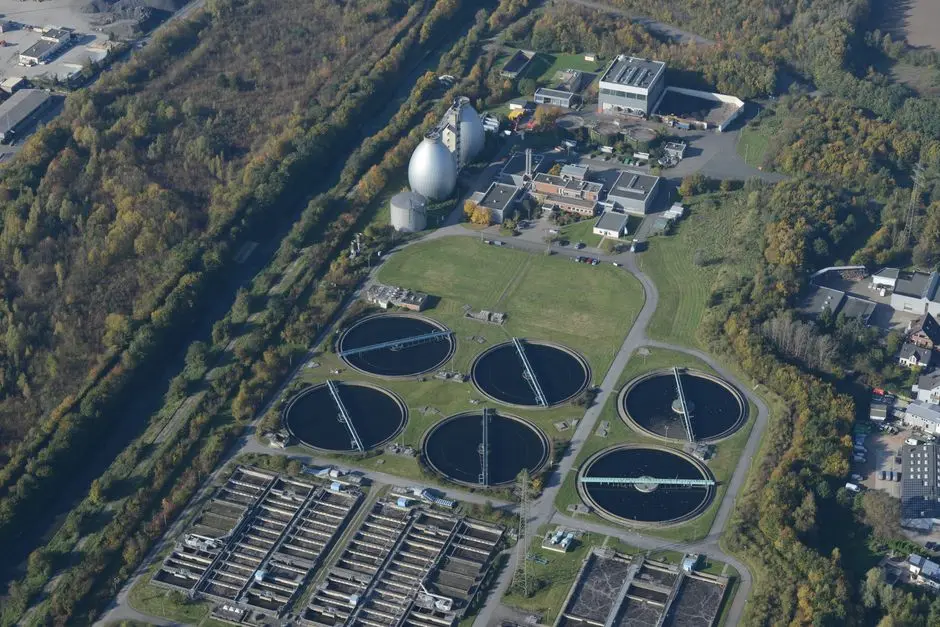
Neither nominal catalog capacity nor flow alone can establish a defensible EV wastewater pretreatment size. The EPA’s January 1975 manual gives preliminary design references that must be checked against site data, pilot results and the selected supplier’s equipment design.
For DAF, EPA Table 7-4 cites hydraulic retention of 20–60 minutes and an air-to-solids ratio of 0.01–0.05 lb air/lb solids. For conventional primary clarifiers, EPA Table 7-2 gives overflow rates of 24–48 m/d and detention times of 1.5–2.5 hours at average flow. These municipal primary-clarifier references are process context, not a complete EV sizing specification.
HydropureWater’s lamella catalog states 20–40 m/h surface loading. Require the selected supplier to identify the applicable loading basis, equalization strategy, inlet condition and sludge-extraction method. A separate automatic chemical dosing system may be needed to reproduce pilot chemistry at full scale.
| Sizing input | Information required from the EV plant | Why it affects selection |
|---|---|---|
| Flow | Average flow, peak flow and batch or storm-discharge conditions | Sets hydraulic and equalization requirements. |
| Solids | TSS, oil and grease, settleable solids and particle-size distribution | Determines whether flotation, gravity separation or both are viable. |
| Chemistry | pH, temperature and permit-relevant constituents | Defines conditioning needs and process sensitivity. |
| Site | Available footprint, power supply and future production expansion | Tests physical and utility feasibility. |
Issue a sampling plan covering TSS, oil and grease, settleable solids, particle-size distribution, pH, temperature and constituents identified by the plant’s permit. Sample the actual manufacturing streams across production conditions, including batch dumping, cleanup and vehicle-wash operation. No supplied source supports sizing from flow alone.
What pilot testing must prove before the purchase order?
Industrial wastewater pilot testing must establish removal, recovered-solids quality and operating sensitivity under the real EV wastewater matrix before either route is guaranteed in a purchase order. EPA’s January 1975 manual uses jar testing to compare chemical-treatment conditions and then supports pilot evaluation before full-scale design.
Use the coagulant dosing system design criteria to translate the chemical conditions identified in the laboratory into the full-scale system. Test actual wastewater rather than clean water or only a synthetic oil surrogate; a synthetic feed will not reproduce the interaction between paint solids, emulsions, detergents, FOG, machining residues and other plant contaminants.
- Establish feed characteristics across normal production, cleanup and batch-discharge periods.
- Compare chemical conditions in jar testing, including pH, mixing and dose.
- Run a representative pilot with the proposed separation equipment and operating controls.
- Measure process response, mass recovery and effluent performance under expected variability.
- Attach the protocol, raw data, calculations and acceptance results to the equipment submittal.
For DAF, measure flotation response, float recovery, skim quality, air-to-solids demand and sensitivity to flow or chemistry changes. For clarification, measure settling behavior, sludge capture, underflow characteristics, solids concentration and the effect of flocculation or sludge recirculation.
Define acceptance criteria for TSS, oil and grease and any permit-relevant metals or other regulated constituents before testing begins. Require the pilot report, proposed guarantees and responsibility for resolving an unsuccessful performance test to become contractual documents rather than informal test notes.
Compare installed cost and operating cost without false precision
The supplied research provides no EV-specific installed-cost range for Morristown, so a universal 2026 equipment price would not be defensible. A commercial chemicals-wastewater guide cites $40,000–$180,000 for permanent stainless DAF equipment in a 50–200 m³/h band; this is a commercial-source reference, not an EV project quotation or market-wide range.
| Cost worksheet item | DAF bid input | Clarifier bid input |
|---|---|---|
| Common pretreatment scope | Equalization, screening, pH adjustment, chemical storage, mixing, flocculation, controls and utilities | |
| Separation equipment | Saturation system, recycle pump, compressed air, flotation cell and skimmer | Inclined plate pack, settling zone, flocculation and sludge handling |
| Solids handling | Float storage, pumping and selected dewatering route | Underflow storage, pumping and selected dewatering route |
| Site and installation | Civil work, foundations, access, electrical and commissioning | Civil work, foundations, access, electrical and commissioning |
| Operating inputs | Electricity, compressed air, chemicals, operator attention and maintenance | Chemicals, sludge pumping, operator attention and maintenance |
The chemicals-wastewater guide cites 5–8 kWh/m³ for DAF saturator recycle pumping and lower chemical demand for some clarifier applications. Require each bidder to provide its own guaranteed or estimated consumption rather than adopting those figures as project guarantees. It also cites 3–6% dry solids for DAF float and 1–3% for clarifier underflow; use those values only as commercial references when comparing the selected dewatering route.
Also price operator attention, maintenance access, odor control, spare parts and future capacity expansion. A plate-and-frame filter press may be relevant to either solids stream, but its suitability depends on the pilot-observed solids characteristics and disposal route.
Where DAF and clarifiers fit in the complete EV treatment train
A DAF-first treatment train is a strong candidate when the design objective prioritizes oil, FOG, buoyant paint material or other flotation-responsive solids. A clarification-first train is a strong candidate when the principal load is dense, gravity-settleable TSS and the objective is solids capture.
EPA Chapter 7 of the January 1975 manual supports combining flotation and gravity sedimentation within one treatment concept for mixed wastewater. That does not establish the sequence for an EV plant: characterization and pilot results must show whether DAF should precede clarification, whether clarification should precede flotation, and whether intermediate conditioning is necessary.
The decision sequence is:
- Equalization.
- Screening.
- pH or chemical conditioning.
- Flocculation if required.
- DAF, clarification or a supported hybrid.
- Float or underflow withdrawal.
- Sludge dewatering.
- Final compliance verification.
Keep biological treatment, membranes and reuse outside the DAF-versus-clarifier comparison unless separate EV process characterization establishes a need for them. A related DAF and clarifier treatment-train comparison can support process-sequence review, but it is not evidence of an EV plant’s wastewater characteristics.
A defensible 2026 procurement checklist
A defensible selection record must connect site-specific wastewater evidence, the pilot program, the permit review and the commercial proposal. The supplied research establishes no universal current Morristown discharge limit, so start with the factory’s current permit, sewer-acceptance conditions, monitoring requirements and approved wastewater characterization.
- Issue identical project inputs and effluent objectives to DAF and clarifier bidders.
- Require drawings showing equipment scope, utilities, controls, footprint, civil interface, startup sequence, spare parts and O&M assumptions.
- Require clarification of material of construction, warranty, performance guarantees, pilot-report transferability and responsibility for failed performance tests.
- Compare recovered float and underflow through the intended sludge route.
- Check whether future production changes would require larger tanks, additional pumps or revised chemical systems.
- Document why the selected route matches the stream’s physical behavior and pilot results.
Use DAF as the leading candidate for flotation-responsive EV streams and a lamella clarifier for predominantly settleable solids. Authorize a hybrid train only where characterization and pilot testing support it. Do not approve a final selection solely from a catalog flow range, stated surface loading, a theoretical removal percentage or a generic online estimate.
The equipment warranties and performance guarantees review should be used to define which supplier remains responsible when pilot results are not reproduced at full scale. A technology recommendation does not transfer the factory’s permit or sewer-acceptance obligations from the owner to the equipment supplier.
Frequently Asked Questions
What should an EV factory budget for DAF versus clarifier pretreatment in Morristown?
There is no defensible universal EV installation price in the supplied research. Require each bidder to price the same scope: equalization, screening, pH adjustment, chemicals, mixing, flocculation, separation, sludge pumping, dewatering, controls, utilities, civil work, installation and commissioning. The $40,000–$180,000 DAF range cited by the 2026 chemicals-wastewater guide applies only to its stated 50–200 m³/h commercial-reference band; it is not an EV quote or guaranteed price. Compare the resulting proposals using expected chemical use, electricity, compressed air, recovered-solids handling and operator labor.
How should a Morristown EV factory size a DAF or lamella clarifier?
Do not size from nominal flow capacity alone. Establish average and peak flow, batch-discharge conditions, TSS, oil and grease, settleable solids, particle-size distribution, pH, temperature, footprint and future expansion requirements. EPA’s January 1975 manual gives preliminary DAF and primary-clarifier references, but the selected equipment must be checked against actual wastewater and pilot results. Require the bidder to document its hydraulic and solids-loading basis, inlet condition, equalization and sludge-extraction method.
Which supplier should an EV plant select for wastewater pretreatment?
Select the supplier that demonstrates the best fit for the characterized wastewater, not the broadest catalog range. Request the same technical proposal from DAF and lamella suppliers, including drawings, utilities, controls, O&M assumptions, material of construction, warranty and performance-test responsibility. Check whether pilot-report results can be transferred to the full-scale design and whether the supplier remains accountable if guaranteed performance is not achieved.
Does equipment removal performance satisfy the factory’s permit obligations?
No. Equipment capability does not replace the factory’s permit and sewer-acceptance requirements. The owner must obtain the current permit, local sewer-acceptance conditions, monitoring obligations and approved wastewater characterization for the Morristown site. Define pilot and performance-test acceptance criteria for every relevant constituent before purchasing, and confirm that the proposed treatment train addresses both treatment performance and required monitoring and reporting.