Which System Fits a Darlington Carbon and Graphite Factory?
For Darlington carbon and graphite factories, choose DAF when the primary objectives are recovering carbon or graphite fines, removing oils and grease, or capturing solids that respond to chemical conditioning before clarification. SigmaDAF Clarifiers reports that DAF separation efficiency can exceed 95% depending on the effluent, with suspended-solids removal on the order of 90% and oils-and-greases removal of at least 95%; these are benchmarks, not carbon-and-graphite guarantees. Choose a lamella clarifier when the dominant solids are readily settleable and the plant needs a simpler gravity-separation step. Final selection requires Darlington site data on flow, suspended solids, oil and grease, pH, particle settling behavior, chemical dosing, corrosion risks, and discharge or sewer requirements. An industrial dissolved air flotation system and a lamella clarifier for graphite wastewater should therefore be compared against the same factory dataset.
Carbon-black production or processing wastewater may contain suspended particles, oil, grease, and colloidal material. Graphite manufacturing wastewater may differ substantially by product, process, washing operation, and reuse scheme. The plant should not infer contaminant concentrations from the industry label; it must characterize its own discharge.
DAF separates suspended solids, oils, and grease by attaching conditioned particles to pressurized-air microbubbles. The float is removed by skimming, while heavier solids can be withdrawn from the bottom. A lamella clarifier instead relies on gravity settling, inclined plates, and sludge recirculation. That mechanism makes it attractive for readily settleable solids, but less suitable as the primary process when the target material is buoyant, oily, very fine, or requires chemical flocculation for capture.
For the preliminary equipment decision, use contaminant behavior and recovery objectives—not flow rate alone—to select the separation principle. Then require application testing before converting that choice into a guaranteed duty.
Carbon and Graphite Wastewater: What the Equipment Must Remove
A representative wastewater sample must show how flow, solids, and oil change during production, cleaning, and upset conditions. An average daily flow can conceal the peak that determines tank size, pump capacity, and equalization volume, while composite samples can miss short-duration graphite or carbon-black losses.
The characterization package should include:
- Flow: average, peak, minimum, operating pattern, and any clean-in-place or wash-water contribution.
- Solids: total suspended solids, settleable solids, particle-size distribution, and the behavior of recovered carbon or graphite fines.
- Oils and grease: concentration, whether free or emulsified, and whether the objective is removal or recovery.
- Chemistry: pH, temperature, dissolved constituents, and contaminants relevant to chemical conditioning and materials selection.
- Treatment limits: the applicable discharge or sewer requirement and the required downstream treatment.
The treatment train should normally begin with equalization and screening, followed by chemical coagulation and flocculation, then DAF flotation or lamella separation, sludge withdrawal, and biological or polishing treatment where required. SigmaDAF Clarifiers advises inlet screening to remove solids that could foul DAF equipment, so screening is part of the flotation system’s operating envelope rather than an optional add-on. The mechanical bar screen and automatic chemical dosing system should be included in the conceptual scope where applicable.
The Hydrology Current Research review, Waste Water Treatment in Chemical Industries: The Concept and Current Technologies, describes chemical-industry treatment as commonly combining physico-chemical and biological processes. That supports a train-based decision for industrial inorganic chemicals treatment: the flotation or clarification unit may recover solids and reduce oil and suspended solids, but it does not automatically establish final effluent compliance.
Jar tests should examine chemical dose, pH, mixing energy, floc condition, and settling or flotation response. For a DAF trial, compare air saturation, recycle flow, contact-zone performance, and float removal. For a lamella trial, examine settling velocity and sludge withdrawal. Without those observations, neither equipment type should be presented as an application-specific result.
DAF and Lamella Clarifiers Compared for Industrial Inorganic Chemicals Wastewater
DAF is the stronger candidate when oil, low-buoyancy fines, or chemically conditioned solids are the principal targets; lamella clarification is stronger when gravity settling is reliable and the objective is a straightforward solids-removal step. The comparison below keeps published benchmarks separate from application-specific guarantees.
| Criterion | DAF | Lamella clarifier | Engineering significance for Darlington |
|---|---|---|---|
| Separation mechanism | Conditioned particles attach to pressurized-air microbubbles and rise to the surface for skimming. | Settleable solids separate by gravity through inclined plates, with sludge recirculation and withdrawal. | Select according to particle buoyancy, settling behavior, and oil and grease capture. |
| Published performance benchmarks | SigmaDAF Clarifiers reports separation efficiency above 95% depending on effluent, suspended-solids removal on the order of 90%, and oils-and-greases removal of at least 95%. | No supplied equivalent application-specific removal benchmark. | DAF figures are screening benchmarks, not guarantees for carbon or graphite effluent. |
| Loading and footprint | SigmaDAF Clarifiers gives hydraulic loading of 4–6 m³/m²/h and mass loading of 3–5 kg/m²/h, favoring a smaller footprint at high loads. | The HydropureWater product specification gives surface loading of 20–40 m/h, but this is a product specification rather than a directly comparable application guarantee. | Compare the complete train, including equalization, screening, dosing, pumping, and sludge handling. |
| Energy and utilities | SigmaDAF Clarifiers identifies the recirculation pump as the higher-energy component. Recirculation is 10–40% of operating flow, with a 3–6 bar pressurization loop. | No pressurized recycle loop is intrinsic to gravity clarification, although feed pumping and sludge handling remain necessary. | Request connected-load and operating-energy data rather than comparing tank prices alone. |
| Chemical demand | SigmaDAF Clarifiers reports COD reduction from 20% to 50% depending on effluent, coagulant or flocculant use, and system design. Clearwater Industries states that coagulation and flocculation increase solids size and contact with microbubbles. | Conditioning may assist flocculation, but demand depends on the settling objective and chemistry. | Establish dosage through jar and pilot testing using representative wastewater. |
| Sludge handling | SigmaDAF Clarifiers reports DAF sludge at 3–4% dry matter, allowing direct transfer to subsequent dewatering. | Sludge concentration depends on the solids removed and withdrawal design. | Compare downstream dewatering and disposal. Include a plate-and-frame filter press where the duty study supports it. |
| Materials | SigmaDAF Clarifiers identifies epoxy-protected carbon steel and AISI 304/316 stainless steel. Clearwater Industries also lists 316 stainless steel, polypropylene, and other materials on request. | Material selection must cover the complete wetted system and chemical compatibility. | Verify compatibility with carbon-black and graphite process water, pH, temperature, cleaning chemicals, and abrasion. |
The numerical comparison must not be read as proof that DAF is universally smaller or more efficient. Hydraulic loading, mass loading, surface loading, and removal percentages describe different bases. A valid comparison applies each supplier’s stated duty to the same Darlington flow and solids profile, then checks whether peak conditions remain inside the selected equipment’s operating envelope.
For graphite dust, particle size, shape, density, and wettability can influence attachment and settling. Carbon-black process water may also contain oils or emulsions that change flotation behavior. Supplier claims should therefore be tied to a representative sample set and stated conditioning conditions.
Build a Preliminary DAF Sizing Basis from Factory Data
Preliminary DAF sizing is a screening exercise, not a final design. It starts with the factory’s design flow, peak flow, operating hours, suspended-solids loading, oil and grease, pH, temperature, effluent requirement, available footprint, and utility constraints.
SigmaDAF Clarifiers states that its manufactured DAF equipment can treat from 3 m³/h to more than 1,000 m³/h. This provides a feasibility screen for a Darlington project, not a statement that any flow within that range is suitable. The required flow, solids variability, operating mode, and wastewater chemistry still govern the selection.
| Screening input | Published benchmark or required input | Use in preliminary evaluation |
|---|---|---|
| Hydraulic duty | 4–6 m³/m²/h, SigmaDAF Clarifiers | Compare conceptual flotation area between bidders; confirm through manufacturer design. |
| Mass duty | 3–5 kg/m²/h, SigmaDAF Clarifiers | Check the design concentration and peak solids load; do not use average flow alone. |
| Recirculation | 10–40% of operating flow, SigmaDAF Clarifiers | Include the recycle pump in power, duty-cycle, and operating-cost estimates. |
| Pressurization | 3–6 bar pressure-loop range, SigmaDAF Clarifiers | Confirm compressor or saturator requirements and electrical demand. |
| Equipment feasibility | 3 m³/h to more than 1,000 m³/h, SigmaDAF Clarifiers | Screen vendor capability against measured factory flow. |
| Vendor catalog range | 4–300 m³/h across 13 standard models, HydropureWater DAF catalog | Use for initial commercial screening only; it is not a universal capacity requirement. |
Use the hydraulic and mass-loading ranges only for conceptual comparison. Final sizing requires application testing and manufacturer review. The equipment model should not be selected from peak flow alone: peak solids loading, equalization performance, chemical recovery, and float-removal capacity may govern the flotation area and recirculation rate.
The complete installation also needs equalization, screening, chemical mixing, feed pumping, recycle pumping, pressure saturation, float skimming, heavy-solids withdrawal, sludge collection, and controls. Omitting these items can make the flotation tank appear smaller than the installation actually required.
A defensible preliminary specification should separate three things: published equipment benchmarks, vendor-proposed design values, and factory performance guarantees. The industrial dissolved air flotation system should be quoted against measured flow and loading data, with every assumption identified.
Installation, Controls and Lifecycle Considerations
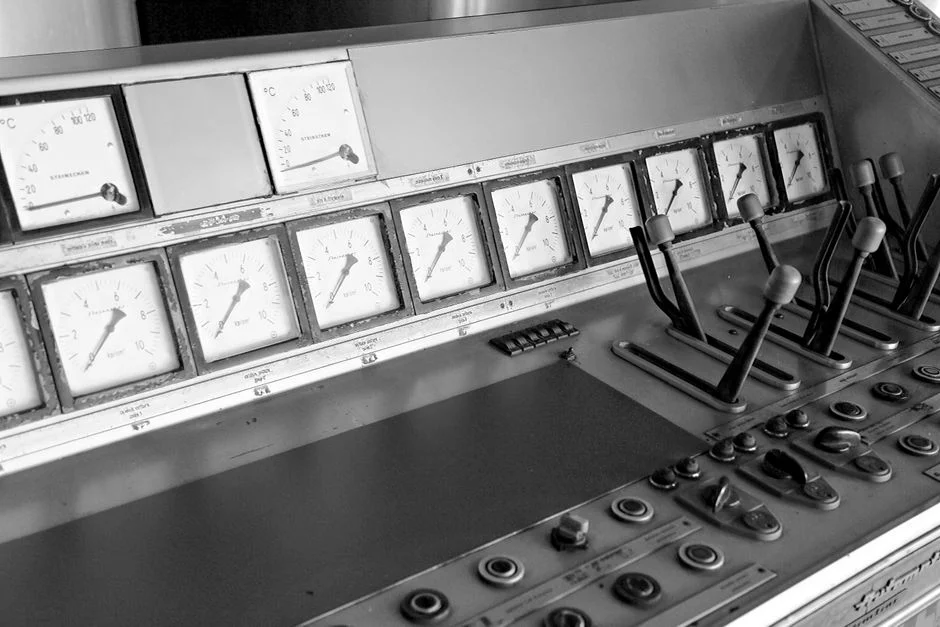
A turnkey flotation arrangement must integrate chemical conditioning, DAF clarification, sensors, instruments, and controls rather than treating the separator as an isolated tank. Clearwater Industries describes a compact skid with a PLC that adjusts chemical dosing, skimmer speed, and sludge discharge, which provides a useful scope definition when comparing automatic DAF systems.
For carbon and graphite wastewater, automatic float skimming and heavy-solids withdrawal deserve specific attention. A separator can show good capture in a trial yet underperform if float accumulation, carbon dust, or dense settled solids obstruct continuous removal. Ask each supplier to define drawdown behavior, scum and sludge collection, cleaning access, and the consequences of interrupted withdrawal.
The documentation package should cover duty cycle, cleaning access, wear-part availability, controls scope, power demand, local service support for Darlington, spare-parts strategy, and troubleshooting support. Local service capability should be evaluated through named contacts, response commitments, and service history rather than a general statement of availability.
Whole-system cost should include chemical consumption, pump energy, sludge dewatering, operator attention, maintenance, controls, disposal, and site services. A lamella clarifier may avoid a pressurized recycle loop, while DAF may provide better capture of oily or chemically conditioned solids. Neither comparison is complete until each supplier prices the same operating basis.
Require performance criteria tied to actual factory wastewater after representative pilot testing or an agreed test protocol. Specify how chemical dose, wastewater variability, sampling method, throughput, and acceptable deviation will be handled. Generic removal percentages should not substitute for a defined acceptance test.
A Pre-Bid Checklist for Selecting Industrial Wastewater Equipment
Comparable proposals begin with one controlled wastewater characterization package. Issue the same flow, TSS, oil and grease, pH, temperature, particle-distribution, and chemical-analysis information to every bidder, together with the applicable discharge or sewer limits.
- Require each proposal to define equipment duty, materials, recycle flow, operating pressure, controls, chemical-conditioning assumptions, sludge output, and drawdown behavior.
- Ask bidders to list every exclusion, especially screening, equalization, dosing, sludge dewatering, electrical work, controls, installation, and commissioning.
- Request a performance demonstration using representative wastewater and state all guarantee conditions, including chemical dose, flow range, feed composition, sampling method, and test duration.
- Check that the proposed DAF remains within the published hydraulic and mass-loading benchmarks after peak flow and solids variations are applied.
- Confirm that the proposed discharge train satisfies the applicable industrial wastewater pretreatment requirements identified for the site; the equipment comparison alone cannot establish compliance.
This checklist also prevents a common specification error: treating generic efficiency claims as application guarantees. Ask each bidder to identify which values are published benchmarks, which are calculated design values, and which will be demonstrated with the factory’s wastewater.
Frequently Asked Questions
What is the lowest-cost option for a Darlington carbon and graphite wastewater project?
The lowest equipment price is not necessarily the lowest lifecycle cost. Require each bidder to price chemical consumption, recirculation pumping, feed pumping, sludge dewatering, maintenance, controls, operator attention, disposal, and site services on the same operating basis. Request both purchase price and documented energy and chemical assumptions. The supplied research does not provide a quotation for a Darlington installation, so a defensible budget cannot be stated without the factory flow, wastewater analyses, treatment target, utility conditions, and complete equipment scope.
Can DAF size be selected from the 4–6 m³/m²/h hydraulic loading and 3–5 kg/m²/h mass loading?
Those values are preliminary DAF benchmarks from SigmaDAF Clarifiers, not final factory guarantees. They can support conceptual comparison between proposals, but final sizing requires measured flow, peak solids loading, wastewater chemistry, chemical conditioning, recirculation requirements, and application testing. Include equalization, screening, dosing, pumping, and sludge handling when comparing the footprint of complete systems.
How should a buyer select a DAF or lamella supplier?
Require representative wastewater testing, documented wetted materials, a complete supply scope, controls and power data, local service capability, and performance conditions tied to the actual effluent. For DAF, verify chemical conditioning, air saturation, recycle flow, skimming, and heavy-solids withdrawal. For a lamella clarifier, verify plate arrangement, sludge recirculation, settling performance, withdrawal capacity, and clean-out access. Supplier selection should follow the completed wastewater package rather than precede it.
Which treatment limits must the selected equipment meet in Darlington?
The selected DAF or clarifier must satisfy the applicable Darlington discharge or sewer limits, including any local pretreatment requirements and follow-up treatment needed for dissolved or biodegradable contaminants. The supplied research does not establish site-specific limits, so the permit authority, sewer authority, and applicable DAF versus clarifier selection guide should be used to frame—but not replace—the site-specific compliance review. Ask bidders to state exactly which limits their proposal covers.
Can DAF be followed by biological treatment?
Yes, if the combined process and final effluent requirements support that arrangement. SigmaDAF Clarifiers describes DAF and a biological reactor as complementary, and the Hydrology Current Research review describes physico-chemical and biological combinations for chemical-industry wastewater. A DAF unit can recover floatable material and reduce suspended solids before biological treatment, while a lamella clarifier can provide preliminary gravity separation where settleable solids dominate. Confirm the downstream design using the factory’s dissolved COD, biodegradability, nitrogen, pH, and toxicity data, and apply the coagulant dosing system design criteria to establish chemical demand before fixing the equipment.