Determine Which Holland Discharge Requirements Apply
Transportation equipment plants near Holland, Michigan, meet sewer-discharge limits by identifying applicable prohibited-discharge rules, categorical standards and Holland BPW local limits, then proving compliance at the point of discharge. The practical path is to segregate process water, characterize metals, oil and grease, suspended solids, pH and cleaning chemicals, and install only the pretreatment needed to satisfy the most stringent applicable requirement. Holland BPW requires permits, continuing-compliance reports, representative sampling and appropriate containment. Equipment decisions must follow plant-specific wastewater data, peak-flow testing and current permit review—not a generic equipment list.
The governing framework has three distinct parts. First, general and specific prohibitions address discharges that may cause treatment-plant interference, collection-system damage or other unacceptable effects. Second, categorical pretreatment standards apply to industrial users subject to an applicable federal category. Third, local limits are developed by the control authority for pollutants and local operating conditions not adequately controlled by the categorical standards (U.S. EPA, Pretreatment Standards and Requirements—Applicability; U.S. EPA, Local Limits Development Guidance, 2021-06-25).
For Holland, the control authority is the Pollution Control Department, a division of the Holland Area Water Reclamation Facility, operating through the Holland Board of Public Works Industrial Pretreatment Program (Holland BPW, Industrial Pretreatment Program). The control authority identifies the standards applicable to each industrial user and applies the most stringent requirement where multiple provisions exist (U.S. EPA, Pretreatment Standards and Requirements—Applicability).
A transportation-equipment manufacturer may be a Significant Industrial User if it is subject to categorical standards, discharges more than 25,000 gallons per day of process wastewater, contributes a process wastestream equal to at least 5 percent of the POTW’s average dry-weather hydraulic or organic capacity, or is designated because it has reasonable potential to interfere with operation or violate a pretreatment requirement (U.S. EPA, Pretreatment Standards and Requirements—Applicability). A Categorical Industrial User is an industrial user subject to national categorical standards.
| Requirement | What it controls | Engineer’s action |
|---|---|---|
| General and specific prohibitions | Discharges prohibited because of treatment-plant, collection-system, worker-safety or environmental risk | Review the Holland sewer-use ordinance and permit for prohibited wastes and discharge conditions |
| Categorical pretreatment standards | Pollutant limits and monitoring requirements for the applicable industrial category | Obtain a written categorical determination and identify production processes covered by it |
| Local limits | Holland BPW limits for pollutants and discharge characteristics controlled through the local pretreatment program | Use the current local limits and surcharge thresholds, not a generic equipment specification |
Before selecting equipment, request the current Wastewater Discharge Permit, sewer-use ordinance, categorical determination, application instructions and fee schedule from Holland BPW. EPA notes that a permit or controlling regulation governs if it conflicts with its local-limits guidance (U.S. EPA, Local Limits Development Guidance, 2021-06-25). Related site-specific workflows are available in the SMIC Arizona acquisition wastewater requirements review and the metals-plant sewer pretreatment workflow.
Map the Transportation Plant's Wastewater Sources
Holland BPW requires industrial users to segregate waste streams, protect floor drains, provide secondary containment and identify the point of discharge before treatment equipment is selected (Holland BPW, Industrial Pretreatment Program). For a transportation-equipment plant, the first engineering task is a source map—not an equipment list.
Build the map around process areas and activities: parts washing, machining and grinding, coolant carryover, paint or coating operations, vehicle or equipment washdown, floor cleaning, process wastewater, spent cleaning solutions and noncontact cooling. Sanitary wastewater and clean stormwater are not industrial process wastewater and should not be included in the process-flow balance merely because they share a downstream sewer. Each process stream should have an owner, flow estimate, discharge destination and sampling point.
| Source category | Potential pollutants or operating concern | Segregation and monitoring action |
|---|---|---|
| Parts washing and machining or grinding | Suspended solids and grit; metals when process data supports their inclusion | Route wash and grind wastewater to pretreatment; sample separately where stream characteristics differ |
| Coolant carryover and noncontact cooling | Coolant constituents, residual oils and episodic flow | Identify the source and quantify flow; do not classify cooling water without verification |
| Paint and coating operations | Suspended solids, residual coating constituents and cleaning chemicals | Keep coatings and cleanup residues out of sanitary flow pending characterization |
| Vehicle or equipment washdown and floor cleaning | Oil, grease, FOG, grit and cleaning chemicals | Collect washdown through process-area drains and troughs to pretreatment |
| Spent cleaning solutions | pH, residual chemicals and concentrated constituents | Segregate from the sanitary sewer and evaluate on-site treatment or authorized removal |
| Sanitary and clean stormwater | Not assumed to be industrial process waste | Document separately in the plant flow and chemical inventory |
The site plan should show buildings, process and chemical-storage areas, pretreatment equipment, floor drains, troughs, sumps, sewer connections and the final discharge manhole. Holland BPW requires floor drains in containment areas to be plugged and sealed, with spill troughs and sumps routed to appropriate pretreatment tanks. Secondary containment must protect floor drains from accidental spills and discharges; where a lesser containment volume is proposed, Holland BPW requires evidence that it is adequate (Holland BPW, Industrial Pretreatment Program).
Include an accessible wastewater sampling vault or manhole in the preliminary layout. Holland BPW says its complexity depends on the sampling requirements imposed by the Control Authority. If continuous flow recording and long-duration, 24-hour composite sampling are required, the manhole must include 110-volt AC power and permit access without entering the industrial property; the industry bears the cost (Holland BPW, Industrial Pretreatment Program).
One designated industrial representative should maintain the chemical inventory, estimate average flows and strengths by category—including process cooling and sanitary flows—and notify the Control Authority of changes that may alter flow or waste strength. The inventory should identify specific chemical names rather than manufacturer codes (Holland BPW, Industrial Pretreatment Program). Coarse solids protection can be evaluated during layout using a rotary mechanical bar screen, but downstream equipment should not be selected until the source map is complete.
Characterize Wastewater and Establish the Design Basis
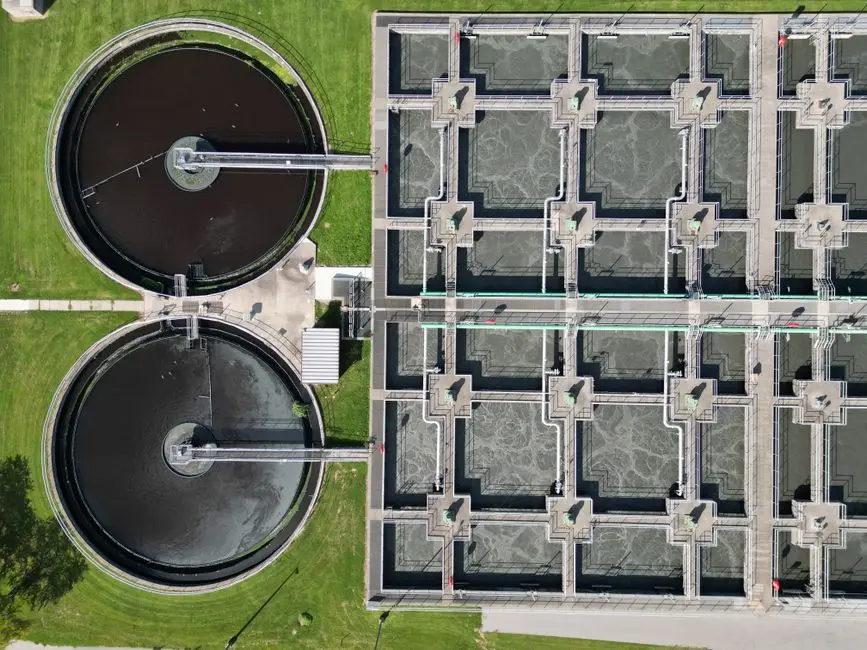
Representative wastewater data—not a catalog removal percentage—must establish the equipment design basis and the expected compliance margin. The supplied Holland BPW research does not establish universal discharge concentrations for transportation-equipment plants, so a design should not assume plant-wide values for oil and grease, suspended solids, BOD, pH or metals.
- Complete the mass balance. Include normal production, washdown, shift changes, cleaning cycles, product changeovers and other peak-generating events. Separate routine from episodic streams.
- Identify regulated analytes. Test pH, oil and grease, suspended solids, BOD and any pollutant identified by the permit, local-limits process or categorical standard. Add metals or other priority pollutants only where the process description or analytical results warrant them.
- Establish representative conditions. Sample the waste streams that actually enter pretreatment. Use sampling locations and methods that support the applicable permit and Holland BPW review.
- Check the treatment objective. Compare expected effluent with the most stringent applicable discharge requirement and assess the receiving capacity of the Holland Area Water Reclamation Facility.
- Protect the data trail. Record sample location, analytical method, chain of custody, flow measurement, instrument calibration and repeatability so the result can support permit decisions and corrective action.
Average flow can conceal the washdown or changeover event that causes an exceedance. Equalization and treatment capacity therefore need to reflect the identified peak conditions and the behavior of each waste stream, including how quickly an episodic batch arrives and how long constituents remain in the system. The coagulant dosing system design criteria are relevant where chemical addition must be linked to measured wastewater conditions rather than a fixed recipe.
Plan sampling access and electrical service early. A sampling location that cannot support the required flow record or composite sample can compromise both the performance demonstration and the operating record. The final protocol should identify who collects samples, where they are split, which laboratory performs each analysis, how calibration is verified and how deviations are handled.
Match the Treatment Train to the Pollutant
Each unit process should answer a defined pollutant-removal or control problem. Mechanical screening protects downstream equipment from rags, plastic, fibrous material and coarse solids; equalization dampens flow and concentration spikes; dissolved air flotation can remove suspended solids, FOG, oil and grease and colloidal material; and controlled chemical addition addresses pH or other treatment chemistry. Additional clarification, biological treatment or membrane treatment requires a demonstrated need.
| Plant condition | Target pollutant or concern | Proposed unit process | Required design input | Monitoring point and failure mode |
|---|---|---|---|---|
| Coarse debris enters the process collection system | Rags, plastic, fibrous material and grit | Mechanical screening | Debris type, peak flow and screenings handling | Screen upstream of pumps; monitor blinding and discharge |
| Washdown or shift-change flows vary sharply | Flow and concentration spikes | Industrial wastewater equalization | Peak flow, duration, mixing and available footprint | Equalization tank and downstream feed; monitor level and bypass |
| Wastewater contains recoverable or floatable oil, FOG or solids | Oil and grease, FOG, suspended solids | dissolved air flotation system for industrial pretreatment | Representative wastewater, peak loading and performance test | DAF effluent; monitor oil and grease, solids and sludge removal |
| Cleaning cycles create acidic or alkaline effluent | pH excursions | automatic chemical dosing system for pH control | pH range, flow range, chemical demand and probe location | Post-treatment pH; monitor calibration, chemical depletion and overfeed |
| DAF or equalization solids require routine removal | Accumulated treatment sludge | Clarification and selected dewatering | Solids yield, consistency and removal schedule | Sludge storage and haulout; monitor inventory and disposal route |
Use representative wastewater to verify DAF performance. The engineering basis for comparing DAF and clarification processes illustrates the need to match technology to wastewater characteristics; it does not substitute for a transportation-plant test. A clarifier alone does not necessarily address floatable oil, while DAF does not eliminate the need for pH control, equalization or solids handling.
Specify automatic dosing controls with calibration and operating records when chemical addition is necessary. Route treatment sludge to an appropriate disposal site or licensed waste hauler, as required by Holland BPW, rather than returning it to the sanitary sewer (Holland BPW, Industrial Pretreatment Program). For the solids-handling evaluation, consider a high-efficiency sedimentation tank and compare the resulting sludge characteristics with a plate-and-frame filter press only after the solids-generation basis is established.
Build the Compliance and Operating Record
Equipment operation becomes defensible only when monitoring, sampling, calibration and reporting are tied to the current permit schedule. Holland BPW provides Form A for Significant Industrial Users and Form B for Categorical Industrial Users, but the permit-specific monitoring schedule remains controlling (Holland BPW, Industrial Pretreatment Program).
The operating file should include chain-of-custody records, analytical results, calibration records, flow data, equipment operating status, deviations, root-cause investigations and corrective actions. Each sample should be traceable to the approved sampling point and the associated production event. Cross-connections, bypasses, tank levels and chemical-dosing status should also be controlled so an apparent treatment result cannot conceal an unauthorized discharge path.
| Cost or enforcement mechanism | Holland BPW treatment | Planning action |
|---|---|---|
| Surcharge Fee | Charged when a compatible pollutant strength exceeds the limit in the sewer-use ordinance | Model expected pollutant strength against the applicable surcharge threshold |
| Special Discharge Allocation Fee | Applies when permission is granted to discharge above surcharge limits and has treatment and capacity components | Do not treat authorization as a substitute for compliant pretreatment |
| Sampling and Analysis Fee | Collected from users using the Holland Area Water Reclamation Facility laboratory | Include required sampling and laboratory services in operating costs |
| Industrial Surveillance Fee | Recovered through the northside or southside surcharge bill | Include as a recurring compliance cost |
| Fines and Municipal Civil Infractions | Penalties for violations of ordinance or permit requirements | Maintain inspection, alarm and corrective-action controls |
These mechanisms and their application are described by Holland BPW in its Industrial Pretreatment Program materials. The financial model should therefore distinguish a permit limit from a surcharge threshold and should not assume that avoiding a permit violation eliminates every cost associated with an above-strength discharge.
The designated industrial representative should notify the Control Authority of planned process alterations and consult management about whether flow or waste strength will change over the next one, two and five years (Holland BPW, Industrial Pretreatment Program). That notification is also a trigger to review tank capacity, treatment loading, sampling frequency and sampling-vault capability rather than assuming the existing permit remains sufficient.
Plan Equipment Sizing, Procurement and Lifecycle Costs
Comparable bids should begin with the same wastewater design basis and compliance target. A supplier that promises removal efficiency without identifying the applicable wastewater characterization, design flow and permit requirement has not provided a verifiable treatment proposal.
| Bid item | Required disclosure | Buyer check |
|---|---|---|
| Design basis | Design flow, applicable wastewater characterization, target pollutants and treatment objectives | Trace each value to the wastewater balance, monitoring plan and permit |
| Installed scope | Footprint, utilities, controls, instrumentation, equalization, chemical storage, secondary containment and sampling access | Compare complete scope rather than equipment purchase price |
| Performance verification | Representative-wastewater test method, monitoring points and acceptance criteria | Ensure the criterion addresses the most stringent applicable requirement |
| Operations and maintenance | Calibration, maintenance, spare parts, energy, chemical consumption, sludge removal and operator attention | Assign each activity to an operator and retain records |
| Compliance support | Operating documentation and proposed procedure for monitoring, deviations and corrective action | Check alignment with Holland BPW reporting and inspection needs |
| Reference performance | Comparable manufacturing wastewater case data | Verify similarity of process, waste characteristics and operating conditions |
Lifecycle cost should include energy, chemical use, laboratory and monitoring costs, sludge hauling, operator attention, calibration, preventive maintenance and spare parts. The DAF versus clarifier analysis for mining wastewater in Milan provides a useful comparison framework, but a transportation-equipment bid must still use plant-specific data.
Change management belongs in the procurement scope. The designated industrial representative must identify process changes that could increase or decrease flow or waste strength and notify Holland BPW. Require the supplier to state which design assumptions become invalid after a process change and how the equipment owner will revalidate capacity and treatment performance.
For sludge handling, request solids yield, consistency, removal frequency and disposal assumptions. A plate-and-frame filter press should be selected for the actual sludge characteristics, not simply because dewatering appears in the scope. Equipment documentation must also support the sampling, calibration and audit record required to demonstrate ongoing compliance.
Frequently Asked Questions
What pretreatment equipment is most likely to matter for a transportation equipment plant near Holland?
Start with the pollutants and flows demonstrated by the source map. Mechanical screening may be needed for coarse debris, equalization for washdown and shift-change peaks, and a dissolved air flotation system for oil, grease, FOG and suspended solids. Automatic chemical dosing may be needed for pH control. Clarification, biological treatment or membranes should follow only when the permit, categorical determination, local limits and wastewater data show that the upstream train cannot achieve the required result. Holland BPW’s source-control requirements also mean that floor-drain protection, secondary containment, sludge management and sampling access can affect the design more than the treatment vessel alone.
How much does an industrial pretreatment system cost for a Holland manufacturing plant?
The research provides no defensible equipment quotation for a transportation-equipment plant, so a buyer should not apply a generic price. Request a separated installed-cost proposal covering treatment equipment, equalization, chemical storage, secondary containment, sampling vault or manhole, instrumentation, electrical service, controls, sludge removal, commissioning and training. Also request recurring costs for chemicals, energy, laboratory work, monitoring, maintenance and sludge hauling. Model the Holland surcharge threshold against representative pollutant data; Holland BPW identifies the Surcharge Fee, Special Discharge Allocation Fee, Sampling and Analysis Fee and Industrial Surveillance Fee as distinct cost mechanisms (Holland BPW, Industrial Pretreatment Program).
Should the plant choose a DAF system or a clarifier for oil, grease and suspended solids?
Choose based on the wastewater characteristics and the required removal mechanism, not on a generic equipment preference. DAF is a logical candidate where floatable oil, FOG, suspended solids or colloidal material must be removed, but performance must be verified with representative plant wastewater. A clarifier may be appropriate for settleable solids or as part of a broader solids-management train; it should not be assumed to provide equivalent oil and grease removal. Use the DAF and clarification comparison as a technical framework, then confirm the decision with the actual wastewater characterization and Holland permit requirement.
What should a wastewater-equipment supplier include in its Holland bid?
Require the bid to state design flow, wastewater basis, target pollutants, treatment objectives, footprint, utilities, controls, sludge route and a performance-verification protocol tied to representative wastewater. Include the sampling vault or manhole, electrical access, secondary containment, chemical storage, calibration requirements and operating documentation in the installed scope. Ask for comparable case-study data and verify that it represents a similar manufacturing wastewater profile. The supplier should also identify every performance claim that remains conditional on Holland BPW permit conditions and plant data.
How long does it take to characterize wastewater and obtain Holland BPW permit approval?
The supplied research does not state a permit-approval duration, so the schedule cannot be represented as a fixed period. Build a project schedule around source mapping, representative sampling, flow monitoring, wastewater-mass-balance completion, conceptual design, equipment procurement, installation, performance verification and permit review. Coordinate the sampling-vault layout with Holland BPW early because continuous flow recording or long-duration composite sampling can require additional manhole complexity and 110-volt AC power. Begin with the current permit application instructions and local fee schedule, and confirm the controlling schedule directly with Holland BPW rather than relying on an assumed lead time.
Related Equipment
- automatic chemical dosing system for pH control — specifications, capacity range, and technical data