What Wastewater Streams Does a Blantyre Data Center Need to Treat?
A data center in Blantyre generally needs a wastewater strategy covering cooling-tower blowdown, domestic sewage, equipment-room drainage and any glycol-bearing cooling-water discharge. The blowdown train should be selected after testing source, circulating and blowdown water for TDS, hardness, silica, alkalinity, chloride, iron, phosphate, suspended solids and treatment chemicals. Side-stream filtration and UF can protect downstream equipment; RO or NF can produce reusable cooling make-up where chemistry and scale permit. IDE Tech reports that conventional BWRO is often limited to 75–80% recovery, while a documented brine desalter achieved around 95% recovery. Blantyre operators should verify discharge routes, permit limits, electricity reliability, imported-equipment logistics and operating skills before selecting equipment.
The first engineering deliverable should be a source-by-source wastewater register, not a blowdown equipment quotation. Each stream needs an owner, flow meter, sampling point, chemical inventory, destination and responsible operator. Do not combine streams merely because they will eventually enter the same treatment skid.
| Stream to register | Scope information to verify | Receiving route and treatment implication |
|---|---|---|
| Cooling-tower blowdown | Makeup, evaporation, measured blowdown, losses, cycles of concentration, cooling-water chemicals | Reuse as cooling make-up, controlled sewer or surface-water discharge, or a separately permitted route |
| Domestic sewage | Flow, occupancy, pretreatment requirements, local sewer acceptance criteria | Sanitary sewer or other authorised route; do not include by assumption in the blowdown balance |
| Equipment-room drainage | Floor drains, process contaminants, episodic flow and discharge point | Separate pretreatment and sampling before any reuse decision |
| Once-through cooling or heat-exchanger drains | Thermal load, water chemistry, chemical use and isolation status | Usually a candidate for operational elimination or separate treatment |
| Glycol-bearing closed-loop discharge | Glycol type and concentration, contamination history, drain segregation | Keep separate; confirm whether glycol can be excluded from the cooling-tower system before assigning a route |
| Clean-water wastewater | Filter backwash, RO reject, laboratory waste and clean-water drainage | Identify whether each stream is reusable, treatable or suitable for the receiving system |
| Construction-phase water | Excavation dewatering, flushing, concrete washout and temporary drainage | Define handling, storage, treatment and disposal before commissioning |
Cooling-tower blowdown is not merely “used water.” It contains concentrated dissolved solids and residual treatment chemicals; Water Utility Report, last updated 2026-04-14, notes that it may also contain elevated metals and altered pH depending on the source water and chemical program. Glycol-bearing drains require a separate decision because the cooling configuration may be able to exclude glycol from the tower system, but that must be confirmed from the system design and operating records.
For initial context, IDE Tech reports up to 2 million litres per day for a 100 MW facility. Treat that as a water-demand benchmark, not a Blantyre design flow: confirm demand against the selected cooling system, chiller or cooling-tower curves, local climate and operating mode. The planning example for lower-water data-centre development and the data-center wastewater and cooling-blowdown engineering guide are useful context, not substitutes for a Blantyre site register.
Characterise the Water Before Selecting Treatment Equipment
Cooling-tower blowdown must be characterised as blowdown, not inferred from source-water chemistry. Sample municipal or borehole source water, circulating cooling water and the actual blowdown discharge at separate points. The blowdown analysis sets membrane osmotic loading, scale risk, pretreatment requirements and the acceptable recovery; source-water analysis mainly establishes the baseline against which concentration and chemical addition are assessed.
| Sample or record | Required information | Decision supported |
|---|---|---|
| Cooling-tower makeup water | TDS, hardness, silica, alkalinity, chloride, iron, phosphate, pH, conductivity and suspended solids | Source-water baseline, cooling chemistry and preliminary scaling assessment |
| Circulating cooling water | Same analytical suite plus temperature and actual cycles of concentration | Control limits, filtration loading and chemical programme |
| Cooling-tower blowdown | Full analytical suite and the identities and doses of biocides, corrosion inhibitors, scale inhibitors and dispersants | UF, NF or RO feed envelope; membrane compatibility; discharge route |
| Site water balance | Makeup, evaporation, blowdown and unmeasured losses over representative operating periods | Design flow, recovery objective and hydraulic-reserve requirement |
| Chemical programme history | Current and legacy products, including any chromate or high-phosphate programme | Compatibility, cleaning strategy and change-control requirements |
The supplied Lilongwe reference reports blowdown TDS of 1,200–6,000 mg/L, approximately 4–8 times makeup-water TDS, but it explicitly states that feed chemistry is site-specific and requires a recent analysis before sizing. It also reports suspended solids of 10–50 mg/L from corrosion products, biofilm fragments and airborne dust. Those values are Lilongwe reference benchmarks, not assumed Blantyre conditions; they define the analysis brief and pretreatment questions.
Genesis Water Tech reports that actual blowdown can exceed theoretical calculations by 15–30% because of unmeasured losses and emergency dumps. Consequently, size equipment from measured operating data, including peak periods, not only the textbook equation. The water balance must distinguish cooling-tower makeup water from circulation flow and total site water demand.
Include legacy chromate or high-phosphate chemistry in the records review, but do not assert that either exists at the Blantyre site without evidence. Ask vendors to use the actual chemical inventory and analysis when defining compatibility. The multimedia filtration design and sizing guide can support the pretreatment brief, but filter loading and backwash requirements must follow measured suspended solids and flow.
How Blantyre Data Center Blowdown Treatment Should Work
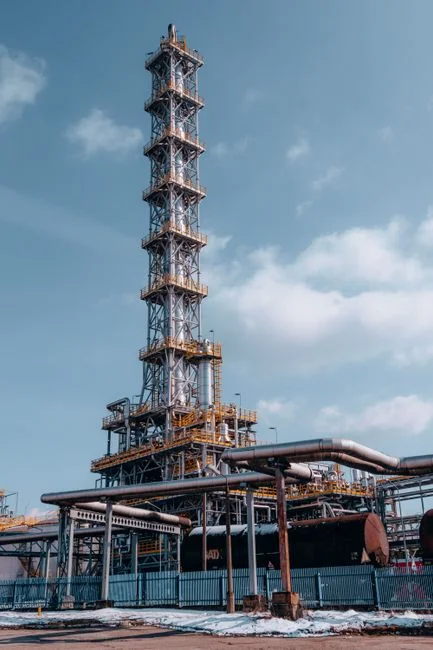
The least-complex defensible train starts with loss control and filtration, then adds desalination only where the reuse or discharge objective requires it. A practical sequence is: establish the water balance; repair leaks and remove unnecessary once-through cooling; optimise blowdown triggers; improve side-stream filtration; treat the resulting stream; reuse permeate where water quality permits; and send a controlled residual stream to an authorised destination.
- Control the source of avoidable loss. Verify metering and alarms, repair leaks, eliminate unnecessary once-through cooling and review whether premature blowdown is being triggered by suspended solids or control settings.
- Remove suspended solids. Use side-stream filtration before any membrane stage. A multi-media filtration system for cooling-water side streams may be appropriate where the measured solids load and backwash arrangement support it.
- Match pretreatment to the membrane. Use ultrafiltration pretreatment for cooling-tower blowdown where finer solids control is required before RO or NF. HydropureWater’s UF system uses 0.03 micron PVDF membranes, accepts feed turbidity up to 300 ppm, and provides automatic backwash and air scour; these catalog specifications do not replace a site chemistry and flux assessment.
- Desalinate for cooling make-up. Select NF when hardness is the controlling reuse or discharge constraint. Use an industrial RO system for cooling-water reuse where salinity, silica and dissolved treatment chemicals require broader salt removal.
- Re-optimise cooling chemistry. RO or NF permeate has different chemistry from the original makeup water. Re-establish inhibitor, biocide, corrosion-control and scaling limits for the actual permeate entering the cooling loop.
- Control the reject. Provide a dedicated residual-discharge route based on the receiving sewer, surface-water system or wastewater-treatment operator’s stated acceptance criteria.
The supplied Lilongwe reference places UF at 0.01–0.1 micron and 10–30 psi, with recovery of 90–95%, and states that feed should be filtered to less than 10–15 microns before RO. It places NF at 70–85% recovery, with permeate TDS at 30–50% of feed, and describes NF as the middle option when hardness rather than total TDS is the controlling constraint. These are reference ranges, not Blantyre guarantees.
The key procurement boundary is the feed envelope. A vendor must demonstrate that the proposed system accepts the measured TDS, hardness, silica, alkalinity, chloride, iron, phosphate, suspended solids, temperature and chemical profile. If representative blowdown is outside that envelope, the vendor must identify pretreatment or operating changes rather than relying on a generic recovery claim.
Choose a Recovery Level That Fits Blantyre's Water and Operating Reality
Recovery should be selected from the cooling objective, measured chemistry and receiving route, not from the highest recovery available. At 4 cycles of concentration, the cited blowdown ratio is 25%; at 6 cycles it is 20%, according to Genesis Water Tech. Increasing cycles reduces blowdown, but the source-water chemistry, biological control, scaling and operator capability still determine whether the higher setting is practical.
| Option | Reference performance | Main selection test |
|---|---|---|
| Operational controls plus side-stream filtration | No recovery percentage stated in the supplied research | Use first where leakage, control and solids removal are the main problems |
| UF for particulate control or RO/NF pretreatment | Lilongwe reference: 90–95% UF recovery | Can the train meet the reuse specification and reduce loading sufficiently to protect the downstream process? |
| NF | Lilongwe reference: 70–85% recovery; permeate TDS at 30–50% of feed | Is hardness, rather than total salinity, the controlling constraint? |
| Conventional BWRO | IDE Tech: often limited to 75–80% recovery before scaling becomes unmanageable; Lilongwe reference gives 50–85% for RO | Do the measured silica, hardness, alkalinity and recovery target remain inside the membrane design envelope? |
| RO plus MVC | Lilongwe reference: 85–95% overall recovery | Does the discharge restriction and lifecycle cost justify evaporative energy and operator burden? |
| Full zero liquid discharge | Lilongwe reference: 95–99% recovery with less than 1% solid waste | Is discharge effectively unavailable or otherwise uneconomic to route? |
HydropureWater and the supplied Lilongwe reference give 60–85% recovery as a planning range for blowdown-to-makeup reuse. Use it as a benchmark to challenge against Blantyre discharge conditions and source chemistry, not as a performance guarantee. The cooling-blowdown treatment design for a data center and the regional data-center blowdown treatment plan provide comparative context.
For more demanding chemistry, IDE Tech reports a brine-desalter architecture combining RO with controlled precipitation of silica, calcium carbonate and other sparingly soluble salts. Its documented unit operated at around 95% recovery with permeate silica of about 1 mg/L. That is a specific case, not a general design guarantee.
Compare options using power quality, operator skill, chemical imports, membrane availability and maintenance response time. A smaller, reliable side-stream and UF installation may outperform a theoretically higher-recovery plant that cannot be maintained consistently in Blantyre.
Budget for Treatment, Logistics and Lifecycle Performance
The defensible budget starts with the supplied equipment benchmarks, then adds landed cost and Blantyre-specific operating inputs. It should not quote a benchmark as a local price. The supplied Lilongwe reference gives side-stream filtration at $50,000–200,000, an installed 50,000 GPD RO at $250,000–500,000, a 10,000–30,000 GPD MVC evaporator at $1–3 million and a full ZLD train at $3–8 million.
| Budget item | Available benchmark | Blantyre quotation input to require |
|---|---|---|
| Side-stream filtration | $50,000–200,000 capex in the Lilongwe reference | Flow, solids loading, filter media, backwash utilities, local installation and freight |
| RO package | $250,000–500,000 installed for 50,000 GPD in the Lilongwe reference | Actual flow and recovery, feed chemistry, pretreatment, controls, buildings and commissioning |
| MVC evaporator | $1–3 million for 10,000–30,000 GPD in the Lilongwe reference | Feed salinity, energy source, condenser design, cooling-water availability and operator requirement |
| Full ZLD | $3–8 million in the Lilongwe reference | Solid handling, disposal route, utilities, chemical consumption and operational staffing |
| Consumables and spares | No general local price supplied | Landed price, membrane replacement interval, cleaning chemicals, stock levels and import lead time |
The same reference cites 15–25 kWh per 1,000 gallons of MVC distillate. Reprice that energy demand using actual Blantyre tariffs, power quality and outage exposure. The $5–15 per 1,000 gallons discharge-fee benchmark in the supplied reference is associated with water-stressed regions; do not import it into the Blantyre business case without the local sewer tariff, destination charge or verified alternative. Model avoided freshwater and wastewater costs from actual invoices and measured consumption.
Price membranes, antiscalant, cleaning chemicals and other consumables on a landed-cost basis and include a five-year membrane replacement allowance. Require every bidder to state capex, opex per 1,000 gallons, chemical consumption, membrane replacement interval and maximum feed-TDS envelope. An equipment price without those boundaries cannot be compared.
Logistics belong in the budget. The supplied reference notes that deliveries to landlocked Malawi may route through Dar es Salaam or Beira and that transit can add 2–6 weeks. Require quotations to state freight assumptions, import-duty responsibility, local installation scope and emergency-spares delivery times. The RO and UF membrane replacement elements should be priced for the proposed operating duty and storage conditions, not as generic spares.
Build the Vendor RFQ and Commissioning Plan
A comparable RFQ starts with measured site data and an explicit treatment objective. Include the source, circulating-water and blowdown analyses; target cycles of concentration; recovery percentage; measured and design flows; discharge-route limits; peak ambient temperature; available footprint; utility data; power quality; and skid or containerisation requirements.
- Set the process boundary. Define which streams enter the treatment train, which remain separate, the intended reuse destination and the authorised reject route.
- Require engineering deliverables. Ask for a process flow, mass balance, membrane-sizing calculation, chemical-consumption schedule, control philosophy, utility list, alarms, bypass strategy and complete equipment schedule.
- Define acceptance testing. Require factory acceptance testing, site commissioning support, operator training and written O&M procedures. Request a recommended spare-membrane and consumables stock for Southern Africa.
- Test with representative water. Specify membrane-cleaning acceptance tests, permeate-quality checks, reject monitoring and a site trial using representative blowdown rather than clean water alone.
- Control chemistry compatibility. Make the cooling-water chemical programme compatible with membrane materials and the receiving discharge route. The supplied Lilongwe reference identifies late-stage chemical incompatibility as a common cause of membrane-train underperformance.
- Secure operational resilience. Confirm spare-parts routes, freight lead times, local electrical standards and outage procedures before award. The treatment valves, filter media and supporting parts should be included in the documented critical-spares list.
Require named commissioning hold points: incoming-water verification, pretreatment acceptance, membrane installation inspection, permeate and reject sampling, chemical-programme verification, operator competency, and an agreed performance test at measured design flow. A vendor should explain how the system responds to high-turbidity blowdown, chemical dosing failure, power interruption and membrane cleaning demand.
Use the data-center wastewater and cooling-blowdown engineering guide to check that the RFQ contains both technical and commercial deliverables. The local commissioning team should receive as-built drawings, control narratives, spare-parts lists, membrane certificates, cleaning procedures and clearly defined ownership for each chemical and waste stream.
Frequently Asked Questions
What treatment capacity does a Blantyre data center need for cooling blowdown?
Size the train from measured makeup, evaporation, blowdown and losses over representative operating periods, including emergency dumps. Use the target cycles of concentration and reuse objective to establish the treatment flow; do not scale the IDE Tech 100 MW, 2 million-litre-per-day benchmark directly without confirming the facility’s cooling design and chiller curves.
Is UF alone sufficient for cooling-tower blowdown reuse?
UF can control suspended solids and biological load, but it does not remove dissolved salts. It is appropriate as the pretreatment for RO or NF, or for a lower-grade reuse where the receiving application does not require desalination. The decision depends on measured hardness, silica, TDS, treatment chemicals and the required cooling-makeup quality.
How much does cooling blowdown treatment cost in Malawi?
No supported Blantyre quotation is available. Obtain site-specific bids for capex, opex per 1,000 gallons, chemical consumption, membrane replacement interval and maximum feed-TDS envelope. Treat the Lilongwe equipment benchmarks as planning references and add verified freight, import duty, local installation, power and maintenance costs.
Should a small Blantyre data center choose RO, MVC or zero liquid discharge?
Choose the least-complex train justified by measured chemistry, facility scale and operator capability. If side-stream filtration and UF meet the required reuse quality, avoid adding RO; if dissolved solids prevent reuse, assess NF or RO; use MVC or full zero liquid discharge only when the discharge route, water value and operating resources justify the additional energy and maintenance burden.
What should a vendor include in a data-center blowdown treatment RFQ?
Require the site analyses, water balance, target cycles of concentration and recovery, discharge limits, process flow, mass balance, membrane calculations, controls, utilities, chemical schedule, alarms, bypass strategy, equipment schedule, commissioning plan, operator training, Southern Africa spares support and performance testing with representative blowdown.
Related Equipment
- industrial RO system for cooling-water reuse — specifications, capacity range, and technical data