
What a Multimedia Filtration System Is and Why It Exists
A multimedia filtration system (MMF) is a downflow pressure or gravity filter that passes water through three or more graded layers of filter media — typically anthracite on top, silica sand in the middle, and garnet or fine sand at the bottom, supported on a gravel bed — so that progressively finer particles are captured as the water moves downward. The coarser top layer captures large suspended solids while the denser bottom layer polishes for fine turbidity, producing an effluent with low turbidity and an SDI suitable for downstream reverse-osmosis protection. Industrial MMFs are widely used as tertiary solids removal in wastewater trains, as RO pretreatment, and for groundwater, stormwater and process-water polishing. Operating data from commercial multi-media filter lines reports solids removal down to 5 microns (Everfilt M-Series).
The engineering problem an MMF actually solves is membrane fouling. Newterra positions the unit as a polishing step ahead of activated carbon, with coarse upper media and successively finer lower media capturing progressively smaller particles (Newterra, multi-media filtration product page, accessed 2026). The measurable target an engineer has to lock in before sizing is the downstream water quality: an SDI value that the downstream RO can tolerate, or a turbidity limit that the discharge permit will accept. Every other parameter — media grade, bed depth, vessel diameter, backwash trigger — is a lever to hit that one number. The Cranfield dissertation "Tertiary treatment of wastewater using multimedia filtration for solids removal" frames the MMF specifically as a tertiary solids-removal stage in a municipal wastewater train (Ncube, CERES Cranfield, 2015). Where the unit sits in the train and what the operator is trying to protect downstream are the two questions that drive the rest of the spec. A buyer who cannot answer both is not ready to talk to a vendor yet. When the spec is right, a unit such as the HydropureWater multi-media filter for water treatment slots in as a packaged RO pretreatment skid rather than a one-off fabrications job.
How a Multimedia Filter Works: The Graded-Bed Mechanism
The mechanism is depth filtration through a bed graded from coarse to fine in the direction of flow. Feed enters through an inlet valve and is distributed over the top of the bed; water then flows down through the media, with suspended solids captured throughout the depth, and the clarified stream enters a bottom distributor and travels upward through a central riser tube to the outlet (Newterra, multi-media filtration product page, accessed 2026).
Grading matters because it changes where the solids are stored. If the top layer is coarse, large particles lodge in the upper part of the bed instead of blinding the surface in the first few millimetres, which would cause an immediate pressure-dump and a short run length. A finer layer at the bottom polishes what the upper layers let through, so the bulk of the bed keeps loading while the effluent stays clean. The coarser the top layer is relative to the bottom, the more solids the bed can hold before the pressure drop forces a backwash. Newterra's product description makes the same point directly: suspended-solids removal takes place throughout the entire bed, and the pressure drop across the vessel rises as the media traps more solids (Newterra, 2026).
Under the graded media sits a support layer of graded gravel and an underdrain system. The gravel keeps finer media out of the underdrain laterals, and the underdrain collects clean water during the service cycle and distributes backwash water evenly during the cleaning cycle. Underdrain failure — a cracked lateral, a broken nozzle, a plugged slot — is one of the most common reasons a bed that looks right on paper still produces channeling and breakthrough in service. The right consumables package, including the HydropureWater media, valve and underdrain consumables range, lets a plant carry the spares that turn an underdrain event from a multi-day outage into an overnight changeout.
Media Selection and Bed Gradation

The standard industrial stack is anthracite on top, silica sand in the middle, and garnet or fine sand at the bottom, all supported on graded gravel above the underdrain. The reason this stack is universal is that each layer does a different job: anthracite is light and coarse, so it traps large particles without blinding; silica sand is the workhorse polishing layer; garnet or fine sand is dense and fine, so it sits at the bottom and polishes for low effluent turbidity. The gravel is there to keep the finer media out of the underdrain slots. Everfilt's commercial specification states only that the M-Series uses a multi-layer media bed that removes solids down to 5 microns; effective sizes, uniformity coefficients, and individual layer depths are not published in the source and must be confirmed with the media supplier and the filter vendor for the specific vessel (Everfilt, M-Series product page, accessed 2026).
| Layer (top → bottom) | Function in the bed | Information to confirm with vendor |
|---|---|---|
| Anthracite | Coarse top layer — captures large particles, prevents surface blinding | Effective size, uniformity coefficient, layer depth (vendor-specific) |
| Silica sand | Mid-bed polishing — captures intermediate solids | Effective size, uniformity coefficient, layer depth (vendor-specific) |
| Garnet or fine sand | Dense bottom layer — fine polishing for low effluent turbidity | Effective size, uniformity coefficient, layer depth (vendor-specific) |
| Graded gravel support | Keeps finer media out of the underdrain laterals | Grading curve, total depth (vendor-specific) |
A common specification mistake is to treat the 5-micron figure as a media-graded-size spec. It is not. Everfilt publishes 5 microns as a bed/output solids-removal figure for the M-Series (Everfilt, 2026), not as the effective size of the finest layer. The media-graded sizes that produce that output are vessel- and application-specific, and the only place to get them is from the filter vendor's drawing and the media supplier's data sheet. Asking for those two documents, side by side, before signing a PO is the cheapest engineering review a buyer will ever do.
Where a Multimedia Filter Sits in a Treatment Train
Position the MMF after bulk-solids removal and before any membrane step. In a typical industrial train, the upstream unit is a primary clarifier or a dissolved air flotation (DAF) unit, which removes the bulk of the TSS, oil, and grease. The MMF then polishes what is left, and the downstream unit is either a discharge point (if the goal is just turbidity) or a UF/RO membrane system (if the goal is reuse or high-purity process water). The Cranfield dissertation explicitly classifies multimedia filtration as a tertiary solids-removal stage in a wastewater train (Ncube, CERES Cranfield, 2015). Newterra places the MMF upstream of activated carbon for turbidity polishing, which keeps carbon beds from fouling prematurely (Newterra, 2026).
The practical design decision at this point is whether to design the MMF for an SDI target or only for a turbidity target. If the next step downstream is an industrial RO system, the RO membranes are the protected asset, and the MMF's job is to deliver an SDI low enough (typically SDI < 5, often SDI < 3 for trouble-free RO operation) that the RO does not foul prematurely. If the next step is discharge, the design target is just the permit's turbidity and TSS limits, and the MMF can be tuned looser. The same physical unit is doing both jobs, but the spec is different, and the media stack and backwash frequency will change accordingly.
Backwash Control, Trigger Logic and Common Failure Modes
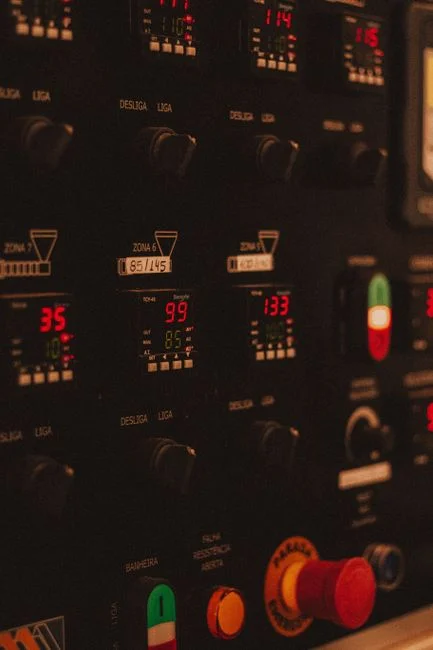
Backwash is the reverse-flow cleaning step that keeps the bed serviceable. During backwash, flow enters down through the riser tube, exits the distributor at the bottom, and flows upward through the bed at a velocity high enough to fluidize the media and flush trapped solids to drain (Newterra, 2026). The bed is then allowed to settle, with the coarse media re-stratifying on top of the fine media because the coarse media is less dense.
Industrial MMFs trigger backwash on one of three signals: a preset differential-pressure setpoint across the vessel, an elapsed-time clock, or a treated-volume counter. Newterra states that backwash is triggered when the pressure drop across the vessel reaches a preset level, with manual override available (Newterra, 2026). Everfilt's M-Series is offered with pneumatic or hydraulic valve operation, which is what allows a fully automated differential-pressure or volume-based trigger (Everfilt, 2026). Numeric backwash rates, bed-expansion percentages, and backwash durations are not published in the cited sources and must be confirmed with the filter vendor for the chosen vessel and media stack.
| Backwash trigger / parameter | What it does | Confirmed in research |
|---|---|---|
| Preset differential pressure | Initiates backwash when ΔP across the vessel exceeds a setpoint | Yes — Newterra, 2026 |
| Elapsed-time clock | Initiates backwash on a schedule | Common industrial practice; not stated in cited sources |
| Treated-volume counter | Initiates backwash after a set throughput | Common industrial practice; not stated in cited sources |
| Manual override | Operator-initiated backwash regardless of trigger | Yes — Newterra, 2026 |
| Backwash flow rate / expansion % | Sets the cleaning intensity | Confirm with filter vendor |
The four failure modes an operator is most likely to see are media fouling or cementing (usually biological or oil-bound), underdrain failure (cracked lateral or plugged nozzle), insufficient backwash flow (the bed does not fluidize, so solids are not released), and channeling caused by air binding. None of these are diagnosed by looking at the media alone — they are diagnosed by loss of effluent quality, a pressure drop that no longer falls after a backwash, or a pressure drop that rises faster than throughput would predict. An MMF that is hitting 5-micron-class effluent (Everfilt, 2026) and backwashing cleanly has a working control loop; an MMF that has lost either one has a specific, findable problem. A spare valve and dosing skid package on site turns most of these into a same-shift fix.
Choosing Between Pressure and Gravity Multimedia Filters
For RO pretreatment and most process-water duties, the default industrial choice is a skid-mounted pressure vessel. Everfilt's M-Series is documented as a skid with 304SS removable wedge-wire underdrains, side access manways for inspection and media changeout, and pneumatic or hydraulic valve operation (Everfilt, 2026). Pressure vessels hold consistent differential pressure under varying flow, fit into a small footprint, and are easy to automate.
Gravity multimedia filters are the right call when the application is stormwater best-management practice, lower-pressure polishing, or a site with the hydraulic head and the footprint to spare. Newterra's Clara line is a passive gravity media filter used as a standalone treatment or as a pretreatment BMP (Newterra, 2026). The decision factors to put on the table are flow rate, available hydraulic head, effluent-quality target (SDI vs turbidity only), media changeout access, and the valve package (manual vs pneumatic vs hydraulic). A pressure vessel with stainless internals and an automatic valve package is the higher-capex option, but it is the right one whenever the downstream unit is an RO membrane and the operating envelope is tight.
Sizing and Spec Checklist for a Multimedia Filter
Before talking to a vendor, lock in the following inputs: design flow in m³/h, peak flow, influent turbidity and TSS, target effluent turbidity, target SDI if the downstream unit is RO, and available pressure or hydraulic head. With those on the table, put the following questions to the vendor in writing: media grades and layer depths, vessel diameter and bed depth, underdrain type, backwash trigger logic, backwash flow and duration, and expected media life. The numeric values for all of these depend on the chosen vendor and the influent, so the only safe answer in a generic spec is "to be confirmed by vendor with reference to the duty point above."
Cross-check the resulting proposal against the 5-micron-class effluent benchmark published for commercial MMF units (Everfilt, 2026). If the vendor cannot show data demonstrating that the proposed bed and backwash cycle will reach that class of performance on a feed with the same turbidity and TSS as your site, the spec is not finished. Finally, confirm local supply of spare media, underdrains, and control valves before signing — a unit that cannot be back in service within 24 hours of a media or underdrain event is a liability, not an asset.
Frequently Asked Questions
What does a multimedia filtration system actually cost for an industrial duty?
Equipment cost depends on vessel diameter, material of construction, valve package, and instrumentation, none of which are published in the cited sources. The only defensible answer to a budget question is to scope the unit against the duty point in the sizing checklist above and request a budgetary quote from at least two vendors with the same duty basis. The inputs a buyer must provide to get a usable number are design flow, target SDI or turbidity, influent quality, and the backwash-trigger preference (differential pressure, time, or volume).
How do I choose the right multimedia filter supplier for RO pretreatment?
Shortlist suppliers that can document, on a feed similar to yours, the SDI the unit will deliver, the backwash trigger logic, and the media life expectancy in months or treated volume. Ask each one for a reference installation with the same downstream membrane and the same influent TSS band, and confirm that spare media, underdrains, and valve parts are stocked regionally. Delivery and lead time for a skid-mounted pressure MMF are typically weeks to a few months depending on size and valve package; request a written lead time tied to the PO, not a verbal one.
How often will a multimedia filter need backwash in normal service?
Backwash frequency is set by whichever trigger is reached first: a preset differential pressure, a timer, or a treated-volume setpoint. Newterra documents differential-pressure triggering as the standard control mode (Newterra, 2026). The actual interval in service depends on influent solids loading and bed depth, so it has to be confirmed during commissioning and adjusted in the first months of operation.
Can a multimedia filter replace a clarifier or DAF upstream?
No. The MMF is a polishing step, not a bulk-solids-removal step. The Cranfield dissertation classifies it as tertiary solids removal (Ncube, CERES Cranfield, 2015), which means a primary clarifier or DAF is expected to do the heavy lifting upstream. Feeding an MMF raw wastewater will blind the bed in minutes, not hours.
