Which Separator Fits the Darlington Wastewater Stream?
For mining and metals wastewater in Darlington, choose a clarifier for dense, rapidly settling mineral solids and DAF for oils, flotation reagents, emulsions, colloids or conditioned metal-bearing solids. Many plants need a clarifier followed by DAF polishing rather than one universal unit. DAF generally uses 30–50 micron microbubbles and depends on jar-tested chemical conditioning, while clarifier performance depends on particle settleability, hydraulic loading and sludge withdrawal. Confirm the choice with representative wastewater testing, peak-flow data and Darlington permit requirements before selecting equipment.
The contaminant fraction, not the product name, determines the preliminary selection. A “flotation clarifier” is still a flotation device, whereas a lamella plate clarifier remains a gravity-separation device. Procurement documents should state the separation mechanism, target fraction and required performance instead of relying on either label.
Fluence’s mining-wastewater application note reports that users cite heavy-metal and oil-waste removal, process-water recycling and material recovery as benefits of flotation. The same source identifies a decisive limitation: DAF is not well suited to water containing high levels of heavy, non-floating silt and clay (Fluence, “What Is Dissolved Air Flotation?”).
For a Darlington stream containing both heavy mineral solids and floatable or colloidal contaminants, the defensible preliminary arrangement is clarification first, followed by DAF polishing. A clarifier alone may be sufficient when testing shows that the required effluent and reuse targets are met by the settleable fraction. DAF alone is more defensible when the remaining load is buoyant or can be reliably conditioned into floatable floc. A combined train should be used only when both fractions require distinct mechanisms.
Equipment evaluation can begin with an industrial lamella clarifier for bulk mineral solids and an industrial DAF system for mining wastewater, but neither should be purchased before representative testing and a common bid basis are complete.
How the Two Separation Mechanisms Handle Mining Wastewater
Gravity clarification removes suspended solids by settling, while dissolved air flotation removes them by attaching conditioned particles to gas bubbles and skimming the resulting float.
In a gravity clarifier, particles with a specific gravity greater than water settle toward the bottom collection zone. Performance is governed by particle settleability, tank geometry, hydraulic loading and sludge withdrawal. A lamella clarifier adds inclined plates to increase effective settling area within a compact tank, but the separation mechanism remains gravity-based. It does not inherently remove oil, surfactant, buoyant material or colloids.
DAF pressurizes recycled water and releases microbubbles when the saturated stream returns to the flotation basin. Clearwater Industries specifies bubbles of 30–50 microns for its DAF systems in its April 27, 2026 publication. The bubbles attach to flocculated particles, which rise and are removed by a skimmer; clarified water is withdrawn below the floating sludge blanket.
Chemical conditioning is integral to that mechanism. Clearwater states that coagulant, pH adjustment and polymer can be introduced through flash-mixing or impeller mixing, with a 15–45 second flash mix used where appropriate. Final contact time must be established empirically rather than accepted as a default.
| Design issue | Gravity or lamella clarification | Dissolved air flotation |
|---|---|---|
| Primary mechanism | Particles settle under gravity; inclined plates increase effective settling area. | Microbubbles attach to conditioned particles, which are skimmed from the surface. |
| Preferred fraction | Dense, readily settleable mineral fines, tailings and metallurgical sludge. | Oils, flotation reagents, emulsions, fine precipitates and conditioned colloids. |
| Principal limitation | Does not reliably capture buoyant or colloidal material. | Not well suited to high levels of heavy, non-floating silt and clay, according to Fluence. |
| Chemical dependence | Flocculation may assist settling, but hydraulic and sludge collection design remain central. | Strongly dependent on pH control, coagulation, flocculation and bubble contact with the target solids. |
| Sludge route | Bottom withdrawal, usually followed by thickening or dewatering. | Skimmed sludge, which must be evaluated for storage and dewatering. |
Match Each Contaminant Fraction to a Treatment Step
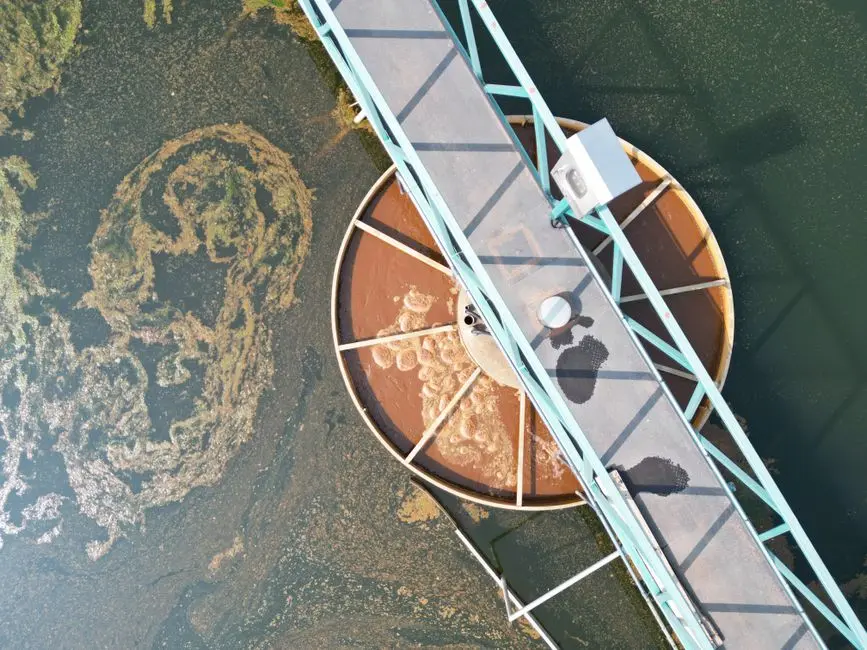
Dense mineral solids and floatable contaminants require different removal mechanisms, so a plant should assign each wastewater source to a treatment step before combining equipment bids.
For dense mineral fines, tailings overflow and metallurgical sludges, clarification should normally provide the primary bulk-solids removal. Underflow requires a defined route for storage, thickening, filtration or sludge dewatering. For oils, emulsions, residual flotation reagents and low-specific-gravity precipitates, DAF belongs after the required pH and chemical-conditioning stage.
Metals do not determine the mechanism by themselves. A dissolved metal may require pH adjustment and precipitation, followed by separation of the resulting particles. A metal attached to settleable solids may respond to clarification; a metal-bearing colloid may require DAF after flocculation. The sampling and analytical basis must distinguish these fractions.
| Treatment question | Conventional or lamella clarification | DAF |
|---|---|---|
| What is the target? | Dense mineral fines, tailings and metallurgical sludge. | Oils, emulsions, flotation reagents, colloids and conditioned metal-bearing solids. |
| What determines performance? | Settleability, hydraulic loading, effective settling area and sludge withdrawal. | Particle floatability, chemical conditioning, bubble contact and skimming capacity. |
| Where does sludge go? | Bottom underflow to thickening or dewatering. | Skimmed sludge to storage and the selected dewatering route. |
| What is its suitable role? | Primary separator for bulk solids; first stage in a mixed train. | Primary separator for a floatable load or polisher after clarification. |
| Footprint consideration | Conventional tanks require more civil space; lamella plates reduce the footprint. | Compact separator, but chemical feed, recycle and air-saturation equipment are part of the installation. |
A preliminary train for mixed wastewater is screening, equalization, pH control, clarification, DAF polishing, filtration or membrane polishing where needed, and sludge dewatering. That sequence is a screening model, not a final design. Filtration or another solids-removal step may be required before high-quality reuse or membrane service; a DAF outlet should not automatically be classified as reusable.
Do not assume that DAF followed by clarification is always necessary or always redundant. Clarification-first is justified where heavy settleable material would interfere with flotation. A DAF-first arrangement may be more appropriate after suitable upstream removal protects the flotation system. The order must follow pilot results and the complete hydraulic profile.
If chemical conditioning is required, specify the automatic chemical dosing system together with the separator rather than treating chemical feed as an accessory.
Build the 2026 Design Basis from Darlington Plant Data
Equipment sizing for Darlington must be based on source-specific hydraulic and solids data, because average flow can conceal the batch event that determines equipment duty.
- Develop flow records for each source, including peak flow, batch-discharge profiles, stormwater contribution and equalization data.
- Characterize TSS, particle-size distribution, settleability, oils and greases, pH, alkalinity, temperature, and total and dissolved metals such as copper, lead and zinc.
- Separate dissolved metals from metals attached to settleable or floatable solids.
- Use representative jar and pilot tests to establish chemical dose, flotation response, sludge behavior and clarification performance.
- Size against both peak hydraulic loading and peak solids loading, including how batch events are equalized.
- Define sludge storage, expected moisture content, dewatering route and disposal assumptions.
The Logan, Utah wastewater treatment plant study recorded an optimum aluminum sulfate dose of 30 mg/L for algae and phosphorus removal in lagoon effluent (Utah State University, 2011). That value applies only to that application; it is not a default dose for Darlington mining wastewater.
The supplied research does not establish a universal 2026 price or removal efficiency for either separator. Request a budgetary quotation tied to flow, TSS, contaminant fraction, chemistry, sludge route and site installation conditions. Also require bidders to state any assumptions behind performance claims.
| RFQ input | Evidence the buyer must provide | Decision supported |
|---|---|---|
| Hydraulic profile | Source-by-source flow, peak flow, batch events, stormwater contribution and equalization operation. | Separator capacity, equalization, controls and peak-flow response. |
| Solids characterization | TSS, particle-size distribution, settleability, solids density where available and grab-sample results. | Choice and configuration of gravity clarification or DAF. |
| Contaminant chemistry | Oils and greases, total and dissolved metals, pH range, alkalinity and temperature. | Conditioning, materials selection and required polishing. |
| Performance basis | Representative samples, jar or pilot results, proposed dose, sampling point and acceptance criterion. | Bid comparison and performance testing. |
| Sludge basis | Expected volume, moisture content, storage time, dewatering method and disposal route. | Underflow and float handling, equipment scope and operating cost. |
Evaluate corrosion-resistant materials against actual chemistry and temperature rather than accepting a generic material list. HydropureWater’s catalog identifies its DAF range as 4–300 m³/h and its lamella clarifier surface-loading rates as 20–40 m/h (HydropureWater, 2026). Neither catalog range replaces site-specific hydraulic, solids and sludge design. Request both the DAF system proposal and the lamella clarifier proposal against that same design basis.
Compare Bids by Installed Performance and Operating Cost
A defensible bid comparison evaluates the complete installed treatment train against one wastewater basis, not the separator’s purchase price or unsupported removal percentages.
Each bidder should identify the separation mechanism, design flow, peak-flow response, solids-loading basis, tank area or configuration, recycle system, sludge collection, controls and materials of construction. DAF and gravity clarification should be evaluated using the same wastewater, chemical assumptions, hydraulic profile, sampling points and performance criteria. If only one process was screened, require an explanation of why the alternative was excluded.
| Bid package | Required scope | Commercial question |
|---|---|---|
| Separator and pretreatment | Screening, equalization, pH control, selected separator and any required filtration or membrane polish. | What civil work, installation and commissioning are included? |
| Chemical dosing | Coagulant, polymer and pH control, including PLC-controlled chemical feed equipment. | What dose, control response and operating labor are assumed? |
| Sludge handling | Collection, storage and the selected sludge dewatering route. | What cake moisture content, cycle time and disposal frequency are committed? |
| Utilities and controls | Power, compressed air, recycle water, instrumentation, alarms and data logging. | What consumption and maintenance assumptions support operating cost? |
| Performance evidence | Comparable references or pilot data tied to the proposed duty. | Does every claim state wastewater, flow, dose, temperature, test method, sampling point and criterion? |
Reject generic removal percentages that omit test conditions, and do not accept an unconditional statement that the equipment will meet every limit. A comparable reference should be treated as evidence of relevant experience, not a performance guarantee for the Darlington stream.
For supplier selection, require a proposed test plan and acceptance basis. The coagulant dosing system design criteria should connect dose control to flow, pH, level and equipment interlocks. If reuse or discharge is the objective, check the mining and metals wastewater pretreatment compliance requirements against the final design.
Recommended Darlington Decision Workflow
The Darlington decision should proceed from stream classification to acceptance testing, with each technical gate completed before a purchase order is issued.
- Classify the sources. Separate heavy settleable solids, colloidal matter, oils, flotation reagents and dissolved metals for each process, contact and stormwater stream.
- Test representative conditions. Include peak and batch conditions, then use jar testing and, where justified, pilot testing to establish conditioning and separation behavior.
- Choose a preliminary train. Use clarification for bulk solids, DAF for buoyant or conditioned material, or clarification followed by DAF for mixed streams.
- Scale the equipment. Check peak hydraulic and solids loading, variable-flow response, sludge collection and downstream dewatering.
- Check the regulatory and reuse basis. Verify current Darlington permit, discharge, reuse and local sewer requirements against the proposed final effluent and operating conditions.
- Issue a common RFQ. Give every bidder the same wastewater data, chemical assumptions, service scope and performance criteria.
- Award on evidence. Compare demonstrated performance, installed scope and total operating cost rather than product terminology or a generic efficiency claim.
This workflow also provides a technical record for internal approval. It shows why the selected mechanism was chosen, which data supported sizing, how pilot results affected the train and what the supplier is obligated to demonstrate. The broader mining wastewater DAF versus clarifier comparison can support the technical screening, but Darlington-specific wastewater data must control the final selection.
Frequently Asked Questions
What will DAF or gravity clarification cost for a Darlington mining plant?
The supplied research does not support a universal 2026 price. Request a budgetary quotation based on design flow, TSS, contaminant fractions, chemical demand, materials, civil work and sludge handling. Price the full train, including equalization, pH control, coagulant and polymer dosing, separator, controls, utilities, installation, commissioning and sludge dewatering, rather than comparing separator prices alone.
How should a DAF or lamella clarifier be sized for Darlington?
No generic flow rule resolves the design. Give bidders source-specific average and peak flow, batch-discharge profiles, stormwater contribution, equalization data, TSS, particle-size distribution, settleability, oils and greases, pH, alkalinity, temperature, total and dissolved metals, and expected sludge quantity and moisture content. Pilot results must then confirm chemical dose, flotation response, clarification performance and variable-flow handling.
How should a supplier be selected for mining and metals wastewater treatment?
Require each bidder to use the same wastewater basis and acceptance criteria, identify the separation mechanism and controls, provide a materials rationale tied to site chemistry and temperature, and state the complete sludge route and service scope. Comparable references must disclose wastewater, flow, chemical dose, temperature, test method, sampling point and performance criterion. A demonstrated PLC-controlled chemical dosing system should be included in the integrated proposal.
Does process selection guarantee compliance with Darlington discharge and reuse requirements?
No. Process selection is only one part of compliance. The final design must be checked against current Darlington permit conditions, discharge or reuse objectives, local sewer requirements, monitoring methods and operating controls. The selected separator should not be credited with meeting an effluent limit until the acceptance test demonstrates it under the agreed influent conditions and sampling plan.
When is a clarifier followed by DAF technically justified?
A clarifier-first train is justified when the wastewater contains substantial heavy, rapidly settleable solids plus a separate floatable or colloidal load that remains after clarification. One correctly selected unit may be sufficient when testing shows that clarification alone meets the required solids, metal and reuse targets, or when the remaining load is reliably floatable and DAF can handle it without upstream removal of interfering solids. Pilot results should decide whether the extra train adds enough value to justify its capital, chemical, space and operating costs.