What Controls Discharge Near Jasper?
Petroleum bulk plants near Jasper generally meet pretreatment limits through a site-specific program: identify the controlling sewer authority and industrial-user permit, characterize oil, grease, solids, petroleum compounds, and flow; segregate contaminated stormwater; treat oily wastewater before the end-of-pipe discharge; and document monitoring and BMPs. EPA confirms that POTW local limits are site-specific, may be numerical or narrative BMPs, and apply at the industrial user’s connection to the sewer. The treatment train commonly combines primary oil-water separation with DAF polishing and automatic chemical dosing, but equipment selection must follow the Jasper-area permit and representative wastewater testing—not generic national limits.
The controlling authority is the POTW receiving the discharge, not a national equipment standard and not a permit copied from another municipality. Begin with the Jasper-area sewer authority’s industrial-user permit, sewer-use regulations, local limits, BMPs, monitoring requirements, and enforcement procedures. The operator must also determine whether categorical pretreatment standards apply to the facility’s activities.
EPA’s Local Limits Development Guidance explains the hierarchy: national pretreatment standards apply, categorical standards apply where applicable, and a POTW establishes local limits to protect its facility, sludge, and receiving waters. The guidance is not itself a regulation; EPA states that a permit or regulation controls if it conflicts with nonbinding guidance (EPA, Local Limits Development Guidance, 2021-06-25).
EPA further explains that 40 CFR Part 403 local limits are site-specific and can be numeric or narrative discharge limits, including BMPs. They apply at the end-of-pipe discharge from an industrial user, meaning the point of connection to the POTW collection system (EPA, “Pretreatment Standards and Requirements—Local Limits,” accessed 2026). A value from another POTW’s rules is not a Jasper requirement.
Maintain a permit-document register showing the effective dates, discharge point, approved flow, pollutants, methods, sample type, frequency, reporting deadlines, BMPs, user charges, enforcement contacts, and change-of-ownership or process-change triggers. A reference article’s mention of a 2024–2026 National Pretreatment Program review cycle does not establish a Jasper-specific audit or enforcement obligation; verify current notices directly with the authority.
| Document | Question the operator must answer | Evidence to retain |
|---|---|---|
| Industrial-user permit | Which pollutants, concentrations, mass limits, flow limits, BMPs, and monitoring conditions are enforceable? | Current permit and all modifications |
| Sewer-use regulations | Which prohibited discharges, user charges, authorizations, and enforcement provisions apply? | Adopted rules and revision date |
| Federal and categorical standards | Do national prohibitions or an applicable categorical standard constrain the discharge? | Applicability determination |
| Program notices | Are there current audits, reporting changes, approvals, or enforcement matters? | Direct written confirmation from the POTW |
The regulatory sequence is similar to the approach in this industrial pretreatment compliance guide: permit terms first, characterization second, equipment third. A broader review of nearby industrial pretreatment controls is also available in this pretreatment guide for industrial facilities.
Build a Representative Wastewater Profile
Representative wastewater data must cover both routine flow and short, high-load events because a daily average can conceal a slug that overwhelms treatment at the end-of-pipe discharge. EPA’s guidance identifies sampling at the POTW, within the collection system, and at industrial users as distinct locations for developing and evaluating local limits (EPA, Local Limits Development Guidance, 2021-06-25).
Segregate sources before sampling. The relevant streams can include tank-bottom water, API separator or coalescer dumps, truck and rail loading drip, vehicle wash-rack wastewater, hydrostatic-test water, and stormwater contacting product-handling areas. Tank drops and coalescer dumps should be recorded as possible slug events, while wash-rack operations and loading activity establish the operating profile.
Characterize average and peak instantaneous flow. Use site logs, tank-turnover records, wash-rack counts, measured flow, and event records rather than extrapolating from a daily mean. For each candidate treatment train, also quantify the oily mass load and identify whether oil arrives as free oil, emulsified droplets, or contaminated solids.
Request HEM or the oil-and-grease method named by the permit, TSS, pH, BTEX, TPH, and any pollutant specified by the controlling POTW or an applicable categorical standard. EPA Method 1664A uses n-hexane extraction for HEM according to the commercial guide, but that source is not a permit. The cited POTW regulation instead requires 40 CFR Part 136 analytical techniques unless an applicable categorical pretreatment standard specifies otherwise (Pawnee-Graham Metropolitan District, Industrial Wastewater Control Regulations, 2023).
Preserve the analytical scope. Distinguish total from filterable fractions, grab from composite samples, and a daily maximum from a daily average or mass-based limit. A result cannot be compared directly with a permit condition if the sample type, averaging period, analyte definition, or analytical basis differs.
| Waste characterization check | Minimum information to obtain | Why it affects design |
|---|---|---|
| Sampling points | Each segregated source and the permitted end-of-pipe discharge point | Identifies free-oil, emulsified, and clean-stream contributions |
| Flow record | Average flow, peak instantaneous flow, and documented slug events | Sets hydraulic and equalization requirements |
| Sample basis | Grab or composite, flow proportionality, duration, and averaging period | Determines whether results can support compliance calculations |
| Laboratory control | Method, detection limits, chain of custody, duplicate results, and sample dates | Supports defensible permit comparisons |
| Operating representation | Normal operations plus a relevant slug or upset condition | Exposes equipment shortfalls that an average sample can miss |
Derive the Treatment Objective from the Permit

The treatment objective must reproduce the permit’s exact regulatory form rather than a generic “oil and grease removal” target. Extract the pollutants, concentrations, mass loads, pH range, flow ceiling, monitoring point, averaging period, BMP conditions, and authorized disposal points from the industrial-user permit.
EPA’s MAHL framework provides the POTW’s basis for evaluating pollutants of concern, collecting and analyzing data, calculating allowable headworks loadings, and designating and implementing local limits (EPA, Local Limits Development Guidance, 2021-06-25). The POTW—not a treatment vendor—establishes the enforceable local limit. EPA guidance supports the calculation method; it does not create a Jasper limit.
The commercial article gives examples rather than Jasper requirements: 100–200 mg/L HEM and approximately 250 mg/L TSS are described as 2026 permit examples, while some water-reuse settings may have HEM limits approaching 50 mg/L (HydropureWater, “How U.S. Petroleum Bulk Plants Meet Pretreatment Limits Before Sewer,” accessed 2026). These values should not appear in a Jasper design basis unless the controlling permit or regulation contains them.
The cited POTW rules demonstrate how local requirements vary. They include a 0.050 mg/L daily maximum benzene limit, a 0.750 mg/L daily maximum BTEX limit, and a 50 mg/L petroleum-oil threshold in specified contexts (Pawnee-Graham Metropolitan District, Industrial Wastewater Control Regulations, 2023). None is a Jasper limit. The same rules prohibit dilution as a substitute for adequate treatment and permit mass limitations when dilution is used.
Calculate concentration and mass targets. A concentration-only permit condition may not capture the complete loading risk when flow or slug discharge changes. The design should show expected residual concentration, daily mass, flow allocation, and treatment train response during identified upset conditions.
| Permit concept | Design action | Evidence required |
|---|---|---|
| Concentration limit | Set residual-performance objectives and account for analytical variability | Current permit language and method |
| Mass limit | Calculate pollutant mass across normal flow and slug events | Measured flow and pollutant loading |
| Flow ceiling | Verify treatment and collection capacity at the authorized flow | Peak-flow record |
| BMP or narrative condition | Translate operational requirements into inspection, containment, and recordkeeping tasks | Permit BMP schedule |
| Dilution prohibition | Size treatment for the required pollutant removal without relying on dilution | Mass balance and treatment design |
The relationship between treatment limits and headworks capacity is further examined in this permit-to-equipment limit development example.
Route Wastewater Through a Defensible Treatment Train
A petroleum bulk plant treatment train should be arranged by contaminant mechanism, with free-oil removal upstream of emulsified-oil polishing. EPA’s regulatory framework identifies prohibited discharges, local limits, and BMPs as separate controls; the physical train must therefore address each applicable pollutant and operating condition rather than rely on a single technology (EPA, “Pretreatment Standards and Requirements—Local Limits,” accessed 2026).
Begin with source control: segregated laterals, covered dump valves, spill containment, drip control, and exclusion of clean stormwater from the treatment train. Next use an API gravity separator, corrugated plate interceptor, coalescer, or equivalent primary stage for free oil and settled solids. The commercial guide warns that DAF alone can be overwhelmed by a free-oil slug from a coalescer dump (HydropureWater, “How U.S. Petroleum Bulk Plants Meet Pretreatment Limits Before Sewer,” accessed 2026).
Use DAF to polish emulsified oil and FOG after primary separation. The available DAF system for petroleum wastewater polishing covers 4–300 m³/h across 13 models, according to the commercial source. That catalog range is not a Jasper sizing recommendation; compare it with measured peak flow, slug conditions, oily loading, and the supplier’s process assumptions.
Add chemical dosing only after jar testing establishes the required coagulant or demulsifier response and operating range. The commercial guide gives 50–200 mg/L dosing and pH 6.5–7.5 as field-practice examples, not universal Jasper requirements. Use the coagulant dosing system design criteria to define feed, mixing, control, and verification requirements.
Treat dissolved pollutants and reuse demands separately. Biological, adsorption, membrane, or advanced treatment should follow only when the permit, reuse specification, or residual analysis demonstrates that physical oil removal is insufficient. The commercial source describes biological or adsorption polishing as a later stage rather than a substitute for primary separation.
| Process step | Primary function | Design evidence |
|---|---|---|
| Segregated collection and equalization | Exclude clean stormwater and moderate slug flow | Source map, flow record, containment review |
| Primary oil-water separation | Remove free oil and settled solids | Droplet distribution, peak load, vendor performance curve |
| DAF or alternative polishing | Remove emulsified oil and FOG | Jar test, chemical response, surface-loading and recycle assumptions |
| Residual analysis | Confirm permit-relevant residual quality | Representative post-treatment samples |
| Authorized discharge | Deliver wastewater at the permitted point | Approved monitoring point and operating controls |
| Parallel residue handling | Manage recovered oil, sludge, and oily waste | Storage, handling, and disposal route |
The commercial guide also distinguishes primary and polishing technologies through this DAF design guide. Require the manufacturer to demonstrate performance with the site’s oil droplet distribution, flow profile, and chemistry rather than relying on generic FOG removal claims.
Match Equipment to Peak Flow, Loading, and Site Constraints?
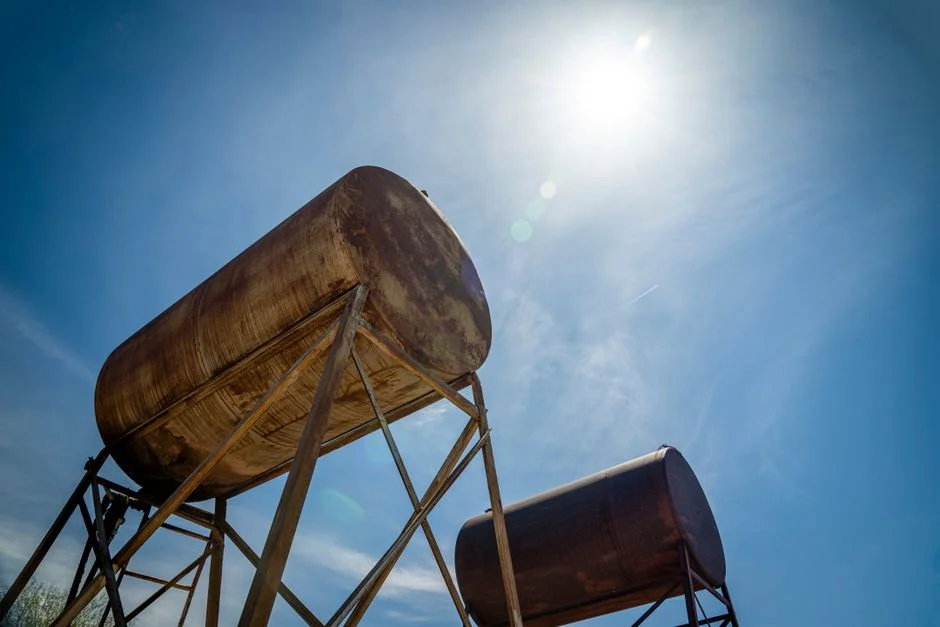
Equipment should be selected for peak hydraulic loading, verified oily load, slug tolerance, and operating constraints—not by nominal treatment capacity alone. A daily mean can conceal the coalescer-dump or tank-drop event that determines whether upstream separation remains effective.
Compare alternatives by removal mechanism, footprint, integration effort, chemical demand, sludge handling, controls, maintenance, and residue-disposal route. A DAF versus clarifier technology comparison illustrates why clarification and flotation should not be treated as interchangeable equipment categories.
For DAF, require the supplier’s confirmed surface-loading, air-to-solids, retention, recycle, and skimming assumptions for the measured flow and pollutant load. State the available catalog range accurately: 4–300 m³/h across 13 standard DAF models (HydropureWater, accessed 2026). This describes available equipment capacity; it is neither a Jasper flow requirement nor a performance guarantee.
Use an automatic chemical dosing system where the process requires repeatable coagulant, demulsifier, or pH control. Request PLC control, duty and standby strategy, calibration access, chemical compatibility documentation, and clear operator interfaces. The DAF versus clarifier technology comparison provides a useful starting point, but the site wastewater must still govern selection.
| Procurement criterion | Information the supplier must document | Buyer check |
|---|---|---|
| Hydraulic capacity | Design flow, peak instantaneous flow, and basis | Compare with measured site data |
| Pollutant loading | Oil mass load, droplet distribution, and assumed residual | Match the selected wastewater profile |
| Controls | PLC sequence, alarms, interlocks, and chemical feedback | Simulate failure and upset conditions |
| Maintenance | Service access, wetted parts, replacement media, and odor controls | Confirm lifecycle and spares |
| Residues | Recovered oil and sludge quantity, storage, and handling route | Price and permit the disposal pathway |
| Site integration | Foundation, power, containment, access, and connections | Fit within the existing treatment footprint |
The principal procurement risk is buying DAF capacity before characterization and upset-condition review are complete. Capacity selected from an unsupported average flow may still carry a free-oil slug into the flotation unit and undermine the intended treatment sequence.
Monitor the Discharge Point and Prove Consistent Compliance?
The monitoring program must reproduce the permit’s parameters, methods, sample type, averaging period, frequency, reporting deadline, and responsible signer. No universal sampling cadence should replace those terms. EPA’s guidance treats sampling frequency, methods, analytical methods, flow data, and result review as components of the local-limits development framework (EPA, Local Limits Development Guidance, 2021-06-25).
EPA’s guidance considers sampling at the POTW, in the collection system, and at industrial users for different purposes. For the plant, the controlling requirement remains the industrial-user permit and the designated end-of-pipe discharge point. A representative composite, a grab sample, and an operational spot check are not interchangeable; use the sampling basis specified by the permit.
Retain the complete evidence chain: characterization data, flow records, calibration records, laboratory reports, chain-of-custody forms, operating logs, chemical-use records, bypass alarms, deviation handling, and corrective-action records. Each result should connect to the sample point, date, operating condition, method, and responsible reviewer.
Create an alarm and response sequence for high oil, excessive TSS, unusual flow, chemical failure, DAF carryover, or primary-separator bypass. The sequence should identify the immediate operator action, equipment response, resampling decision, hold or diversion step, and notification path to the POTW when the permit requires it.
| Compliance evidence | Required content | Use in review |
|---|---|---|
| Monitoring plan | Parameter, point, method, sample type, frequency, and reporting deadline | Confirms the program matches the permit |
| Laboratory reports | Results, qualifiers, method, detection limits, and sample dates | Supports comparison with permit conditions |
| Operating logs | Flow, oil observations, chemical use, alarms, bypasses, and actions | Explains compliance performance |
| Calibration and maintenance | Instrument checks, equipment service, and corrective work | Supports data and equipment reliability |
| Deviation records | Notification, resampling, root cause, and closure | Demonstrates controlled response |
Do not repeat the commercial article’s unsupported enforcement arithmetic. Its claims that two violations in twelve months automatically create Significant Noncompliance, or that a specific monthly inspection and reporting schedule guarantees no violation, are not established by the cited EPA guidance. Enforcement consequences must be assessed under the controlling permit, regulation, and POTW procedures.
Implement the Jasper-Area Approval and Equipment Plan
The implementation sequence begins with authority confirmation, not equipment selection. Confirm the receiving POTW, collection system, industrial-user permit, applicable pretreatment requirements, and any approval authority. Involve the sewer authority early if treatment, monitoring, or control plans will be submitted for review.
- Compile the permit-document register and identify every enforceable condition, BMP, monitoring term, and modification trigger.
- Complete source segregation, flow characterization, and representative wastewater testing across normal and slug conditions.
- Prepare a basis-of-design package covering treatment objectives, unit processes, hydraulic sizing, oily loading, controls, chemicals, monitoring, BMPs, bypass prevention, and residue handling.
- Pilot-test the proposed DAF and chemistry with representative wastewater, including expected droplet sizes and a relevant upset or slug condition.
- Obtain authority review and resolve permit, design, and operating conditions before final equipment selection.
- Commission against agreed tests for hydraulic capacity, oil removal, residual solids, controls, alarms, chemical delivery, and documented operating ranges.
- Train operators before the first compliance discharge and establish reviews for permit changes, maintenance, chemistry changes, and recurring exceedance patterns.
The basis-of-design package should also establish how construction and operating changes will be reported. Asset-acquisition planning can offer a separate review model for comparing wastewater requirements before ownership transfer in this industrial wastewater acquisition guide.
Frequently Asked Questions
What pretreatment limits apply to a petroleum bulk plant near Jasper?
The enforceable limits must come from the controlling Jasper-area POTW’s industrial-user permit and sewer-use regulations, together with any applicable federal or categorical pretreatment standards. The supplied research does not establish the exact Jasper-area limits, sampling frequency, or approved-equipment list. EPA identifies local limits as site-specific and applies them at the industrial user’s end-of-pipe discharge, so a limit from another municipality cannot be used without the controlling documents.
What data should a supplier request before pricing DAF equipment?
Request measured average and peak flow, source-by-source oily loading, oil droplet characteristics, representative HEM or permit-method results, TSS, pH, BTEX, TPH where applicable, expected slug events, chemical-test results, available footprint, utilities, and residue-handling requirements. The supplier should then document its selected flow basis, surface-loading and air-to-solids assumptions, equipment configuration, controls, commissioning tests, and performance exclusions. No reliable price can be stated without those inputs and a defined scope of supply.
How should a buyer select a supplier for a petroleum wastewater treatment train?
Require evidence tied to the buyer’s wastewater rather than generic oil-and-grease claims. Evaluate proposed performance against site droplet distribution, measured peak flow, slug loading, chemistry, and permit targets; also check pilot data, controls, alarms, maintenance access, wetted-part compatibility, replacement media, commissioning scope, and support. A supplier should identify any duty/standby assumptions and explain how the train handles a representative upset condition.
Can primary separation and DAF be purchased as one treatment train?
They can be integrated, but the procurement scope must preserve the contaminant-mechanism sequence: source segregation and equalization, primary oil-water separation, flotation or other polishing, residual analysis, and authorized discharge. The commercial guide warns that DAF alone can be overwhelmed by free-oil slugs from coalescer dumps. Pilot testing should therefore examine both emulsified oil and a relevant free-oil upset before the final train is specified.