
Why Mishawaka Pretreatment Is Stricter Than the Federal Floor
The 2014 EPA consent decree against the City of Mishawaka is the controlling enforcement signal for any industrial discharger in the District service area. EPA found the City had violated Sections 301 and 309 of the Clean Water Act and discharged approximately 111 million gallons of raw sewage to the St. Joseph River every year from a combined sewer system that "failed to effectively and sufficiently convey a portion of sanitary sewage and other pollutants" to the wastewater treatment plant (epa.gov, 2014-02). The settlement required $132.1 million in capital improvements to eliminate wet-weather overflows, a $28,000 civil penalty split between the federal government and the State of Indiana, and a coordinated program with Elkhart and South Bend totaling $800 million across the three communities (epa.gov, 2014-02). That posture is still operationally visible: Mishawaka Utilities currently maintains 19 combined sewer overflow (CSO) structures and 28 remote lift stations, and the agency's stated responsibility includes "monitoring and reporting activity of 19 combined sewer overflow (CSO) structures" as part of the CSO control program (mishawaka.in.gov).
For an EV or auto assembly plant tied to this collection system, the practical consequence is that the receiving POTW is hypersensitive to any industrial slug. Under 40 CFR Part 403.5(a), no industrial user may discharge any pollutant that causes pass-through as defined in 40 CFR Part 403.3(p) or interference as defined in 40 CFR Part 403.3(k); under 40 CFR Part 403.8(b)(4), every SIU must have a written slug-control plan, and any event that contributes to a CSO activation is reportable. With IDEM acting as the NPDES approval authority that issued the City's biosolids permit covering St. Joseph, Marshall, LaPorte, and Elkhart counties (mishawaka.in.gov) and Mishawaka Utilities acting as the delegated control authority for SIU permitting and enforcement, a "just meet the categorical floor" design will fail an audit the first time a slug escapes the building.
The Federal-State-Local Stack for a Mishawaka EV Plant
The permit a Mishawaka engineer reads is the top layer of a four-layer stack. Each layer imposes its own numbers, and the design target is whichever number is lower.
Layer 1 — 40 CFR Part 403 (General Pretreatment Regulations). Sets the umbrella prohibitions on pass-through (403.3(p)) and interference (403.3(k)), defines a Significant Industrial User at 403.3(v), and requires a written slug-control plan at 403.8(b)(4). Part 403 sits on top of every categorical standard, so a Part 433-compliant discharge that still causes pass-through at the receiving plant is a permit violation.
Layer 2 — 40 CFR Part 433 (Automobile and Other Motor Vehicle Manufacturing). This is the federal categorical floor for assembly plants. Section 433.12 sets numerical ceilings including a 52 mg/L oil & grease 1-day maximum and priority-pollutant metal ceilings (Zn, Ni, Cr, Pb, Cd). Subparts apply different sublimits depending on which process — metal finishing, painting, assembly — is on the line.
Layer 3 — IDEM (Indiana Department of Environmental Management). IDEM is the EPA-authorized NPDES approval authority for Indiana. IDEM issues the POTW's NPDES permit and the biosolids land-application permit; it does not write industrial SIU permits directly, but it sets the framework Mishawaka Utilities operates within, including the St. Joseph, Marshall, LaPorte, and Elkhart county biosolids footprint (mishawaka.in.gov).
Layer 4 — Mishawaka Utilities. The delegated control authority writing and enforcing the SIU permit for industrial users in the District service area. Documented local limits include 1.0 mg/L effluent phosphorus when raw sewage exceeds 5.0 mg/L, an influent-based removal schedule of 65–80% by phosphorus band, and 0.02 mg/L total residual chlorine (mishawaka.in.gov). These are routinely tighter than the Part 433 categorical floor because the control authority must protect its own NPDES permit and biosolids program.
| Layer | Authority | What it sets | Key citation |
|---|---|---|---|
| 1 | U.S. EPA | General pass-through/interference prohibitions, SIU definition, slug-control plan | 40 CFR 403.3(k), 403.3(p), 403.3(v), 403.5(a), 403.8(b)(4) |
| 2 | U.S. EPA | Categorical ceilings for auto/EV assembly (O&G, metals, TSS) | 40 CFR 433.12 |
| 3 | IDEM | State NPDES approval authority; biosolids land-application permit | Indiana NPDES delegation; mishawaka.in.gov |
| 4 | Mishawaka Utilities | SIU permit; phosphorus ceiling, TRC, O&G local limits | mishawaka.in.gov |
Five Stream Archetypes an EV/Auto Plant Discharges to the Sewer
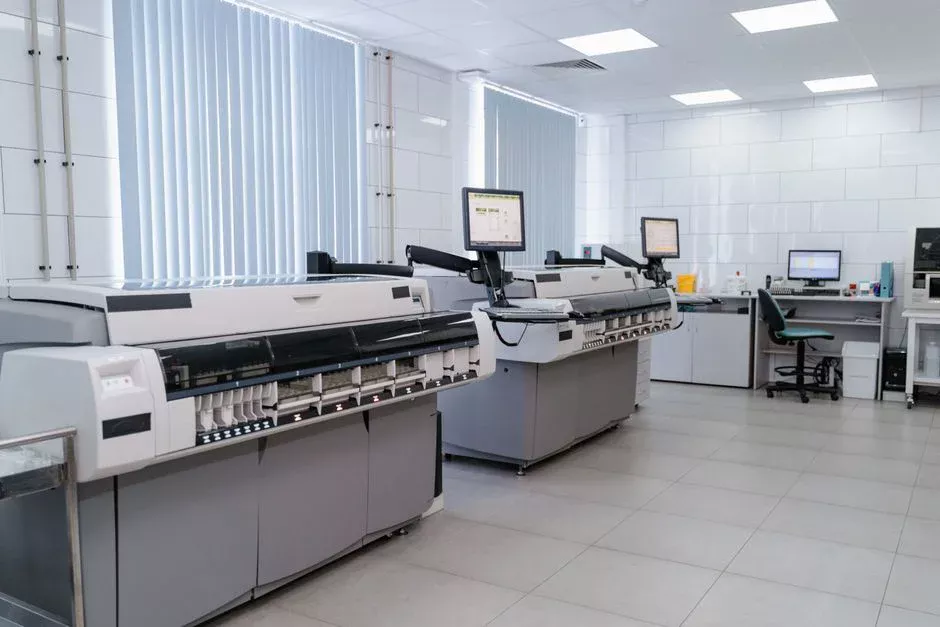
The pollutant mix a Mishawaka POTW receives is determined by which drains are connected before the sewer manhole. Five stream archetypes dominate the auto/EV assembly drain, and each drives a different unit operation downstream. Numbers below are drawn from typical operating envelopes for these unit operations and from 40 CFR Part 433 categorical ceilings (HydropureWater field data, 2026); a plant-specific basis-of-design should refine them against the actual SIU permit and a representative influent sampling campaign.
| Stream | pH | Key pollutants (typical band) | Slug-load risk |
|---|---|---|---|
| Phosphate / Ni-Zn conversion coating rinse | 3–5 | OP 10–80 mg/L as P; Zn 5–50 mg/L; Ni 1–20 mg/L | Rinse drag-out during tank transitions |
| E-coat UF permeate (tank dump) | 4–6 | COD 500–2,500 mg/L; TSS 50–300 mg/L; low FOG | UF permeate surges during tank dumps |
| Paint-shop detackifier / booth water | 6–9 | TSS 200–1,000 mg/L; FOG 50–200 mg/L | Booth overflow during color change |
| General assembly floor wash + lubricant runoff | 6–9 | O&G 100–500 mg/L; TSS 200–800 mg/L; glycol/solvent spikes | Coolant dumps; line-side spills |
| EV battery / thermal management drain | Variable | Trace Li/Ni/Co loads; glycol 5–100% by volume if dumped | Glycol coolant dump; electrolyte spill |
The dominant MBR-upset cause in this archetype is mixing e-coat UF permeate with floor wash at uncontrolled pH — a pH swing from 4 to 9 in a few minutes collapses nitrification and the MBR loses margin. Treat the drain-segregation map as a hard prerequisite for sizing every downstream unit, not an option.
The Unit-Operation Train That Clears the Mishawaka Permit
The unit operations below are sequenced so each stage protects the next from fouling, pass-through, or interference.
- Drain segregation at the head of the plant. Physical separation of the five archetypes above. Without it, no downstream unit can be sized correctly.
- Equalization with pH trim. A surge basin plus a PLC-controlled coagulant and pH dosing skid dampens slug loads and protects the biological stage. Typical operating envelope: 4–8 hours of hydraulic retention at average flow.
- Dissolved Air Flotation (DAF). Removes FOG, free oil, and floatable paint solids. A properly sized DAF unit for oil and grease removal targets ≤25 mg/L O&G on its effluent so the downstream MBR has margin to absorb an upset (HydropureWater field data, 2026).
- MBR (Membrane Bioreactor) polish. Handles dissolved COD, ammonia, and trace metals. PVDF submerged membranes at 0.1 μm nominal pore size. The MBR polish stage is protected from fouling by upstream DAF performance — a DAF that fails pushes FOG and paint solids straight onto the membranes.
- Chemical polishing for phosphorus. Dose to 65–80% removal bands per Mishawaka's influent-based schedule (mishawaka.in.gov), targeting ≤1.0 mg/L effluent. Aluminum-based coagulants and/or FeCl₃ are typical.
- Disinfection and dechlorination. Meet the 0.02 mg/L total residual chlorine ceiling at Mishawaka Utilities (mishawaka.in.gov). Overdosing chlorine is itself a permit violation — the engineering target is a dechlorination requirement, not a chlorination target.
For a comparable architectural comparison, the Michigan transportation equipment pretreatment guide applies the same DAF + MBR sequencing under a similar Part 433/Part 403 frame. For ongoing operating-cost planning on the DAF side, the 2026 DAF OPEX breakdown is a useful sizing reference. The analogous chemical-plant train is detailed in the Houston chemical plant 40 CFR Part 414 pretreatment guide.
Categorical Ceiling vs. Mishawaka Local Limit vs. Engineering Target
The single decision-grade table an engineer will paste into a basis-of-design memo. The categorical numbers in column 2 represent the federal floor from 40 CFR Part 433; column 3 is the band Mishawaka Utilities typically writes into an SIU permit; column 4 is the engineering design target — set at or below the local limit to absorb occasional upsets without tripping the permit.
| Parameter | 40 CFR Part 433 categorical ceiling | Typical Mishawaka SIU permit band | Engineering design target |
|---|---|---|---|
| Oil & grease (1-day max) | 52 mg/L — 40 CFR §433.12 | 50–100 mg/L daily max | ≤25 mg/L post-DAF |
| TSS | Categorical limit varies by subpart | ~200–300 mg/L industrial contributor | ≤30 mg/L post-MBR |
| Total Zn | Categorical priority pollutant | Categorical priority pollutant | At or below local limit |
| Total Ni | Categorical priority pollutant | Categorical priority pollutant | At or below local limit |
| Total Cr | Categorical priority pollutant | Categorical priority pollutant | At or below local limit |
| Total Pb | Categorical priority pollutant | Categorical priority pollutant | At or below local limit |
| Total Cd | Categorical priority pollutant | Categorical priority pollutant | At or below local limit |
| Hexavalent Cr | Categorical priority pollutant | Below detection; quarterly verification | Non-detect; quarterly verification |
| Phosphorus | Categorical metal-finishing number | 1.0 mg/L effluent when raw sewage >5.0 mg/L; 65–80% removal by influent band (mishawaka.in.gov) | ≤1.0 mg/L |
| Total residual chlorine | Not categorical; set by control authority | 0.02 mg/L (mishawaka.in.gov) | <0.02 mg/L post-dechlorination |
Five-Item Audit Checklist for a Mishawaka SIU Permit
The unit operations clear the permit; the paper trail defends it. Five repeatable items carry most of the audit weight for a Mishawaka Utilities SIU.
- Drain segregation map. Physical confirmation that the five stream archetypes are plumbed to the correct headworks. No floor wash to e-coat UF.
- Slug-control plan written under 40 CFR Part 403.8(b)(4). Documented response to a 5-gallon glycol coolant dump or any other reportable slug; biannual tabletop drill.
- Monthly self-monitoring for O&G, TSS, BOD, and total metals (Zn, Ni, Cr, Pb, Cd); quarterly hexavalent Cr verification.
- Phosphorus log tied to Mishawaka's influent-based removal schedule (65–80% by influent band per mishawaka.in.gov), with daily grab and 24-hour composite sampling.
- Written SIU determination from Mishawaka Utilities. Do not assume a flow-based exemption below 25,000 gpd — pollutant strength, process similarity, or pass-through history can all trigger SIU status under 40 CFR Part 403.3(v).
Frequently Asked Questions
Who is the control authority for SIU permits in Mishawaka, Indiana?
Mishawaka Utilities, acting as the delegated control authority under IDEM's NPDES program. The legal frame is 40 CFR Part 403 + 40 CFR Part 433 + Mishawaka local limits; IDEM is the EPA-authorized NPDES approval authority for Indiana.
What is the phosphorus discharge limit at Mishawaka Utilities?
≤1.0 mg/L effluent when raw sewage exceeds 5.0 mg/L, with an influent-based removal schedule of 65–80% (80% when influent ≥4 mg/L; 75% at 3–4 mg/L; 70% at 2–3 mg/L; 65% at 1–2 mg/L) per mishawaka.in.gov.
Does an EV battery pack line without electroplating still need an SIU permit?
Yes. Under 40 CFR Part 403.3(v), a discharger can be classified as an SIU on flow, pollutant strength, OR process similarity. A written determination from Mishawaka Utilities is required before assuming a flow-based exemption below 25,000 gpd.
What unit operations are typical for a Mishawaka EV/auto plant pretreatment train?
Drain segregation → equalization with pH trim → DAF for O&G/FOG/paint solids → MBR polish → chemical phosphorus removal → dechlorination, sequenced so each stage protects the next.
Why is a 5-gallon glycol coolant dump a reportable event?
Because 40 CFR Part 403.8(b)(4) requires a written slug-control plan and any discharge that causes pass-through or interference is prohibited under 40 CFR Part 403.5(a). A coolant dump at uncontrolled pH and high BOD meets that definition; with 19 CSO structures still active in the District (mishawaka.in.gov), the pass-through pathway to the St. Joseph River is real.