What 'Pretreatment' Means for Industrial Dischargers Near Flint
For a transportation equipment plant in the Buick City corridor, "pretreatment" is the engineered wastewater treatment installed upstream of the monitoring manhole to bring discharge below the limits the local POTW enforces at its own headworks. The federal frame is 40 CFR Part 403, which defines the Industrial User (IU) program and requires categorical standards where they exist. The Genesee County Drain Commissioner — operating the Water and Wastewater Treatment Service Area that serves the City of Flint and surrounding industrial customers — layers its own sewer use ordinance, which is the controlling day-to-day limit set for the City of Flint WWTP (the McKenzie Lakeshed facility, ultimately discharging to the Flint River).
The headline local sewer-use limits a Flint-area transportation equipment plant must hit at the monitoring manhole are: oil & grease ≤100 mg/L daily maximum, pH 6.0–9.0, TSS ≤250 mg/L, total chromium ≤5 mg/L, zinc ≤2.6 mg/L, lead ≤0.6 mg/L, and nickel ≤2.0 mg/L. These are the design basis numbers. Where a plant's operations fall under a categorical standard, 40 CFR Part 433 (Metal Finishing) and 40 CFR Part 464 (Metal Molding and Casting) apply based on SIC/NAICS sub-code, which drives sampling frequency, BMP reporting, and the categorical limits that are tighter than the local ordinance for some parameters. The openRxiv 2023 sewer-connectivity assessment (doi 10.1101/2023.05.24.23290486) is relevant only insofar as service-area demographics shape enforcement density; it does not change the unit-process engineering task in front of the design engineer.
The Wastewater Signature of a Transportation Equipment Plant
A typical Flint-area transportation equipment plant — Tier-1 or Tier-2 — discharges a blend of streams that must be characterized before any equipment is selected. The dominant contributors by volume are alkaline aqueous parts-wash rinse water (30–40% of total flow), general facility floor wash (10–20%), vibratory deburring effluent (10–20%), phosphate machining fluid (5–15%), and compressor condensate with oil carryover (5–10%). Each stream has a distinct chemistry, and blending them in the sewer without equalization is the single most common cause of permit excursions.
Concentration ranges the engineer should expect at the source, before any treatment, vary by process. Phosphate machining fluid carries 1,500–5,000 mg/L COD with high pH (9–10) and free oil; vibratory deburring slurry runs 800–3,000 mg/L TSS with elevated iron and aluminum from the media and parts; parts-wash rinse is 200–800 mg/L COD at pH 9–11 with surfactant load; compressor condensate is 200–1,000 mg/L oil & grease that emulsifies readily under plant pressure. Total plant hydraulic load scales at 25–80 m³/day per 100 production employees, with a peak factor of 2.5× the daily average during a cleaning-line batch dump. Winter humidity in Genesee County increases compressor condensate volume by roughly 10–20% from November through March, and the equalization basin should be sized to absorb that seasonal swing rather than only the annual average.
| Stream | % of Total Flow | COD (mg/L) | TSS (mg/L) | Oil & Grease (mg/L) | pH |
|---|---|---|---|---|---|
| Phosphate machining fluid | 5–15% | 1,500–5,000 | 200–800 | 500–2,000 | 9–10 |
| Vibratory deburring effluent | 10–20% | 400–1,200 | 800–3,000 | <100 | 7–8 |
| Parts-wash alkaline rinse | 30–40% | 200–800 | 50–200 | 50–200 | 9–11 |
| Compressor condensate | 5–10% | 100–400 | <50 | 200–1,000 | 6–8 |
| Floor wash & general | 10–20% | 200–600 | 100–500 | 50–150 | 7–9 |
How the 2026 Treatment Train Is Structured for Sewer Discharge
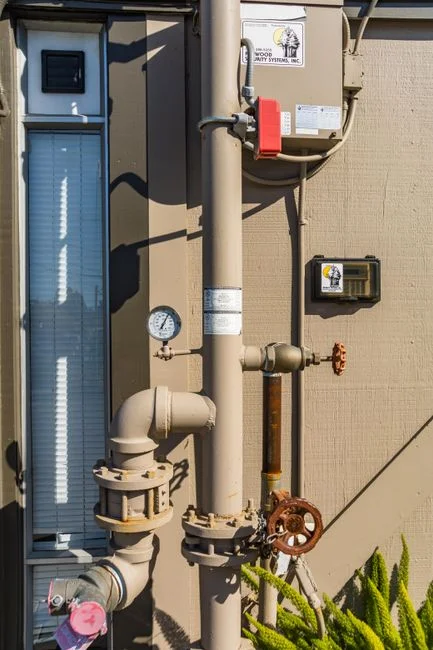
The four-stage train that meets the 2026 Flint corridor envelope, in the order flow actually arrives, is: headworks screening → flow equalization → dissolved air flotation → membrane bioreactor polishing. Each stage is sized to a specific number, not a generic rule of thumb.
Stage 1 — Headworks screening. A GX-series rotary mechanical bar screen at 2–5 mm aperture removes rags, plastics, and tramp metal that would otherwise foul DAF nozzles and MBR aerator diffusers. Specify dual overload bypass and a self-cleaning brush discharge so a single rag bundle does not take the screen down during a cleaning-line flush. Stage 2 — Equalization. A surge basin sized for at least one full cleaning-line flush — typically 4–6 hours of average flow, which works out to roughly 8–20 m³ per 100 employees depending on the cleaning-line schedule — with air mixing to prevent grease re-emulsification. Hydraulic buffering is the most cost-effective pretreatment upgrade available: a 2.5× peak becomes a 1.0–1.2× load on everything downstream. Stage 3 — DAF for oil, grease, and suspended solids. A DAF system operating at 4–20 m³/h surface loading with polymer flocculation ahead of the cell. Air-to-solids ratio of 0.04–0.08 kg air per kg suspended solids drives free-oil and emulsified-oil capture to under 100 mg/L. Stage 4 — MBR for biological polishing. A DF-series MBR flat-sheet membrane module with activated sludge at MLSS 8,000–12,000 mg/L followed by submerged PVDF membranes at 0.1 µm pore size. Effluent TSS reliably under 10 mg/L and COD under 50 mg/L — well inside the Genesee County local limits. The reference architecture, applied to a 50 m³/day plant, is illustrated step by step in the delivered 2026 DAF FOG interception case study.
Matching Equipment to the Flint Corridor Compliance Envelope
Translating the architecture into a purchase order specification is where most pretreatment projects under-deliver. The decision points are: what flow to size each unit to, what flux or surface loading to assume, and how chemical dosing is integrated. A PLC-controlled automatic chemical dosing skid for coagulant, polymer, and pH adjustment should be specified in the same purchase order as the major unit processes.
Three sizing rules cover 90% of the engineering decisions: (1) specify the bar screen by peak instantaneous flow, not daily average — a 2.5× peak over average during a deburring tank dump will define the screen's required hydraulic capacity; (2) size DAF hydraulic capacity at the equalized peak flow, not the daily average, with surface loading rate 4–8 m/h for free-oil capture and 15–25 m/h for emulsified oil with coagulant addition; (3) select MBR membrane area using design flux of 12–18 LMH for flat-sheet PVDF multiplied by design daily flow, which drives the module count the engineer compares against available floor space. The full sizing methodology for the DAF and MBR stages, applied to oily condensate specifically, is detailed in the 2026 DAF sizing guide for compressor oily condensate and the 2026 MBR sizing for oily condensate.
| Unit Process | Design Basis | Typical Range | Notes |
|---|---|---|---|
| Bar screen aperture | Tramp metal exclusion | 2–5 mm | Dual overload bypass required |
| Equalization basin HRT | Cleaning-line batch volume | 4–6 h of avg flow | Air mixing, no mechanical mixers |
| DAF surface loading | Equalized peak flow | 4–8 m/h (free oil) / 15–25 m/h (emulsified) | Air-to-solids 0.04–0.08 kg/kg |
| MBR MLSS | Mixed liquor concentration | 8,000–12,000 mg/L | Flat-sheet PVDF, 0.1 µm pore |
| MBR design flux | Membrane area selection | 12–18 LMH | Defines module count |
| Polymer dose (DAF) | Emulsion breakage | 5–25 mg/L | Jar-test optimized on site |
Sludge Handling and 2026 Planning Notes for Genesee County
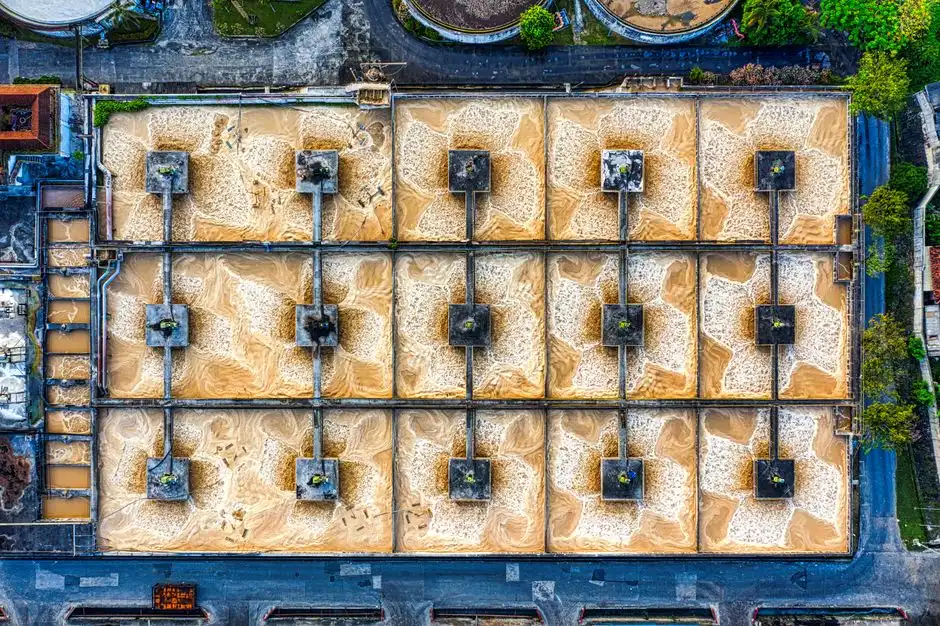
The solids side of the mass balance must be presented to the POTW during permit renewal. DAF skimmings come off at 3–6% solids, and MBR waste activated sludge (WAS) at 0.8–1.2% solids. A plate-and-frame filter press sized to operate one shift per day on the combined DAF + WAS stream targets cake solids of 22–28%, which keeps hauling cost manageable for a plant producing 200–600 kg dry solids per day. Three 2026 planning items specific to the Genesee County envelope are: PFAS monitoring has been added to the local IU sampling list for 2026, lead and zinc trend monitoring remains an active requirement because of legacy corridor soils, and the local limits may tighten after the 2024–2025 POTW permit cycle, which argues for designing with 20–30% margin on metals capacity.
Frequently Asked Questions
What happens if a plant installs only DAF and skips the MBR stage?
DAF alone typically delivers 60–100 mg/L TSS and 40–80 mg/L COD, which exceeds the Genesee County 250 mg/L TSS limit only marginally but fails dissolved metals and COD reduction because DAF is a physical, not biological, process. A DAF-only plant will miss categorical metals limits under 40 CFR Part 433 and will see excursions on zinc and lead during parts-wash peaks.
How often must the POTW monitoring manhole be sampled?
For a non-categorical IU in the Genesee County service area, baseline self-monitoring runs quarterly for conventional parameters (pH, TSS, O&G) and annually for metals, with increased frequency — typically monthly — for any parameter that has exceeded 80% of its local limit in the prior 12 months. Categorical facilities under 40 CFR Part 433 follow the more frequent sampling schedule defined in the standard.
What should happen when a cleaning-line batch overwhelms the equalization basin?
Route the overflow through a fail-safe actuated valve to a lined holding lagoon sized for at least one full batch volume, then return the contents to the head of the train at a metered rate over the next 8–12 hours. This is preferable to a hard bypass to the monitoring manhole, which would constitute a reporting violation under the local sewer use ordinance.
Do the local Flint limits differ from the categorical federal limits?
Yes, the controlling limit is the more stringent of the two. The Genesee County local limits for oil & grease (≤1