Why Madison-area EV and auto plants are pretreatment-regulated in 2026
Under 40 CFR Part 403.5(a), no industrial user may discharge to a POTW any pollutant that causes pass-through as defined in 40 CFR Part 403.3(p) or interference as defined in 40 CFR Part 403.3(k). For an EV or auto assembly plant near Madison, WI, the legal frame stacks as follows: 40 CFR Part 403 sits at the top, 40 CFR Part 433 (Automobile and Other Motor Vehicle Manufacturing) imposes the federal categorical floor on metal-finishing and assembly lines, and the Madison Metropolitan Sewerage District (Madison MSD) local limits sit on top of that floor — often tighter, never looser. The Wisconsin Department of Natural Resources (WDNR) is the EPA-authorized Approval Authority for the National Pretreatment Program in Wisconsin (per the EPA NPDES program authorization status, December 2024), and Madison MSD acts as the delegated control authority for SIU permitting, sampling, and enforcement inside the District service area.
An EV battery pack assembly line that performs no electroplating can still be classified as a Significant Industrial User (SIU) on flow and pollutant strength alone; the categorical determination is a sufficient but not a necessary condition for SIU status. A Madison-area assembly plant typically discharges under an SIU permit with monthly self-monitoring for oil & grease, TSS, BOD, total metals (Zn, Ni, Cr, Pb, Cd), and quarterly monitoring for hexavalent chromium carried over from historical line residue or from e-coat bath carryover. The operational consequence is straightforward: a 5-gallon glycol coolant dump at 11 p.m. on a Sunday that reaches the sewer manhole is a reportable slug under 40 CFR Part 403.8(b)(4), and the local limit the permit names is the engineering target — not the categorical ceiling.
The auto-assembly pollutant fingerprint a Madison POTW actually sees
The pollutant mix a Madison POTW receives is determined by which drains are connected before the sewer manhole. Five stream archetypes dominate the auto/EV assembly drain, and each drives a different unit operation downstream.
| Stream | Typical influent band | Key pollutants | Slug-load risk |
|---|---|---|---|
| Phosphate / Ni-Zn conversion coating rinse | pH 3–5; OP 10–80 mg/L as P; Zn 5–50 mg/L; Ni 1–20 mg/L | Orthophosphate, Zn, Ni, F⁻, surfactant | Rinse drag-out during tank transitions |
| E-coat rinse + UF permeate | COD 500–2,500 mg/L; TSS 50–300 mg/L; low FOG | Paint resin, surfactant, detackifier carryover | UF permeate surges during tank dumps |
| Paint-shop detackifier / booth water | TSS 200–1,000 mg/L; FOG 50–200 mg/L | Paint solids, solvent traces, BOD/COD | Booth overflow during color change |
| General assembly floor wash + lubricant runoff | O&G 100–500 mg/L; TSS 200–800 mg/L | Oil, grease, glycol, solvent spikes | Coolant dumps; line-side spills |
| EV battery / thermal management | Variable; Li-ion trace loads; glycol 5–100% by volume if dumped | Glycol, electrolyte, trace Li/Ni/Co | Glycol coolant dump; electrolyte spill |
The Madison MSD slug-control plan, written under 40 CFR Part 403.8(b)(4), is built specifically to address the rows in that table marked as slug-load risk. The numerical bands above are drawn from typical operating envelopes for these unit operations and from 40 CFR Part 433 categorical ceilings (HydropureWater field data, 2026); a plant-specific basis-of-design should refine them against the actual SIU permit and a representative influent sampling campaign.
A five-stage pretreatment train for Madison EV/auto plants
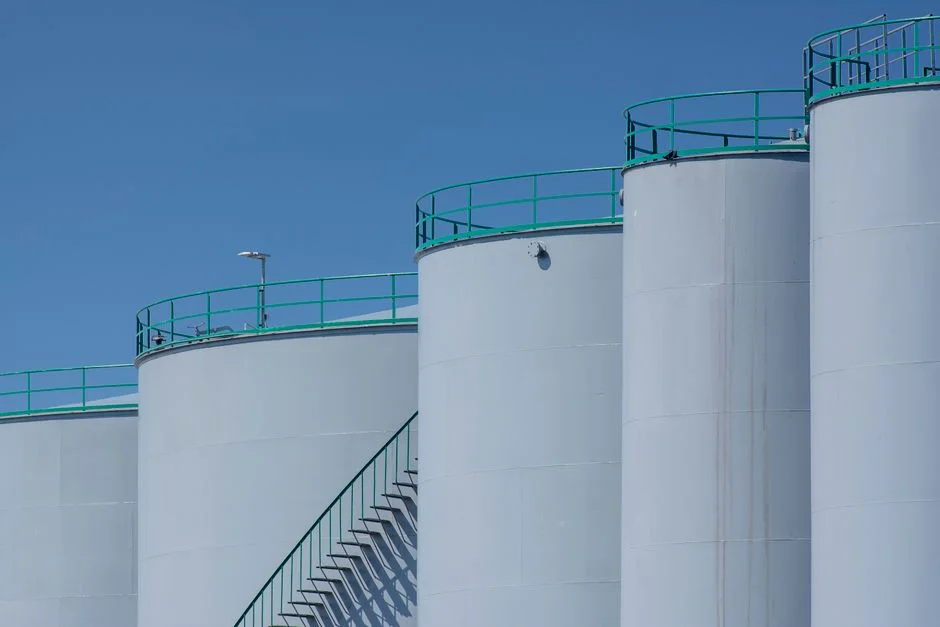
The unit operations below are sequenced to ensure each stage protects the next from fouling, pass-through, or interference. Proper drain segregation at the head of the train is essential for sizing, as mixing e-coat ultrafiltration permeate with floor wash at uncontrolled pH is the most common cause of MBR upset.
- Stage 1 — Source segregation and equalization. 8–24 hours of hydraulic retention on the e-coat and floor-wash side, with pH trim to 6–9, sized to smooth a 5-gallon glycol dump into a sub-limit hourly loading. This is the primary control point for preventing interference at Madison MSD's biobasins (HydropureWater field data, 2026).
- Stage 2 — Coagulation and chemical precipitation. Caustic or lime for pH 8.5–9.5, then ferric chloride or alum to drop orthophosphate below 1 mg/L as P and precipitate zinc and nickel as hydroxide sludge. The sludge reports to a plate and frame filter press for the chemical precipitation sludge, and the dose trim is best handled by an automatic chemical dosing system for pH trim and metal precipitation tied to the equalization basin's pH and ORP probes.
- Stage 3 — Dissolved air flotation (DAF). A dissolved air flotation system for the phosphate rinse and floor-wash side is the right fit at A/S 0.02–0.06, HRT 15–30 min, and saturator recycle 20–50% of forward flow. Outlet target: oil & grease 15–30 mg/L and TSS under 50 mg/L, which clears the typical Madison MSD local ceiling with margin (per 40 CFR Part 433 categorical numbers).
- Stage 4 — Biological polishing with MBR. An MBR membrane bioreactor for the e-coat and paint-detackifier polish uses flat-sheet PVDF modules at 0.1 µm, holds MLSS at 8,000–12,000 mg/L, and pushes TSS below 5 mg/L with turbidity below 1 NTU. MBBR is an acceptable substitute where footprint allows and the residual COD envelope is forgiving; MBR is preferred for space-constrained EV plants and where the permit is tight.
- Stage 5 — Polishing and monitoring. Multimedia filter for any TSS breakthrough, activated carbon for residual COD and solvent trace, online oil-in-water analyzer (fluorescence probe) with a 10–20 mg/L alarm setpoint, online pH and conductivity, and a flow totalizer feeding the Madison MSD DMR. This stage is the one inspectors verify first.
The DAF + MBR combination above follows the same design principles used in the Kalispell petroleum pretreatment guide and the Columbus chemical plant pretreatment guide. For ongoing OPEX planning on the DAF side, the 2026 DAF OPEX guide is a useful sizing reference.
Madison MSD local-limit envelope the train has to clear
The design target is whichever number — categorical or local — is lower. Madison MSD's local limits are routinely more stringent than the federal categorical floor because the control authority must protect its own NPDES permit and biosolids program.
| Parameter | 40 CFR Part 433 categorical ceiling | Typical Madison MSD SIU daily maximum | Engineering design target |
|---|---|---|---|
| Oil & grease | 52 mg/L (1-day max) — 40 CFR §433.12 | 50–100 mg/L | ≤25 mg/L before sewer |
| TSS | 31–52 mg/L (1-day max) — 40 CFR §433.12 | ~200–300 mg/L industrial contributor | ≤30 mg/L after MBR |
| BOD | Categorical limits vary by subpart | ~200–300 mg/L industrial contributor | ≤25 mg/L after bio + carbon |
| pH | 6–9 envelope | 6–9 | 7–8 with online trim |
| Total Zn | Categorical priority pollutant | Local ceiling; quarterly | ≤1 mg/L after precipitation |
| Total Ni | Categorical priority pollutant | Local ceiling; quarterly | ≤0.5 mg/L after precipitation |
| Hexavalent Cr | Categorical priority pollutant | Quarterly; 24-hr composite | Below detection; quarterly verification |
| Flow reporting | Categorical | Continuous totalizer | Metered + logged to DMR |
The categorical numbers in the second column represent the federal floor from 40 CFR Part 433; the third column is the band Madison MSD typically writes into an SIU permit for an assembly contributor; the fourth column is the engineering target for the basis-of-design, providing sufficient margin to absorb occasional upsets without tripping the permit.
Documentation, monitoring, and slug-control discipline

The unit operations clear the permit; the paper trail defends it. Five repeatable items carry most of the audit weight for a Madison MSD SIU.
- Self-monitoring. 24-hour flow-weighted composite sampling on the cadence the SIU permit names — typically monthly for oil & grease, TSS, BOD, sulfides, phenols, and ammonia, and quarterly for total metals, BTEX, and hexavalent chromium. Results are reported on Madison MSD's DMR or local equivalent (per 40 CFR Part 403 reporting requirements).
- Slug-control plan under 40 CFR Part 403.8(b)(4). This plan must be written, current, and shared with staff; it covers coolant dumps, e-coat UF permeate surges, tank transitions, and batch discharges. The plan defines what constitutes a slug, containment procedures, and notification protocols within the EPA-prescribed window.
- Accidental-discharge reporting. When a slug escapes — a coolant overflow, an e-coat tank transition, or a floor-wash release — the plant must notify Madison MSD and relevant hazardous-waste authorities, followed by a written corrective-action report.
- Auditable records. BMP logs, chemical inventories restricted by the SIU permit, calibration records for online analyzers, and chain of custody for every composite sample are required. These are the items an EPA or Madison MSD inspector will request first.
- Slug-load containment hardware. The equalization basin and the DAF saturator determine whether a slug becomes a violation. Online pH and oil-in-water alarms with a sewer shutoff interlock turn the plan into a control loop.
Frequently Asked Questions
Do I need a pretreatment permit if I send less than 25,000 gpd to the Madison sewer?
Flow alone does not determine SIU status under 40 CFR Part 403.3(v). A discharger below the 25,000 gpd threshold can still be classified as an SIU based on pollutant strength, process similarity to a categorical user, or a history of pass-through or interference at the receiving POTW. A Madison-area assembly plant should not assume a flow-based exemption without a written determination from Madison MSD as the control authority.
What is the Madison MSD oil & grease limit for an auto assembly plant?
Madison MSD's SIU permits typically cap oil & grease at 50–100 mg/L on the daily maximum, with tighter ceilings where the receiving plant's NPDES permit is constrained. The engineering design target should sit at or below 25 mg/L on the side of the DAF, so the MBR polish has margin to absorb an upset without tripping the permit.
How do I size a DAF for a phosphate rinse stream?
For a phosphate/Ni-Zn conversion coating rinse, size the D