
Why a Rosenberg Chemical Plant Can Pass the Number and Still Be in Violation
Pass-through and interference are qualitative triggers under 40 CFR 403.5(a), so a single upset can be a violation even when every grab sample reads under a numeric limit (per EPA, 2026). Pass-through is defined at 40 CFR 403.3(p) as a discharge that exits the POTW into waters of the United States in quantities or concentrations that, alone or in conjunction with discharges from other sources, is a cause of a violation of any requirement of the POTW's NPDES permit — including an increase in the magnitude or duration of an existing violation (per EPA, 2026).
Interference, defined at 40 CFR 403.3(k), is a discharge that, alone or with other sources, both (1) inhibits or disrupts the POTW, its treatment processes, or its sludge processes, use, or disposal, and (2) therefore is a cause of an NPDES permit violation or a violation of sewage sludge use or disposal requirements under CWA §405 or RCRA (per EPA, 2026). Layered on top, 40 CFR 403.5(b) lists specific prohibitions — including ignitable, corrosive, or toxic gas discharges — that are banned regardless of numeric concentration (per EPA, 2026). In a Gulf Coast setting, hydraulic surges from storm events, batch transfers between unit operations, and shared collection systems in the Rosenberg industrial corridor raise pass-through risk even when a composite sample stays comfortably under the limit.
The Three-Layer Pretreatment Limit Stack That Applies Near Rosenberg
Three layers of limits can govern a single discharge, and the most stringent applicable layer is the one an engineer has to design to (per EPA, 2026). Layer 1 is the general and specific prohibitions at 40 CFR 403.5(a) and 403.5(b), which apply to every nondomestic industrial user sending wastewater to a POTW (per EPA, 2026). Layer 2 is the federal categorical pretreatment standards at 40 CFR Parts 405–471; for chemical plants the relevant subparts are Part 414 (organic chemicals, plastics, and synthetic fibers), Part 415 (inorganic chemicals), Part 417 (soap and detergent manufacturing), Part 419 (petroleum refining), and Part 433 (metal finishing) (per EPA, 2026). Layer 3 is local limits developed by the POTW's Control Authority and published in its approved pretreatment program — site-specific numbers that can be more stringent than the federal categorical standard when the receiving plant's hydraulic or biological capacity is constrained (per EPA, 2026). The statutory anchors are CWA §307(b), which directs EPA to set pretreatment standards for pollutants that pass through or interfere, and CWA §402(n), which authorizes POTW pretreatment programs under the NPDES framework (per EPA, 2026). EPA revises categorical subparts on a multi-year cycle, so the current 40 CFR text must be checked rather than relied on from memory (per EPA, 2026).
| Layer | Source | What It Sets | Notes |
|---|---|---|---|
| 1 | 40 CFR 403.5(a) and 403.5(b) | General and specific prohibitions (qualitative, plus listed pollutants) | Floor that applies to every industrial user; bans pass-through, interference, and listed ignitable, corrosive, or toxic gas discharges (per EPA, 2026). |
| 2 | 40 CFR Parts 405–471 (e.g., 414, 415, 417, 419, 433) | Numeric effluent limits for specific industry categories | Confirm current values in 40 CFR; EPA revises subparts on a multi-year cycle (per EPA, 2026). |
| 3 | POTW's approved pretreatment program | Site-specific numeric limits, often more stringent than federal categorical numbers | Derived from MAHL analysis and capacity constraints of the receiving plant (per EPA, 2026). |
Significant Industrial User Status: Why It Almost Always Triggers for a Chemical Plant

The Significant Industrial User definition at 40 CFR 403.3(v) drives the monitoring, reporting, and slug load control plan obligations the rest of the compliance program hangs on (per EPA, 2026). SIU status is triggered by any one of three conditions: (1) any industrial user subject to categorical pretreatment standards; (2) any other industrial user discharging an average of 25,000 gpd or more of process wastewater; or (3) any industrial user whose process waste stream makes up 5% or more of the POTW's average dry-weather hydraulic or organic capacity (per EPA, 2026). Chemical plants almost always meet trigger (1) because they fall under 40 CFR Part 414, 415, 419, or an adjacent subpart (per EPA, 2026). That status brings specific obligations: a baseline monitoring report at categorical standard promulgation or new-discharge startup, 90-day compliance reports on a defined schedule, a written control mechanism from the POTW, and routine POTW inspections and sampling under 40 CFR 403.12 (per EPA, 2026). Batch operators are typically required to develop a slug load control plan under 40 CFR 403.8(f) to prevent discharge surges that could trip pass-through or interference at the receiving plant (per EPA, 2026).
The Six-Unit-Operation Train That Handles Most Chemical Plant Streams to a POTW
Six unit operations, in roughly the order below, handle the vast majority of chemical plant wastewater streams that go to a POTW (per EPA, 2026). Not every plant needs all six — the right subset is set by the controlling pollutant, which the next section defines. Equalization dampens batch swings in pH, flow, temperature, and concentration; the regulatory driver is 40 CFR 403.5(a) on pass-through and 40 CFR 403.8(f) on slug load control (per EPA, 2026). PLC-controlled pH adjustment with acid or caustic dosing targets the typical local pH window of 6–9; the driver is 40 CFR 403.5(b) specific prohibitions plus the local limit (per EPA, 2026). Dissolved air flotation removes oils and total suspended solids; the driver is 40 CFR 403.5(a) on pass-through plus the applicable categorical standard and the local limit (per EPA, 2026). Chemical precipitation followed by a clarifier removes dissolved metals such as Cd, Cr, Cu, Ni, Pb, Zn; the driver is the categorical standard (for example 40 CFR Part 433 for metal finishing) plus the local limit (per EPA, 2026). Biological polishing using activated sludge or an MBR system for BOD and COD polishing hits BOD/COD; the driver is the categorical standard plus the local BOD/COD limit to the POTW (per EPA, 2026). Multimedia or carbon filtration is the polish step, with the driver being the local limit and reuse-quality targets where the plant is moving toward closed-loop water (per EPA, 2026).
| Unit Operation | Influent Problem | Parameter Controlled | Regulatory Driver |
|---|---|---|---|
| Equalization | Batch swings in pH, flow, temperature, concentration | Smoothing across batch cycles | 40 CFR 403.5(a) pass-through/interference; 40 CFR 403.8(f) slug load control (per EPA, 2026) |
| PLC-controlled chemical dosing | Strong acid or caustic batches | pH (typically 6–9 local limit) | 40 CFR 403.5(b) specific prohibitions; local limit (per EPA, 2026) |
| Dissolved air flotation system for chemical plant pretreatment | Emulsified oils, free oils, TSS | Oils and grease, TSS | 40 CFR 403.5(a) pass-through; categorical standard; local limit (per EPA, 2026) |
| Chemical precipitation + clarifier (e.g., high-efficiency sedimentation tank for metals precipitation) | Dissolved metals | Cd, Cr, Cu, Ni, Pb, Zn | Categorical standard (e.g., 40 CFR Part 433); local limit (per EPA, 2026) |
| Biological polishing (activated sludge / MBR) | High BOD/COD | BOD, COD | Categorical standard; local BOD/COD limit to POTW (per EPA, 2026) |
| Multimedia / carbon filtration | Residual organics, color, trace contaminants | Refractory organics | Local limit; reuse-quality targets if applicable (per EPA, 2026) |
How to Pick the Right Train for a Rosenberg Plant in Four Decision Axes
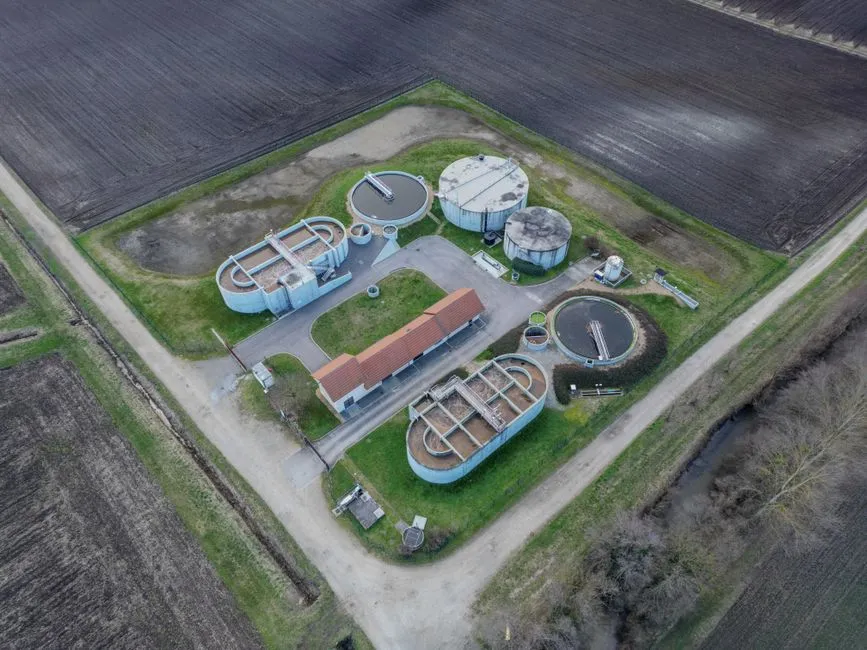
Four decision axes determine which combination of unit operations to build, and walking through them in order produces a defensible equipment train (per EPA, 2026). Axis 1 — controlling pollutant: identify the parameter most likely to exceed the most stringent applicable limit. Oils and TSS point to a dissolved air flotation system for chemical plant pretreatment; dissolved metals point to chemical precipitation plus a clarifier such as a high-efficiency sedimentation tank for metals precipitation; high COD/BOD points to biological polishing using an MBR system for BOD and COD polishing; pH swings point to equalization plus a PLC-controlled chemical dosing for pH and metal precipitation package (per EPA, 2026). Axis 2 — SIU status and applicable standard: if the plant is an SIU under a categorical standard, the federal number is the floor and the local limit is often the binding constraint; non-categorical plants still have to prevent pass-through and interference under 40 CFR 403.5(a), which is qualitative but no less enforceable (per EPA, 2026). Axis 3 — flow pattern: batch operations with long cycle times or shared collection systems need equalization sized for hours to days, while continuous operations can usually get away with 4–8 hours of retention — under-sizing equalization is the most common root cause of failed compliance events at chemical plants (per EPA, 2026). Axis 4 — water reuse: if the plant is moving toward reuse, an MBR-plus-RO path using an MBR module with reverse osmosis polish becomes a stronger candidate than discharge-only activated sludge because it produces reuse-quality water; pure discharge-to-sewer operations can stay on conventional activated sludge or a simpler aerobic basin (per EPA, 2026). For an analogous compliance framing, see the chemicals plants near Galva pretreatment compliance guide and the metal finishing wastewater treatment process engineering guide.
Texas-Specific Compliance Items a Rosenberg Engineer Should Confirm in 2026
First, confirm the current 40 CFR Part 414 subpart text because EPA revises categorical subparts on a multi-year cycle and memory-based numbers are not defensible (per EPA, 2026). Second, pull the local POTW's approved pretreatment program and its local limits — these can be more stringent than the federal categorical standard and frequently are the binding number on the Gulf Coast where hydraulic and biological capacity is constrained (per EPA, 2026). Third, confirm Texas Commission on Environmental Quality delegations and any additional state-level reporting cadence the local control authority requires beyond the federal baseline monitoring and 90-day compliance reports (per EPA, 2026). Fourth, track the 2022 US House legislation that would impose PFAS limits on manufacturers of organic chemicals, plastics, and synthetic fibers starting in 2024, since that rulemaking has direct implications for plants under 40 CFR Part 414 (per C&EN, 2022). Fifth, re-validate the slug load control plan under 40 CFR 403.8(f) after any process change, and size equalization for hours to days rather than the minimum 4–8 hours used for continuous operations (per EPA, 2026). Equalization and PLC-controlled dosing are the lowest-cost insurance against compliance excursions, and under-sizing either of them is the most common root cause of failed compliance events at chemical plants (per EPA, 2026). For a side-by-side DAF-vs-clarifier comparison relevant to oily and metals-bearing streams, see the DAF or clarifier for chemicals wastewater in Morristown factory guide.
Frequently Asked Questions
What is the binding pretreatment limit a chemical plant near Rosenberg has to hit before sewer discharge?
The binding number is the most stringent of three layers: the general and specific prohibitions at 40 CFR 403.5(a) and 403.5(b), the applicable federal categorical pretreatment standard under 40 CFR Part 414, 415, 417, 419, or 433, and the site-specific local limit published in the local POTW's approved pretreatment program (per EPA, 2026). In practice on the Gulf Coast, the local limit is often the binding number because the receiving plant's hydraulic or biological capacity is constrained (per EPA, 2026).
What is a reasonable capital budget range to specify a chemical plant pretreatment skid in 2026?
No specific cost or pricing figure is supported by the supplied research. A buyer should request a written proposal that itemizes equalization volume, DAF surface loading, clarifier footprint, biological basin or MBR capacity, and any polish step, then validate it against current local limits and the plant's actual flow and load projections before committing.
How does a plant engineer pick the right pretreatment equipment supplier for a Rosenberg project?
Confirm the supplier's experience with the controlling subpart — 40 CFR Part 414 for organic chemicals, plastics, and synthetic fibers, or the adjacent subpart that applies — and ask for reference installations that have passed the local POTW's slug load and SIU inspections under 40 CFR 403.12 (per EPA, 2026). Also verify delivery and lead time in writing against the local POTW's control mechanism renewal date, since the supplier's schedule must align with the permit cycle.
How should a chemical plant handle PFAS, slug loads, and reuse economics in 2026?
Track the 2022 US House legislation that would impose PFAS limits on manufacturers of organic chemicals, plastics, and synthetic fibers starting in 2024, since that rulemaking has direct implications for plants under 40 CFR Part 414 (per C&EN, 2022). Pair that with a slug load control plan under 40 CFR 403.8(f) sized for hours to days of equalization rather than the minimum 4–8 hours used for continuous operations (per EPA, 2026). For reuse economics, an MBR-plus-RO path produces reuse-quality water and can offset the cost of fresh in-plant water, but the specific payback depends on site inputs that have to be obtained from the local utility tariff and the plant's water balance.