Which unit fits the wastewater fraction?
For mining and metals wastewater in Effingham, factories should choose by contaminant fraction: a clarifier or thickener for dense, rapidly settling mineral fines, and dissolved air flotation for emulsified oils, flotation reagents, conditioned colloids, and low-density precipitates. Heavy, non-floating silt and clay generally need gravity separation before flotation. A combined plant often needs a clarifier followed by a DAF polisher, then filtration if the discharge or reuse criteria require it. Final selection should follow stream testing, permit limits, jar testing, peak-flow characterization, and sludge-handling review—not a universal DAF-versus-clarifier rule.
The decision is not between two interchangeable tank types. It is a decision about which contaminant fraction the unit must remove. Dense tailings particles and metallurgical solids may separate under gravity if their settling behavior and hydraulic loading are suitable. An inclined-plate or lamella clarifier for bulk mineral solids adds effective settling area without changing the underlying gravity-settling mechanism.
DAF works differently. Pressurized, air-saturated recycle is depressurized into the wastewater, producing bubbles that attach to conditioned floc. A skimmer removes the resulting float, while clarified water is withdrawn from below the blanket. This mechanism makes an industrial DAF system for mining wastewater a candidate for oils, surfactants, flotation-reagent carryover, colloidal solids, and low-density precipitates that do not settle readily.
The practical sequence follows the physics. First remove heavy, non-floating silt and clay by gravity; then use DAF to capture conditioned colloidal, precipitated, oily, or buoyant material. Neither unit independently removes dissolved heavy metals. Depending on the chemistry and receiving requirements, pH adjustment, precipitation, filtration, ion exchange, membranes, or another polishing step may still be necessary.
Compare the two separation mechanisms
DAF and gravity clarification separate different physical forms of contamination, so their design variables and failure modes must be compared directly.
| Criterion | Dissolved air flotation | Clarifier or lamella settler |
|---|---|---|
| Separation mechanism | Micro-bubbles attach to conditioned floc, which is skimmed from the surface. | Dense particles settle by gravity; bottom sludge is withdrawn. |
| Typical target fraction | Emulsified oils, flotation reagents, conditioned colloids, and low-density precipitates. | Tailings, mineral fines, and metallurgical solids with suitable settling behavior. |
| Key design inputs | Hydraulic loading, recycle ratio, saturation pressure, air-to-solids basis, contact-zone design, float capacity, and skimming assumptions. | Specific gravity, settling velocity, surface overflow rate, effective settling area, inlet baffling, overflow configuration, and underflow solids target. |
| Operating sensitivities | Recycle pressure, saturation conditions, hydraulic loading, float depth, skimming reliability, and conditioning chemistry. | Hydraulic loading, blanket depth, solids inventory, underflow withdrawal, and short-circuiting. |
| Main limitation | Poor fit for high levels of heavy, non-floating silt and clay. | Does not independently capture colloidal, buoyant, or dissolved loads. |
Clearwater Industries describes the DAF sequence as chemical conditioning, pressurized recycle, depressurization, bubble attachment, float skimming, and withdrawal from below the blanket. Its commonly described micro-bubble range is 30–50 microns (Clearwater Industries, undated technical material, as reproduced in HydropureWater’s 2026 selection article). Chemical conditioning contact time is stated as 15–45 seconds, with the dose established empirically through jar testing.
Clarifier performance depends on specific gravity, settling velocity, surface overflow rate, and sludge withdrawal. Lamella plates compress the footprint by increasing effective settling area, but they do not eliminate hydraulic short-circuiting or poor floc settleability. A conventional clarifier generally has simpler mechanical duties, while DAF can be attractive where footprint is constrained but adds recycle pumps, air-saturation equipment, chemical dosing, and skimming maintenance.
Match each Effingham plant stream to the right stage
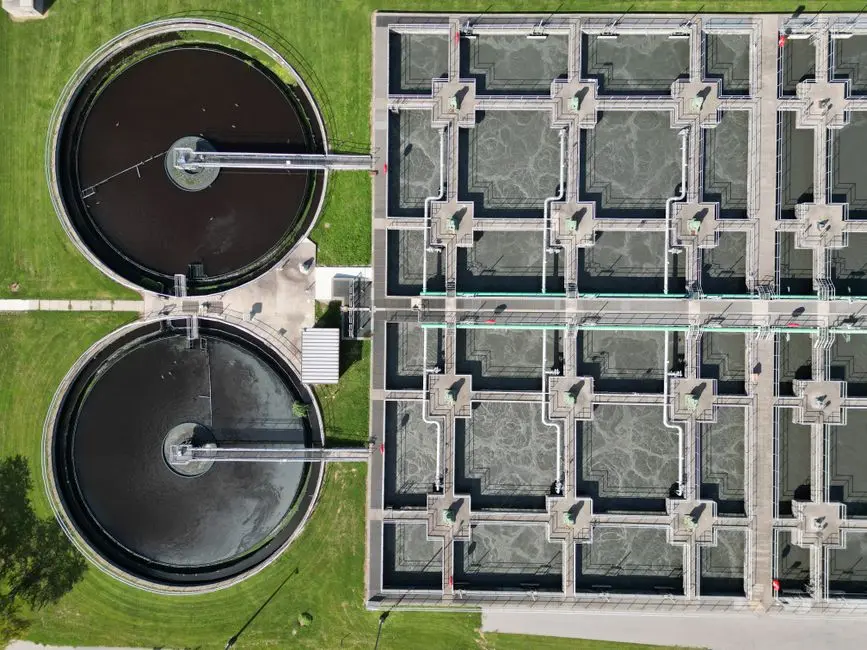
Wastewater variability makes stream segregation more defensible than assigning one treatment train to every discharge at a mining or metals facility.
| Plant stream | Dominant fraction to verify | Typical treatment position | Data needed for design |
|---|---|---|---|
| Tailings overflow | Dense tailings and mineral fines | Tailings thickener or gravity clarifier; downstream polishing as required | Flow, TSS, particle-size distribution, settling velocity, solids inventory, and underflow target |
| Mill discharge | Mineral fines plus process reagents | Clarifier, then DAF if colloidal or reagent fractions remain | TSS, PSD, pH, reagent residual, metals, and settleability |
| Thickener overflow | Fine solids, colloids, and dissolved metals | Clarifier or lamella stage; DAF polisher where flocculable or buoyant solids remain | Overflow TSS, PSD, turbidity, pH, dissolved metals, and oil and grease |
| Washdown runoff | Variable silt, settled minerals, and wash-water additives | Equalization, screening, gravity separation; treatment sized for episodic flow | Peak flow, rainfall or wash schedule, TSS, PSD, pH, and metals |
| Flotation-reagent carryover | Surfactants, froth reagents, and fine suspended solids | DAF, commonly after bulk-solids clarification | Reagent identity, residual concentration, oil and grease, TSS, and jar-test response |
| Metal-finishing rinse water | Fine precipitates, colloids, oils, and dissolved metals | Chemical adjustment and DAF; filtration or dissolved-metal polishing as required | Metals, pH, TSS, PSD, oil and grease, and reuse criteria |
| Oily equipment wash water | Free and emulsified oil plus settleable dirt | DAF, with gravity separation when heavy solids dominate | Oil and grease, emulsification, TSS, flow profile, and pH |
| Acid-mine-drainage neutralization overflow | Precipitated metal solids and dissolved metals | Clarification of settled precipitate; DAF only where conditioning can target the residual fraction | pH, acidity, metals, TSS, PSD, settling data, and precipitate characteristics |
| Combined plant effluent | Multiple solid, oily, colloidal, and dissolved fractions | Equalization and screening, clarification, chemical conditioning, DAF, then filtration if required | Composite and event sampling, peak flow, full chemistry, and sludge mass balance |
EPA’s November 1978 SRC Site-Specific Pollutant Evaluation reported coal-pile-runoff TDS of 247–44,050 mg/L and suspended solids of 22–3302 mg/L. Those values demonstrate why source segregation and variability matter, but they apply to the report’s 1978 Illinois coal-liquefaction scope and are not mining-facility acceptance limits for Effingham.
For combined streams, the defensible sequence is equalization and screening, then a clarifier or high-rate lamella stage, chemical conditioning, DAF, filtration where required, and sludge dewatering. A mechanical bar screen protects downstream equipment, while an automatic chemical dosing system supports repeatable conditioning. Acidic or abrasive service needs project-specific metallurgy and coating selection; the supplied research does not establish one universal material specification.
Size the equipment from measured wastewater data
Vendor-defensible sizing begins with measured flow and contaminant data, not a catalog hydraulic range.
| Data package | Required information | Why it affects selection |
|---|---|---|
| Hydraulic basis | Average and peak flow, hydraulic profile, storm runoff, washdown, shutdowns, and variable mill or flotation throughput | Establishes equalization, unit capacity, peak behavior, and recycle requirements |
| Suspended solids | TSS, particle-size distribution, settleability or pilot data, and solids inventory | Separates dense bulk solids from colloidal or low-density material |
| Organic and buoyant load | Oil and grease, COD where relevant, and flotation-reagent concentrations | Defines DAF demand and chemical-conditioning tests |
| Chemistry | pH, temperature, dissolved metals, and reagent concentrations | Controls precipitation, conditioning, corrosion, and downstream polishing |
| Clarifier design | Design surface loading rate, inlet baffling, effective settling area, overflow configuration, and underflow solids target | Converts measured settling behavior into tank geometry and sludge withdrawal |
| DAF design | Hydraulic loading, recycle ratio, saturation pressure, air-to-solids basis, contact-zone design, float capacity, and sludge assumptions | Defines whether floc can be floated and removed within the available hydraulic envelope |
HydropureWater’s lamella clarifier is published at 20–40 m/h surface loading rates and up to 30% lower chemical consumption, but those are catalog values rather than automatic project guarantees (HydropureWater, 2026 selection article). Clearwater Industries states that chemical-conditioning contact time is 15–45 seconds and that empirical jar testing must set the dose (Clearwater Industries, undated technical material, reproduced in HydropureWater’s 2026 selection article).
Elder’s 2011 Utah State University study found 30 mg/L aluminum sulfate optimum for algae and phosphorus removal in lagoon effluent; that is evidence for site-specific optimization, not a default dose for metal-bearing wastewater (Elder, 2011). Require representative pilot results or comparable full-scale data before final sizing or acceptance. For chemical-feed design, apply coagulant dosing system design criteria to the selected chemical, measured demand, and operating envelope.
Build the treatment train around reuse, discharge, and sludge
The final destination—direct discharge, POTW or industrial sewer pretreatment, process-water reuse, evaporation, or another zero-liquid-discharge pathway—must be fixed before equipment selection.
DAF can support process-water recycling, but clarified water may still require filtration or membrane treatment before sensitive reuse or strict discharge compliance. The proposed train is therefore:
- Equalization and source segregation
- Screening and bulk-solids clarification
- Chemical adjustment and conditioning
- DAF polishing for conditioned or buoyant solids
- Filtration or membrane treatment where the destination requires it
- Sludge thickening, dewatering, and disposal
Clarifier underflow is generally a dense bulk-solids stream, while conditioned DAF float can be thick enough to reduce some dewatering demand. Neither relationship is a site guarantee; verify solids concentration, capture rate, filtrate quality, and final disposal route through a mass balance.
Include sludge handling in the RFQ rather than comparing tank prices alone. A plate-and-frame filter press can be considered where batch size, required filtration area, and operating mode suit separated mineral or metallurgical sludge. A UF system may be relevant where the reuse or discharge specification requires additional solids separation. Automatic chemical dosing remains part of the DAF train because repeatable coagulant, polymer, and pH control supports stable floc formation.
Neither DAF nor a clarifier alone guarantees permit compliance or zero-liquid-discharge performance. The current permit, wastewater chemistry, pretreatment, hydraulic design, and operating controls determine the final result.
Compare capital, operating, and compliance risks
The supplied research does not establish a reliable 2026 unit price for either DAF or a clarifier, so any 2026 budget must come from a site-specific quotation.
| Cost or risk area | Clarifier | DAF |
|---|---|---|
| Core equipment | Tank, settling mechanism, launders, and sludge withdrawal | Tank, recycle pump, air-saturation system, contact zone, and skimmer |
| Supporting scope | Civil work, foundation, inlet and overflow structures, underflow handling | Civil work, compressor, recycle piping, controls, chemical storage, and dosing |
| Operating cost drivers | Sludge withdrawal, maintenance, and associated solids handling | Power for recycle and air systems, chemicals, skimming maintenance, and float handling |
| Primary technical risk | Hydraulic short-circuiting or excessive loading reduces settling performance | Poor conditioning, recycle performance, or skimming reliability prevents stable float removal |
| Compliance risk | Colloidal, oily, or dissolved fractions may carry over | Heavy non-floating solids may overload the flotation stage |
Clarifiers generally trade a larger conventional civil footprint and bulk-solids underflow for simpler gravity operation. DAF adds recycle and air-saturation equipment, chemical-conditioning demand, and float-skimming maintenance, but can be more compact and target fractions that gravity separation misses. The correct comparison is life-cycle cost at the site’s measured flow and chemistry, including civil work, electrical and controls, utilities, commissioning, chemicals, power, maintenance, sludge handling, and any filter or membrane pretreatment.
Supplier diligence should include references for similar metallurgical streams, pilot data, guaranteed duty points, utility requirements, controls scope, materials, spare parts, startup support, and a remediation protocol for off-spec performance. The additional mining wastewater DAF and clarifier comparison provides a useful cross-check, but it does not replace Effingham site data or the current permit.
Issue an RFQ that suppliers can quote consistently

A comparable RFQ must carry the wastewater basis, performance target, process boundary, and acceptance conditions into every bid.
Require suppliers to receive:
- Average and peak flow, hydraulic profile, TSS, particle-size distribution, pH, temperature, oil and grease, COD where relevant, dissolved metals, flotation reagents, and seasonal or upset flows
- The required destination and effluent quality, including reuse, discharge, or sewer-pretreatment criteria
- Representative chemical and settleability data, plus jar-test or pilot results for DAF conditioning
- Surface overflow rate and underflow solids target for a clarifier, or hydraulic loading, recycle ratio, saturation pressure, air-to-solids basis, float capacity, and skimming assumptions for DAF
- Materials of construction, controls, utilities, recycle requirements, chemical storage, instrumentation, and sludge-disposal route
Require each bidder to identify exclusions for pretreatment, chemical systems, pumps, blowers, coatings, foundations, electrical work, piping, freight, taxes, installation, and commissioning. Ask for a proposed process flow and complete mass balance rather than isolated equipment prices.
Performance guarantees should name a defined influent range, sampling method, startup period, and remedy for missed performance. Comparable operating references and pilot reports must resemble the actual metal-bearing stream. These requirements make bids technically comparable and give the buyer a defensible basis for evaluating an industrial DAF system for mining wastewater against gravity alternatives.
Frequently Asked Questions
Should an Effingham mining or metals factory choose DAF or a clarifier?
Choose by dominant contaminant fraction. Use a clarifier or thickener for dense, rapidly settling solids and DAF for conditioned colloids, oils, flotation-reagent carryover, or low-density precipitates. Combined streams often need both: gravity separation first, DAF polishing second.
What data is required to size DAF or a clarifier?
The minimum package is average and peak flow, TSS, particle-size distribution, pH, oil and grease where relevant, dissolved metals, temperature, reagent concentrations, and seasonal or upset flows. Add settling-velocity or pilot data for clarification and jar-test results for DAF conditioning. Catalog hydraulic ranges are starting references, not project designs.
What should a 2026 budget request include?
Request a site-specific quotation because the supplied research provides no defensible 2026 unit price. Ask the supplier to price civil work, equipment, electrical and controls, recycle and air equipment, chemical storage and dosing, installation, commissioning, utilities, chemicals, maintenance, sludge handling, and downstream filtration or membranes as separately identified items.
How should a buyer select and qualify a supplier?
Require pilot or comparable full-scale data for a similar metal-bearing stream, references for comparable operating duty, a complete utility and civil scope, defined guarantees, spare-parts availability, commissioning support, and an off-spec remediation protocol. Verify metallurgy and coatings against the actual acidic, abrasive, or high-solids service.
Does either unit by itself guarantee Effingham permit compliance?
No. Equipment selection is only one part of the demonstration. Compliance depends on stream characterization, current permit limits, hydraulic design, chemical controls, downstream treatment, monitoring, and operating records. Use site-specific testing and the applicable Effingham or Illinois requirements to define the final performance basis.