Which Nashville Rules Govern a Fabricated Metals Discharge?
Fabricated metals plants near Nashville meet pretreatment requirements by identifying every regulated waste stream, then designing treatment around the most stringent applicable requirement in the Metro Water Services permit, local limits, and 40 CFR Part 433 categorical standards. A typical train is equalization followed by DAF for oil, FOG, and suspended solids, PLC-controlled chemical dosing for pH and soluble metals, and biological or advanced polishing where the permit requires it. Compliance also requires representative sampling, calibrated instruments, self-monitoring, and complete records; equipment alone does not establish a compliant discharge.
Metro Water Services administers the industrial pretreatment program for Davidson County and ten satellite communities under 40 CFR 403, according to Nashville.gov Environmental Compliance, which is the appropriate official starting point. Three control layers must be reconciled:
- The Industrial Discharge Permit establishes site-specific discharge conditions, monitoring, reporting, and slug-control requirements.
- The Metro Sewer Use Ordinance and applicable local-limit policy establish enforceable local requirements.
- Federal categorical standards apply when the facility’s processes and waste streams fall within a regulated industrial category.
For fabricated metals operations, fabricated metals pretreatment under 40 CFR Part 433 is the cited framework for metal-finishing wastewater controls. The framework addresses heavy metals, cyanide, and pH, but the active permit and current federal and state text determine how those provisions apply to the facility.
| Control layer | What it determines | Engineering use |
|---|---|---|
| Metro Water Services Industrial Discharge Permit | Site-specific limits, averaging periods, monitoring, reporting, and discharge controls | Primary permit-compliance basis |
| Metro Sewer Use Ordinance and local-limit policy | Local discharge limits and sewer-use requirements | Compare with categorical limits and permit conditions |
| 40 CFR Part 433 and other applicable categorical standards | Category-specific limitations for regulated industrial processes | Apply when the facility meets the category definition |
A critical distinction is that a surcharge threshold is not automatically a permit limit. HydropureWater’s 2026 Nashville guide identifies BOD and TSS surcharge thresholds of 300 mg/L and 325 mg/L. Crossing those thresholds can create charges, but it does not by itself establish a permit violation. Conversely, a categorical or local maximum can be violated even when the facility is below a surcharge threshold.
Do not use a published limit table as the design basis until it has been checked against the site permit, current Metro policy, applicable state requirements, and the facility’s regulated category.
That check is essential because the supplied sources describe different scopes, and some published values conflict. The active MWS permit and current program policy must resolve which value applies, including the sample type, averaging period, and production category.
Map Each Fabricated Metals Waste Stream Before Sizing Equipment
Equipment sizing should begin with a process-by-process inventory because machining waste, parts washing, coating rinse, and floor washdown impose different treatment duties. The inventory should follow the actual wastewater path from generation through segregation, equalization, treatment, sampling, and sewer discharge rather than beginning with a selected machine.
| Waste stream | Pollutants to characterize | Primary treatment function |
|---|---|---|
| Machining and grinding fluids | Oil and grease, TSS, COD/BOD, metals, pH, and production-dependent constituents | Source control, equalization, physical removal, and applicable polishing |
| Parts washing | FOG, cleaning chemicals, metals, pH, and TSS | Segregation, DAF or clarification, and chemical control where required |
| Paint or coating rinse | Paint solids, COD, VOC-related constituents, pH, and metals | Containment and physical removal; advanced treatment only if characterized as necessary |
| Floor washdown | Suspended solids, oil, metals, cleaning chemicals, and episodic loadings | Slug control, equalization, and physical removal |
| Segregated stormwater or other excluded flows | Source, pollutants, precipitation, and discharge authorization | Keep separate unless an approved treatment and monitoring basis exists |
For each stream, request flow, production correlation, pH, oil and grease or FOG, TSS, BOD or COD, and the metals relevant to the facility’s processes and permit. Sampling must represent normal production, cleanup, and washdown events; a single clean-process sample will not establish design flow or peak loading.
Dilution is not a compliance strategy. HydropureWater’s Nashville material describes the federal Combined Wastestream Formula as a flow-weighted method for combining regulated and non-regulated streams before discharge. That calculation does not remove the need to control the regulated stream.
Give industrial wastewater equalization a defined role: buffer hydraulic and concentration variation before treatment and prevent shock loading of downstream biological or membrane systems. Where floor washdown or other operations can create episodic discharges, evaluate dedicated containment, automatic diversion, and documented slug-control controls. More detail on DAF versus clarifier selection for fabricated metals plants can support that equipment decision, but the final basis remains the permit and influent characterization.
Choose a Pretreatment Train by Pollutant, Not by Equipment Name
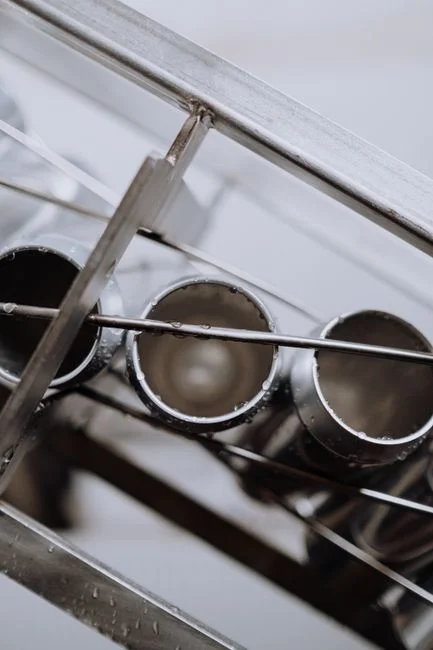
The treatment train should be selected by pollutant function: remove floatables and suspended solids, control pH and dissolved metals, and add biological or advanced polishing only where the waste profile and permit justify it. Metals wastewater characterization and local-limit compliance remains a useful framework for separating analytical needs from equipment selection.
| Treatment function | Use it when | Key design and operating checks |
|---|---|---|
| DAF | Free oil, FOG, floatable solids, or recoverable solids are significant | Oil skimming, recycle performance, polymer demand, solids handling, and downstream protection |
| Clarification | Heavy settleable solids are present but floatable oil removal is not the primary duty | Solids inventory, sludge withdrawal, settling performance, and upstream oil removal |
| PLC-controlled chemical dosing | pH adjustment or dissolved-metals precipitation is required | Characterization-supported reagent selection, mixing, reaction control, residuals, and sludge generation |
| MBR biological treatment | Biological oxidation and membrane solids separation are required by the permit and waste profile | Biodegradability, temperature, hydraulic retention, membrane fouling, cleaning, and solids management |
| Advanced chemical oxidation | Specific residual pollutants cannot be met by the selected physical and biological train | Target compound, reaction chemistry, downstream residuals, safety, and side-stream arrangement |
| Disinfection | The permit, reuse plan, or site-specific pathogen requirement supports it | Validated dose, contact conditions, monitoring, and residual management |
Use DAF where free oil, FOG, and floatable solids are significant. HydropureWater’s 2026 Nashville guide reports 90–98% FOG and TSS removal under stated EPA 2024 benchmark conditions. That figure is a planning benchmark, not a guarantee for a specific plant. An industrial DAF system for fabricated metals wastewater should be selected around measured oil, TSS, flow variation, and downstream fouling risk.
Use PLC-controlled chemical dosing for pH and metals precipitation when characterization shows that a controlled chemical reaction is necessary. The reagent and dose must follow the waste chemistry and permitted outcome; neither can be selected from a generic treatment recipe.
Use an integrated MBR biological treatment system only where biological treatment and membrane solids separation are justified. HydropureWater’s 2026 Nashville guide reports 95%+ BOD/COD removal and TSS below 1 mg/L under stable design-temperature and hydraulic-retention-time conditions. Stable operation is part of the performance claim, so pretreatment, equalization, maintenance, and monitoring remain necessary.
Source reduction, segregation, and dedicated streams should precede every equipment purchase when they can remove oil, metals-bearing rinse water, or high-strength slugs. Add sludge dewatering or another solids-management step whenever the selected process creates a residue that cannot be handled as ordinary sewer solids.
Translate Permit Limits into Design and Operating Parameters
A permit limit becomes an engineering requirement only after its sample type, averaging period, monitoring frequency, reporting deadline, and production basis are identified. Obtain these details from the active MWS permit and confirm them during permit review rather than relying on a generalized process guide.
| Parameter or concept | Supplied value and scope | How to use it |
|---|---|---|
| Oil and grease | HydropureWater’s 2026 Nashville guide states that MWS Local Limits Operational Division Policy 2008-01 sets 300 mg/L as a daily maximum on a 24-hour flow-proportional composite and 600 mg/L on a grab sample | Confirm the active permit and applicable policy before using either value for design |
| BOD | The same source identifies 300 mg/L as a surcharge threshold | Model the charge separately from categorical or permit maxima |
| TSS | The same source identifies 325 mg/L as a surcharge threshold | Do not describe the threshold as a categorical discharge cap without permit confirmation |
| Copper | The source lists a 1.0 mg/L categorical planning value for metal finishers and local-limit comparison values of 5.0 mg/L composite and 10.0 mg/L grab | Use the active permit to determine the enforceable requirement |
The design basis should include measured flow, concentration ranges, production schedules, operating factors, and upset scenarios confirmed during permit review. Any added treatment margin is an engineering decision, not a regulatory limit. It should be documented separately so the owner can see the difference between compliance and reliability.
Also distinguish pollutant removal from discharge compliance. A DAF or MBR performance claim does not establish that the final combined discharge meets the permit. Final compliance depends on upstream segregation, treatment train performance, sample representativeness, controls, maintenance, and the analytical result.
When comparing treatment alternatives, use site data and the enforceable permit as the common basis. The DAF versus clarifier selection for fabricated metals plants and DAF versus clarifier selection for chemical wastewater provide useful selection frameworks, but neither replaces Nashville-specific review.
Build a Compliance Case That Survives Inspections and Sampling
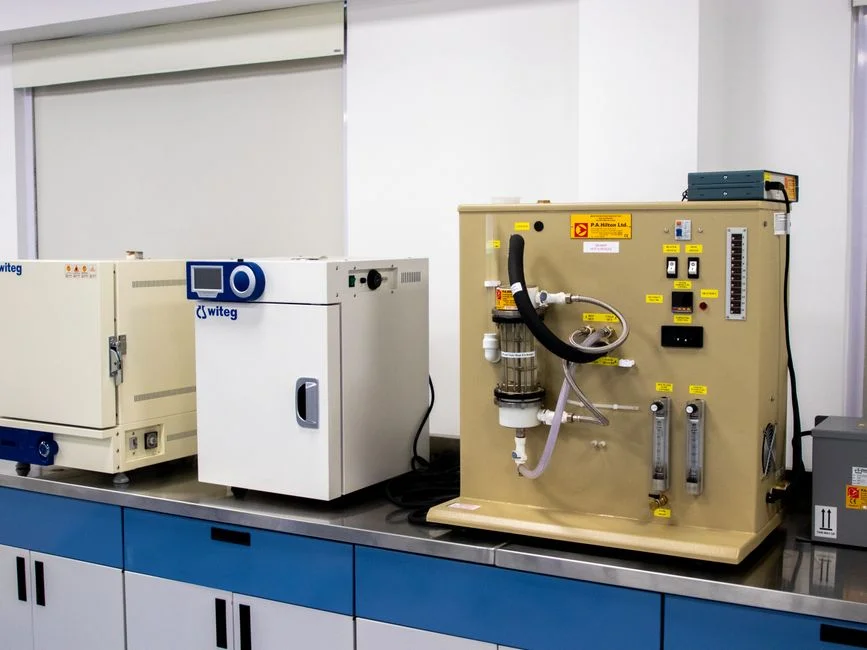
A defensible compliance file links each analytical result to a permit requirement, a reporting period, a sampling method, and corrective action where needed. The supplied Nashville material indicates that self-monitoring frequency may be daily, weekly, or monthly depending on the facility and pollutant, while compliance reports are often quarterly.
- Follow the active permit’s self-monitoring schedule and reporting deadlines.
- Calibrate pH probes and flow meters on the specified schedule and retain current records.
- Archive composite results against the relevant reporting period.
- Document slug-control exercises with dates and participants.
- Preserve chain-of-custody, laboratory, and analytical records.
The supplied material identifies 40 CFR 136 protocols and flow-proportional composite sampling as relevant requirements. Keep sampling-point access, automatic sampler records, calibration logs, laboratory reports, and production data together so the sample can be connected to the operating condition that produced it.
Prepare a written exceedance procedure before it is needed. Confirm the result, notify MWS as required, repeat the analysis, investigate the cause, and retain corrective-action evidence. The separate wastewater treatment assessment for a data center illustrates why source and discharge controls must be traced end to end, while the SCADA engineering specification guide addresses the controls and records needed to operate and audit a treatment system.
Do not present expected equipment performance as proof of a compliant discharge. Performance depends on influent loading, operation, maintenance, sampling quality, and verification. During an inspection or enforcement review, records demonstrate performance; an equipment brochure does not.
Compare Cost, Lead Time, and Compliance Risk Before Ordering
Equipment cost should be compared with the compliance exposure and operating burden of the selected train, not with installed equipment price alone. HydropureWater’s 2026 Nashville guide cites approximately $1.2 million in capital cost and $80,000 per year in operating cost for a medium 50 m³/h DAF-plus-MBR package under typical U.S. industrial utility rates.
| Budget or procurement item | Supplied evidence or required input | Buyer check |
|---|---|---|
| Capital equipment | Approximately $1.2 million for a medium 50 m³/h DAF-plus-MBR package under typical U.S. industrial utility rates, per HydropureWater’s 2026 Nashville guide | Confirm the quoted flow, treatment scope, site utilities, civil work, controls, and exclusions |
| Operating cost | Approximately $80,000 per year for energy, chemicals, and maintenance under the same source conditions | Obtain a utility-price and chemical-consumption model tied to the proposed duty |
| Surcharge exposure | The source estimates up to $250,000 per year in avoided MWS surcharges in favorable scenarios | Calculate from actual flow, pollutant concentrations, and the applicable MWS rate schedule |
| Permitting | The source gives a broad pretreatment permitting range of $5,000–$20,000 | Request a written scope covering application, analytical data, engineering, fees, and agency review |
| Implementation | A typical 6–12 month period for permitting, fabrication, installation, and commissioning | Map dependencies and approval gates before accepting the delivery date |
The potential surcharge saving is scenario-dependent, not a guaranteed return. A credible business case must use the facility’s measured flow, concentration profile, applicable surcharges, and expected post-treatment performance. Separately budget characterization, permit application, fabrication, installation, commissioning, operator training, chemicals, preventive maintenance, membrane or DAF service, electrical work, and sludge disposal.
Evaluate bids on the process basis, equipment sizing, control narratives, factory or site acceptance testing, controls integration, maintenance support, electrical requirements, included engineering, and compliance-related performance criteria—not on nominal capacity alone. A supplier should identify which guarantees correspond to enforceable permit requirements and which are equipment conditions. The 2026 fabricated-metals pretreatment guide provides a useful scope framework, while the electrocoagulation guide for steel-mill wastewater illustrates the need to match advanced technology to actual stream chemistry.
Frequently Asked Questions
Is DAF alone sufficient for a fabricated metals plant near Nashville?
Not necessarily. DAF is appropriate where free oil, FOG, and floatable solids are significant, but dissolved metals, pH, soluble organics, and biological loading may require chemical treatment, biological polishing, or another validated step. The active MWS permit and representative characterization determine whether DAF alone is sufficient.
How should a pretreatment system be sized?
Start with the enforceable permit basis, then use representative flow and concentration data, production variation, operating factors, and the selected process’s removal performance. Include equalization and upset conditions, but label operating factors and margins as design assumptions rather than regulatory limits. If these inputs are missing, perform a characterization campaign before ordering.
What should a pretreatment supplier provide?
Request a process basis, flow and pollutant design data, equipment sizing, control narratives, electrical requirements, FAT or commissioning scope, operating and maintenance requirements, solids-management provisions, and performance criteria tied to the permit. For the plastics and rubber pretreatment compliance pathway, the same documentation standard applies even though the jurisdiction and industrial category differ.
How long does implementation take, and what drives the schedule?
HydropureWater’s 2026 Nashville guide estimates 6–12 months for permitting, fabrication, installation, and commissioning. The critical path depends on representative data, agency review, equipment design approval, fabrication release, utility readiness, installation access, and operator acceptance.
What should be done if influent data is missing?
Commission a characterization campaign covering flow, production correlation, pH, oil and grease or FOG, TSS, BOD or COD, and relevant metals. Review those results with the active MWS permit and treatment designer before making a final equipment commitment. DAF versus clarifier guidance for transportation wastewater illustrates why the decision must follow characterization rather than a preselected equipment name.