Why Steel Mill Wastewater Is a Different EC Problem
An electrocoagulation system for steel mill wastewater uses sacrificial iron or mild-steel anodes in a DC cell to generate Fe²⁺/Fe³⁺ coagulant in situ, breaking oil emulsions, precipitating dissolved metals, and floating tramp oil. In a U.S. Department of Energy field validation at the Cleveland-Cliffs cold rolling mill in Cleveland, OH, iron-anode EC improved tramp oil recovery by approximately 25% and cut chemical use 60–100% versus the existing flocculation system, at typical energy use of 3.5–13.7 kWh/m³ for metal-bearing streams (per S4, eta-publications.lbl.gov, DOE/LBNL ITV report).
Steel-mill streams are not generic plating wastewater. A 2026 RFQ has to handle four distinct stream archetypes with very different chemistry: cold rolling emulsion (oil and grease, 100–1,000+ mg/L, stabilized by emulsifiers at 40–60°C), pickle line acid rinse (dissolved Fe²⁺/Fe³⁺, free acid, sulfate or chloride), hot mill scale flush (high TSS, low oil, dominated by iron-oxide fines), and coke-plant ammonia still liquor (NH₃, phenols, cyanide, COD in the 5,000–20,000 mg/L range). The cell sizing, electrode material, and current density for each of those streams are different, and a vendor proposal that quotes a single parameter set across the four is not engineered.
Iron or mild-steel anodes are the default for steel-mill duty. The anode mass loss is itself a steel product the mill already handles, the resulting sludge is a mixed iron-hydroxide that is more readily recyclable than aluminum hydroxide, and there is no aluminum discharge limit to manage (per Butler et al. 2011, S3). The most important caveat from the Cleveland-Cliffs field validation is that iron-anode EC raises the iron content of the recovered tramp oil — a real downstream specification issue that has to be priced in before the cell ships. The widely-cited S1 Elsevier study on EC + ozonation for cold rolling mill wastewater is still referenced in academic literature, but the original DOI currently returns a 404, so its numbers should be confirmed against a copy held in the buyer's technical library before they go into a 2026 RFQ. For the broader mechanism and trade-off data behind in-situ coagulant generation, the electrocoagulation system for metal finishing wastewater guide is the working reference.
How an Iron-Anode EC Cell Treats Rolling Mill Emulsion
Three simultaneous reactions drive iron-anode EC on a rolling mill line. At the anode, sacrificial mild steel releases Fe²⁺ and Fe³⁺ directly into the bulk solution, where they hydrolyze to fresh, highly reactive iron-hydroxide flocs. At the cathode, water is reduced to hydrogen gas, and the bubble sweep floats free oil, broken emulsion, and entrained floc to the surface. At the anode surface, dissolved oxygen evolution and anodic oxidation break residual free oil and trace organics, including small amounts of free cyanide and complexed chelators dragged in from upstream cleaners (per S5, hydropurewater.com, 2026).
Cold rolling emulsion is the easiest EC target in a steel mill. The feed is already warm (40–60°C) and emulsifier-stabilized, so the hydrogen bubble sweep physically liberates free and broken oil, while the iron-hydroxide floc enmeshes suspended solids and emulsified metal fines. Published bench-scale data on iron anodes for similar metal-bearing matrices is the best available proxy while a site pilot is being scoped: 90–99% mixed metallic ion removal at pH 9.5 in 30 minutes (Cora & Hung, per S3), and 95% Cr(VI) removal with iron electrodes versus only 15% with aluminum under otherwise identical ANN-optimized conditions at 30 minutes electrolysis, pH 5–8, and 17.1 mg/L initial Cr(VI) (Aber et al., per S3). For chromium-bearing pickle rinse, a comparable aluminum-anode study reported 91% Cr(III) removal at pH 4.23, 9.14 V, 10 minutes, 27.5°C, at 3.536 kWh/m³ (Zaroual et al., per S3) — a useful lower bound on electrical opex for the pickle-line row in the parameter table.
The working window for oil and metal polishing on a steel-mill feed is pH 6–9, current density 10–50 A/m², and 15–30 minutes residence time (per S5). The dominant failure modes if the cell is mis-applied are well known: passivation of the iron anode at high pH or low chloride, scaling of the cathode with CaCO₃, and under-delivery of coagulant if conductivity drops below roughly 1,000 µS/cm. All three are upstream-instrumentation problems, not cell-design problems, and they are the reason a downstream equalization tank and an automatic chemical dosing system for pH and conductivity trim belong in the RFQ line items, not as optional extras.
Steel-Mill Stream-by-Stream Parameter Table
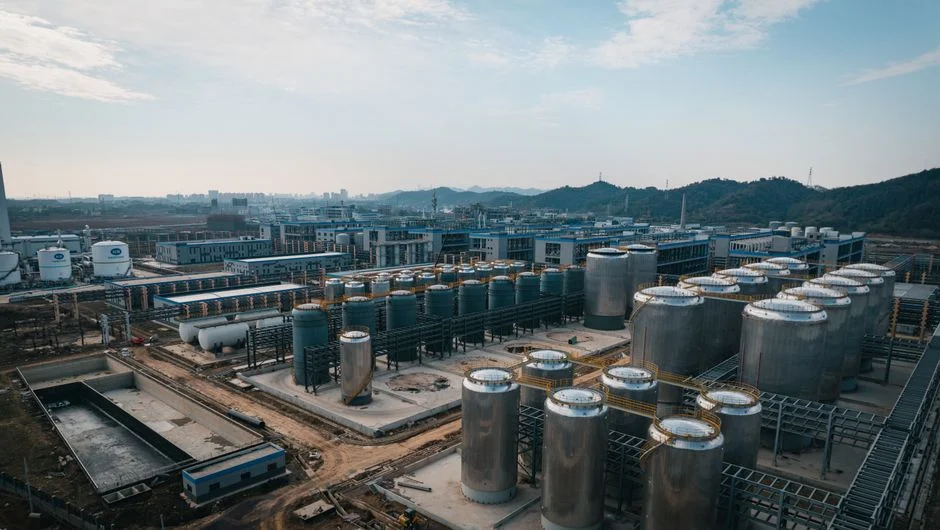
Generic EC parameter tables are why cold rolling, pickle, hot mill scale, and coke-plant streams keep getting bid as if they were the same job. The table below is a steel-mill-specific reference a buyer can hand to a vendor as the basis of a 2026 RFQ, anchored to the Cleveland-Cliffs field validation (S4) where data is available and to Butler et al. 2011 (S3) and the 2026 metal-finishing EC guide (S5) for the rest.
| Stream | Target pH | Current density (A/m²) | Residence (min) | Electrode | Expected removal | Energy (kWh/m³) |
|---|---|---|---|---|---|---|
| Cold rolling emulsion | 6–9 | 15–50 | 15–30 | Fe / mild steel | ~25% better tramp oil recovery vs CF; 60–100% chemical-use reduction (S4) | Site-specific; pilot required. S4 reports "substantially more electricity" than CF but does not publish a specific kWh/m³ figure |
| Pickle line acid rinse | 8.5–9.5 | 10–40 | 20–30 | Fe / mild steel | 90–99% multi-metal removal at pH 9.5 in 30 min (Cora & Hung, per S3); 91% Cr(III) at 3.536 kWh/m³ (Zaroual et al., per S3) | ~3.5–7 |
| Hot mill scale flush | 7–9 | 10–30 | 15–25 | Fe / mild steel | 90–97% TSS removal typical of iron-anode EC on particulate-dominated feeds (Butler et al. 2011, S3); oil loading low | ~3–6 |
| Coke-plant ammonia still liquor | 7–8 (post-ammonia strip) | 20–50 | 30–60 | Fe / mild steel, often paired with AOP | EC alone insufficient for phenols/CN; use as pretreatment before biological or AOP polishing (analogous to S2 hybrid logic — 88.8% COD with H₂O₂-assisted cavitation, 90.7% with persulfate-assisted cavitation) | ~5–10 before AOP |
The hot mill scale row is the one to push back on. Oil loading is low, TSS is the dominant load, and a lamella clarifier typically does the job for less capex and opex. EC earns its place on that stream only when the mill is also chasing dissolved metals or trace oil that the clarifier is missing. The coke-plant row is not a single-cell solution at all; it is a pretreatment in front of an AOP or biological step, in line with the hybrid EC + hydrodynamic cavitation logic from the S2 Water Environment Research paper (2026), where EC as a preliminary stage improved effluent characteristics and the downstream oxidant-assisted cavitation step carried the COD removal to 88.8% (H₂O₂-assisted) and 90.7% (persulfate-assisted).
Placement: Where EC Fits in a Mill's Existing Train
The most common retrofit mistake in a 2026 steel-mill RFQ is putting a raw EC cell in front of an existing clarifier. A typical cold rolling mill train in 2026 still runs equalization → chemical flocculation or DAF → sand filter or plate interceptor → biological or membrane polish → discharge or reuse. EC earns its place as a polish after the existing DAF or API separator, not as a replacement for it, because emulsified oil and variable conductivity punish a raw influent cell without equalization (per S5).
The corollary is sharper: EC can replace chemical flocculation only when the mill has a reliable equalization tank, a pH probe on automatic trim, and conductivity reliably above 1,000 µS/cm — a condition that is rarely met on old pickle lines. The Cleveland-Cliffs evidence is the honest retrofit path: the EC cell was tested in parallel with the existing chemical flocculation system, not as a drop-in replacement (per S4). That parallel-test framing is what a defensible 2026 RFQ should mirror. The general rule from the metal-finishing literature is the same: put EC after the existing clarifier, not before it (Altmayer, 2026, per S5), and that rule carries over to most steel-mill retrofit scenarios.
For greenfield pickle lines, EC can go upstream of a small DAF to act as the primary coagulant generator, but a downstream deaeration or DAF step is still required to handle the entrained H₂ and O₂ bubbles the cell generates. A downstream DAF for oil and floatable colloid removal is therefore not optional in either retrofit or greenfield layouts — it is part of the cell, not a polish to it. For a broader decision framework on placement in steel and metals plants, the DAF vs clarifier decision for steel and metals plants guide covers the upstream train in more detail.
2026 Cost Crossover: EC vs Chemical Flocculation for a Steel Mill
The defensible dollar figure a plant manager will sign off on is the electrical opex line item, translated from the published energy range. The 3.5–13.7 kWh/m³ band for metal-bearing streams (Butler et al. 2011, per S3 and S5) at a 2026 U.S. industrial tariff of $0.08–$0.12/kWh lands the EC electrical line item at $0.28–$1.64 per cubic meter treated, before counting avoided coagulant, polymer, and sludge-haul savings.
Chemical flocculation on the same stream runs 100–300 mg/L of ferric chloride or alum, almost always with a fixed-rate polymer feed because true hydroxide concentration cannot be measured inline (per S5). At $0.40–$0.80/kg delivered ferric chloride and a 200 mg/L dose, a 50 m³/h line burns through roughly $140,000–$280,000 per year of coagulant before polymer, lime, and haul. At those chemical prices, an EC cell drawing 7 kWh/m³ at $0.10/kWh costs about $0.70/m³ in electricity, which is roughly equal to chemical opex before counting sludge, polymer, and labor savings.
| Line item | Chemical flocculation (2026) | Iron-anode EC (2026) |
|---|---|---|
| Coagulant / energy | 200 mg/L ferric chloride ≈ $0.40–$0.80/kg → ~$0.10–$0.40/m³ before polymer | 3.5–13.7 kWh/m³ at $0.08–$0.12/kWh → $0.28–$1.64/m³ |
| Polymer | 0.5–2 mg/L anionic/cationic; separate make-down and feed skids | None in most streams; charge neutralization is internal |
| Sludge character | Ferric chloride "greatly increases sludge volume" (Altmayer, 2026); gelatinous hydroxide cake overruns filter press | Denser iron-hydroxide cake that dewaters more cleanly on a plate and frame filter press for sludge dewatering |
| Chemical handling | Daily tanker deliveries, drum storage, acid/caustic for pH trim, jar-test QA | 60–100% chemical-use reduction observed at Cleveland-Cliffs cold rolling mill (per S4); electrode mass loss is the consumable |
| Often-forgotten opex | Lime for neutralization, polymer make-down labor, sludge haul tonnage | Anode mass loss at 1–3 kg Fe per kWh of DC input (per S5); equalization tank and automatic chemical dosing system for pH and conductivity trim upstream of the cell |
Two cost lines engineers forget on the EC side are the anode mass loss — Faraday-consumption of the iron itself, which scales with kWh as a consumable rather than a capital line, at roughly 1–3 kg of electrode metal per kWh of DC input depending on material (per S5) — and the equalization tank plus pH/conductivity instrumentation needed upstream of the cell. On the chemical side, the avoided sludge-haul line is where the business case actually closes: ferric chloride hydroxide sludge is gelatinous, holds water, and overruns filter-press capacity, while EC iron-hydroxide cake releases more cleanly on a dewatering press and cuts haul tonnage per shift. At the midpoint energy (~7 kWh/m³ at $0.10/kWh) and 2026 chemical pricing, EC electrical opex is roughly equal to chemical opex before counting sludge, polymer, and labor savings — so the sludge and chemical-handling lines are the actual margin in a 2026 RFQ. A useful cross-check for the wire-drawing side of the same mill is the filter press for wire drawing wastewater guide, which covers the dewatering end of the same sludge stream.
Frequently Asked Questions
What does an electrocoagulation system do for steel mill wastewater?
It generates Fe²⁺/Fe³⁺ coagulant in situ by corroding sacrificial iron or mild-steel anodes in a DC cell, breaking oil emulsions, precipitating dissolved metals, and floating tramp oil. In the U.S. DOE/LBNL Cleveland-Cliffs cold rolling mill field validation, iron-anode EC improved tramp oil recovery by approximately 25% and cut chemical use 60–100% versus the existing flocculation train (per S4).
How much energy does an EC system use on a cold rolling mill?
Published working range for metal-bearing streams is 3.5–13.7 kWh/m³, anchored by the Zaroual Cr(III) study at the low end and the Bhatti Cr(VI) study at the high end (per Butler et al. 2011, S3). At a 2026 U.S. industrial tariff of $0.08–$0.12/kWh, that puts the electrical line item at $0.28–$1.64 per m³ treated. The Cleveland-Cliffs demo reported "substantially more electricity" than the existing chemical flocculation system but did not publish a specific kWh/m³ figure for the cold rolling line, so a 2026 RFQ should treat that row as site-specific and pilot-confirmed (per S4).
Can electrocoagulation replace DAF or chemical flocculation in a steel mill?
It replaces chemical flocculation only when the mill has a reliable equalization tank, automatic pH trim, and conductivity above ~1,000 µS/cm — a condition rarely met on old pickle lines. The standard placement rule is EC after the existing DAF or API separator, not before it, mirroring the aerospace plating case in the 2026 metal-finishing guide (per S5) and the parallel-test framing used at Cleveland-Cliffs (per S4).
What electrode material should a steel mill use — iron or aluminum?
Iron or mild steel is the default. The Aber et al. ANN-optimized study reported 95% Cr(VI) removal with iron electrodes versus only 15% with aluminum under otherwise identical conditions (per S3). The anode mass loss is itself a steel product the mill already handles, and the resulting iron-hydroxide sludge is denser and more readily recyclable than aluminum hydroxide.
Does electrocoagulation reduce sludge volume in a steel mill?
Yes, and that is usually where the business case closes. Ferric chloride hydroxide sludge is gelatinous and "greatly increases the amount of sludge to be handled" during final solids removal (per S5, Altmayer 2026). EC sludge is a denser, lower-volume iron-hydroxide cake that releases more cleanly on a plate and frame filter press for sludge dewatering, directly cutting haul cost per shift. For the broader mechanism and parameter logic behind in-situ coagulant generation, the electrocoagulation system for metal finishing wastewater guide is the working reference.