
Regulatory Framework: 40 CFR 403 and Metro Water Services Authority
Metro Water Services (MWS) administers the industrial pretreatment program for Nashville, Davidson County, and 10 satellite communities under the authority of federal regulations in 40 CFR 403 (source: Nashville.gov Environmental Compliance). Nashville Metro Water Services enforces industrial pretreatment under 40 CFR 403 for Davidson County and 10 satellite communities. Facilities must obtain an Industrial Discharge Permit before discharging; the application requires process flow schematics, pollutant characterization data, and pretreatment system design. Local limits for BOD, TSS, FOG, pH (6.0–10.0 SU), and specific heavy metals are set in Metro's SUO; categorical standards (40 CFR 405–471) apply based on industrial category. Permit applications go to Environmental Compliance, 1450 Lebanon Pike Building C, Nashville, TN 37210.
The legal framework governing industrial wastewater in Davidson County follows a strict hierarchy. The federal Clean Water Act establishes the foundational standards, which are translated into specific requirements through the EPA General Pretreatment Regulations in 40 CFR 403. At the state level, the Tennessee Department of Environment and Conservation (TDEC) delegates local implementation authority to MWS. The local legal mechanism is the Metro Sewer Use Ordinance (SUO), which establishes enforceable local limits and dictates the conditions of each individual Industrial Discharge Permit. MWS operates under EPA Region 4 oversight to ensure that no industrial discharge causes pass-through or interference at municipal wastewater treatment plants.
For facilities operating within downtown Nashville, compliance strategies are heavily influenced by the city's infrastructure history. The combined sewer system (CSS) serves the downtown and urban core of Nashville, dating back to the late 1800s (source: cleanwaternashville.org). During significant rainfall events, stormwater and sanitary wastewater combine in a single piping network. To prevent combined sewer overflows (CSOs) and satisfy the requirements of the legally binding Consent Decree negotiated between the U.S. Department of Justice, the State of Tennessee, and MWS, industrial facilities in the CSS service area may face stringent flow equalization mandates and wet-weather discharge restrictions to minimize hydraulic loading on the municipal system.
Nashville Metro Local Discharge Limits: Pollutant-by-Pollutant Table
The Metro Water Services Sewer Use Ordinance (SUO) establishes local limits for conventional pollutants, including a strict pH range of 6.0 to 10.0 Standard Units (SU) and a temperature cap of 40°C (104°F) to protect the physical integrity of the collection system (source: Metro Nashville SUO guidelines). These local limits are designed to prevent biological treatment inhibition at the POTW and to protect utility workers in the collection system. Facilities exceeding surcharge thresholds for Biochemical Oxygen Demand (BOD5) and Total Suspended Solids (TSS) are subject to high-strength sewer surcharges, while exceeding the maximum allowable limits constitutes an immediate permit violation.
The following table consolidates the primary numeric local limits and surcharge thresholds enforced by Metro Water Services for industrial and commercial dischargers in Davidson County:
| Pollutant Parameter | Daily Maximum Limit (mg/L) | Monthly Average Limit (mg/L) | Surcharge Threshold (mg/L) | Sampling Type |
|---|---|---|---|---|
| Biochemical Oxygen Demand (BOD5) | 1,000.0 | Report Only | 250.0 | 24-Hour Composite |
| Total Suspended Solids (TSS) | 1,000.0 | Report Only | 250.0 | 24-Hour Composite |
| Fats, Oils, and Grease (FOG) - Total | 100.0 | N/A | 100.0 | Grab |
| Ammonia-Nitrogen (NH3-N) | 45.0 | Report Only | 25.0 | 24-Hour Composite |
| Arsenic (As) | 0.10 | 0.05 | N/A | 24-Hour Composite |
| Cadmium (Cd) | 0.05 | 0.03 | N/A | 24-Hour Composite |
| Chromium (Total Cr) | 2.75 | 1.50 | N/A | 24-Hour Composite |
| Copper (Cu) | 1.50 | 1.00 | N/A | 24-Hour Composite |
| Lead (Pb) | 0.30 | 0.15 | N/A | 24-Hour Composite |
| Mercury (Hg) | 0.01 | 0.005 | N/A | Grab |
| Nickel (Ni) | 2.00 | 1.00 | N/A | 24-Hour Composite |
| Silver (Ag) | 0.10 | 0.05 | N/A | 24-Hour Composite |
| Zinc (Zn) | 2.50 | 1.50 | N/A | 24-Hour Composite |
| Total Toxic Organics (TTO) | 2.13 | N/A | N/A | Grab |
To put these numbers in perspective, facilities can review a FOG discharge limits comparison across jurisdictions to see how Nashville's 100.0 mg/L threshold aligns with national standards. Industrial operations with high-strength organic waste streams must implement physical separation before discharge. Installing a high-efficiency DAF system for FOG and TSS removal is a proven method to reduce BOD5 and suspended solids below surcharge thresholds. For inorganic streams containing dissolved heavy metals, executing pH adjustment via a PLC-controlled chemical dosing for pH and metals precipitation allows precise control over hydroxide precipitation, ensuring effluent consistently meets the sub-milligram-per-liter metals limits shown above.
Categorical Pretreatment Standards Applicability for Nashville Industries

Federal categorical pretreatment standards under 40 CFR Parts 405 through 471 establish industry-specific discharge limitations that apply to any facility matching the regulatory definition of a regulated category (source: EPA 40 CFR 403.6). These standards are technology-based and apply uniformly across the United States. Metro Water Services is legally mandated to enforce these standards, and where a local SUO limit and a federal categorical limit overlap for the same pollutant, the facility must comply with the more stringent of the two.
The table below provides a crosswalk of common industrial categories in Davidson County, their corresponding federal regulations, and the primary pollutants targeted by MWS enforcement:
| Industrial Category | Applicable NAICS Codes | 40 CFR Part | Key Regulated Pollutants |
|---|---|---|---|
| Metal Finishing | 332813, 332710 | Part 433 | Cd, Cr, Cu, Pb, Ni, Ag, Zn, Cyanide, TTO |
| Pharmaceutical Manufacturing | 325412 | Part 439 | COD, BOD5, TSS, Specific Organic Solvents |
| Organic Chemicals, Plastics & Synthetic Fibers | 325211, 325199 | Part 414 | BOD5, TSS, Total Copper, Total Zinc, Priority Organics |
| Food Processing (Meat & Poultry) | 311611, 311615 | Part 432 | BOD5, TSS, Ammonia-N, O&G, Total Phosphorus |
| Coil Coating | 332812 | Part 465 | Cr, Cu, Zn, Cyanide |
| Aluminum Forming | 331318 | Part 467 | Cr, CN, Zn, Al, O&G, TSS |
When a facility combines regulated categorical wastewater streams with non-regulated streams prior to treatment, MWS applies the Combined Wastestream Formula (CWF) found in 40 CFR 403.6(e) to derive equivalent modified limits. This mathematical flow-weighted averaging prevents facilities from using dilution as a substitute for treatment. For electroplating and metal finishing operations, a Case study: metals facility pretreatment compliance demonstrates how multi-stage precipitation and recovery systems can achieve categorical compliance. Under Part 433, metal finishers can opt for a Total Toxic Organics (TTO) certification alternative, which allows the facility to submit a solvent management plan and sign a periodic certification statement in lieu of expensive daily organic compound monitoring.
Industrial Discharge Permit Application: Step-by-Step Package Requirements
Compiling a complete Industrial Discharge Permit application Nashville package requires a minimum of 90 days of lead time prior to the planned discharge date to accommodate Metro Water Services' 60-day administrative and technical review cycle (source: Nashville.gov Environmental Compliance). Submitting an incomplete application or failing to provide verified analytical data will reset the review clock, delaying facility commissioning. To ensure compliance with the Nashville Metro Water Services industrial and commercial wastewater pretreatment discharge requirements, engineering teams must follow a structured seven-step preparation process.
- Pre-Application Consultation: Contact the MWS Environmental Compliance Section via email to schedule an initial project briefing. This step clarifies local sewer capacity in your specific Davidson County basin and identifies potential hydraulic constraints.
- Obtain and Complete the Official Forms: Download the current Industrial Discharge Permit Application PDF directly from nashville.gov (source: Nashville.gov Environmental Compliance). Complete all sections, including facility description, water balance, and chemical storage inventories.
- Develop the Engineering Package: Draft detailed process flow diagrams mapping all water-using processes, water supply meters, and distinct wastewater discharge points. Include complete piping and instrumentation diagrams (P&IDs) of the pretreatment system and a hydraulic profile.
- Execute Pollutant Characterization: Conduct a minimum of 30 days of representative, flow-proportional composite sampling of the raw wastewater. All analytical testing must be performed by a state-certified laboratory using EPA-approved methods under 40 CFR 136.
- Draft the Baseline Monitoring Report (BMR): For categorical industries, compile a BMR detailing production rates, actual water usage, and categorical pollutant concentrations. For existing sources, this is due within 180 days of the effective date of a categorical standard; for new sources, it must be submitted at least 90 days before discharge begins.
- Pretreatment System Certification: All pretreatment system designs, calculations, and O&M manuals must be certified, signed, and stamped by a Professional Engineer (PE) registered in the State of Tennessee.
- Package Submission: Mail the original, signed hard copy of the application package to: Metro Water Services Environmental Compliance, 1450 Lebanon Pike Building C, Nashville, TN 37210, Attn: Industrial Compliance Section (source: Nashville.gov Environmental Compliance). Alternatively, a digital copy can be emailed directly to the Environmental Compliance department to initiate the administrative review.
MWS reviews submittals within 60 days of receipt. Once approved, MWS issues a draft permit for public and facility review before executing the final Industrial Discharge Permit, which is typically issued for a fixed 5-year term.
Ongoing Compliance: Monitoring, Reporting, and Inspection Readiness
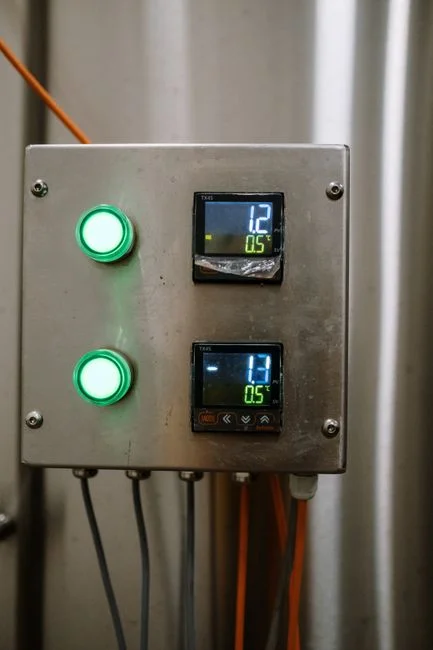
Metro Water Services conducts unannounced annual inspections and sampling events at all permitted Significant Industrial Users (SIUs) to verify compliance with discharge authorizations (source: EPA Region 4 Pretreatment Guidelines). Permittees are legally obligated to maintain continuous self-monitoring programs. The frequency of self-monitoring is determined by the individual permit but typically ranges from monthly for categorical industries to quarterly for non-categorical industrial users. All sampling must follow the protocols in 40 CFR 136, utilizing 24-hour flow-proportional composite samplers unless grab samples are specifically required for parameters like pH, temperature, cyanide, and volatile organics.
Reporting mandates require facilities to submit semi-annual compliance reports (typically due in June and December) summarizing all analytical data, daily flow averages, and production metrics. If self-monitoring results indicate a permit violation, the facility must notify MWS within 24 hours of becoming aware of the exceedance. The facility must then repeat the sampling and analysis and submit the new results to MWS within 30 days of the initial violation notice. Any slug load—defined as any discharge of a non-routine, episodic nature that could cause interference or pass-through—must be reported immediately to the MWS emergency contact line.
For commercial facilities and food service establishments, the Nashville FOG program dictates specific maintenance protocols. Grease interceptor and grease trap certification forms must be completed by an individual who has completed the MWS online certification course (source: Nashville.gov Environmental Compliance). While this course carries a standard $12.00 fee, the cost is waived for operators, plumbers, and engineers working within the Nashville area. Grease interceptors must be pumped at a frequency that prevents the grease and solids layer from exceeding 25% of the tank's operating capacity, typically requiring a maximum 90-day cleaning cycle.
Failure to meet these monitoring and reporting requirements can result in MWS declaring the facility in Significant Non-Compliance (SNC). Under the MWS Enforcement Response Guide (ERG), SNC status is triggered if 66% or more of all wastewater measurements taken during a 6-month period exceed the daily maximum limit or the average limit for the same pollutant parameter (source: EPA General Pretreatment Regulations). SNC status triggers mandatory public notice in the largest local daily newspaper, administrative fines of up to $10,000 per violation per day, and potential permit revocation or sewer service termination.
Frequently Asked Questions
What are the current Nashville Metro local limits for FOG and heavy metals?
The Metro Water Services Sewer Use Ordinance (SUO) limits Total Fats, Oils, and Grease (FOG) to 100.0 mg/L for all industrial and commercial dischargers. Heavy metals limits are strictly regulated on a daily maximum basis: Copper is limited to 1.50 mg/L, Zinc to 2.50 mg/L, Nickel to 2.00 mg/L, Lead to 0.30 mg/L, and Cadmium to 0.05 mg/L (source: Metro Nashville SUO guidelines). Any discharge exceeding these daily maximum values constitutes a direct permit violation.
How long does the industrial discharge permit application take to process?
Metro Water Services requires a 60-day administrative and technical review period from the date a complete application is received (source: Nashville.gov Environmental Compliance). To prevent operational delays, facilities should submit their completed application package, including 30 days of representative sampling data and PE-certified engineering plans, at least 90 days before they intend to begin discharging wastewater.
Do food service establishments need a full industrial permit or just grease interceptor certification?
Standard food service establishments (FSEs) do not require a full Industrial Discharge Permit; instead, they are regulated under the Metro FOG program. FSEs must install approved grease interceptors and have them certified by an MWS-approved plumber, hauler, or engineer who has completed the local certification course (source: Nashville.gov Environmental Compliance). However, industrial-scale food processors, meatpackers, and commercial bakeries must secure a full Industrial Discharge Permit and comply with categorical standards under 40 CFR 432 or local limits.
What sampling methods does Metro accept for self-monitoring reports?
In accordance with 40 CFR 136, Metro Water Services requires 24-hour flow-proportional composite samples for most metal and inorganic parameters to ensure the sample represents the daily discharge. Grab samples are only acceptable for highly volatile or unstable parameters, specifically pH, temperature, cyanide, total phenols, volatile organic compounds (VOCs), and fats, oils, and grease (FOG).
How does the combined sewer system affect my pretreatment requirements during wet weather?
Facilities discharging to the combined sewer system (CSS) in downtown Nashville are subject to strict hydraulic controls during wet-weather events to prevent combined sewer overflows (CSOs). Under the city's Consent Decree, MWS may require CSS-connected facilities to install flow equalization tanks to store industrial wastewater during heavy rainfall, restricting discharge until storm flows in the municipal system have subsided (source: cleanwaternashville.org).