DAF or Clarifier for Petroleum Wastewater in Pasadena: The 2026 Decision
For petroleum bulk wastewater in Pasadena, choose DAF when free or emulsified oil, FOG and low-density solids are the primary removal targets; choose a clarifier when the waste is dominated by dense, rapidly settling solids. Many factories need both: DAF for light oil-bearing material, followed by clarification or another solids-polishing step. The EPA’s 2019 refinery study frames wastewater treatment as a system—equalization, oil-and-solids removal, biological treatment and possible polishing—not a single separator. Final selection should therefore follow stream characterization, treatment objectives, jar and pilot testing, permit requirements and a whole-life operating comparison.
The practical answer for a Pasadena refinery, petrochemical plant or fuel-handling facility depends on what the bulk stream contains, what the downstream treatment train must receive, and where the water ultimately goes. A DAF system is the default candidate when the separator must capture free oil, emulsified oil, FOG or low-density solids that will not settle effectively in a practical basin. A clarifier is the stronger candidate when the dominant material is dense grit, metals precipitate or other solids that settle quickly.
Neither conclusion follows from flow rate alone. The same flow can present entirely different separation problems depending on the free-oil fraction, emulsification, particle specific gravity, chemical-conditioning demand and flow variability. A plant with light oils and heavy solids may justify a DAF-clarifier train, a DAF with bottom solids removal, or an upstream separator followed by clarification.
The EPA’s Detailed Study of the Petroleum Refining Category, published in September 2019, places these units within a broader treatment sequence: equalization and storm-water diversion, oil-and-solids removal, carbonaceous-waste removal through biological treatment, and possible polishing. A more complete treatment-train perspective is available in the biological treatment options for petroleum bulk wastewater, while the petroleum-wastewater DAF versus clarifier comparison provides a useful companion decision framework.
Why Petroleum Wastewater Needs a Treatment-Train Decision
EPA 821-R-19-008 identifies 40 CFR Part 419 as the federal effluent-guidelines framework for petroleum refining, and its listed treatment sequence places oil-and-solids removal before biological treatment and polishing.
The regulation covers facilities processing raw petroleum crude into products including gasoline, fuel oil, jet fuel, heating oils and gases, petrochemicals and other products. The EPA’s September 2019 study states that the regulation includes BOD, TSS, COD, oil and grease, phenolic compounds, ammonia, sulfide and chromium. That pollutant list demonstrates why a separator should not be treated as a complete refinery wastewater plant.
Within the EPA-identified treatment train, in-plant source control comes first. This includes segregating stormwater from polluted process water, controlling sulfide and ammonia at their sources, and eliminating once-through cooling water where practicable. At the end-of-pipe level, the sequence identified in the September 2019 study is equalization and storm-water diversion; oil-and-solids removal; biological treatment for carbonaceous waste; and possible polishing. Neither dissolved air flotation nor a clarifier independently removes the dissolved carbonaceous load that biological treatment is intended to address.
The discharge path changes the compliance basis. A direct discharger must evaluate its NPDES permit, while an indirect discharger must evaluate categorical pretreatment standards and the receiving publicly owned treatment works’ local limits. The industrial wastewater compliance and equipment guide provides broader context, but Pasadena applicability must be established from the plant’s permit, sewer agreement and receiving agency—not from a generic equipment specification.
| Treatment function | EPA-identified role | Equipment implication |
|---|---|---|
| Source control and segregation | Keep polluted process water separate from stormwater and control pollutants at their sources. | DAF or clarifier capacity should not be based on an undifferentiated combined flow. |
| Equalization | Stabilize flow and load before end-of-pipe treatment. | Check detention, mixing and transfer behavior before sizing the separator. |
| Oil-and-solids removal | The September 2019 EPA study lists an API separator or baffle-plate separator for this function. | Determine whether DAF supplements, replaces or follows upstream free-oil recovery. |
| Biological treatment | Remove carbonaceous waste after oil-and-solids removal. | Prevent floating oil and excessive solids from disrupting the biological process. |
| Polishing | May follow biological treatment. | Clarification or filtration may still be required even if DAF performs early oil removal. |
DAF and Clarifier Mechanisms for Oil-Contaminated Water
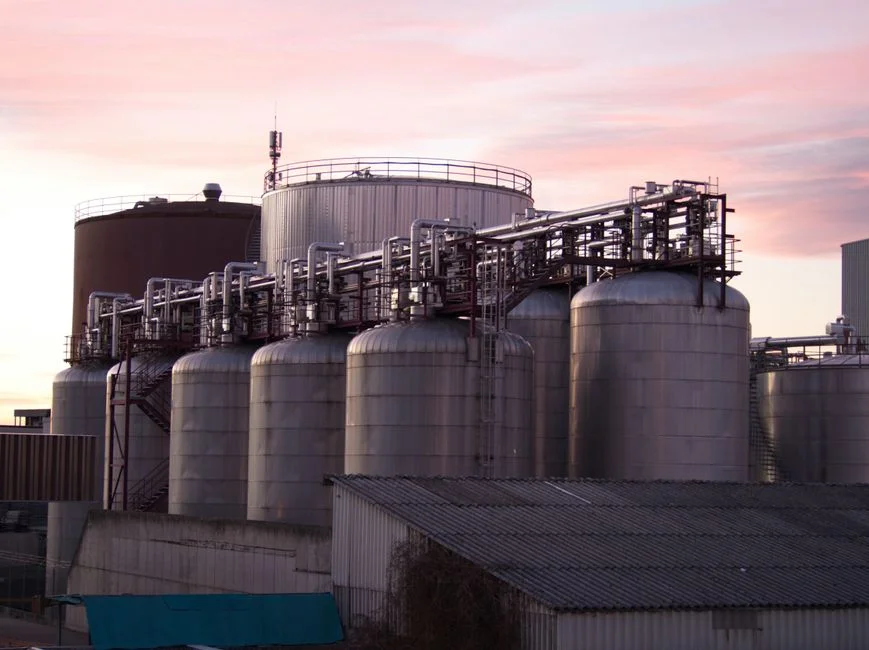
Differences in specific gravity provide the first screening rule: materials denser than water favor sedimentation, while oils and other low-density materials favor flotation.
Dissolved air flotation uses a pressurized recycle stream to saturate water with air. When that “white water” returns to atmospheric pressure in the flotation tank, microbubbles form, attach to suspended material and carry it to the surface for skimming. The mechanism is useful for free oil, emulsified oil, FOG and fine or low-density solids that would not settle within a practical retention time.
Clarification relies on gravity. Incoming solids settle to the bottom while clarified water leaves the treatment zone. A conventional clarifier provides a relatively simple solids-separation function. A lamella clarifier adds inclined settling plates, increasing effective settling area, but that benefit depends on producing floc dense enough to travel toward the plates and settle.
That distinction is critical when comparing an industrial DAF system for petroleum wastewater with a lamella clarifier for dense wastewater solids. DAF conditioning seeks floc that remains light enough to attach to microbubbles. Clarifier conditioning seeks floc that settles rapidly. More polymer is not automatically better; the desired floc structure depends on the separation mechanism.
DAF also does not automatically replace bulk free-oil recovery. The EPA’s September 2019 study identifies API or baffle-plate separation as an end-of-pipe oil-and-solids control, while also identifying DAF among refinery treatment technologies. When an API separator is needed before DAF explains the physical separation issue in detail. Where the process requires recovery of free oil, a DAF may be better positioned downstream of a suitable upstream separator.
| Selection issue | DAF | Clarifier or lamella clarifier |
|---|---|---|
| Primary mechanism | Microbubbles attach to material, which rises for skimming. | Dense material settles under gravity. |
| Best initial contaminant fit | Free oil, emulsified oil, FOG and low-density solids. | Grit, metals precipitate and other dense, fast-settling solids. |
| Conditioning objective | Produce floc light enough to float without sinking. | Produce floc dense enough for rapid settling. |
| Principal operating concern | Saturation, recycle flow, air supply, skimming and scum handling. | Sludge withdrawal, settling behavior, rake operation and solids carryover. |
| Important process limitation | Does not remove dissolved carbonaceous pollution as a biological treatment substitute. | Should not be assumed effective for emulsified oil or FOG. |
Which Wastewater Profile Points to DAF or a Clarifier?
Published engineering values provide a screening range, but the wastewater analysis determines which profile applies and whether the selected loading is defensible.
For an oil- and FOG-dominant bulk stream, prioritize DAF. Require the supplier to understand the oil type, free-oil fraction, degree of emulsification, FOG concentration, suspended solids and pH. For a heavy-solids-dominant stream, prioritize a conventional or lamella clarifier. Require particle-specific-gravity data, settling observations, grit information, metals-precipitate characteristics and an estimate of the resulting sludge volume.
Published engineering data from WX Water Tech reports DAF riser rates of 3–8 gpm/ft², equivalent to 7–20 m/h, and lamella effective settling rates of 1.5–3.5 gpm/ft², equivalent to 40–80 m/h. The same source reports conventional circular-clarifier loading of 0.5–1.5 gpm/ft², illustrating the greater area commonly associated with conventional gravity separation. It also reports application-dependent DAF loading up to 3,000–5,000 mg/L and lamella loading up to 8,000+ mg/L with heavy settleable solids. These are published selection values, not guarantees; the vendor must confirm them against the actual wastewater, selected geometry and operating mode.
For mixed streams, compare at least four configurations: DAF alone, clarifier alone, DAF followed by clarification, and upstream separation followed by clarification. A DAF equipped with bottom solids removal may also be relevant where grit and light floatables coexist, but it should not be assumed to perform as a dedicated grit chamber. Chemical conditioning should be evaluated with an automatic chemical dosing system sized from jar-test results rather than a generic feed-rate estimate.
| Wastewater profile | Initial choice | Evidence to request | Main risk |
|---|---|---|---|
| Oil- and FOG-dominant | DAF | Oil type, free-oil fraction, emulsification, FOG, TSS and pH | Unstable flotation caused by unsuitable floc or chemical dosage. |
| Heavy-solids-dominant | Conventional or lamella clarifier | Specific gravity, settleability, grit, metals precipitate and sludge volume | Carryover or sludge accumulation from incorrect hydraulic loading. |
| Light and heavy fractions together | DAF-clarifier train or DAF with bottom solids removal | Particle-size distribution, oil fraction, solids loading and pilot removal data | Selecting one mechanism for contaminants it cannot reliably capture. |
Before procurement, request flow-duration data, batch and dump volumes, stormwater segregation, temperature, pH, oil and grease, FOG, TSS, COD, BOD, sulfide, ammonia, phenols and relevant metals. Peak and upset conditions can control equipment size even when average flow is modest.
Compare Footprint, Utilities, Operations and Whole-Life Cost
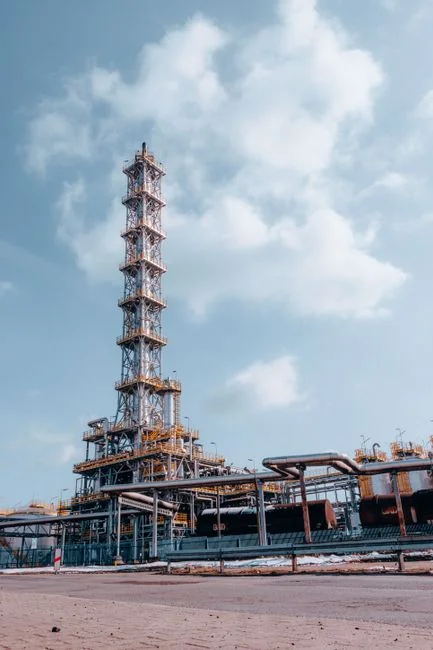
The installed separator is only one part of the cost: a DAF’s recycle pump, air compressor and saturation vessel must be compared with a clarifier’s simpler mechanical arrangement and its sludge-handling requirements.
A DAF generally needs a recycle pump, air compressor, saturation vessel, controls, skimmer and scum-management provision. A clarifier typically has fewer powered auxiliaries, although a feed pump, flocculation equipment, sludge-transfer system, chemical conditioning and an optional rake drive may be required. Equipment layout must therefore include auxiliary skid space rather than comparing tank footprints alone.
WX Water Tech reports typical DAF auxiliary power of 0.3–0.8 kW per 50 gpm treated. Treat this as a published selection value, not a guaranteed project consumption; motor loading, recycle ratio, air-saturation performance, flow variability and site electrical requirements must be checked in the vendor design.
DAF operation adds control of white-water saturation, recycle flow, compressor operation, skimmer performance and scum management. Clarifier operation centers on sludge withdrawal, floc behavior, rake torque and preventing solids carryover. Both routes may require coagulant and polymer, but the required floc differs: over-flocculation can defeat DAF flotation, while dense, rapidly settling floc is generally favorable to clarification.
Compare installed equipment, electrical demand, compressed air, chemicals, sludge hauling or dewatering, operator attention, maintenance, outage risk and recovered-material or oil value. The plate-frame filter press may be relevant where recovered sludge requires further dewatering, but its selection should follow measured solids concentration and cake-handling requirements.
| Cost or burden category | DAF | Clarifier |
|---|---|---|
| Installed scope | Separation tank plus recycle, air-saturation, skimming, controls and scum handling. | Separation basin plus feed, sludge withdrawal and optional rake or flocculation equipment. |
| Continuous utilities | Electrical demand for recycle and compressed-air systems; chemical demand may be sensitive to dosing. | Generally less powered equipment; sludge transfer and conditioning remain material costs. |
| Operator attention | Saturation, recycle, air, skimmer and scum controls. | Sludge withdrawal, settling behavior and solids carryover. |
| Whole-life comparison | Include continuous auxiliary operation and recovery-system availability. | Include basin area, sludge handling, chemical conditioning and downstream solids risk. |
Validate the Choice with Jar Tests, Pilot Data and Permit Review
Bench testing is required to establish actual settling or flotation behavior, chemical demand and sludge consistency because design calculations alone cannot demonstrate site performance.
Use a controlled sequence:
- Characterize representative bulk-wastewater samples, including normal, peak and upset conditions.
- Run settling and flotation jar tests to compare contaminant removal, floc behavior and chemical demand.
- Pilot the preferred configuration under expected flow and loading, and evaluate sludge handling.
- Review the complete treatment train, including equalization, upstream free-oil recovery, biological treatment and downstream polishing.
- Resolve the discharge path and permit conditions before issuing the equipment specification.
Stormwater should be addressed explicitly because the EPA’s September 2019 study identifies storm-water diversion as a separate treatment function. Testing must also establish whether the selected unit will protect downstream biological, filtration or reuse equipment.
For Part 419 Subparts A–E, the EPA’s September 2019 study cites PSES and PSNS values of 100 mg/L for oil and grease and 100 mg/L for ammonia as N, plus a 1 mg/L total-chromium PSNS. These are federal pretreatment references, not substitutes for the plant’s permit. A Pasadena project must document whether discharge is direct to surface waters, indirect to a POTW, or retained for on-site reuse, then apply the applicable NPDES conditions, categorical standards, local sewer limits and receiving-POTW requirements.
Useful supporting references include the effluent treatment plant buyer guide and the 2025 guide to PAC dosing for industrial applications. Use the permit and receiving agency—not general guidance—to establish the compliance basis.
Frequently Asked Questions
What is the difference in cost between DAF and a clarifier for petroleum bulk wastewater?
DAF usually adds cost through the vessel, recycle pump, compressor, saturation system, controls, skimmer and continuous utilities. A clarifier shifts more of the burden to basin area, sludge withdrawal, conditioning, possible rake equipment and downstream solids handling. Request an installed comparison based on flow duration, auxiliary loads, chemical use, sludge volume, maintenance and operator labor. No defensible price can be stated until the wastewater and operating basis are known.
How should a factory select and qualify a DAF or clarifier supplier?
Require each supplier to state the guaranteed influent basis, treated-water objective, applicable loading data, vessel materials, auxiliary-equipment scope, control philosophy, testing method and warranty. Ask how the guarantee will be verified at representative site wastewater and which conditions are excluded. Also request references for comparable petroleum streams, startup support and spare-parts availability.
How do you size a DAF or lamella clarifier for a refinery wastewater stream?
Do not select a model from average flow alone. Provide flow-duration data, batch and dump volumes, contaminant concentrations, particle specific gravity, settleability, oil characteristics, pH, temperature and chemical-conditioning results. Use bench tests and pilot data to confirm removal performance, sludge consistency and hydraulic behavior, then size against the verified flow and load basis.
Which compliance risk should be checked before buying separation equipment?
First identify the discharge path: direct NPDES discharge, indirect discharge to a POTW, or on-site reuse. Then obtain the applicable permit, categorical pretreatment requirements and local sewer limits. Federal Part 419 references provide a starting framework, but the purchaser must demonstrate that the proposed unit contributes to the site’s required oil-and-solids and carbonaceous treatment objectives without creating a downstream solids or emulsified-oil problem.