Why Frozen Food Wastewater Is Not a Single Treatment Stream
MBBR can be a credible biological stage for frozen food wastewater when the plant separates and characterizes production, thawing, washdown, changeover and cleaning streams before biological treatment. The reactor retains biomass on moving carriers while aeration supplies oxygen and keeps media moving, but it does not replace screening, equalization, FOG removal, pH control or downstream solids separation. Published results show potential rather than guarantees: a 2019 laundry study using Kaldnes K1 at 20% fill reduced COD from 910 mg/L to 56.3 mg/L and BOD from 441 mg/L to 39.67 mg/L after 10 days. Frozen-food design should therefore be based on representative seasonal sampling, a mass balance, site-specific loading calculations and a pilot using actual production and cleaning wastewater.
A frozen-food plant should treat the following as distinct sources until sampling shows they can be combined safely:
| Stream | What to characterize | Design implication |
|---|---|---|
| Process losses | Flow, COD, BOD, TSS, pH, temperature, nutrients and discharge timing | Establish the baseline organic and solids load presented to equalization and biology. |
| Product-contact washdown | Product residues, detergents, sanitizers, FOG and operating concentration | Determine whether equalization and pH control are sufficient or whether constituents require physical removal. |
| Thawing or defrosting water | Flow timing, temperature, COD, BOD, TSS and FOG | Include thawing-related hydraulic and organic peaks in the operating envelope. |
| Equipment and floor washing | Solids, grit, fibrous material, cleaning chemistry and wash frequency | Protect pumps, aerators, carriers and downstream solids equipment. |
| Product changeover | Product-specific residues, cleaner and sanitizer inventories, pH and discharge sequence | Assess inhibition risk and the need for segregation or chemical adjustment. |
| Laboratory drains | Analytical or process chemicals, flow and discharge restrictions | Evaluate whether they require a separate route rather than dilution with washdown. |
| Cleaning-chemical discharge | Surfactants, bleach-related compounds, alkalinity, disinfectants and product ingredients | Classify each constituent as readily biodegradable, potentially inhibitory or requiring removal. |
The production calendar is part of the wastewater description. Hydraulic peaks and organic loads may shift with production volume, frozen-storage turnover, thawing and intensive cleaning cycles. The food-processing MBBR design guide states that concentration data alone cannot define reactor loading or required pretreatment.
The 2019 Tanjungpura University laundry study is useful only as analog evidence. Its tested stream contained surfactants, carboxymethyl cellulose, calcium, phosphate, silicate and bleach-related inputs. Those constituents affect biodegradability, precipitation, solids loading and biological compatibility differently, so the frozen-food plant must identify its own products, cleaners and sanitizers rather than describe the whole site as generic food-processing wastewater.
Build the Wastewater Mass Balance Before Sizing the MBBR
Reactor sizing must begin with flow and mass over operating time, not with a single concentration result. A defensible design requires three linked profiles: average, peak and worst-case cleaning conditions. Each profile should connect production, washdown, thawing, changeover and cleaning records to the discharge sequence.
For each operating cycle, calculate COD and BOD mass as concentration multiplied by flow integrated over the relevant period. Divide the resulting mass by usable production or operating time to obtain an average loading rate, then evaluate the most demanding cleaning event separately. Equalization should be sized around hydraulic peaks and load variation, with routing, storage volume and bypass provisions shown on the process drawing. A rotary mechanical bar screen for wastewater pretreatment addresses gross solids; it does not perform equalization.
| Mass-balance input | Required record | Use in design |
|---|---|---|
| Production schedule | Products, volumes, run hours, storage turnover and thawing events | Defines when hydraulic and organic loads occur. |
| Washdown and changeover | Flow, duration, discharge destination and cleaning chemical used | Separates routine washdown from atypical changeover loads. |
| Cleaning events | Most intensive documented cycle, chemical concentrations, frequency and exclusion period | Establishes the worst-case treatment case. |
| Organic and solids data | COD, BOD and TSS concentrations with flow-integrated mass | Supports organic loading, equalization and solids-handling calculations. |
| Compatibility data | FOG, pH, temperature, nutrients, surfactants, sanitizers and disinfectants | Identifies pretreatment, inhibition and control requirements. |
| Final objective | Discharge permit or reuse specification, including sampling points | Defines the required biological and solids-separation performance. |
Require the sampling plan to identify grab or composite basis, duration, locations, operating conditions and analytical methods. Data should cover normal production, thawing, washdown, changeover and the most demanding cleaning event. Ask the plant for product, cleaner and sanitizer inventories rather than relying only on a generic “sanitizer” description.
Keep excluded materials explicit. FOG, settleable solids, trash, plastics and fibrous material should be removed or routed away before carriers and aeration equipment. DAF pretreatment for frozen food wastewater may handle part of the suspended-solids, FOG and colloidal load, but its duty must follow characterization rather than precede it.
The 2019 Tanjungpura study used Kaldnes K1 at 20% fill and stated that fill volume, treatment time and media type required further investigation. That supports testing operating conditions rather than copying one fill ratio into the frozen-food design.
Use Pretreatment to Protect the Biological Reactor

Each pretreatment unit should have a defined contaminant-removal duty, and no unit should be credited with tasks it cannot perform. Screening protects equipment; DAF removes physical and floatable material; equalization controls shock loads; chemical dosing controls pH; downstream separation removes biological solids.
| Pretreatment step | Primary duty | Boundary |
|---|---|---|
| Rotary mechanical bar screen | Remove gross solids, rags, plastics and fibrous debris | Does not dissolve FOG, equalize flow or establish biodegradability. |
| DAF | Remove suspended solids, FOG, oil and grease, and colloidal material | Does not replace biological treatment or final solids separation. |
| Equalization | Blend hydraulic and organic peaks and provide controlled feed | Does not correct incompatible cleaning chemistry by itself. |
| Automatic chemical dosing | Adjust pH or provide another specified chemical function | Must follow chemical characterization, dosing calculation and control interlocks. |
| MBBR | Remove biodegradable dissolved and particulate organics | Does not provide screening, FOG removal or final clarification. |
The food-processing MBBR design guide describes DAF as pretreatment rather than a substitute for biological treatment. Evaluate DAF pretreatment for frozen food wastewater where suspended solids, FOG or colloidal material could increase biological loading or interfere with carrier movement. Use the rotary mechanical bar screen for wastewater pretreatment where rags, plastics or fibrous material could obstruct pumps, aerators, valves or downstream solids equipment.
Confirm whether frozen-food cleaners, sanitizers or disinfectants can inhibit the selected microbial process. Where adjustment is required, define the automatic chemical dosing system duty, reagent inventory, control logic, fail-safe response and interaction with equalization.
A successful BOD or COD reduction demonstrates biological performance only within the test. It does not prove that final effluent complies with a discharge permit or reuse specification. The biological stage normally sends mixed liquor to a separate clarifier or solids filter. Where reuse or a solids-tight outlet is required, compare that route with MBR, which integrates membrane solids separation but introduces different capital, maintenance and energy obligations.
Design the MBBR Around Organic Load and Operating Conditions
The 2022 Applied Water Science review identifies hydraulic loading rate, organic loading rate, hydraulic retention time, sludge retention time, pH, temperature, carrier type, filling ratio, reactor configuration, microbial population, biofilm thickness, attached and suspended biomass, and aeration extent as principal MBBR design variables, as summarized in HydropureWater’s 2026 food-processing MBBR design guide. The supplier must define every variable for average, peak and worst-case operation.
| Design item | Required supplier response | Basis for review |
|---|---|---|
| Reactor volume and configuration | Calculated volume, compartment arrangement and usable operating envelope | Peak and average loads from the production and cleaning mass balance. |
| Carrier | Material, dimensions, protected active surface area, fill fraction and replacement basis | Active surface area, mixing behavior, durability and actual wastewater compatibility. |
| Hydraulic and organic loading | Calculated rates for every operating case | Flow-integrated COD and BOD loads, not concentration ranges alone. |
| Biological conditions | pH, temperature, DO, SRT basis, biofilm expectations and adjustment strategy | Site conditions and the intended biological treatment objective. |
| Mixing and aeration | Airflow, diffuser arrangement, circulation calculation, dead-zone controls and expected energy demand | Carrier distribution, oxygen transfer, mixing and variable load. |
| Solids and maintenance | Excess-biofilm control, fouling response, access, media replacement and downstream solids consequences | Long-term operability and complete plant performance. |
No defensible reactor volume can be calculated from concentration ranges alone. The vendor should state the reactor basis, proposed fill fraction, carrier specification, mixing calculation, dissolved-oxygen strategy, expected energy demand and dead-zone controls in the offer.
Compare carriers using protected active surface area, not media volume alone. Ecologix states that its Eco Chip provides more than 5,500 m²/m³ of protected active surface area, compared with 350–800 m²/m³ for competitive media. These are commercial product claims, not independent guarantees of frozen-food treatment performance.
Do not treat 30–50% filling as a universal optimum. HydropureWater’s 2026 guide attributes that range to dairy applications reviewed in Applied Water Science, whereas the 2019 Tanjungpura study used 20% fill. The appropriate fraction must be justified against carrier geometry, mixing, active area, loading and the pilot results.
The 2022 review cited in the 2026 guide notes that MBBR may require more energy than sequencing batch reactor for carrier suspension and may develop stagnant zones. Review aeration for carrier motion, oxygen transfer, mixing, dead zones and energy demand. Plan for excess-biofilm removal, downstream solids accumulation, carrier fouling, maintenance access and eventual media replacement.
Interpret Published Performance Without Turning It into a Guarantee
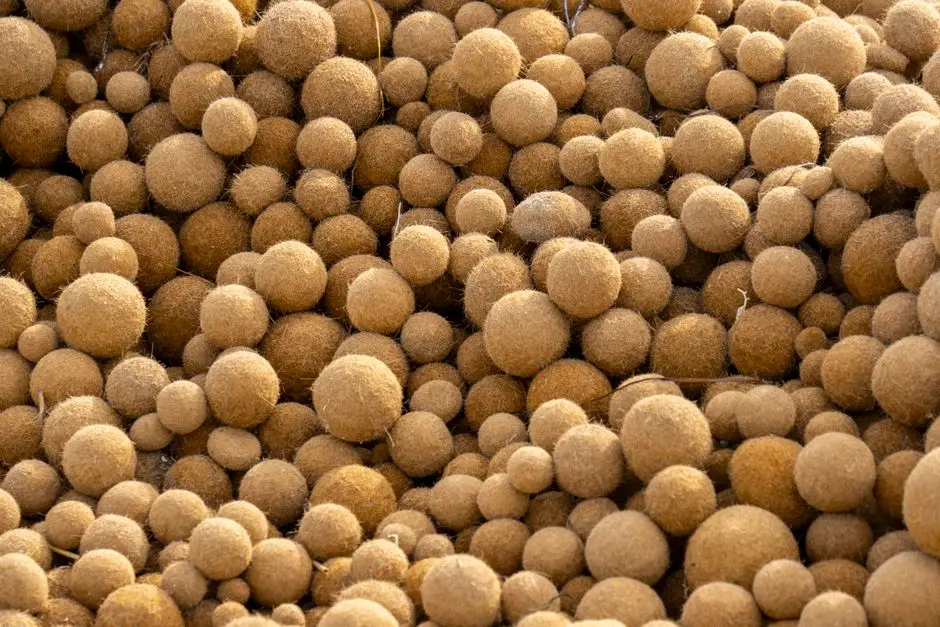
The 2019 Tanjungpura study tested FRESCO laundry wastewater in Kaldnes K1 at 20% fill, with 15-day seeding and treatment periods of 6, 8 and 10 days. Its results establish biological removal under that wastewater and reactor configuration; they do not establish a frozen-food performance guarantee.
| Parameter | 2019 Tanjungpura University result | Boundary for frozen-food use |
|---|---|---|
| COD | 910 mg/L to 56.3 mg/L; 93.81% reported effectiveness after 10 days | FRESCO laundry wastewater, Kaldnes K1, 20% fill and the stated reactor conditions. |
| BOD | 441 mg/L to 39.67 mg/L; 91% reported effectiveness after 10 days | Not a plant-specific frozen-food limit or final effluent guarantee. |
| Phosphate | 38.24 mg/L to 5.31 mg/L; 86.10% reported effectiveness | Requires comparison with the plant’s nutrient objective and wastewater composition. |
| Surfactant | 47.8 mg/L to 5.62 mg/L; 88.22% reported effectiveness | Applicable only if the frozen-food stream has comparable surfactant inputs and removal mechanisms. |
Laundry wastewater is not a frozen-food process stream. The tested surfactants, carboxymethyl cellulose, calcium, phosphate, silicate and bleach-related inputs differ from a plant’s product residues and cleaning chemicals. The study supports MBBR feasibility as a hypothesis and identifies variables for testing; it does not set reactor loading, fill fraction, hydraulic retention time or acceptance criteria.
Use the 2022 Applied Water Science figures cited by HydropureWater only as review context. The review describes 60–70% as a general efficacy range, 30–70% as an operating range and study-specific fractions from 20% through 70%. These figures are not frozen-food guarantees because the underlying studies covered municipal and industrial contexts.
The 2022 Environmental Engineering Research study on seafood wastewater supports further evaluation of a porous and hydrophilic PUF-PVA gel carrier. It does not establish that the same carrier is best for frozen-food washdown. Carrier selection still depends on actual wastewater constituents, mixing regime and reactor geometry. The broader MBBR process design for soluble food-industry organics provides context, but soluble food-industry organics are not automatically equivalent to frozen-food streams.
Choose MBBR, MBR or a Combined Treatment Train
MBBR and MBR share a biological treatment objective, but they separate solids in different ways. MBBR normally sends mixed liquor to a separate clarifier or solids filter. MBR combines biological treatment with submerged membrane filtration, adding integrated solids separation to the reactor package.
| Decision factor | MBBR route | MBR route |
|---|---|---|
| Biological treatment | Biomass retained on moving carriers; separate solids removal normally required | Biological treatment with submerged membrane solids separation |
| Space and structure | Can use a usable biological tank; separate solids-separation space is required | More compact equipment package, subject to site-specific design |
| Operational priorities | Operational flexibility with a separate downstream solids unit | Low suspended solids or reuse preparation where membrane obligations are justified |
| Main constraints | Clarification, sludge handling, carrier management and downstream filtration | Membrane capital, maintenance, energy and operational demands |
| Supplier evidence | Carrier, filling, aeration, reactor and separate solids-separation design | Hydraulic and organic loading, membrane configuration, controls and cleaning |
HydropureWater’s MBR product specification claims a footprint 60% smaller than conventional systems and a capacity range of 10–2,000 m³/day. These are MBR-specific commercial claims, not MBBR features and not universal site guarantees.
Compare the complete treatment train: equalization, DAF, biological treatment, downstream solids separation, sludge handling, controls, disinfection where required and reuse preparation. The 2026 DAF versus clarifier selection for food wastewater helps separate the physical-removal decision from the biological-route decision.
Choose MBBR when a usable biological tank is available, downstream solids removal can be provided separately and operational flexibility is the priority. Choose MBR when low suspended solids, compact equipment or reuse preparation justifies membrane capital, maintenance, energy and operating demands. Base the final decision on the permit or reuse objective, footprint, staffing, energy expectations and solids-handling constraints—not biological removal percentages alone.
Pilot, Commission and Set Acceptance Criteria
A meaningful MBBR pilot must reproduce the plant’s actual production, thawing washdown, product changeover and most demanding cleaning sequence. A homogenized laboratory sample can miss shock loads, pH excursions, solids carryover, cleaning chemistry and operational handling problems.
| Phase | Required action | Recorded evidence |
|---|---|---|
| Baseline characterization | Sample normal production, thawing, changeover and intensive cleaning | Flow, COD, BOD, TSS, FOG, pH, temperature, nutrients and cleaning-chemical records. |
| Pilot setup | Define carrier, fill fraction, reactor configuration, equalization, aeration and sampling method | Grab or composite basis, sampling duration, analytical methods and operating cases. |
| Startup | Wet carriers, seed biomass, increase loading gradually and adjust airflow | Carrier distribution, DO, airflow, pH, temperature and stabilization evidence. |
| Variable-load operation | Run representative peak and cleaning conditions | Organic removal, carrier accumulation, dead zones, biofilm condition and aeration demand. |
| Acceptance | Test against the site’s permit or reuse objective | BOD, COD, TSS, nutrients, FOG, pH and other relevant regulated constituents. |
| Solids acceptance | Verify the final solids-removal and sludge-handling route | Final effluent quality, solids quantity and handling, maintenance and downstream consequences. |
The supplied research does not establish a universal pilot duration. Require the supplier to state the sampling method, grab or composite basis, sampling duration and analytical methods, as well as when samples are collected and how startup is separated from stabilized operation.
Set acceptance criteria from the facility’s discharge permit or reuse objective. The test program should address BOD, COD, TSS, nutrients, FOG, pH and any regulated constituent relevant to the site. A published COD or BOD removal percentage cannot replace a site acceptance limit.
Commissioning should include carrier wetting, biofilm seeding, gradual loading, airflow adjustment, carrier-circulation checks and evidence of biological stabilization before formal testing. Verify that carriers remain distributed without accumulation, stagnant zones, excessive biofilm shear or repeated loss. Record aeration demand and downstream solids consequences under variable loads.
Include solids handling in acceptance. Evaluate a plate-frame filter press or high-efficiency sedimentation tank as part of the complete solids train. As HydropureWater’s 2026 guide states, successful biological treatment is not complete plant acceptance while solids handling or final effluent quality remains unresolved.
Questions to Put in the MBBR Equipment Specification
The equipment specification should require auditable design inputs rather than accept a generic biological removal percentage. Separate supplied data, supplier assumptions, exclusions and guarantees so that responsibility for each design stage is clear.
- What site data supports the design? Require a wastewater characterization report, production-flow ranges, concentration ranges, sampling records, cleaning-chemical inventory, permit or reuse criteria, and the proposed hydraulic and mass balance.
- What is the complete process route? Require a process drawing covering screening, equalization, pretreatment, MBBR zones, downstream solids separation, sludge handling, controls and bypass provisions, with flow and load assumptions for every unit.
- How is the MBBR engineered? Require carrier type, protected active surface area, proposed fill fraction, reactor calculation, mixing and aeration calculations, dissolved-oxygen strategy, expected energy demand, dead-zone controls and excess-biofilm management.
- Where are the performance boundaries? Require stated operating cases, pilot protocol, analytical methods, startup criteria and guarantees linked to representative frozen-food wastewater rather than unrelated laundry or dairy results.
- What is included commercially? Clarify commissioning, operator training, permit-acceptance responsibility, reference installations, maintenance intervals, spare-parts availability and civil-work exclusions. Confirm whether treatment parts, valves, filter media and replacement items are included rather than left as an undefined allowance.
Use the treatment parts, valves and filter media scope as a specific schedule within the offer. Do not allow a supplier to show a tank, blower and carrier price while leaving biological performance, solids separation or critical replacement items outside the commercial boundary.
Reference installations are useful only when their wastewater constituents, operating variability and treatment objectives resemble the frozen-food plant. Generic dairy or laundry performance is not a substitute for a site-specific pilot or engineering justification. Ask the supplier to identify which conclusions are measured results, which are design assumptions and which are subcontractor or civil-contractor responsibilities.
Frequently Asked Questions
How much does an MBBR system for frozen food wastewater cost?
The supplied research does not provide a defensible cost, flow or reactor-volume figure for an MBBR system for frozen food wastewater. Request a quote only after representative wastewater characterization, the production and cleaning mass balance, the discharge or reuse target, pretreatment requirements, downstream solids handling and site constraints are established. Then ask the supplier to itemize equipment, media, aeration, controls, pretreatment, solids separation, commissioning, civil work and exclusions so that the offers are comparable.
Can MBBR replace DAF and downstream clarification?
No. DAF can remove FOG, suspended solids and colloidal material before biology, while MBBR normally requires a separate clarifier or solids filter after the biological stage. Combining the units would also combine their solids-handling, maintenance and recovery requirements, so each should be specified around a defined duty.
What frozen-food wastewater data should a supplier request?
Request flow and production schedules, COD, BOD, TSS, FOG, pH, temperature, nutrients, cleaning chemicals, discharge or reuse criteria, and representative production and cleaning samples. The sampling plan should state its grab or composite basis, duration and analytical methods. Include the most demanding cleaning cycle because a single normal-production sample will not define the design envelope.
Is the 93.81% COD removal from the 2019 laundry study guaranteed for a frozen-food plant?
No. Tanjungpura University’s 2019 result used Kaldnes K1 at 20% fill for FRESCO laundry wastewater with 15-day seeding and 10-day treatment. It is analog evidence, not a frozen-food guarantee. Require a site pilot and contract based on representative production, washdown, changeover and cleaning effluent.
When is MBR more appropriate than MBBR?
MBR is more relevant when compactness, low suspended solids or reuse preparation outweigh membrane capital, maintenance, energy and operating demands. MBBR is more suitable when separate solids removal and a usable biological tank are acceptable. Make the selection from the permit or reuse objective, footprint, staffing, energy expectations and downstream solids-handling constraints.