Is MBBR Suitable for Canned Food Wastewater?
MBBR can be a biological treatment option for canned food wastewater when the flow is biodegradable, solids and FOG are controlled, and reactor loading is calculated from site-specific data. The best design is usually a treatment train: equalization, screening, DAF or another solids/FOG-removal step, biological MBBR treatment, and downstream solids separation. Published results show potential, but not canned-food guarantees. A 2019 study using Kaldnes K1 media at 20% fill reduced laundry wastewater COD from 910 mg/L to 56.3 mg/L and BOD from 441 mg/L to 39.67 mg/L after 10 days. Canned-food effluent must be characterized by stream, concentration, flow, pH, biodegradability and discharge or reuse target before equipment is sized.
An MBBR is a biological process in which microorganisms grow as a biofilm on moving plastic carriers while aeration keeps the carriers in motion. The biofilm provides a retained microbial population for degrading biodegradable organic matter and, where the configuration and nutrient balance support it, nutrients. The biological stage is not a substitute for screening, FOG removal, solids separation or disinfection.
For a canned-food plant, the feasibility condition is straightforward: the plant must be able to characterize its wastewater, control variable loading, provide suitable pretreatment and define the final discharge or reuse target. Fruit and vegetable residues, starches, sugars, fats, oils and sanitized cleaning discharges can change the mass and biodegradability of the load. The MBBR food-processing wastewater design guide makes the critical distinction: a published BOD or COD removal result establishes performance under that study’s conditions, not compliance with a food plant’s permit or reuse specification.
What Makes Canned Food Wastewater Different?
Canned food wastewater must be characterized by production stream and cleaning event because average flow can conceal the load that controls biological reactor design. Ordinary production wastewater may contain fruit and vegetable residues, starches, sugars, process water and other biodegradable organics. Concentrated washdown and intermittent cleaning streams can introduce fats, oils and grease, suspended solids, sanitizers or cleaning chemicals that are not equally biodegradable at the concentrations encountered.
Separate production wastewater from cleaning and sanitizing discharges before combining their flow and load data. For each line, batch, shift and cleaning event, request COD, BOD, flow, pH, suspended solids and FOG. A wastewater mass balance should then show what enters during normal production, during peak discharge, during concentrated washdown and during the plant’s selected design cleaning event. Average flow alone is not an adequate design input because it can understate both hydraulic and organic shocks.
The 2019 Tanjungpura University study is adjacent evidence, not a canned-food dataset. Its laundry stream contained surfactants, carboxymethyl cellulose, calcium, phosphate, silicate and bleach-related inputs. The researchers reported separate BOD, COD, phosphate and surfactant results under the tested conditions, so the study can help identify parameters for characterization while its removal percentages cannot be transferred directly to canned-food effluent.
| Data requirement | Why it controls the MBBR decision | Evidence or procurement action |
|---|---|---|
| Flow by source and event | Separates continuous production load from batch washdown and cleaning peaks. | Request production, batch, shift and cleaning-event records before calculating reactor loading. |
| COD and BOD profiles | Identifies biodegradable organic load and the effect of concentration variation. | Obtain samples across representative operating and cleaning conditions. |
| Suspended solids and FOG | Determines whether solids and grease removal must precede the biological stage. | Evaluate a solids/FOG removal step using measured wastewater characteristics. |
| pH and biodegradability | Defines biological operating conditions and treatment suitability. | Request pH history and a site-specific biodegradability assessment. |
Where labels, packaging fragments and fibrous debris are present, a rotary mechanical bar screen for food-processing wastewater may protect downstream equipment. Screening, however, does not remove dissolved organics or emulsified FOG; its duty should be defined from the plant’s material inventory and observed flow characteristics.
Build the Treatment Train Before Sizing the MBBR

The MBBR should be placed after source control, equalization and the physical pretreatment required by the measured wastewater. The biological reactor treats the load that remains after objectionable material and variability have been controlled. Its outlet is not automatically a low-solids effluent suitable for discharge or reuse.
- Source control and screening: Remove packaging, labels, plastic fragments, fibrous material and other debris before they enter the equalization system.
- Equalization: Measure, blend and buffer production and cleaning flows so hydraulic and organic peaks do not pass directly to biological treatment.
- Solids and FOG pretreatment: Evaluate DAF for suspended solids, FOG, oil and grease, and colloidal material when the characterization supports that duty. A DAF system for canned-food wastewater pretreatment is an option to evaluate, not a universal MBBR component.
- pH control where required: Adjust the wastewater to the conditions selected for the biological population before it enters the reactor.
- MBBR biological treatment: Provide the carrier inventory, aeration, zoning, recirculation and biofilm controls needed for the calculated load and treatment objective.
- Downstream solids separation: Add a solids-separation stage when the discharge or reuse target requires low suspended solids.
- Disinfection or reuse steps: Include further treatment where the final specification requires it.
WWDMag identifies four principal MBBR components: the basin, plastic media, aeration grid and sieve. The aeration grid keeps media moving and supplies oxygen; the sieve retains carriers while water passes through. Anoxic zones can also support denitrification in suitable configurations, with mechanical mixing used where carrier distribution requires it. These components should be arranged around the required aerobic and anoxic treatment zones rather than added as an unstructured single basin.
| Process position | Primary function | Design basis |
|---|---|---|
| Screening and source control | Remove visible solids and protect downstream equipment. | Material inventory, flow profile and observed debris. |
| Equalization | Buffer hydraulic and organic variability. | Average, peak and selected cleaning-event loads. |
| FOG and solids pretreatment | Reduce material that can impair biological treatment. | Suspended-solids, FOG and colloidal characterization. |
| pH control | Protect the selected biological process. | pH range and chemical-dosing demand. |
| MBBR | Remove biodegradable organics and selected nutrients. | Load, HRT, media area, aeration and target. |
| Downstream solids separation | Meet outlet suspended-solids requirements. | Effluent specification and solids handling route. |
Where pH correction requires chemical addition, the automatic chemical dosing system should be selected from measured demand, control requirements and operator capability—not from the presence of pH adjustment alone.
MBBR Design Parameters for a Canned Food Plant
MBBR sizing begins with a wastewater mass balance covering average and peak flow, batch and cleaning-event profiles, COD and BOD loads, suspended solids, FOG, pH, biodegradability indicators, nutrient balance, temperature, the final discharge or reuse target and available footprint. Concentration alone does not define reactor loading; the supplier must calculate mass load for the relevant operating cases.
The 2019 Tanjungpura University study provides a scoped reference: Kaldnes K1 media, 20% media fill, 15 days of biofilm seeding and treatment at 6, 8 and 10 days. The best reported results occurred on day 10. Those conditions describe that laundry-wastewater study and cannot be used as a canned-food prescription.
Media fill is a calculated variable. WWDMag states that an MBBR basin is generally filled 50–70% with media, while the 2026 food-processing MBBR guide reports 30–50% polypropylene-tank filling as a successful dairy-specific observation. Neither range is a canned-food default. The selected fill must reflect carrier geometry, mixing, oxygen transfer, biofilm accumulation and the required loading.
WWDMag gives an MBBR length-to-width ratio of 0.5:1 to 1.5:1 and notes that ratios above 1.5:1 can cause non-uniform carrier distribution and poorer oxygen transfer. The same source reports materially different COD removal at different hydraulic retention times: 54% COD removal and 96% total-phosphorus removal at 24 hours, close to 50% COD removal at 4.9 hours, and 32% COD removal at 1.6 hours. HRT must therefore be calculated for the plant’s load and target, not copied from one of these examples.
| Parameter | Evidence available | Project decision |
|---|---|---|
| Media and fill | 20% Kaldnes K1 fill in the 2019 laundry study; general 50–70% basin filling described by WWDMag; 30–50% dairy-tank filling reported in the 2026 food-processing guide. | Select and calculate from carrier area, texture, mixing, oxygen transfer and loading. |
| Basin geometry | WWDMag length-to-width range of 0.5:1 to 1.5:1. | Validate carrier distribution and oxygen transfer in the final configuration. |
| HRT | WWDMag examples report 54%, close to 50% and 32% COD removal at 24, 4.9 and 1.6 hours, respectively. | Calculate for the actual load and effluent objective; do not transfer percentages directly. |
| Carrier engineering | The 2022 seafood study used a PUF-PVA gel carrier with 3.4 m²/g specific surface area, 10–40 μm pores and a hydrophilic surface. | Evaluate texture, wettability, usable area and adhesion under site conditions. |
The 2022 seafood study is useful for media selection because it linked carrier structure to faster immersion and microbial adhesion, but it does not establish canned-food performance. The final reactor must also address carrier area, texture and wettability, media zoning, aeration, recirculation and the accumulated solids inventory. If the target requires very low suspended solids, compare this biological stage with an integrated MBR integrated wastewater treatment route or provide dedicated solids separation, such as a plate-and-frame filter press for the resulting solids stream.
What Published Performance Studies Actually Prove?
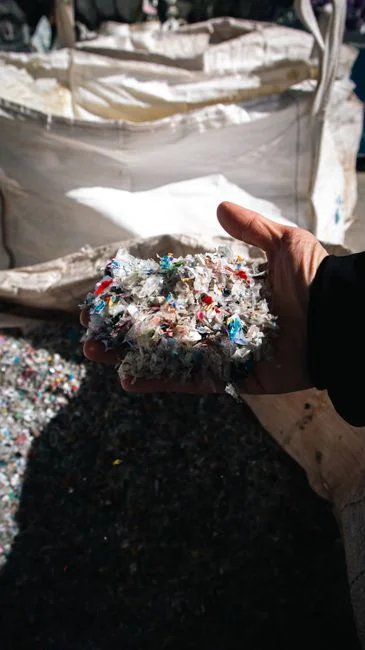
The 2019 Tanjungpura University laundry study proves that MBBR can reduce biodegradable organics and measured surfactants under its tested conditions; it does not prove a comparable result for canned-food wastewater. The reactor used Kaldnes K1 media at 20% fill, 15 days of seeding and treatment at 6, 8 and 10 days.
On day 10, the study reported COD decreasing from 910 mg/L to 56.3 mg/L with 93.81% effectiveness. BOD decreased from 441 mg/L to 39.67 mg/L with 91% effectiveness. Phosphate decreased from 38.24 mg/L to 5.31 mg/L with 86.10% effectiveness, while surfactant decreased from 47.8 mg/L to 5.62 mg/L with 88.22% effectiveness. These results are bounded by the laundry wastewater, reactor configuration and operating conditions tested in 2019.
The 2022 seafood-wastewater study demonstrates why carrier engineering matters. Its PUF-PVA gel carrier had a specific surface area of 3.4 m²/g, pores of 10–40 μm and a hydrophilic surface, which supported faster immersion and microbial adhesion. That material finding does not transfer the treatment performance to fruit, vegetable or canned-food effluent.
Most importantly, percentage removal is not the same as a compliance prediction. A reported 93.81% COD reduction says nothing by itself about the final concentration at a plant, the fate of FOG or solids, nutrient limits, disinfection, reuse quality or permit compliance. Those outcomes depend on influent variability, pretreatment, hydraulic design, aeration, solids separation and the applicable specification.
| Published result | Tested scope | Correct procurement interpretation |
|---|---|---|
| COD: 910 mg/L to 56.3 mg/L; 93.81% effectiveness. | 2019 laundry wastewater; Kaldnes K1; 20% fill; day 10. | Evidence of biological potential under tested conditions, not a canned-food guarantee. |
| BOD: 441 mg/L to 39.67 mg/L; 91% effectiveness. | Same laundry study and reactor conditions. | Use as a reference point for testing, not as a design load. |
| Phosphate: 38.24 mg/L to 5.31 mg/L; 86.10% effectiveness. | Same laundry study. | Nutrient removal depends on feed composition and reactor zoning. |
| Surfactant: 47.8 mg/L to 5.62 mg/L; 88.22% effectiveness. | Same laundry study. | Does not establish removal of cleaning chemicals from canned-food wastewater. |
The supplied research contains no canned-food-specific MBBR dataset and no universal reactor-loading rule. A pilot test using representative wastewater remains necessary. The MBBR design for fruit and vegetable processing wastewater can help frame adjacent process questions, but it cannot close the site-specific evidence gap by itself.
MBBR or Alternative Biological Treatment?
Choose the biological route that meets the specified effluent within the available footprint, operating capability and pretreatment constraints. MBBR is a strong candidate when compact biological treatment, carrier retention, resistance to shock loading and a low-sludge fixed-film approach are priorities. These are process characteristics, not proof that every MBBR configuration will handle every canned-food discharge.
Compare MBBR with activated sludge when adequate land is available, operators already understand the process, or existing infrastructure can be modified more economically. The 2026 food-processing wastewater assessment states that MBBR can require less space than conventional activated sludge for the same treatment capacity and may be adapted to an existing activated-sludge structure. That comparison still requires site-specific design and confirmation of the available footprint, utilities and operating arrangements.
Compare MBBR with MBR when the required outlet calls for integrated biological treatment and very low suspended solids. An MBBR retains biomass on moving carriers; it does not itself provide membrane solids separation. Without an appropriate downstream solids-removal step, MBBR outlet quality may not satisfy the required specification.
| Selection question | Favors MBBR | Favors an alternative |
|---|---|---|
| What is the principal biological objective? | Biodegradable organics and selected nutrients in a compact fixed-film system. | Activated sludge when an established process and suitable land are available. |
| What is the required solids quality? | MBBR with separately engineered solids separation. | MBR when integrated treatment and very low suspended solids are required. |
| What operating model fits the plant? | Operators able to manage carrier, aeration and biofilm controls. | An existing process may reduce transition and training burden. |
| Does the site constrain footprint? | MBBR can be advantageous where compact treatment is needed. | Activated sludge may be acceptable where land and civil works are less restrictive. |
Do not select the route with the highest published percentage. The governing comparison is the guaranteed, testable effluent specification under representative loads, including cleaning events, within the plant’s physical and operational constraints.
From Characterization to Equipment Selection
- Map every source: Record flow, COD, BOD, suspended solids, FOG, pH and relevant operating conditions during production and cleaning cycles. Identify the wastewater routing before and after any equalization.
- Establish the receiving requirement: Define the discharge, sewer or reuse specification, including suspended solids, nutrients, dissolved solids and disinfection where applicable. Identify which requirements need additional treatment or reactor zoning.
- Complete the mass balance: Calculate hydraulic and pollutant loads for average, peak and selected design conditions. Request the supplier’s calculation for each case rather than accepting a generic tank-volume rule.
- Validate with representative wastewater: Pilot-test or otherwise validate the selected media, seeding strategy, HRT, aeration, pH adjustment and load tolerance using production and cleaning wastewater that represent the intended design envelope.
- Compare supplier proposals consistently: Review skid dimensions, utilities, media quantity, aeration demand, controls, maintainability, downstream solids handling and operator training requirements.
- Write enforceable acceptance criteria: Define influent and effluent sampling conditions, test methods, duration, limitations, remedies and remedial obligations in the purchase specification.
The mass balance should connect source data to reactor loading and then to treatment performance. A supplier should be able to explain how average flow, peak flow, batch concentration and cleaning-event loads affect HRT, media inventory, aeration and equalization. If the proposal supplies only equipment volume, it has not demonstrated a site-specific design.
For pretreatment comparisons, the DAF versus clarifier for food and beverage wastewater guide provides a useful framework for reviewing solids removal. The separate food and beverage plant sewer-limit guide reinforces the need to connect treatment decisions with the receiving requirement rather than treating laboratory removal percentages as regulatory compliance.
Before purchase, require a process calculation package, media and aeration basis, control narrative, utilities estimate, maintainability information, solids-handling plan, commissioning protocol and performance-test method. A commercial offer should be evaluated against those deliverables and the agreed operating cases, not headline capacity alone.
Frequently Asked Questions
What inputs does a supplier need to size an MBBR for a canned food plant?
The supplier needs average and peak flow, batch and cleaning-event profiles, COD and BOD concentrations and loads, suspended solids, FOG, pH, biodegradability information, nutrient balance, temperature, the final discharge or reuse target, and site constraints. No supplied source supports a universal tank size. The equipment should therefore be sized from the plant’s wastewater mass balance and the supplier’s calculations for each design case.
How should a buyer compare MBBR suppliers?
Compare the process calculation, evidence boundaries, media selection, aeration design, controls, maintainability, utilities, downstream solids handling, commissioning support and performance-test method. A supplier should identify which project data support its design and where assumptions remain. Equipment capacity stated without a load calculation is not a sufficient basis for selection.
Does demonstrated MBBR removal guarantee permit compliance or reuse quality?
No. The 2026 food-processing MBBR guide states that demonstrated BOD or COD removal establishes biological performance within a study; it does not establish that final effluent meets a food plant’s discharge permit or reuse specification. Compliance depends on the applicable requirement, representative influent, complete treatment train and verified operating performance.
What should be defined before a representative pilot test begins?
Define the wastewater sources included, production and cleaning conditions, sampling points and frequencies, analytical methods, reactor configuration, media, seeding, aeration, pH control, operating duration and acceptance criteria before testing. The pilot must use representative wastewater because the 2019 laundry study and the 2022 seafood study were bounded by different feeds, carriers and reactor conditions.
How much should an MBBR system cost for canned food wastewater?
The supplied research provides no quotation or cost basis for a canned-food MBBR installation, so a defensible price cannot be stated. Request itemized quotations based on the agreed flow and load cases, reactor and media configuration, pretreatment scope, aeration and utilities, controls, solids handling, civil works, commissioning, performance testing and operator training. Compare bids against the same technical scope so that differences in included equipment and performance obligations remain visible.