Start With the Receiving Authority and Applicable Rules
A mining or metals operation near Hobbs can comply with sewer pretreatment limits by identifying the applicable EPA categorical rules, obtaining the receiving POTW’s industrial user permit and local limits, and demonstrating that representative wastewater can meet every applicable condition before discharge. A defensible design normally follows source control and equalization, pH adjustment, coagulation/flocculation, clarification, filtration, and sludge dewatering, with UF added when the limit or reuse target requires additional solids separation. EPA explains that local limits protect the POTW, its sludge, and receiving waters and must address pass-through and interference. The final equipment scope should therefore be based on local POTW requirements, waste-characterization data, treatability testing, and the applicable categorical standard—not generic mining-water assumptions.
The discharge route determines which documents control. A sewer connection to a POTW is an indirect discharge governed by the POTW’s pretreatment program and the operator’s industrial user permit or equivalent control mechanism. A direct surface-water discharge or stormwater outfall may instead require an NPDES permit and separate stormwater controls. These pathways can coexist at one site, but a general treatment guide cannot substitute for the permit attached to each route.
Before selecting equipment, assemble the current industrial user permit, POTW sewer-use or pretreatment limits, applicable EPA categorical standard and subcategory, NPDES permit for any direct or stormwater discharge, and recent monitoring and discharge data. The EPA’s pretreatment guidance identifies NPDES conditions, water-quality criteria, sludge-quality standards, air-quality criteria, resource-protection criteria, treatment-plant interference and worker-safety prohibitions, and evaluations of industrial and commercial discharges among the sources used to determine pollutants of concern. That is a verification framework, not a substitute for the receiving authority’s current documents.
| Document or rule | What it establishes | Action before design |
|---|---|---|
| Industrial user permit or equivalent POTW control mechanism | Site-specific authorization, monitoring, reporting, and enforceable discharge conditions | Obtain the current issued version and renewal status. |
| POTW local limits and sewer-use requirements | Receiving-system requirements, including protection against pass-through and interference | Request written limits, averaging basis, sampling point, and surcharge rules. |
| EPA categorical pretreatment standard | Federal discharge limitations and prohibitions for the confirmed subcategory | Confirm the operation and subcategory; do not borrow a neighboring site’s classification. |
| NPDES permit | Requirements for direct or stormwater discharges, where applicable | Separate these conditions from sewer pretreatment requirements. |
| 40 CFR Parts 430, 433, 434, and 437 | Verification map for metal mining, metal finishing, coal mining, and ore mining or dressing | Use only after confirming that the part and subcategory actually apply. |
EPA’s Local Limits Development Guidance, published 2021-06-25, expressly states that it is guidance rather than a regulation and that permits or regulations control when there is a conflict. The same document explains that indirect discharger obligations are determined by POTW industrial-user permits or equivalent control mechanisms and regulatory requirements. The mining plant sewer pretreatment compliance workflow provides a useful document-first model, but the receiving authority’s Hobbs-area requirements remain controlling.
Build the Compliance Basis from Real Wastewater Data
Each permit condition must become a measurable design input: pH, flow, TSS, individual metals, oil and grease, toxicity or inhibition indicators, monitoring frequency, averaging period, and discharge point. EPA’s 2021-06-25 guidance places the same emphasis on data quality, analytical methods, and flow data, so a proposal based only on an average flow and a single metals result is not a defensible basis for equipment sizing.
Build an industrial wastewater characterization program around representative operating conditions. Sample at the industrial-user discharge point, in the collection system where applicable, and at the POTW where the approval process requires it. Pair flow records with laboratory data and analytical-method quality control. EPA’s guidance identifies sampling at POTWs, in the collection system, and at industrial users as distinct locations for developing local limits; that same discipline prevents a clean downstream sample from masking a concentrated slug upstream.
| Permit or process condition | Required design input | Evidence the buyer should require |
|---|---|---|
| pH limit | Raw pH, control range, response time, and required alarm setpoints | Representative pH record and chemical-response test |
| Metal limits | Total and dissolved metals by stream, with treatment-stage targets | Analytical data, detection limits, sampling method, and laboratory split results |
| TSS and turbidity | Solids generation, settling or flotation behavior, and filter loading | Batch, pilot, and continuous flow data |
| Flow and monitoring basis | Average flow, peak flow, slug frequency, sampling point, and averaging period | Validated flow records and the POTW’s written monitoring basis |
| Prohibited or surcharge conditions | Oil and grease, FOG, toxicity or inhibition, and chemical compatibility | Current POTW rules and representative analytical results |
The maximum allowable headworks loading concept links permissible industrial loading to the receiving POTW’s treatment and disposal capacity. EPA’s 2021-06-25 guidance organizes its derivation around four evidence paths: effluent quality, sludge quality, inhibition, and air quality. No Hobbs numerical loading can be calculated from the supplied research alone. The engineer must request the POTW’s applicable local limits, flow basis, pollutant profile, and headworks or industrial-loading allocation before assigning a design capacity.
For batch discharges, do not blend every stream into one generic average. Segregate contact water, washdown, process water, and slug loads. Then evaluate equalization and segregation so a short campaign peak is captured and released within the permitted operating envelope, rather than allowing an uncontrolled slug to exceed a local limit or defeating the whole design through conservative peak dilution. The current POTW local limits and categorical limits must be obtained directly; limits published for other regions are not Hobbs requirements.
The mining and metals wastewater compliance guide provides another comparative workflow, but the buyer should retain the local permit, approved sampling plan, and signed design basis as the controlling procurement documents.
Treat the Metal-Bearing Stream in Process Order
Dissolved metals must be converted into removable particles before clarification or filtration can deliver a defensible result. Start with source segregation, equalization, and pH control, then evaluate metal hydroxide precipitation and coagulation/flocculation. Jar tests should establish the chemistry, dose range, solids settleability, and effect on final pH before the full process is scaled.
After precipitation, coagulation and flocculation should create particles suitable for separation. Clarification then removes settled or floated metal-bearing solids. A PLC-controlled pH and coagulation dosing skid is relevant where chemical feed, interlocks, and recorded dose data are required, but the dose setpoint must come from site chemistry rather than a generic mining assumption.
| Process stage | Primary function | Selection condition | Design caution |
|---|---|---|---|
| Source control and equalization | Prevents uncontrolled concentrations and smooths batch releases | Required when stream composition or discharge timing varies materially | Equalization cannot correct incompatible chemistry or omitted source control. |
| pH adjustment and precipitation | Supports metal hydroxide formation and downstream dosing | Representative wastewater shows dissolved metals requiring removal | Confirm chemical demand, residual anion effects, and sludge generation. |
| Coagulation and flocculation | Forms particles that can be separated | Metal-bearing solids, colloids, or emulsions are present | Preserve floc integrity with appropriate mixing and hydraulic design. |
| DAF clarification | Removes floated and settled solids | Oil, grease, FOG, or fine colloidal material is present | Provide reliable float and sludge removal, including upset conditions. |
| Lamella clarification | Separates dense metal-hydroxide flocs in inclined plates | Dense flocs and footprint are controlling issues | Confirm sludge blanket removal and inlet distribution. |
| Multi-media filtration | Polishes residual solids, turbidity, and colloids | A lower-bound solids or turbidity target remains | Specify backwash and filtrate-disposal strategy. |
| UF polishing | Adds a tighter membrane barrier | The verified discharge or reuse target requires more separation | Confirm feed quality, cleaning, redundancy, and filtrate use. |
DAF is the stronger candidate when the wastewater carries oil, grease, FOG, or fine colloidal material. The cited 2026 HydropureWater equipment data state that its DAF systems cover 4–300 m³/h across 13 standard models and use micro-bubble flotation with automatic skimming. A DAF system for oil, colloids, and metal-bearing solids should therefore be evaluated against the waste character, not selected merely because it occupies less space than a settler.
A lamella clarifier is more defensible when dense metal-hydroxide flocs and available footprint control the design. The cataloged design in the supplied research uses 20–40 m/h surface loading and combines sludge recirculation, flocculation, and inclined-plate separation. Multi-media filtration can then polish residual suspended solids, turbidity, and colloids; automated backwash makes it suitable as a polishing and RO-protection stage.
UF is conditional, not automatic. The supplied 2026 product data identify 2,000–40,000 L/h capacity, 0.03-micron PVDF hollow-fiber membranes, automatic backwash and air scour, and feed turbidity up to 300 ppm. Those are equipment attributes, not a demonstrated Hobbs discharge guarantee. Add UF only where the verified limit or reuse objective cannot be met by the selected filtration process, and validate the sequence through jar and pilot testing.
Control the Sludge Before the Treatment Train Is Approved
Treatment approval must include the solids the process creates. pH-adjustment chemicals, coagulant and flocculant residuals, clarifier underflow, DAF float, filter backwash, and UF backwash all contribute to sludge mass, water content, metal content, and disposal demand. Calculating only clarifier underflow can leave a major solids-handling gap in the proposal.
A plate-and-frame filter press can separate metal-bearing sludge and return filtrate to the process when chemistry and local rules permit that route. The supplied HydropureWater product information lists filtration areas from 1 m² to 500 m², with manual, hydraulic, or fully automatic PLC-controlled operation. The plate-and-frame filter press for metal-bearing sludge should be scoped from solids characterization rather than selected by sludge volume alone.
Require the vendor to identify the expected source of each sludge stream, dry-solids production, metal and chemical residual content, operating campaign, cycle frequency, plate-area basis, filtrate quantity and quality, cleanout method, chemical-handling arrangement, and final disposal pathway. A proposal that returns filtrate to equalization must also demonstrate that dissolved chemical and metal concentrations do not accumulate and create a new compliance problem.
Press area, cycle design, and redundancy depend on the combined generation rate, metal content, flow variability, and operating schedule. If one press is unavailable during a campaign, the system may need equalization capacity, standby equipment, or a documented shutdown and disposal plan. Confirm these operating consequences with the POTW and sludge-disposal authority before approving the treatment train.
Choose Equipment Against Compliance Risk and Operating Reality
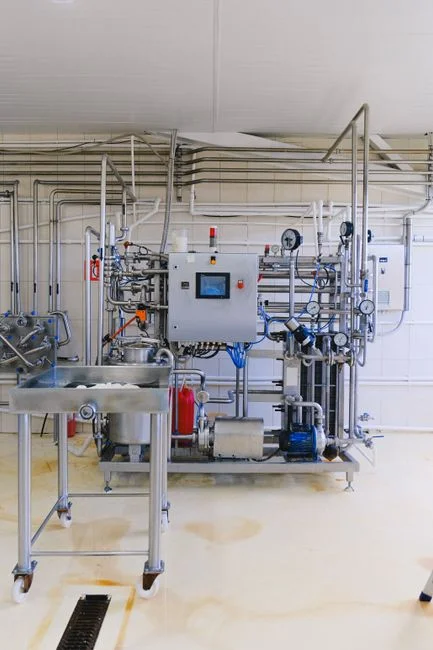
Comparable bids must state the same compliance basis. Require each bidder to identify the governing POTW limit, applicable categorical standard, averaging basis, assumed influent envelope, peak-flow basis, target treated-water quality, and proposed margin. A bid based on a generic “mining wastewater” envelope cannot be evaluated against a Hobbs permit condition.
Compare clarification by wastewater character. DAF is generally more appropriate when oil, grease, FOG, or fine colloids drive separation. Lamella is generally more appropriate when dense metal-hydroxide flocs and footprint are controlling. The comparison of DAF and clarifiers for mining wastewater provides a useful decision framework, but the final choice should follow the representative wastewater and pilot results.
Compare filtration by the required output. Multi-media filtration addresses residual solids, turbidity, and colloids. A multi-media polishing filter may be sufficient if representative testing demonstrates that it satisfies the verified requirement. A UF system for tighter solids separation should be justified where the discharge or reuse target requires a tighter barrier.
| Proposal item | Acceptable written response | Rejection warning |
|---|---|---|
| Compliance basis | Cites the current POTW authorization, local limit, categorical standard, and averaging basis | Generic regulatory narrative with no controlling local values |
| Influent design envelope | States measured ranges, sampling method, flow basis, and representative campaigns | Unsubstantiated average or peak flow |
| Process sequence | Names every stage, its purpose, and the contaminant it removes | Equipment list with no hydraulic or chemical basis |
| Controls | Defines interlocks, alarms, chemical-feed capacity, data logging, and manual fallback | “PLC controlled” without functional detail |
| Solids handling | Quantifies sludge sources, dewatering, filtrate route, cleanout, and disposal | Solids generation excluded from the scope |
| Commissioning | Defines test wastewater, sample points, analytical methods, averaging, and acceptance criteria | Acceptance based only on equipment startup |
| Capacity allocation | Explains assumptions for uncontrolled sources, hauled waste, safety factor, and growth | Installed capacity has no stated basis |
EPA’s 2021-06-25 guidance treats uncontrolled sources, hauled waste, safety factor, and expansion or growth allowance as explicit allocation questions. Ask every bidder to state how each is reflected in installed capacity. Compare lifecycle issues as well: chemical capacity, solids-handling availability, backwash and cleanout strategy, maintenance access, operator training, spare-part support, and treated-water or filtrate disposition.
Make the site acceptance test part of the purchase package. Use representative wastewater and written performance criteria tied to the POTW authorization and applicable categorical standard. If the supplier cannot state the governing limit, averaging period, analytical method, test duration, and disposition of nonconforming results, the proposal is not yet comparable.
Commission and Verify Before the First Sewer Discharge
Commissioning converts the design basis into an auditable operating history. Before introducing the full wastewater envelope, complete dry-run, chemical-calibration, hydraulic, and control checks. Verify that alarms, interlocks, fail-safe responses, chemical delivery, sludge withdrawal, filtrate return, and backwash or cleanout functions operate as specified.
Run a representative performance test with agreed sampling points, analytical methods, averaging periods, and acceptance criteria. Compare results directly with the POTW authorization and applicable categorical standard. A startup sample from clean water does not demonstrate treatment of the metal-bearing stream, and a single spot sample does not establish compliance under a monitoring basis that requires a different averaging period.
Establish operator logs for pH, flow, chemical dose, clarifier and DAF performance, filter differential pressure or turbidity, UF backwash, sludge volume, and filtrate return. Define operating responses to pH excursions, metal exceedances, high TSS, hydraulic surges, chemical-delivery failure, and solids-handling stoppage. Those responses should identify when to divert, stop discharge, switch redundancy, or notify the receiving authority.
Retain influent and treated-effluent results, calibration records, maintenance history, chemical-use records, and sludge-disposal documentation. The DAF system design parameters for 2026 can support equipment-level commissioning review, but the final compliance test remains the one written against the site’s controlling permit documents.
Frequently Asked Questions
What is the minimum information needed to size a mining wastewater treatment system for sewer discharge near Hobbs?
Obtain the current POTW industrial user permit and local limits, the confirmed EPA categorical rule and subcategory, representative industrial wastewater characterization, validated flow data, and the required monitoring and averaging basis. The equipment proposal should also state how batch slugs, hauled waste, and future growth are included. Without these inputs, request a qualification basis rather than accepting a fixed price or capacity.
When is DAF better than a lamella clarifier for a mining or metals wastewater train?
Use DAF when oil, grease, FOG, or fine colloidal material is a principal separation problem, particularly where those contaminants interfere with reliable settling. Use lamella clarification when dense metal-hydroxide flocs are the dominant solids and footprint is constrained. Confirm the decision with representative wastewater because mixed streams can require both characteristics to be addressed.
Is UF necessary before sewer discharge?
UF is necessary only if the verified POTW limit or treated-water target requires separation beyond what the selected multi-media filtration can demonstrate. Mining status alone does not require UF. Request feed-turbidity data, expected chemical cleaning demand, redundancy, filtrate disposition, and a performance test before adding membrane capacity.
How should a buyer compare treatment vendors near Hobbs?
Require permit-specific assumptions, named process stages, stated product capacity, controls and chemical-feed scope, sludge handling, commissioning tests, maintenance support, and written acceptance criteria. Also request the inputs behind price: flow envelope, analytical basis, metals profile, civil works, chemical supply, disposal, and staged-installation options. The supplied research contains no defensible Hobbs quotation, so the buyer should request these inputs itemized before comparing budget.
What is the main compliance risk when a plant sends wastewater to a municipal sewer?
The main risk is designing to the wrong authority or the wrong limit. A direct-discharge NPDES permit or generic mining treatment guide does not replace the POTW’s industrial user permit and local limits. EPA’s 2021-06-25 guidance states that permits or regulations control over guidance, so the receiving authority’s current written requirements must govern the sewer-discharge decision.