Start with the permit that controls the discharge point
Mining and metals plants near Brown Hollow meet pretreatment limits by controlling nondomestic wastewater before discharge to a POTW under an industrial permit derived from CWA §307(b), 40 CFR Part 403, applicable categorical standards, and the control authority’s sewer-use ordinance. The plant first characterizes metals, pH, TSS, oil and grease, flow variability, and arsenic, then sizes equalization, chemical precipitation, DAF or lamella clarification, filtration, and—when justified—UF. Equipment must be designed for the peak 2-hour flow with 20–30% turndown and verified against confirmed local monthly-average limits. Direct surface-water or stormwater outfalls may require separate CWA §402 authorization.
The EPA’s National Pretreatment Program requires nondomestic dischargers introducing pollutants to POTWs to comply with pretreatment standards. POTWs also have responsibilities to protect their treatment infrastructure, while EPA, state pretreatment programs, and local authorities operate the national framework (US EPA, National Pretreatment Program Overview, current 2026).
| Pathway or category | What it controls | Status for Brown Hollow procurement |
|---|---|---|
| POTW sewer connection | Industrial pretreatment permit, local sewer limits, and applicable categorical pretreatment standards | Confirm with the control authority |
| Direct surface-water or stormwater outfall | Separate CWA §402/NPDES authorization may be required | Confirm discharge point; do not combine with sewer permit |
| 40 CFR Part 430 | Metal mining categorical standards | Determine applicability from process and current rule |
| 40 CFR Part 434 | Coal mining categorical standards | Determine applicability from process and current rule |
| 40 CFR Part 437 | Ore mining and dressing, including subcategories at §§437.40–437.47 | Confirm subcategory and limits |
| 40 CFR Part 433 | Metal finishing where plating, pickling, or anodizing is co-located | Confirm applicability |
Request four documents before writing the design basis: the current sewer-use ordinance, industrial discharge permit, representative wastewater characterization, and the control authority’s categorical-standard determination. Do not infer Brown Hollow requirements from national summaries. This article uses four labels: confirmed requirement, applicable federal standard, typical screening value, and to be verified. Regional examples of a regional mining wastewater pretreatment workflow and the mining plant sewer-limit compliance approach can guide document collection, but they do not establish local limits.
Build the wastewater profile around worst-case metal loads
The treatment design must be based on measured worst-case mass and hydraulic loads, not a generic POTW envelope. Request representative and peak-period sampling for pH, TSS, total iron, manganese, copper, lead, zinc, arsenic, chromium, ammonia, oil and grease, and flow. Each record should identify the process origin, sample time, and analytical method; otherwise a batch slug cannot be assigned a reliable treatment duty.
Keep continuous drainage separate from equipment washdown, truck wash, contact water, dump-leach discharges, mill clean-outs, and any co-located plating, pickling, or anodizing streams. Their pollutant distributions and permit treatment may differ. The design also needs the seasonal flow history, maximum batch volume, maximum discharge rate, minimum flow, and any reuse demand.
| Parameter | Typical screening reference | Design status |
|---|---|---|
| pH | 6.0–10.0; often 6.5–9.0 | Not a confirmed Brown Hollow limit |
| TSS | 250–500 mg/L or lower | Not a confirmed Brown Hollow limit |
| Total arsenic | 0.5 mg/L | Not a confirmed Brown Hollow limit |
| Total iron and manganese | 5–10 mg/L each | Not a confirmed Brown Hollow limit |
| Oil and grease | 100 mg/L | Not a confirmed Brown Hollow limit |
These are typical screening values reported in the Halo, US pretreatment reference, current 2026—not confirmed Brown Hollow requirements. If co-located metal finishing is relevant, 40 CFR §433.15 provides copper limits of 3.38 mg/L daily maximum and 2.07 mg/L monthly average, and total chromium limits of 2.77 mg/L daily maximum and 1.71 mg/L monthly average in the Halo reference, current 2026. Confirm the actual subcategory, current rule text, and local limits before using them.
Define the hydraulic basis as the peak 2-hour flow with 20–30% turndown, as specified in the Halo reference, current 2026. Treat batch discharges as a separate design case: storage, controlled release, and treatment must prevent a short slug from setting the monthly-average compliance result. Use the DAF versus clarifier selection for mining wastewater when translating this measured profile into clarification duties.
Equalize the load before treating metals
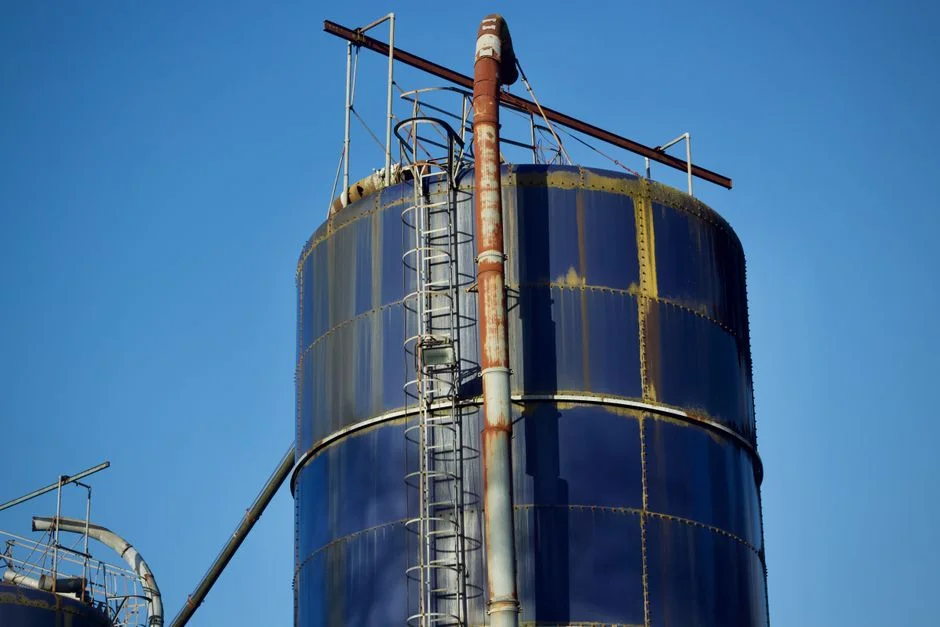
Equalization should precede chemical dosing so dump-leach cycles, shift changes, mill clean-outs, and washdown do not deliver untreated metal slugs to the treatment train. The required tank duty is a mass-balance result: batch volume, maximum discharge rate, treatment hydraulic capacity, storage turndown, and confirmed concentration and mass limits all affect the answer.
The Halo reference cites two planning references. One sizes equalization for batch-discharged streams at 8–24 hours of average daily flow; another identifies 20–30 minutes of holding before a downstream stage to smooth feed variability. These are planning references, current 2026, not universal holding times. A short buffer can smooth routine variation; it will not necessarily contain a complete mill clean-out or dump-leach batch.
Specify controlled discharge through a dedicated pump or controlled-valve system, with high-level and batch-release alarms. Define how accumulated wastewater is held, how off-specification flow is diverted, and how operators verify that no release violates the permit or local monthly-average requirement. A PLC-controlled pH and coagulation dosing skid should receive a smoothed feed, but automatic dosing does not replace adequate holding volume.
Remove dissolved metals with controlled precipitation
Preliminary treatment commonly uses pH-controlled hydroxide precipitation with lime or caustic to precipitate dissolved iron, manganese, arsenic, and other metals, followed by solids separation. The Halo reference reports 85–95% total-metals removal in operating mining and metals installations (Fluence, 2024-11, as cited in that reference, current 2026). Whether that performance closes the gap to the confirmed permit depends on feed concentration and residual target.
The same reference gives a precipitation setpoint of approximately 8.5–9.0 when lead and arsenic are present, followed by adjustment to 7.0–8.0 for discharge. These are process settings, not Brown Hollow discharge limits. The operating sequence requires an inline pH probe, PLC-controlled reagent addition, chemical storage, and a treatment-chemistry supplier’s confirmed operating envelope.
| Process condition | Applicable process | Engineering consequence |
|---|---|---|
| General dissolved metals and permissible residual | Hydroxide precipitation with lime or caustic | Use measured removal performance to determine whether polishing is needed |
| Residual target below 0.1 mg/L | Sulfide precipitation using NaHS, FeS, or Na₂S | Budget for higher reagent cost, sealed reactors, and scrubbed H₂S vents |
| Arsenic present predominantly as As(III) | Oxidation followed by iron-arsenate co-precipitation | Place oxidation and co-precipitation before solids separation and UF |
Sulfide precipitation is reserved for cases requiring residual metals below 0.1 mg/L. The Halo reference reports residual Cu, Zn, Cd, and Ni of 0.01–0.05 mg/L at 2–4 times the reagent cost of hydroxide precipitation, with H₂S off-gas requiring sealed reactors and scrubbed vents. It also reports that hydroxide precipitation alone underperforms on As(III); the reference therefore uses ClO₂ or H₂O₂ to convert As(III) to As(V) before iron-arsenate co-precipitation. A controlled chlorine-dioxide system must be evaluated as part of that oxidation step, not as a substitute for the permit review.
Choose DAF or lamella clarification from the waste profile
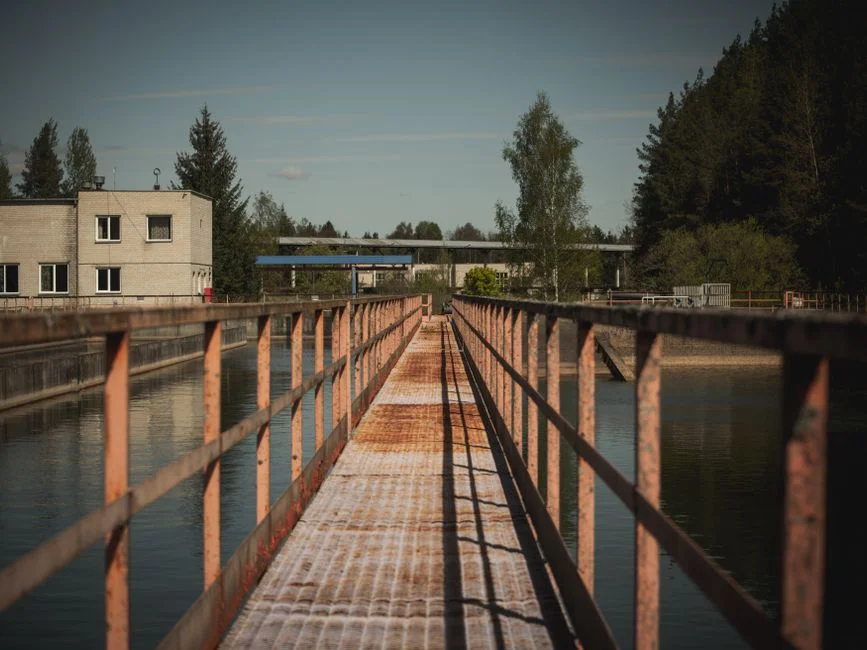
DAF is the stronger fit when the stream contains oil, grease, hydrocarbons, or fine colloidal metals; lamella clarification is the stronger fit when the main solids are metal-hydroxide flocs, flow is high, and site area is constrained. The distinction is process-specific, not a general claim that one unit consumes less space or costs less.
| Decision factor | DAF | Lamella clarification |
|---|---|---|
| Best-fit waste | Oil, grease, hydrocarbons, fine colloidal metals | Primarily metal-hydroxide sludge |
| Hydraulic or surface loading cited | 5–25 m³/m²·h | 20–40 m/h |
| Reported removal | 90–98% TSS; 85–95% oil and grease | Handles heavy metal-hydroxide flocs well |
| Footprint | Compare installed system footprint | Roughly one-third of a conventional clarifier |
| Principal limitation | Requires reliable recycle, bubble generation, and sludge handling | Less effective for free oil and colloidal fines |
All DAF and lamella performance and loading values in the table are from the Halo pretreatment reference, current 2026. The same reference reports 20–80 µm DAF micro-bubbles. A DAF system for oil, grease, and colloidal mining wastewater therefore suits hydrocarbon-bearing wash streams. A high-efficiency lamella sedimentation tank is more defensible for dense hydroxide sludge at a footprint-constrained site.
Compare installed scope rather than vessel price. Include flocculation geometry, low-shear mixing, recycle, sludge-blanket management, odor control, freeze protection, instrumentation, controls, and utilities. The Halo reference specifies 15–25 minutes in a flocculation basin with low-shear paddle mixing. It also lists alum at 50–150 mg/L, ferric chloride at 30–100 mg/L, or polyaluminum chloride, with anionic polyacrylamide at 1–5 mg/L, as initial bench-test ranges rather than guaranteed operating doses.
Filter the clarified stream and add UF only where the risk warrants it
A multi-media filter provides the solids-removal safeguard after clarification. The Halo reference uses a 1–2 m/h filtration rate with differential-pressure-triggered backwash and reports residual TSS below 10 mg/L. It also identifies upstream multi-media filtration as practical insurance when clarification overflow carries 50–100 mg/L fines and performance may be affected by polymer mis-dosing or hydraulic surges.
| Polishing stage | Design reference | Purchase condition |
|---|---|---|
| Multi-media filtration | 1–2 m/h filtration; differential-pressure backwash; residual TSS reported below 10 mg/L | Include when measured clarifier overflow is near the confirmed TSS limit or hydraulic upset is credible |
| UF | Under 1 NTU and under 5 mg/L TSS; 0.03-micron PVDF; 50–80 L/m²·h flux; TMP below 1.0 bar; automatic backwash and CIP | Use only when clarified performance does not reliably meet the required discharge or reuse quality |
The UF values are from the Halo pretreatment reference, current 2026. For hot, abrasive, high-TDS service, evaluate ceramic SiC rather than assuming hollow-fiber PVDF is suitable. A 0.03-micron PVDF ultrafiltration system is a candidate where the measured feed fits its operating envelope.
HydropureWater’s hollow-fiber UF system uses 0.03-micron PVDF membranes, accepts feed turbidity up to 300 ppm, and includes automatic backwash and air scour. That is a product boundary, not a site guarantee. UF adds fouling control, cleaning, instrumentation, membrane replacement, and capital. The purchasing decision should compare measured clarifier performance against the confirmed limit or reuse target; do not insert UF as a universal pretreatment step.
Design the sludge route before accepting the equipment quote
A treatment train is incomplete until pH-adjustment sludge, clarifier underflow, DAF float, and UF backwash solids have a mass balance and a final route. Metal-bearing sludge dewatering can preserve clarifier capacity and reduce the volume entering disposal, but the contractor must identify cake handling, filtrate return, conditioning chemicals, and the permitted disposal or recovery route.
Calculate daily dry solids from each residual stream using measured TSS or dry-solids data and corresponding flow. Then size dewatering around the combined peak and campaign discharge. The Halo reference recommends a plate-and-frame filter press with polypropylene plates and automatic plate shifting for plants producing more than about 2 dry tonnes of sludge per day. It reports 60–70% dry solids by weight in that service.
The same reference gives 0.5–1.0 m³ of chamber volume per 50–80 kg of dry solids per cycle and a 90–180 minute cycle time. Require the vendor to support those dimensions with pilot or performance data for the actual sludge, because solids compressibility and conditioning can change press capacity. A metal-laden sludge dewatering press is one equipment option, but it does not replace a compliant residual-disposal plan.
Specify filtrate recovery, cake discharge, cake moisture, odor containment, washwater, chemical conditioning, and the destination of the dewatered solids. The proposal should also state whether filtrate returns to the equalization tank or requires separate treatment.
Turn the treatment train into a Brown Hollow bid package
A comparable bid package starts with the permit, not the equipment list. Require every proposal to identify the control authority, industrial permit, sewer-use ordinance, applicable 40 CFR category, assumed local daily-maximum and monthly-average limits, measured influent, and design basis. A quote that omits any of these assumptions cannot demonstrate compliance.
| Bid section | Minimum information required | Acceptance evidence |
|---|---|---|
| Regulatory basis | Permit, ordinance, categorical determination, assumed local limits | Written control-authority confirmation or documented assumption |
| Hydraulic basis | Measured influent, seasonal and batch flows, peak 2-hour flow, 20–30% turndown, minimum flow | Process calculations and equipment envelopes |
| Performance | Guaranteed daily-maximum and monthly-average targets, sampling points, instruments | FAT and SAT using representative water and, where practical, residual sludge |
| Operations and residuals | Alarms, diversion logic, chemical storage, sludge output, staffing, maintenance, spares | Manuals, training plan, controls narratives, and maintenance schedule |
State the measured influent, seasonal and batch flows, peak 2-hour flow, 20–30% turndown, minimum flow, waste characteristics, and reuse target in the bid package. Require vendors to define guaranteed effluent targets, sampling locations, alarm and diversion logic, chemical storage, sludge output, operator staffing, and included maintenance.
Make award contingent on factory and site acceptance testing. The test should demonstrate compliance with confirmed local limits rather than generic catalog values. For 2026 purchasing risk, ask whether each proposal addresses the LCRR, the 2024 Multi-Sector General Permit PFAS monitoring finalized in 2024-09, and the 2025 ore-mining BAT revisions from 2025-03, as described in the Halo reference, current 2026. These actions do not automatically create a Brown Hollow sewer limit, but vendors should state whether they affected the design assumptions.
The Halo reference states that CWA §309 civil penalties can reach $25,000 per day per violation. That does not mean every deviation receives the maximum penalty, but it makes prevention economically material. Compare proposals against the confirmed monthly-average limits and the exposure of an avoidable excursion.
Check the final design against these acceptance questions
A design is not ready for release if its permit assumptions remain unconfirmed. Obtain the current sewer-use ordinance, industrial discharge permit, categorical-standard determination, and confirmed local limits in writing from the control authority. Check that every value in the proposal is labeled as confirmed, federal, typical, or to be verified.
Confirm that the train is sized for the peak 2-hour flow and 20–30% turndown, including batch and minimum-flow conditions. The chemical, pH, clarification, filtration, and UF sequence must demonstrate the confirmed monthly-average metals limits with representative testing. Off-specification flow must be diverted or held rather than discharged untreated.
Review the residual mass balance, dewatering method, cake route, and filtrate destination. Require alarms, automatic chemical control, data logging, operator training, maintenance, and spare-parts requirements in the proposal. For membrane maintenance, define compatible replacement media through a RO and UF membrane-element supply specification rather than leaving the final route open.
Frequently Asked Questions
Who administers pretreatment requirements for a Brown Hollow mining or metals plant?
The local POTW or control authority administers the industrial pretreatment permit and local requirements, while EPA and authorized state programs establish the national framework. The EPA National Pretreatment Program, current 2026, explains that the program identifies discharge standards and requirements for nondomestic wastewater sent to POTWs. The plant must obtain the current Brown Hollow-area ordinance and permit rather than treating a national summary as its local authorization.
Should the plant choose DAF or a lamella clarifier on price alone?
No. Compare oil and grease, colloidal solids, sludge type, flow, footprint, and residual handling. The Halo reference, current 2026, reports DAF removal of 85–95% for oil and grease at 5–25 m³/m²·h hydraulic loading, while lamella clarification handles heavy metal-hydroxide flocs at 20–40 m/h surface loading in roughly one-third the footprint of a conventional clarifier. Those are screening references, not a site guarantee.
What should a vendor proposal include for accurate pricing and sizing?
Require measured influent concentrations, confirmed local monthly-average limits, the peak 2-hour flow with 20–30% turndown, minimum flow, and residual handling. The cost basis should also include chemical storage, controls, alarms, operator labor, maintenance, membrane replacement, dewatering, and disposal. If the control authority has not confirmed a limit, request a written local limit rather than accepting an assumed number in the quote.
When is UF justified, and which supplier controls should apply?
UF is justified when measured clarified-water performance does not reliably meet the confirmed discharge limit or reuse target. The Halo reference, current 2026, identifies under 1 NTU and under 5 mg/L TSS as the UF design target, with automatic backwash and CIP. Before supplier selection, check membrane material, feed-water compatibility, expected flux, cleaning method, instrument set, data recording, operator training, replacement-element availability, and whether the proposed acceptance test uses representative water.
Related Equipment
- DAF system for oil, grease, and colloidal mining wastewater — specifications, capacity range, and technical data