What an Effluent Treatment Plant in Rwanda Must Achieve
An industrial effluent treatment plant in Rwanda should be selected after characterizing the wastewater, defining the required effluent quality, assessing the receiving environment and confirming the reuse objective—not chosen from a standard catalogue. The plant must integrate collection, equalization, treatment, disinfection, sludge handling, monitoring and final discharge or reuse. MBR, DAF and UF can perform different parts of that train, while package sewage systems suit different applications. A quotation should therefore be based on measured wastewater data, a defined design flow, a complete process concept and measurable acceptance criteria. This industrial effluent treatment plant buyer’s guide provides a broader procurement framework.
Define the project objective before selecting equipment. An environmental discharge objective requires applicable discharge limits confirmed through a permit review; process-water reuse requires criteria for the intended process; and agricultural or potable use requires additional treatment, validation and regulatory confirmation. These are not interchangeable objectives. A treatment train that satisfies one may not satisfy another.
University of Twente research evaluates direct nanofiltration for polishing wastewater treatment plant effluent to EU Water Framework Directive standards and for reclamation objectives, including agricultural or indirect potable use. This supports nanofiltration as a potential advanced-polishing route, not as proof of a universal Rwanda compliance standard (University of Twente, research output: Direct nanofiltration of wastewater treatment plant effluent).
Local evidence must also be interpreted carefully. The Kacyiru study examines effluent quality and impacts on the receiving environment, but it does not replace a project-specific permit, receiving-water assessment or demonstration of industrial wastewater performance. Buyers should use it to frame environmental diligence, then obtain the current requirement from the relevant authority and apply it to site data.
Characterize the Wastewater Before Selecting Equipment
Reliable equipment sizing starts with a production-representative sampling plan, because average flow and one-off laboratory results cannot describe variable industrial effluent. The design flow must reflect production shifts, cleaning cycles, storm events and the wastewater fraction actually routed to the ETP. The buyer should also establish whether each result represents an individual process stream or the combined final effluent.
Request flow measurements covering minimum, maximum and representative operating periods. The laboratory request should cover pH, COD, BOD, suspended solids, oil and grease, electrical conductivity, sulfide, sulfate, nitrate, phosphate, phenols, metals and sector-specific chemicals. Ask for the analytical method, detection limit, sampling point, preservation method and whether the result is a grab, composite or flow-weighted sample.
Persistent toxicity can remain after conventional parameter treatment. A pharmaceutical-industry study reported that COD, BOD, electrical conductivity, sulfide, sulfate, nitrate, phosphate, grease, phenols and several metals in untreated wastewater exceeded the study’s permissible limits and remained higher after treatment. At 50% concentrations, untreated and treated wastewater inhibited seed germination by 70% and 50%, respectively; the corresponding mitotic indices were 85% and 75% lower than the negative control. These results are a warning from the pharmaceutical sector, not Rwanda limits or proof of the same performance for every industrial ETP (Journal of Experimental Biology and Agricultural Sciences, 2024).
For textile projects, request information on synthetic dyes and chemical auxiliaries. A 2025 review describes dye liquor as toxic, corrosive, carcinogenic, allergenic and environmentally polluting when discharged without treatment. That review also notes untreated discharge from small-holder textile producers in Uganda and elsewhere in Africa, making textile characterization particularly important in the regional context (International Journal for Research in Applied Science and Engineering Technology, 2025).
| Data package | Minimum information required | Why it affects design |
|---|---|---|
| Flow | Shift, cleaning and storm flows; minimum, maximum and average discharge to the ETP | Determines collection, equalization, treatment and peak-hydraulic capacity |
| Organic load | COD, BOD and sector-specific organic compounds with analytical methods | Establishes biological loading and whether pretreatment or source control is required |
| Solids and floatables | Suspended solids, oil and grease and settleability | Determines screening, DAF, clarification and sludge-handling requirements |
| Chemical and toxic profile | pH, conductivity, sulfide, sulfate, nitrate, phosphate, phenols, metals and relevant industrial chemicals | Identifies inhibition, accumulation and advanced-treatment risks |
| Sample validity | Sampling points, dates, laboratory methods and detection limits | Prevents procurement decisions based on nonrepresentative or incomparable data |
Headworks protection and chemical dosing should follow the characterization, not precede it. A rotary mechanical bar screen can remove debris that may damage downstream equipment, while an automatic chemical dosing system should be justified by the required pH correction, coagulation, flocculation or specialty dosing duty.
Build a Treatment Train Around the Effluent Objective
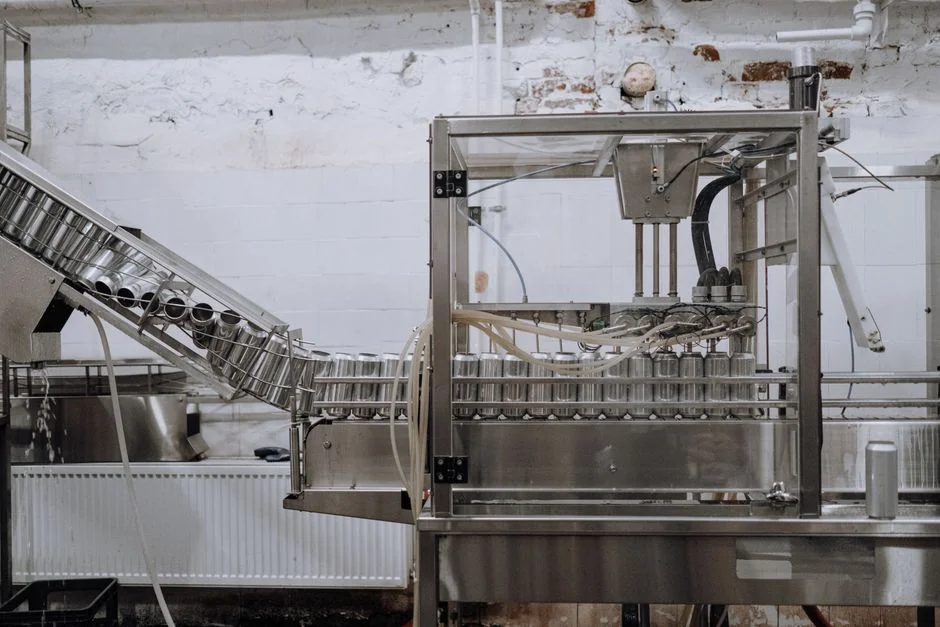
A complete ETP uses a staged process so each unit receives the wastewater conditions it can handle. A typical sequence is preliminary screening, flow equalization, pH and dosing control, DAF or clarification, biological treatment, final filtration, disinfection, sludge dewatering and monitored discharge or reuse. The sequence must be adjusted after characterization; a single high-throughput unit cannot be assumed to remove every contaminant category.
- Protect the plant: remove rags, plastics, fibrous debris and suspended material at the inlet.
- Stabilize the flow: equalize production discharges and control pH before biological or membrane processes.
- Remove floatables and solids: use DAF where oil, grease, FOG, colloids or suspended solids require separation.
- Remove biodegradable load: provide biological treatment sized from measured organic loading, with appropriate aeration and solids control.
- Polish the treated water: apply filtration, membrane treatment or disinfection according to the discharge or reuse specification.
- Manage residuals: contain, dewater and dispose of sludge, skimmings, reject water and spent chemicals through approved routes.
At headworks, a GX rotary mechanical bar screen provides physical screening before wastewater reaches pumps and biological stages. Automatic dosing should have controlled chemical storage, calibration, interlocks and a clear operating envelope. The automatic chemical dosing system is relevant where analysis demonstrates a defined coagulant, flocculant, pH-adjustment or other chemical requirement.
DAF is the appropriate pretreatment candidate where wastewater contains oil, grease, FOG, suspended solids or colloidal matter. An industrial DAF wastewater pretreatment system should follow the confirmed flow, contaminant and required removal basis. It removes floatables and solids; it should not be represented as a substitute for biological treatment of biodegradable organics.
MBR combines biological treatment with membrane separation. The catalogued integrated MBR wastewater treatment system covers 10–2,000 m³/day and filtration below 1 μm. It is a stronger candidate where footprint is constrained or the reuse objective requires low turbidity, but membrane cleaning, mixed liquor management and pretreatment remain critical operating issues.
UF is a polishing option rather than a substitute for source control and biological treatment. The catalogued UF system provides 2,000–40,000 L/h, a 0.03 μm membrane, automatic backwash and air-scour operation. It should be added only where its duty, pretreatment and cleaning regime fit the measured effluent.
| Process stage | Primary purpose | Design question to close |
|---|---|---|
| Screening and equalization | Remove debris and stabilize hydraulic and quality conditions | What are the peak and batch-discharge conditions? |
| pH and chemical dosing | Protect downstream processes and achieve required treatment conditions | Which chemicals, storage, dosing rates and interlocks are required? |
| DAF or clarification | Remove floatables, suspended solids and colloidal material | What are the oil, grease, solids and skIMMings loads? |
| Biological treatment or MBR | Remove biodegradable organics; MBR also provides membrane separation | What organic load, temperature variation and membrane duty apply? |
| UF or other filtration | Polish solids and colloids and protect downstream equipment | Does the pretreatment support the stated membrane flow and cleaning cycle? |
| Disinfection and sludge handling | Control pathogens where required and manage treatment residuals | Where do reject water, skimmings and dewatered sludge go? |
Where the process creates a substantial solids load, sludge treatment is part of the ETP scope. Lamella clarification can support solids separation, while a plate filter press can dewater suitable sludge. Neither equipment should be selected without the sludge’s composition, conditioning requirements and permitted destination.
Compare MBR, DAF, UF and Package Treatment Systems
The four technologies solve different problems, so a specification-based comparison is more useful than a single ranking. DAF primarily removes floatables and solids, MBR integrates biological treatment with fine membrane separation, UF polishes water, and WSZ integrates biological sewage treatment in a buried package.
| Technology | Published duty or capacity | Primary role | Best-fit decision | Key limitation to verify |
|---|---|---|---|---|
| DAF | 4–300 m³/h across 13 models | Suspended solids, FOG, oil and grease, and colloid removal | Use as pretreatment when characterization shows significant floatables or solids | It is not a complete biological treatment system; verify skimmings and sludge handling |
| MBR | 10–2,000 m³/day; filtration below 1 μm | Integrated activated-sludge treatment and fine membrane separation | Consider for a constrained site or a stringent, low-turbidity reuse target | Confirm pretreatment, membrane cleaning, aeration and solids-management requirements |
| UF | 2,000–40,000 L/h; 0.03 μm PVDF membranes | Polishing without added coagulant; removes bacteria, colloids and suspended solids | Use downstream of suitable treatment to protect reuse equipment or improve solids separation | Filtration alone does not establish destruction of every dissolved organic or industrial chemical |
| WSZ | 1–80 m³/h; A/O contact oxidation, sedimentation and disinfection | Integrated biological sewage treatment in a buried package | Consider for decentralized sewage or sanitary wastewater | It is not a universal substitute for characterizing a chemical process stream |
For an industrial wastewater characteristically containing oil, grease and floatable solids, DAF is normally a front-end decision. For a site with limited space and a demand for fine separation, MBR may combine biological and membrane duties. UF is strongest as a downstream guard or polishing stage. The underground integrated sewage treatment system serves a different project basis: decentralized sewage or sanitary wastewater rather than an uncharacterized chemical process stream.
Require each vendor to demonstrate the proposed train against the buyer’s measured wastewater. The submission should identify pretreatment, expected output quality, membrane area or module count, reject streams, cleaning chemicals, operator interventions, utility demand and maintenance frequency. Generic throughput claims do not establish suitability.
Plan Reuse, Disposal and Residual Sludge Safely
A reuse objective must be stated as an application, not as a generic intention to “recycle water.” Boiler feed, cooling, washing, irrigation, process charging, agricultural use and potable use impose different quality, reliability and regulatory requirements. The buyer should identify the receiving equipment, expected operating pressure and temperature, permitted water chemistry, continuity requirements and consequences of contamination.
Nanofiltration should be evaluated only as a potential polishing route. The University of Twente research assessed direct nanofiltration for WWTP effluent polishing and reclamation objectives, but actual project performance requires site-specific pilot testing against the selected effluent and intended use. A pilot should examine membrane fouling, cleaning, concentrate disposal and the relationship between treatment and the reuse specification.
The residual-waste design must cover spent chemicals, membrane cleaning solutions, backwash water, DAF skimmings, biological sludge, MBR reject and dewatered sludge. For each stream, specify segregation, storage capacity, bunding or containment, transfer method, permitted destination and monitoring responsibility. A high-efficiency sedimentation tank may support solids separation, while the UV sterilizer can provide final disinfection where its duty matches the application; neither establishes whole-plant compliance by itself.
Include the monitoring architecture in the concept design. Define final sampling locations, flow recording, analytical parameters, alarm conditions, backup power, operator access, maintenance clearances and remote-monitoring expectations. The permit and reuse plan should identify which measurements demonstrate performance and who is responsible when results exceed the agreed operating envelope.
Evaluate Suppliers and Control the 2026 Project
A defensible ETP procurement separates process design, equipment supply, civil works, commissioning and long-term support into one assigned scope. The supplier should identify design assumptions, equipment sizing, utilities, local fabrication, installation, controls, training, spares, O&M documentation, warranty boundaries and responsibilities for membrane cleaning, backwash, DAF skimming, sludge conditioning and chemical delivery.
Ask for evidence from comparable industrial projects, but do not accept project names alone. Request the wastewater characteristics, treatment objective, tested parameters, operating conditions, acceptance method and unresolved operating issues. Require the proposal to use the buyer’s wastewater analysis rather than a generic wastewater model.
Use a performance-based contract. It should define test methods, sampling points, acceptance criteria, operating conditions, operator training, preventive-maintenance schedules and spare-parts availability. Check local service capability, response arrangements, membrane and media supply, valves and consumables, and whether the supplier can support lifecycle maintenance. The RO and UF membrane filter elements and water treatment parts, valves and media should be linked to the proposed equipment bill rather than treated as generic spares.
Before the layout is frozen, verify site access, utility connections, power quality, backup requirements, hazardous-area considerations, drainage, maintenance access, sludge and chemical-delivery routes, operator facilities and waste transport. Ask every bidder to list utilities and operating consumables so lifecycle costs can be compared consistently. A useful wastewater treatment plant cost engineering breakdown can help structure the estimate, but the final budget must reflect Rwanda site conditions and the measured treatment scope.
- Confirm the discharge or reuse objective with the relevant authority.
- Complete representative wastewater characterization and toxicity screening.
- Issue a basis-of-design and process-selection request.
- Compare staged bids against one process basis and documented assumptions.
- Complete site, utility, construction and residual-waste reviews.
- Define acceptance tests, training, handover and O&M obligations in the contract.
Frequently Asked Questions
What will an industrial ETP in Rwanda cost?
No defensible price can be given without the design flow, wastewater strength, treatment stages, civil works, utilities, controls, sludge handling, installation and commissioning scope. Request a line-item quotation based on the buyer’s flow data, analysis, treatment objective and site information, then ask suppliers to identify exclusions and operating consumables. This cost structure can be informed by the supplied 2025 plant cost engineering breakdown, but it is not Rwanda pricing.
How should an ETP be sized for an industrial expansion?
Size hydraulic capacity from measured production, cleaning, storm and maximum discharge conditions, then size each treatment stage from the relevant contaminant loading. Require the vendor to state design flow, peak flow, organic and solids loads, membrane or flotation duty, redundancy and expansion provisions. A catalog capacity alone is not a valid size for the project.
When should a buyer select MBR, DAF, UF or WSZ?
Select DAF when the measured wastewater contains significant oil, grease, floatables, colloids or solids. Consider MBR when biological treatment and fine membrane separation are needed within a constrained footprint. Use UF for downstream polishing where pretreatment supports it. Consider WSZ for decentralized sewage or sanitary wastewater. Always verify performance against the measured industrial stream.
How can a buyer reduce supplier-selection and compliance risk?
Check that the supplier provides a complete process scope, comparable evidence, named acceptance methods, operator training, maintenance schedules, consumables and local support. Confirm the final discharge or reuse requirement with the relevant authority. Compliance should be demonstrated through site-specific analysis, commissioning tests and ongoing effluent quality monitoring—not promised through equipment capacity alone.
Related Equipment
- industrial DAF wastewater pretreatment system — specifications, capacity range, and technical data