What Determines the Right ETP for an Aqaba Facility
An industrial ETP in Aqaba should be selected from the actual effluent, not a generic package. Aqaba’s industrial profile includes phosphate, tourism, and port logistics: the supplied HydropureWater guide reports phosphate flows up to 10,800 m³/day and port influent TDS of 40,000–45,000 mg/L. A common high-quality train is mechanical pretreatment followed by DAF, then MBR or biological treatment, with chemical precipitation, UF, or RO added according to metals, salinity, discharge, and reuse targets. JS 893/2006 governs industrial wastewater, but the buyer should confirm current permit limits with the relevant Jordanian authorities before selecting equipment.
The first design decision is the water destination: direct environmental discharge, controlled discharge to a sewer, process reuse, or higher-grade reclaimed-water reuse. The HydropureWater guide, Aqaba Industrial Wastewater Treatment: Costs & Specs (2025), states that environmental discharge or reuse can trigger stricter thresholds than basic sewer pretreatment. JS 893/2006 is therefore the starting compliance reference, not a substitute for the current permit, applicable Aqaba requirements, or review by an approved local designer.
Issue a representative sampling request across a production week. It should cover average and peak flow, COD, BOD, TSS, pH, FOG, TDS, and metals relevant to the process. Optima Water Solutions’ ETP page for Jordan identifies BOD, COD, TSS, heavy metals, and pH among the parameters reviewed before proposal. The Aqaba guide also warns that port-logistics plants may operate below design flow for much of the year and then spike when ship and yard batches coincide.
Equipment performance claims are selection inputs, not project guarantees. The source-reported 92–97% COD removal applies to a DAF-plus-MBR train with solids, FOG, and salinity staged correctly; it should not be transferred to a different feed without representative testing and a vendor guarantee.
| Input to establish before quotation | Engineering use | Buyer action |
|---|---|---|
| Final discharge or reuse route | Defines the required treatment and polishing objectives. | Obtain the current permit and written reuse specification. |
| Average and peak flow | Sets equalization, pretreatment, and treatment capacity. | Measure across a representative production week. |
| COD, BOD, TSS, FOG, TDS, pH, and relevant metals | Identifies biological, solids, oil, salinity, and precipitation duties. | Use accredited analysis and include production variability. |
| Contractual outlet limits | Converts treatment claims into measurable acceptance criteria. | State the agreed influent basis, sampling method, and guarantee conditions. |
Aqaba Effluent Conditions That Change the Process
Phosphate processing, tourism, and port logistics create different treatment risks and cannot share one default process design. The HydropureWater guide identifies these as Aqaba’s dominant industrial loads. Phosphate facilities can handle flows up to 10,800 m³/day and may contain high suspended solids and chemical residues. That combination points toward robust solids removal, protected equipment, and a controlled sludge route.
Port operations present a different constraint. The guide reports port influent TDS of 40,000–45,000 mg/L and states that this salinity can inhibit standard biological treatment. It also identifies cadmium and lead as heavy metals that may require precipitation or membrane stages. Neither metal should be included in the final design basis unless representative sampling confirms its presence, concentration, and treatment objective.
Tourism facilities can produce higher organic loads and seasonal peaks. The guide therefore emphasizes equalization and biological treatment, while also recommending segregation of industrial and sanitary streams where package plants are used. Segregation prevents metals, FOG, and shock loads from overloading a biological package intended for sanitary wastewater.
Advanced polishing should be evaluated against the end-use specification, not added automatically. The University of Twente doctoral thesis Direct Nanofiltration of Wastewater Treatment Plant Effluent evaluates nanofiltration as a method for polishing WWTP effluent, while Wageningen University’s doctoral thesis, published on 23 September 2022, investigates constructed wetlands for micropollutant removal. These studies show that polishing requirements vary; neither establishes a universal Aqaba ETP configuration.
| Aqaba sector | Source-reported condition or pattern | Design consequence |
|---|---|---|
| Phosphate processing | Flows up to 10,800 m³/day; high suspended solids and chemical residues. | Confirm solids character and chemical dosing needs; include sludge handling. |
| Port logistics | Influent TDS of 40,000–45,000 mg/L; possible cadmium and lead. | Test salinity and metals; review salt-compatible biology and membranes. |
| Tourism | Higher organic loads and seasonal peaks. | Provide equalization and biological treatment; segregate sanitary flows where relevant. |
Choose a Treatment Train by End Use
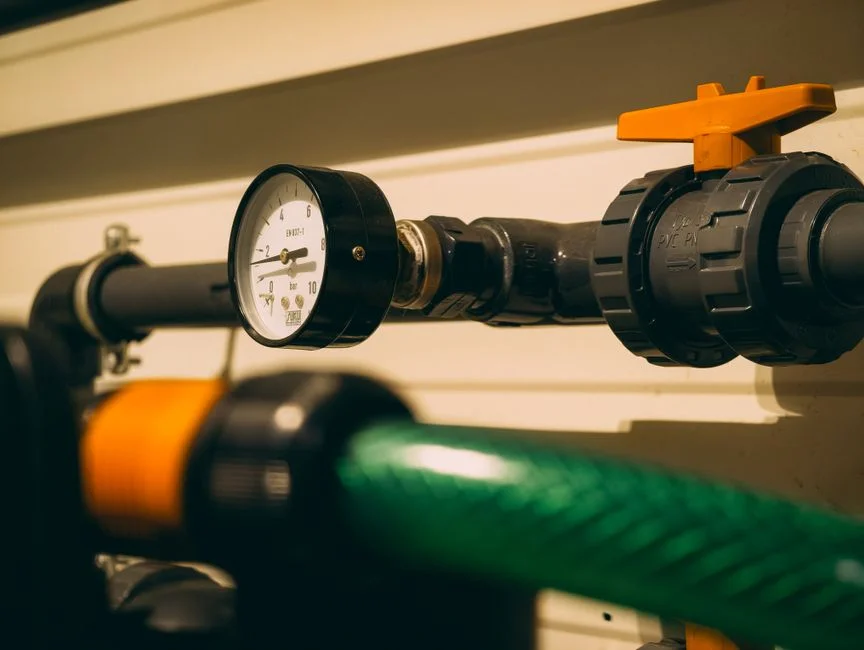
The process sequence should follow the contaminant job: protect the plant, remove bulk solids and FOG, reduce biodegradable organics, finish regulated pollutants, and polish only where the destination requires it. Screening and equalization come first. The HydropureWater GX Series rotary mechanical bar screen handles 10–200 m³/h with 1–6 mm bar spacing in the source’s Aqaba context, removing debris that can damage downstream equipment.
Use DAF when oil, FOG, floatables, or light solids dominate. The supplied product range is 4–300 m³/h; the guide reports 90–95% FOG removal for the described oily industrial application and approximately 0.3–0.5 kWh/m³ energy use. A buyer can evaluate an industrial DAF system for Aqaba pretreatment against the measured FOG load and required downstream protection.
Use lamella clarification where dense TSS is the dominant solids fraction. The supplied specification is 20–40 m/h surface loading, with up to 30% lower chemical consumption; the broader Aqaba guide reports 85–90% TSS removal in its described primary-treatment stage. These are planning values, not acceptance guarantees for an unidentified effluent.
Use MBR after suitable biological pretreatment when compact installation and fine solids separation are required. The product range is 10–2,000 m³/day with filtration below 1 μm, and the Aqaba guide states that MBR occupies 60% less floor space than conventional activated sludge. A salt-tolerant MBR wastewater treatment system should not be selected until the feed TDS and biological loading have been established.
Add chemical precipitation only where sampling confirms metals or phosphorus requiring chemical removal. The guide reports approximately 0.1–0.3 kWh/m³ energy use, but also warns that sludge can equal 5–10% of influent volume. That makes dewatering and disposal part of the treatment decision, not an accessory.
Add UF for RO protection, residual solids removal, or a defined reuse barrier. The supplied UF systems operate at 2,000–40,000 L/h, use 0.03 μm PVDF membranes, accept turbidity up to 300 ppm, and include automatic backwash and air scour. Add RO for desalination or high-quality process reuse; the industrial RO product supports recovery rates up to 95%. At the guide’s reported 40,000–45,000 mg/L port TDS, upstream solids removal, antiscalant strategy, and salt-compatible materials are essential.
| Process stage | When it belongs in the train | Key check before award |
|---|---|---|
| Screening and equalization | All industrial streams. | Peak flow, debris, batch discharge, and equalization residence time. |
| DAF or lamella clarification | DAF for light solids and FOG; clarification for dense TSS. | Measured solids character, oil content, and required removal. |
| Biological treatment or MBR | Biodegradable organic load and required effluent quality. | BOD/COD, TDS, temperature, salt tolerance, and footprint. |
| Chemical precipitation | Confirmed metals or phosphorus removal. | Dosing chemistry, sludge quantity, and disposal route. |
| UF and RO | Reuse, desalination, or membrane protection. | Final water specification, feed chemistry, recovery, and cleaning strategy. |
Compare DAF, MBR, UF, and RO by Their Job
DAF, MBR, UF, and RO are complementary technologies rather than interchangeable removal claims. DAF is a primary clarifier for suspended solids, colloids, oil, FOG, and floatable material; the supplied catalog supports 4–300 m³/h across 13 standard models. MBR combines biological treatment and membrane separation, with 10–2,000 m³/day catalog capacity and filtration below 1 μm; the source-reported Aqaba energy range is 0.8–1.2 kWh/m³.
UF provides a physical barrier for bacteria, colloids, and suspended solids. The supplied configuration uses 0.03 μm membranes, automatic backwash, and air scour, with an input-turbidity limit of 300 ppm. An ultrafiltration system for Aqaba pretreatment must still be preceded by adequate solids and FOG control; the membrane rating does not remove the need for upstream engineering.
RO is a desalination and polishing process with recovery rates up to 95%. It should follow appropriate pretreatment and requires a high-salinity design review. The supplied industrial RO system for Aqaba wastewater reuse should be evaluated with project-specific feed analysis, recovery targets, antiscalant strategy, membrane materials, and cleaning provisions.
Compare systems by removal mechanism, hydraulic capacity, pretreatment, chemical demand, energy demand, sludge effect, reuse suitability, and maintainability. Do not rank them by a single removal percentage. The Wageningen constructed-wetland thesis from 23 September 2022 and the University of Twente nanofiltration thesis demonstrate that polishing objectives vary, so neither research supports a universal Aqaba process recipe.
| Technology | Primary job | Source-reported capacity or feature | Main project-specific issue to verify |
|---|---|---|---|
| DAF | Remove light solids, colloids, oil, FOG, and floatables. | 4–300 m³/h; 90–95% FOG removal for the described application. | Feed oil, solids, chemical demand, and sludge disposition. |
| MBR | Combine biological treatment with fine solids separation. | 10–2,000 m³/day; filtration below 1 μm; 0.8–1.2 kWh/m³ in the Aqaba guide. | Salt tolerance, biological load, membrane maintenance, and footprint. |
| UF | Provide a physical barrier for bacteria, colloids, and suspended solids. | 2,000–40,000 L/h; 0.03 μm PVDF; turbidity up to 300 ppm. | Upstream solids removal, backwash, air scour, and recovery. |
| RO | Desalinate and polish for reuse. | Recovery up to 95% in the supplied product range. | Feed TDS, scaling, materials, pretreatment, and cleaning. |
Build the Aqaba Budget and Compliance Case
The available cost data supports an initial planning frame, not a quotation. For an approximately 50 m³/h medium facility, the HydropureWater guide gives indicative DAF CAPEX of $80,000–$120,000 and DAF OPEX of $0.20–$0.40/m³. The same guide gives indicative MBR CAPEX of $200,000–$1.5 million depending on daily capacity and RO-train CAPEX of $100,000–$800,000. Capacity, feed quality, pretreatment, civil works, and installation must be resolved before these ranges become a project estimate.
The source estimates Aqaba industrial electricity at $0.12–$0.15/kWh, chemical spending at roughly 20–30% of OPEX, and skilled operator labor at $15–$25/hour. It also reports avoided freshwater cost of $0.50–$1.50/m³, major-violation fines that can reach $50,000/year, and a typical 3–5-year payback. These figures should be tested against the buyer’s water tariff, actual permit exposure, operating schedule, and chemical consumption.
For the reported GCF Aqaba reuse project, the guide lists Total Nitrogen below 15 mg/L and phosphorus below 2 mg/L. Do not apply those values automatically to every Aqaba reuse project; confirm the applicable specification. Likewise, reported pretreatment examples such as TSS below 350 mg/L apply only after checking the current permit and discharge route.
Compare installed systems on the same scope. Include civil works, installation, utilities, controls, laboratory instrumentation, commissioning, operator training, maintenance, chemicals, and sludge disposal even if the equipment quotation omits them. A PLC-controlled chemical dosing skid should be priced and sized from the approved chemical regime rather than from a generic dosing range.
| Budget item | Source-reported planning value | Procurement treatment |
|---|---|---|
| DAF, approximately 50 m³/h case | $80,000–$120,000 CAPEX; $0.20–$0.40/m³ OPEX. | Planning range only; confirm scope and feed conditions. |
| MBR | $200,000–$1.5 million CAPEX, depending on daily capacity. | Obtain capacity-specific proposal and total installed scope. |
| RO train | $100,000–$800,000 CAPEX. | Separate pretreatment, recovery, controls, and commissioning. |
| Energy, chemicals, and labor | $0.12–$0.15/kWh; chemicals around 20–30% of OPEX; labor $15–$25/hour. | Validate current tariffs, chemical rates, staffing plan, and operating hours. |
Specify, Test, and Procure the ETP with Less Risk
A repeatable procurement process starts with effluent characterization, not with a packaged-plant price. Issue one data request to all bidders covering average and peak flow, production schedule, COD, BOD, TSS, FOG, TDS, pH, temperature, relevant metals, and the final discharge or reuse specification. A permit copy and production schedule should accompany the sampling results.
Require each supplier to return a P&ID, equipment list, process and hydraulic calculations, materials of construction, control philosophy, utilities demand, performance guarantees, and an exclusions list. Performance guarantees should name agreed influent limits, outlet parameters, sampling methods, and remedies. Do not use the generic DAF-plus-MBR COD-removal claim of 92–97% as the sole contractual basis.
Where the port condition in the source—40,000–45,000 mg/L TDS—applies, require salt-tolerance and membrane-material review. Include FAT and SAT protocols, acceptance-test samples, operator training, maintenance manuals, spare parts, remote support, and a site commissioning plan. A low removal-percentage offer is not economical if fouling, chemical demand, or membrane replacement risk was excluded from the comparison.
Plan sludge disposal before award. The supplied guide states that precipitation can generate 5–10% sludge by influent volume. The HydropureWater plate-and-frame press range of 1–500 m² filtration area provides a basis for requesting an appropriate industrial sludge dewatering press, but final selection requires sludge character, solids content, hourly generation rate, and disposal destination.
| Procurement stage | Mandatory deliverable or check | Reason it protects the project |
|---|---|---|
| Characterization | Representative flow and pollutant dataset; permit and reuse specification. | Prevents capacity and process selection from an assumed effluent. |
| Technical proposal | P&ID, calculations, materials, controls, utilities, guarantees, and exclusions. | Makes alternatives technically and commercially comparable. |
| Factory and site acceptance | FAT/SAT protocols, test samples, commissioning plan, and training. | Converts the guarantee into an inspected acceptance event. |
| Lifecycle and residuals | Chemicals, energy, maintenance, spares, sludge volume, and disposal route. | Prevents residual treatment costs from disappearing from the budget. |
Frequently Asked Questions
How much does an effluent treatment plant in Aqaba cost?
Use ranges rather than a single price. The HydropureWater guide gives DAF CAPEX of $80,000–$120,000 for its approximately 50 m³/h case, MBR CAPEX of $200,000–$1.5 million depending on daily capacity, and RO-train CAPEX of $100,000–$800,000. Ask each bidder for a capacity-specific, installed-scope quotation that separately identifies civil works, utilities, controls, commissioning, training, and sludge handling.
What is the best treatment for high-salinity port wastewater in Aqaba?
No single technology is sufficient without characterization. The source-reported port condition of 40,000–45,000 mg/L TDS requires solids and FOG removal before sensitive equipment, salt-compatible biological or membrane design, and precipitation or membrane stages when sampling confirms the relevant pollutants. Require the bidder to state the feed envelope, recovery approach, membrane materials, and chemical strategy.
Should an Aqaba factory choose DAF or MBR?
Choose DAF for primary oil, FOG, floatable, and light-solids removal; choose MBR for biological treatment and fine solids separation when the required effluent quality and footprint justify it. They can also be sequential. The decision should follow the measured pollutant load and outlet specification, not a preference for one equipment class.
How do I select an ETP supplier in Aqaba?
Require project-specific sampling, a process basis, P&ID, hydraulic calculations, named guarantees, FAT/SAT requirements, commissioning scope, operator training, local engineering support, and clearly separated equipment and civil-work exclusions. Check whether the supplier will accept performance against the current permit and agreed reuse specification; a generic removal claim is not a sufficient acceptance criterion.
Is an industrial wastewater plant required when connecting to Aqaba’s municipal sewer?
The supplied guide says industrial sites must still pretreat on site to meet pH, TSS, and FOG limits before sewer discharge. Confirm the exact obligation, applicable limits, monitoring, and connection conditions with the relevant Jordanian authority and the approved local designer before purchasing equipment.