
Choose ETP or DAF from the wastewater, not the product name
A Jaipur factory usually needs a DAF system when its wastewater contains oil, grease, emulsions or suspended solids and the objective is to remove them before biological treatment or reuse. A complete industrial ETP is more appropriate when the discharge also requires biological treatment and final polishing. DAF works by releasing pressurized air as microbubbles that attach to floatable contaminants, which are then skimmed. A sound selection starts with representative wastewater testing, average and peak flows, pH, oil and grease, suspended solids, COD, required effluent quality and the intended reuse or discharge route. A final supplier recommendation should follow that assessment rather than a listed price or capacity alone.
An industrial effluent treatment plant is a treatment train, not a single vessel. OpenBlueprint’s 2021 Quora contribution describes three levels: primary treatment using physical and chemical methods, secondary biological treatment, and tertiary treatment for final cleaning (OpenBlueprint, 2021). A dissolved air flotation unit is a physico-chemical clarification process: pressurized air forms bubbles that attach to suspended particles and oil droplets, reducing their effective density so they rise and can be skimmed. Aquagreentechs describes the same separation mechanism and identifies oil, grease, suspended solids and organic contaminants as target applications (Aquagreentechs, undated).
Use this split as the first screening rule:
| Factory condition | Preselection | Reason |
|---|---|---|
| Main targets are oil, grease, FOG, emulsions or suspended solids | Evaluate DAF | These contaminants are floatable or can be made floatable through coagulation and flocculation. |
| Biodegradable organic load remains | Evaluate DAF followed by biological treatment, or a complete ETP | DAF is primarily a clarification and contaminant-removal stage; it does not replace biological treatment. |
| Dissolved salts, nutrients or a defined reuse or discharge standard must be addressed | Investigate a complete ETP | The route may require biological and tertiary unit operations beyond DAF. |
| Reuse, sewer transfer or further treatment is planned | Define the receiving requirement first | The destination determines the required treatment objectives and acceptance criteria. |
A factory may need both. DAF can protect downstream biological treatment from emulsified oil and fine solids, while an ETP can include DAF as one stage. The 2026 DAF unit selection and decision framework provides a useful basis for developing the site-specific process route before comparing equipment.
Build a representative wastewater and flow profile
A supplier cannot size a credible treatment system from one laboratory result or a nominal production flow. The buyer must provide data that represent the wastewater, including the variability that determines tank and pump requirements.
- Sample the operating cycle. Obtain wastewater characterization across normal production, cleaning, startup and shutdown. A single grab sample can miss cleaning chemicals, diluted production water or concentrated batch discharges.
- Measure the core parameters. Record pH, oil and grease, suspended solids and COD. Add conductivity, dissolved oxygen, surfactants, metals or other stream-specific parameters where the process indicates a need.
- Separate the flow terms. Report average flow, peak hourly flow, batch-discharge volume and discharge duration. These inputs affect equalization, residence time, pump sizing and flotation capacity.
- Map every source. Identify the production line, cleaning operation and chemical source associated with each stream, along with the production schedule and expected future expansion.
- Define the destination. For wastewater reuse, identify the receiving process and its water-quality needs. For discharge or sewer transfer, obtain the applicable consent and pretreatment requirements from the relevant authorities rather than assuming a generic limit.
| Data item | What the buyer supplies | What it controls |
|---|---|---|
| Wastewater characterization | pH, oil and grease, suspended solids, COD and relevant trace parameters | Process selection, chemical use and expected contaminant separation |
| Flow profile | Average flow, peak hourly flow, batch volume and discharge duration | Tank sizing, equalization, pumping and recycle design |
| Stream map | Production source, cleaning chemicals and discharge timing | Segregation, pretreatment and operating control |
| Treatment objective | Internal reuse specification or applicable discharge requirement | Required unit operations and acceptance tests |
| Future plan | Expected production changes and expansion | Installed capacity and allowance for future equipment |
For a factory with multiple drains, ask the laboratory to sample by source instead of blending every stream at the inlet. This reveals whether segregation would protect the flotation unit, biological stage or reuse line. A PLC-controlled chemical dosing system should then be evaluated against the confirmed chemical regime, not purchased as a standard accessory before jar or pilot testing establishes the required doses and operating pH.
The completed profile should also state who owns each boundary condition: factory sampling, laboratory methods, incoming wastewater variability, utility availability and the receiving requirement. That prevents the design responsibility for poor influent quality or an unspecified reuse standard from moving between supplier and buyer after award.
Match common factory waste streams to the treatment route
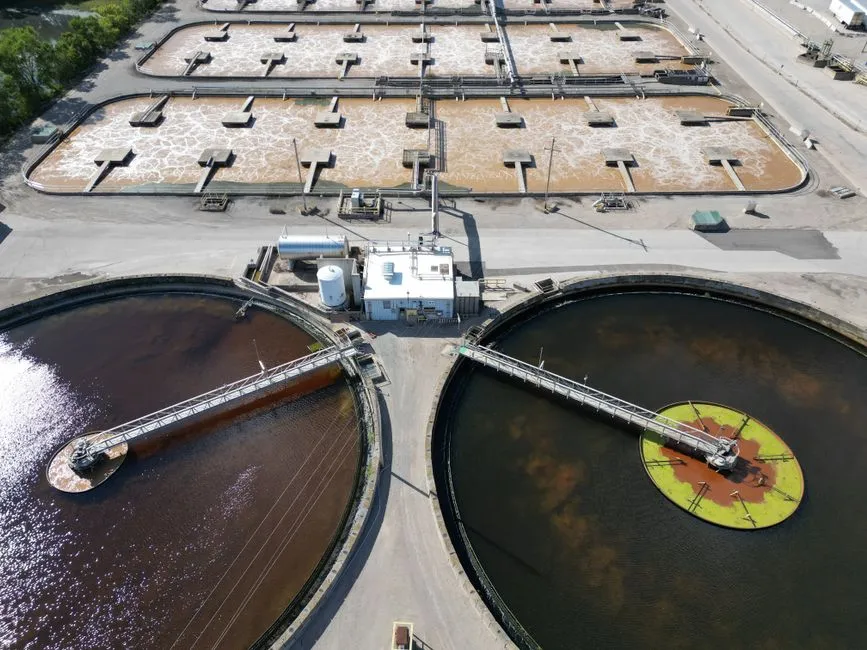
Waste stream identity narrows the treatment route, but it does not establish performance. The following match rules are starting points for testing and process development, not guaranteed equipment outcomes.
- Food processing: DAF is relevant where the stream contains FOG, oil droplets or suspended food solids. Aquagreentechs identifies oil, grease, suspended solids and organic contaminants as DAF targets (Aquagreentechs, undated). A full ETP may still be required for biodegradable organic load and final polishing, especially where internal reuse is intended.
- Textile: DAF can address suspended solids and colloidal material. The designer must also assess dyes, surfactants, pH and biological treatability; a solids-removal stage alone does not establish a route to compliant discharge or reuse.
- Metalworking: DAF can be considered for oil, grease and suspended solids. Dissolved metals and other contaminants may require additional chemical or tertiary treatment.
- Petrochemical and refinery service: OpenBlueprint describes DAF as a secondary clarifier and pre-biological protection stage where emulsified oil and ultrafine solids could impair biological treatment (OpenBlueprint, 2021). The same source notes that emulsified oil can coat microbial colonies, impair oxygen transfer and damage the microbial population.
- Municipal or mixed sewage: A packaged biological treatment system may be more relevant than DAF alone when the primary objective is organic-matter and solids stabilization. The packaged WSZ underground integrated sewage treatment system can be evaluated for that scope, subject to the actual wastewater and receiving requirement.
For FOG recovery, define whether the objective is merely DAF removal into a scum stream or recovery of saleable oil. A DAF unit can remove floatable oil and grease, but the recovered material’s quality, water content and handling route determine whether it qualifies as a recoverable product. If FOG recovery is the business objective, specify that outcome separately from wastewater treatment performance.
Mixed streams deserve particular caution. A high-volume dilute stream can dilute the oil concentration, while a concentrated cleaning discharge can overload a unit sized from the daily average. Segregation, equalization or a separate pretreatment train may be required. The supplier should state which streams it has included and which it has excluded from the design basis.
Design the DAF around flotation performance and sludge removal
A DAF unit must be selected around contaminant separability, hydraulic load and reliable removal of the floating sludge—not simply around tank volume or a supplier’s claimed efficiency.
During recirculation, part of the treated effluent is pressurized and saturated with air, then returned to the flotation tank. The pressure reduction releases fine bubbles that attach to particles and oil droplets, causing the flo material to rise for skimming. The industrial dissolved air flotation system should therefore be quoted with the complete recirculation, air-generation, flotation and scum-removal arrangement identified.
Kelvin Water Treatment identifies four major DAF components: the flotation tank, air compressor, skimmer and chemical dosing system (Kelvin Water Treatment, undated). It also states that efficient flotation requires approximately 6–10 g/m³ or 4–6 litres/m³ of treated water for flotation air, with recycle flow of approximately 6–15% and usually 8–10%, depending on inlet temperature and dissolved oxygen (Kelvin Water Treatment, undated). These are stated design references, not automatic settings for every factory; the supplier should recalculate them against the selected wastewater and operating temperature.
OpenBlueprint reports that pressure-release bubbles are typically 10–100 microns in diameter (OpenBlueprint, 2021). Actual bubble size and attachment performance depend on wastewater chemistry, pressure, saturation and operating conditions, so this range should be treated as reported flotation behavior rather than a guaranteed output.
| Design or operating item | Supplier confirmation required |
|---|---|
| Flotation basis | Design flow, hydraulic loading, recycle rate and the selected air basis. |
| Chemical treatment | Coagulant and flocculant selection, pH correction, dose control and jar or pilot-test basis. |
| Recirculation | Pump and saturation arrangement, control method, pressure conditions and air demand. |
| Scum removal | Skimmer arrangement, trough capacity, sludge collection and transfer route. |
| Performance test | Specific inlet and outlet parameters, sampling method, test duration and acceptance criteria. |
Ask how pH, recycle rate, chemical dose and scum discharge will be controlled, and what happens during an upset. A PLC-controlled chemical dosing system can support controlled injection, but the instrument range and storage arrangement must match the selected chemicals. Sludge transfer is equally important: if the flotation tank produces scum faster than the downstream collection system can remove it, the operating objective fails even when the clarified water meets its specification.
Kelvin Water Treatment describes DAF as simple to operate and low-maintenance (Kelvin Water Treatment, undated). Treat that as a commercial product description, not an operating guarantee. Maintenance exposure still depends on equipment condition, controls, operator routines, compressed-air quality and reliable scum handling.
Size a complete ETP around treatment objectives and unit operations
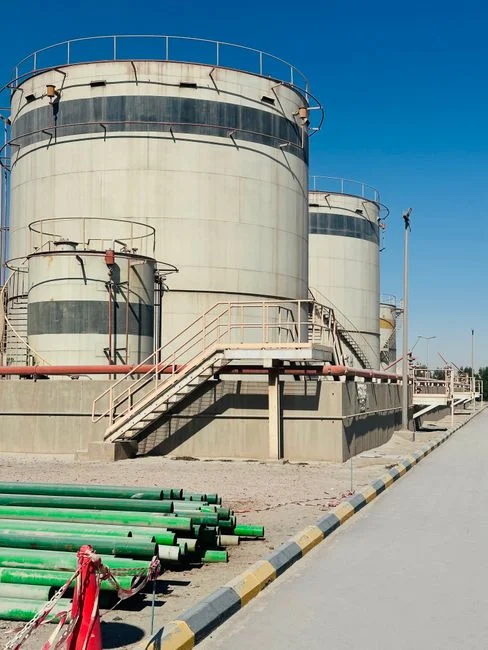
A complete ETP should be specified as a sequence of unit operations with defined duties, not as a generic “ETP package.” OpenBlueprint identifies primary treatment, biological treatment and tertiary treatment as the treatment levels (OpenBlueprint, 2021). Each level should answer a defined part of the factory’s treatment objective.
The quotation should state design and peak flow, retention or loading criteria, aeration arrangements, sludge management and the final treatment objective. It should also identify which streams are treated, what happens to concentrated sludge and which chemicals are consumed. A MBR integrated wastewater treatment system should be evaluated when biological treatment and very fine solids separation are both required, not merely because membrane technology is available.
Kelvin Water Treatment makes a commercial claim that DAF can remove 99% of suspended particles, oil and grease (Kelvin Water Treatment, undated). This should not be converted into a project guarantee. Require a project-specific acceptance test stating the relevant parameter, inlet condition, outlet limit, sampling method and test period. “99% removal” is not useful if the applicable denominator, starting concentration and operating envelope are absent.
Upstream oil control is critical. OpenBlueprint reports that emulsified oil reaching biological reactors can coat bacteria, prevent oxygen transfer and destroy microbial colonies (OpenBlueprint, 2021). A complete ETP receiving such a stream may therefore need DAF or another pretreatment stage before biology.
Request a complete mass balance covering feed water, treated water, concentrated sludge, chemical additions and any reuse or discharge stream. It should also identify residual and waste-handling responsibilities. Without that balance, an apparently high removal rate can conceal a sludge route that has not been designed.
For compact biological treatment, the WSZ package can be evaluated as an anoxic/aerobic option, while MBR provides a higher-grade separation option. Neither automatically satisfies an industrial discharge consent or an internal reuse specification. The final selection still depends on wastewater analysis, required effluent quality, footprint, operations and sludge handling.
Compare DAF, ETP and combined treatment before requesting a quote
DAF is strongest as a targeted oil, FOG and solids-removal stage; a complete ETP becomes necessary when the treatment objective extends beyond clarification to biological degradation and final polishing. Use the comparison of DAF with clarifiers and other treatment alternatives to support that preselection, then confirm it through site data.
| Option | Best-fit objective | Main scope | Buyer focus |
|---|---|---|---|
| DAF only | Oil, grease, FOG, emulsions and suspended-solids removal | Flotation tank, recycle and air system, chemical dosing, skimmer and sludge route | Whether clarified water has a defined next treatment or reuse destination |
| DAF plus biological and tertiary treatment | Protected biological stage plus final effluent quality | DAF, equalization, biological treatment, tertiary treatment and associated controls | Oil loading to biology, aeration, sludge handling and final acceptance criteria |
| Standalone complete ETP | Biodegradable organic load and broader treatment train | Primary, biological and tertiary unit operations | Every stage’s design basis and the final discharge or reuse requirement |
| Lamella clarification | Suspended-solids separation where flotation is not the preferred mechanism | Clarification, flocculation and sludge withdrawal | Oil and grease, floc properties, hydraulic loading and required effluent quality |
| MBR | Biological treatment with very fine solids separation | Biological process, membrane separation and sludge handling | Influent suitability, membrane fouling, reuse specification and operating controls |
Evaluate the high-efficiency sedimentation tank for solids separation when its settling and floc performance fit the wastewater. The DAF-versus-clarifier decision is not a product popularity contest; it depends on oil and grease, floc properties, hydraulic loading and the required effluent quality.
A combined DAF–ETP arrangement can protect downstream biology and reduce clarification load, but it adds equipment, controls, energy and sludge-management duties. A DAF-only scope has a smaller mechanical chain, yet it is acceptable only if the clarified water has a suitable destination and the supplier can demonstrate the required removal performance.
Qualify Jaipur suppliers with a technical and commercial checklist
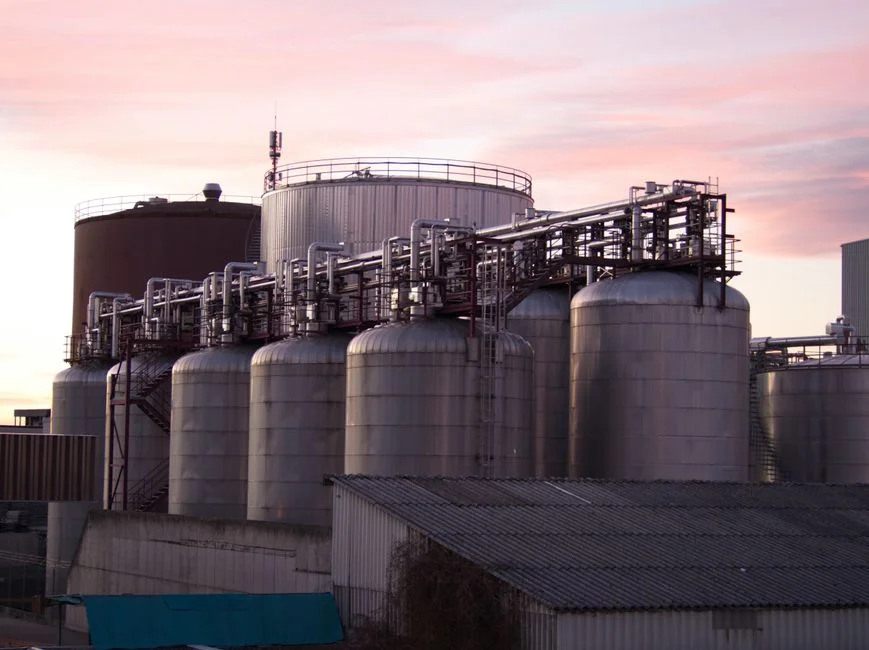
A valid supplier proposal must convert the factory’s wastewater analysis, flow profile and treatment objective into a documented process design. A model name, listed capacity or advertised price is not a selection basis.
| Check | Evidence to request before shortlisting |
|---|---|
| Process basis | Wastewater characterization, flow profile, treatment objective and calculation notes |
| Equipment scope | Tank and equipment sizing, material selection, controls, pump duty points and utilities demand |
| Site boundary | Equalization, screening, dosing, sludge collection or dewatering, pumping, electrical, civil work, installation and commissioning |
| Performance | Commissioning tests, project-specific acceptance criteria and treatment of failed acceptance |
| Handover | Operator training, manuals, spare parts, warranty and a named Jaipur service contact |
| Reference | Verified installation with comparable wastewater and evidence of how underperformance was resolved |
Ask each bidder to answer the same technical questions. The calculation basis should identify the applicable design flow, hydraulic and contaminant loading, recycle assumptions, chemical dose and sludge generation. Utilities demand should cover power, compressed air, water and chemical storage. The installation boundary must be explicit; otherwise quotations may not be comparable.
Commercial service commitments also need specificity. Require commissioning tests, operator training, manuals, spare-parts support, warranty terms and a defined local service-contact arrangement for Jaipur. Confirm whether the quoted scope includes civil work, electrical controls, pumps, chemical tanks, sludge handling, installation and commissioning.
Aajjo’s 2026 Jaipur listings show DAF entries with different capacities, automation levels and installation types, including a 2,500 m³/hour listing (Aajjo, 2026). That variability demonstrates why listings need normalization; it does not prove process suitability. A marketplace listing, review or advertised price is not a substitute for wastewater-specific calculations and acceptance testing.
Shortlist suppliers against the same site data, request comparable scopes, document exclusions, and record technical compliance separately from price. A lower quotation is not comparable if it omits dosing, sludge handling, civil work, controls, installation or commissioning.
Frequently Asked Questions
How much does an industrial DAF or ETP cost for a factory in Jaipur?
The supplied research does not establish a defensible universal price for factory wastewater treatment in Jaipur. Request quotations using the same wastewater analysis, flow profile, treatment objective and installation scope, then separate equipment, civil work, electricals, chemicals, sludge handling, installation, commissioning and service. The Jaipur DAF guide provides a structured basis for DAF system cost and compliance planning, but a project quotation remains necessary.
How do I know whether I need a DAF system or a complete ETP?
Choose DAF for the preselection when the main targets are floatable oils, FOG, emulsions and suspended solids, especially when clarified water will proceed to another treatment stage or a defined reuse application. Investigate a complete ETP when biological treatment, tertiary polishing and final discharge or reuse quality are also required. Confirm that split through representative testing and the receiving requirement.
What should a Jaipur DAF supplier provide in the quotation?
Require the design flow, process and calculation basis, tank and equipment sizing, chemical dosing, controls, utilities, installation boundary, commissioning tests, training, warranty and local service scope. Also require project-specific performance criteria. A general removal claim should not substitute for a defined inlet condition, outlet parameter and acceptance test.
Can one DAF unit handle all factory wastewater?
Not until the streams and discharge pattern are characterized. Mixed flows and variable batch discharges may require segregation, equalization, pretreatment or separate treatment trains. Provide source-specific samples, average and peak flow, batch volume and duration, and map cleaning chemicals before accepting a single-unit solution. The answer may be one DAF with adequate equalization, or several dedicated process stages.
How do I confirm that the treated water is suitable for reuse or discharge?
Define the receiving process specification or applicable consent, and require the supplier to design and test against that requirement. For reuse, identify the receiving equipment and its water-quality constraints. For discharge or sewer transfer, confirm the applicable permit and pretreatment requirements with the relevant authorities; do not rely on a generic DAF performance statement.