Build a water and wastewater balance for the Shivaji Nagar site
A Shivaji Nagar data center should treat sanitary wastewater, greywater, harvested rainwater, cooling-tower blowdown and membrane or RO concentrate as separate flows with different destinations and owners. The first design decision is therefore not which treatment plant to buy, but which water source can serve each cooling duty after its quality, reliability, permit status and future availability are established. At four cycles of concentration, a typical cooling tower loses approximately 25–30% of make-up water to blowdown, according to Genesis Water Tech, but the site’s actual evaporation, drift, blowdown and consumptive use must be calculated separately. Schneider Electric states that closed-loop direct-to-chip systems can recirculate more than 95% of coolant, with relatively small maintenance or leak losses. This makes cooling architecture part of the water treatment decision.
Build a data centre water balance by source, destination, operating ownership and measurement point. Include a broader data center wastewater treatment planning guide and the site-specific variables that must replace generic assumptions: municipal tariff, local water availability, sewer rules, anticipated rack density, cooling load, operating hours, expansion plan and any future non-potable water source. The supplied research does not establish flows, tariffs or discharge rules for Shivaji Nagar; these remain owner and authority inputs.
Do not use WUE alone to demonstrate reuse. The U.S. Congressional Research Service explains that WUE does not distinguish potable from recycled water, so source and consumptive-use reporting should accompany it.
| Stream or loss | Measurement required | Decision supported |
|---|---|---|
| Sanitary wastewater | Flow, peak and average load, sewage characteristics | Separate treatment, sewer discharge or documented reuse |
| Greywater and harvested rainwater | Available flow, seasonal variability, contamination risk | Non-potable source suitability and storage |
| Cooling-tower make-up | Source, quality, required cycles of concentration | Freshwater use and makeup chemistry |
| Cooling-tower blowdown | Volume, conductivity, cycles, treatment-chemical history | Reuse, discharge or recovery treatment |
| RO or membrane concentrate | Flow, TDS, treatment chemicals and permitted endpoint | Concentrate-management scope |
| Evaporation and drift | Separate heat-rejection water balance | Consumptive-use reduction |
For another source-to-endpoint method, see cooling-blowdown treatment planning for a water-stressed data center. The transferable lesson is the sequence—reduce demand, identify non-potable sources, define treatment requirements—rather than any location-specific flow.
Set treatment objectives before choosing equipment
Each stream needs a defined receiving quality, flow duty and residual route before equipment is selected. A sanitary-sewage objective may require biological treatment and compliance with a sewer authority. A cooling-tower make-up reuse objective requires control of scaling, fouling, corrosion and biological content. Process-water reuse, municipal discharge and zero liquid discharge are separate design bases with different treatment and cost implications.
Water resilience is a site-selection issue because Schneider Electric reports that around 75% of India’s data-centre facilities are concentrated in Maharashtra, Tamil Nadu, Karnataka, Telangana and Uttar Pradesh, including water-stressed areas. Schneider Electric also notes that India has about 18% of the world’s population but only 4% of its freshwater resources. These figures support early integration of water sourcing with cooling design; they do not establish a Shivaji Nagar supply constraint by themselves.
The Bureau of Energy Efficiency’s 2023 District Cooling Guidelines encourage treated wastewater for cooling-tower make-up where feasible. Rules introduced in 2025 also require bulk users consuming more than 5,000 litres per day to increase wastewater treatment and reuse, according to Schneider Electric’s 2026-09-29 review. The applicable Maharashtra, municipal and site-specific approvals must be confirmed with the relevant authorities.
Before selecting a train, document:
- the source-water and finished-water specifications;
- daily flow, peak flow, operating hours and required redundancy;
- the required recovery and maximum concentrate volume;
- whether reclaimed water enters directly, after blending or through a separate tank;
- the permitted sewer or receiving-water route;
- the disposal or treatment route for sludge and concentrate; and
- how treatment will scale with rack density and cooling load.
Without those inputs, “zero liquid discharge” is only a label, not an enforceable project scope.
Characterize the wastewater and blowdown before design
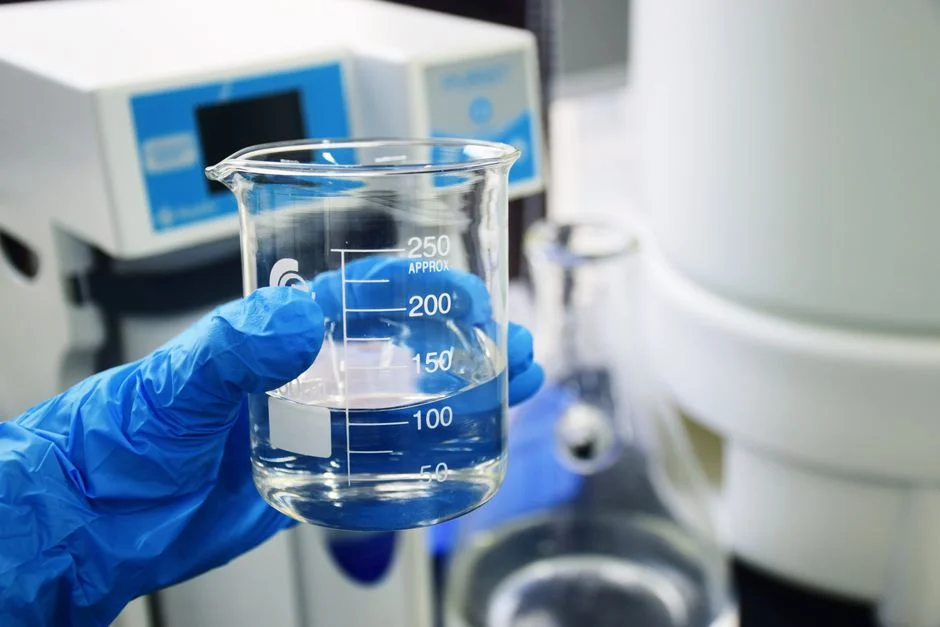
Water analysis determines whether the design problem is solids removal, dissolved-solids reduction, biological treatment or scale control. Obtain source-water and blowdown analyses covering TDS or conductivity, calcium, magnesium, silica, alkalinity, hardness, suspended solids, turbidity, biological indicators and relevant treatment-chemical residuals. Sampling should distinguish raw source water, treated make-up, circulating cooling water, blowdown, pretreatment feed and final permeate.
Genesis Water Tech reports that blowdown TDS is typically four to eight times make-up-water TDS and may range from 1,200 to 6,000 mg/L, depending on cycles of concentration and source-water quality. The same source reports suspended solids of typically 10–50 mg/L. Concentrated calcium, magnesium, silica and alkalinity create precipitation risks that can foul membranes and undermine reuse.
The existing cooling-water chemical program must also be reviewed. Biocide, corrosion inhibitor, scale inhibitor, dispersant and phosphate or chromate carryover can affect biological control, membrane compatibility and discharge acceptance. Genesis Water Tech identifies legacy chromate and high-phosphate chemistries as particular reuse and discharge challenges. If the chemical program changes after commissioning, the treatment design must be revisited.
Specify sampling frequency, calibrated flow meters, online conductivity and level instruments, and a protocol for seasonal source-water changes. Treat treatment parts, valves and media as supporting scope rather than as a substitute for the analytical program.
| Analysis or observation | Design consequence | Information required |
|---|---|---|
| TDS or conductivity | Determines membrane demand, cycles of concentration and concentrate volume | Source-water range, blowdown cycles and seasonal variation |
| Calcium, magnesium, alkalinity and silica | Defines scaling risk and antiscalant or pH-control requirements | Temperature-corrected analyses and saturation calculations |
| Suspended solids, turbidity and biological indicators | Defines filtration, UF, disinfection and sludge handling | Representative samples across operating conditions |
| Biocide, phosphate, chromate and inhibitor residuals | Determines membrane compatibility and permit risk | Current chemical program and dosing records |
| Flow and level | Sets hydraulic capacity, equalization and redundancy | Peak, average and minimum operating flows |
Match each treatment train to its reuse or discharge duty
Select treatment by contaminant removal and recovery requirement, not by technology name. Sanitary wastewater requiring biological treatment and a high-quality reuse outlet may justify the MBR integrated wastewater treatment system, which combines activated sludge with submerged PVDF membrane filtration and provides effluent below one micrometre. Its final disinfection and reuse controls still depend on the application and receiving-water analysis.
For blowdown, use ultrafiltration pretreatment for cooling blowdown when suspended solids, colloids and biological material are the main targets. Genesis Water Tech reports UF operation at 10–30 psi, recovery of 90–95%, and chemical cleaning every one to three months depending on feed quality. UF does not remove dissolved salts.
Use an industrial RO system for blowdown recovery where the reuse target requires TDS reduction. Genesis Water Tech reports 95–99% dissolved-solids removal, permeate TDS of 10–50 mg/L, operating pressure of 150–400 psi and typical blowdown-RO recovery of 50–85%. Consider NF where partial hardness and sulfate removal is sufficient: the source reports operation at 75–150 psi, recovery of 70–85%, and permeate TDS at 30–50% of feed-water TDS.
| Technology | Primary fit | Genesis Water Tech benchmark | Key design constraint |
|---|---|---|---|
| MBR | Sanitary or process wastewater with biological and fine-solids removal | Effluent below 1 micrometre | Sludge, biological loading and application-specific disinfection |
| UF | Blowdown pretreatment or solids-controlled reuse | 10–30 psi; 90–95% recovery; cleaning every 1–3 months | Dissolved solids remain |
| RO | Cooling make-up reuse or TDS reduction | 95–99% TDS removal; 10–50 mg/L permeate TDS; 50–85% recovery | Scaling, antiscalant dosing and concentrate |
| NF | Partial hardness and sulfate removal | 75–150 psi; 70–85% recovery; permeate TDS at 30–50% of feed | Chloride passage and incomplete demineralization |
| MVC or thermal concentration | Concentrate recovery or higher recovery | 95–98% recovery of concentrate; distillate below 10 mg/L TDS | Energy demand and brine endpoint |
Protect downstream membranes with feed filtration below 10–15 microns, scale-control conditioning and pH adjustment where required, as recommended by Genesis Water Tech. These are process conditions, not a substitute for a site-specific membrane projection. Evaluate MVC, thermal concentration or crystallization only after membrane recovery and reuse options have been tested against the required recovery.
Use staged reuse and concentrate management to protect the business case
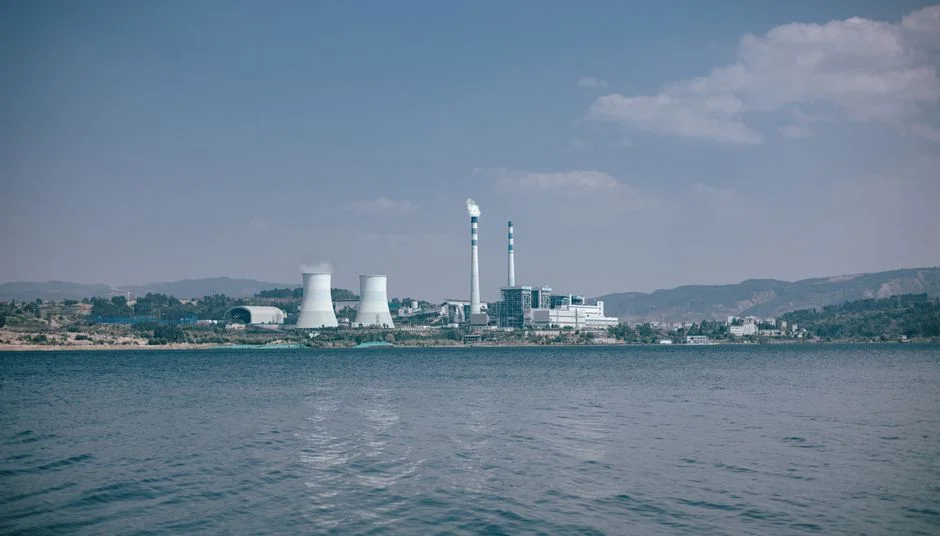
Route the highest-quality reclaimed water to the duty with the greatest operational value, while matching every reclaimed-water quality to a defined application. A staged sequence can use MBR or UF where biological control and solids removal are required, followed by RO or NF where dissolved-solids reduction is necessary. The final barrier should reflect the reuse point and the consequences of chemical carryover.
Genesis Water Tech reports that MVC can recover 95–98% of water from concentrate and produce distillate below 10 mg/L TDS, with energy consumption of 15–25 kWh per 1,000 US gallons of distillate. The source also reports 85–95% overall recovery for a combined RO and MVC configuration, with minimal liquid discharge.
Full zero liquid discharge is more expensive and should be compared against the lower-cost reuse route. Genesis Water Tech gives 95–99% overall recovery for ZLD, capital cost of US$3–8 million for typical data-centre installations, and operating cost of US$5–15 per thousand gallons treated. These are source-specific international benchmarks, not 2026 quotations for Shivaji Nagar.
The concentrate endpoint must be selected before committing to the train. It may be approved disposal, permitted treatment, managed crystallization or another documented route. If no route has been confirmed, the project should retain a liquid-concentrate option and carry the disposal uncertainty into the price comparison rather than assuming evaporation ponds or deep-well injection are permissible.
| Stage | Decision | Evidence required |
|---|---|---|
| Source reduction | Can evaporation or make-up demand be reduced first? | Cooling load, cycles of concentration and expansion plan |
| Primary treatment | Are biological, suspended-solids or dissolved-solids duties controlling? | Representative source analyses and reuse target |
| Polishing | Does the reuse point require TDS reduction? | Cooling chemistry limits and permeate specification |
| Recovery | Is additional concentrate recovery justified? | Water value, energy cost and recovery target |
| Residual management | What is the permitted endpoint for concentrate and sludge? | Authority confirmation and disposal quotations |
Equipment and consumable scope for RO and UF membrane elements should therefore be tied to feed quality, recovery and replacement assumptions, not simply to target plant flow.
Plan disinfection, controls and residual-waste handling
The final disinfection barrier must match the intended reuse and the biological risk identified in the source water. Chlorine dioxide can provide residual control in industrial cooling loops and process wastewater, while UV is a chemical-free option where its treatment objective, fouling exposure and power reliability are acceptable. A disinfectant residual that protects the distribution system should not be assumed to satisfy a membrane-feed or cooling-water specification without checking compatibility.
Use automatic, PLC-controlled chemical dosing for coagulants, antiscalants, pH adjustment and other specialty chemicals. Include interlocks, chemical-strength monitoring, day tanks, containment and a controlled response to high or low dosing rates. Antiscalant performance should be checked against the measured calcium, magnesium, silica, alkalinity and concentrate chemistry—not inferred from a generic dose.
Define concentrate and sludge handling before construction: sampling, storage, transport, approved disposal and records. Neither the supplied research nor the available Shivaji Nagar site data establishes a legal disposal route, so a supplier’s sludge-disposal statement is not sufficient evidence.
Specify instruments for flow, pressure, differential pressure, conductivity, pH, turbidity, level and recovery ratio. Operators need an alarm and response logic for membrane fouling, abnormal conductivity, chemical-dosing failure, permeate-quality excursions and high concentrate concentration. The control narrative should also show how backwash, cleaning, isolation and redundancy operate without compromising the data-centre cooling duty.
Build a budget and procurement scope with explicit assumptions
A defensible quotation requires a design-basis document containing measured flows, analyses, recovery targets, operating hours, redundancy, expansion provisions, utilities, sludge route, permits and acceptance tests. The supplied research provides international reference benchmarks, but no reliable Shivaji Nagar project price.
Genesis Water Tech gives US$250,000–500,000 for a 50,000 GPD blowdown-RO installation and US$1.50–3.00 per thousand gallons treated in operating cost, including energy, chemicals, membrane replacement and maintenance. For UF pretreatment, the source gives US$50,000–200,000 for typical data-centre installations and recommends filtration capacity equal to 1–5% of total circulation flow, depending on system conditions and water-quality objectives. These benchmarks should be labelled for their stated scope, not converted silently into an Indian tender price.
Require each bidder to separate equipment, membranes, installation, controls, pretreatment, chemical storage, commissioning, operator training, energy, consumables, maintenance and concentrate disposal. Ask suppliers to state their flow basis, feed-water assumptions, recovery method, redundancy, cleaning interval, membrane replacement allowance and performance guarantee.
Run sensitivity cases for source-water quality, recovery, chemical cost, membrane life, electricity and disposal. Where an input is absent, request a written assumption or a priced alternative. Do not allow a low base case to hide an unpriced brine route.
| Cost item | Information required from bidder | Buyer check |
|---|---|---|
| Equipment and membranes | Design flow, flux, recovery, materials and replacement interval | Does the stated basis match measured site data? |
| Installation and controls | Civil work, utilities, PLC scope, redundancy and exclusions | Are interfaces and site works explicit? |
| Operation | Energy, chemicals, cleaning, labour and membrane replacement | Are all consumables included? |
| Residual disposal | Volume, chemistry, route, haulage and applicable charges | Is the endpoint legally and commercially confirmed? |
| Performance | Permeate quality, recovery, availability and test protocol | Are guarantees tied to defined feed conditions? |
Where solids removal is required before membrane treatment, use the sedimentation and flotation alternatives for solids removal as a pretreatment decision framework. Filtration equipment can then be specified against the resulting feed quality rather than the untreated blowdown.
Commission the system against measurable acceptance criteria
Commissioning should verify each treatment barrier against the reuse or discharge specification in the design basis. Repeat the baseline water analyses, confirm calibration of meters and analyzers, and test interlocks before introducing the full design flow. A plant that meets permeate quality only at reduced flow has not demonstrated the specified capacity.
For RO, demonstrate stable permeate quality, normalized flow, salt rejection, recovery, antiscalant performance and concentrate quality over the agreed test period. For UF, verify solids removal, biological reduction, automatic backwash, air scour, differential-pressure trend and cleaning-cycle performance. These are the tests identified by Genesis Water Tech for the respective process functions.
Train operators to respond to rising differential pressure, falling normalized flow, abnormal conductivity, elevated suspended solids, dosing faults and permeate-quality excursions. The handover should include alarm settings, bypass rules, cleaning triggers, spare-parts lists, sampling procedures and responsibilities for every residual stream.
Track municipal intake, recycled-water supply, consumptive use, WUE, recovered volume, blowdown volume, concentrate volume, chemical use, membrane cleaning and energy consumption separately. That record set supports both membrane-fouling diagnosis and regulatory or sustainability reporting without presenting WUE as proof of source substitution.
Frequently Asked Questions
What treatment is required for a data center in Shivaji Nagar?
First reduce evaporative demand, then identify sanitary wastewater, greywater, rainwater and cooling-tower blowdown that can serve defined non-potable duties. Sanitary wastewater may require biological treatment; blowdown treatment depends on whether the objective is solids removal, TDS reduction or discharge compliance. The final scope requires local water analyses, sewer rules, discharge routes and site flow data, none of which the supplied research establishes for Shivaji Nagar.
Should a data center install UF, RO or full ZLD?
Use UF when suspended solids, colloids and biological material are the controlling contaminants, and use RO when cooling-loop reuse requires dissolved-solids reduction. Consider full zero liquid discharge only when a documented recovery or no-discharge requirement justifies it after lower-cost reuse alternatives are evaluated. Compare expected recovery, concentrate volume, energy, maintenance and the permitted residual route—not just the water-reuse percentage.
How much should blowdown treatment cost in 2026?
Do not use the supplied international benchmarks as a local quotation. Genesis Water Tech gives US$250,000–500,000 for a 50,000 GPD blowdown-RO installation and US$1.50–3.00 per thousand gallons treated in operating cost, while UF pretreatment is given as US$50,000–200,000 for typical data-centre installations. Request itemized Indian quotations based on measured flow, feed analyses, recovery, electricity tariff, chemical consumption, membrane life, operating hours and concentrate disposal.
What water analyses should be sent to an equipment supplier?
Send representative source-water and blowdown results covering TDS or conductivity, calcium, magnesium, silica, alkalinity, hardness, suspended solids, turbidity, biological indicators and treatment-chemical residuals. Include flow, operating hours, cooling cycles, temperature and the proposed reuse point. Specify the finished-water quality and maximum recovery so competing UF, RO, NF and ZLD proposals can be compared on the same basis.
Which Indian reuse rules should be checked before finalizing the design?
Obtain written confirmation of the applicable sewer and discharge conditions, water-source requirements, reuse approvals and any Maharashtra or local authority obligations. Schneider Electric’s 2026-09-29 review notes that the BEE’s 2023 District Cooling Guidelines encourage treated wastewater for cooling-tower make-up where feasible and that 2025 rules require bulk users consuming more than 5,000 litres per day to increase wastewater treatment and reuse. The project should also confirm whether a cooling tower, treated-wastewater connection or zero liquid discharge system triggers additional technical or regulatory review.