
What Changes When MBR Replaces Conventional Activated Sludge?
For mining and metals wastewater serving a Hembree, Tennessee operation, MBR is a leading candidate when compact equipment, reliable solids separation, or a reuse-oriented endpoint justifies membrane separation. Conventional activated sludge remains credible when the biological load is manageable, flow and loading are stable, land is available, and clarification can meet the required discharge or reuse standard. Neither platform replaces equalization, pH control, solids or metals pretreatment, or biological compatibility testing.
The defining difference is the solids-separation mechanism. Conventional activated sludge uses an activated biological reactor followed by clarification, with a conventional settled-sludge stream. A membrane bioreactor retains the activated-sludge biology but substitutes membrane filtration for primary solids separation. That change affects equipment arrangement, solids handling, membrane maintenance and the level of solids carryover entering downstream treatment.
The academic evidence is useful only within each study’s waste stream and objective. The supplied excerpt for S3, “Winery wastewater treatment for water reuse purpose: Conventional activated sludge versus membrane bioreactor (MBR),” examines reuse. S4, “Process efficiency and microbial monitoring in MBR (membrane bioreactor) and CASP (conventional activated sludge process) treatment of tannery wastewater,” addresses process efficiency and microbial monitoring. S1, “Fate and distribution of pharmaceuticals in wastewater and sewage sludge of the conventional activated sludge (CAS) and advanced membrane bioreactor (MBR) treatment,” addresses pharmaceuticals in wastewater and sewage sludge.
None of the supplied excerpts for S1, S3, or S4 provides direct mine-water metals-removal data. They support process context, not a Hembree performance guarantee. The technical basis for selecting a platform is explained further in the MBR cost per m³ and when to choose an MBR analysis.
Characterize the Hembree Wastewater Before Choosing a Biological Treatment Process
A defensible Hembree selection cannot be made from average flow or a single metals analysis; the wastewater streams, metal fractions and final endpoint must be defined first. No Hembree permit limits, flow records, contaminant concentrations, reuse criteria or cost estimates were supplied, so the project team must obtain them before assigning equipment capacity or selecting a biological process.
Request a process-dependent characterization that covers flow and its diurnal and seasonal variation, pH, temperature, soluble and total COD, BOD, TSS, total suspended metals, dissolved metals and the analytical methods used. Separate contact, entrainment, washout and process-water streams from drainage and groundwater. Those sources can have different contaminant distributions, hydraulic patterns and treatment objectives, so combining them before characterization can conceal the load that controls equipment sizing.
For metals-bearing wastewater, distinguish dissolved, colloidal and particulate fractions. Dissolved metals may require pH adjustment, precipitation and filtration before biology; colloidal material can affect membrane fouling; and particulate metals can be removed upstream or captured in the biological solids. Biological treatment should not be credited with a universal dissolved-metals removal advantage because the supplied research does not establish one.
Also identify biological inhibitors such as residual oxidants, free chlorine, solvents, treatment chemicals and product cleaners, then define where they will be isolated or removed. The final destination must also be fixed: direct discharge, sanitary sewer discharge, zero-liquid-discharge support or industrial water reuse changes the required solids separation, polishing and monitoring.
| Site input | What the buyer must obtain | Decision affected |
|---|---|---|
| Flow | Average, peak, diurnal, seasonal and episodic washdown records | Equalization, hydraulic capacity and redundancy |
| Organic load | Soluble and total COD, BOD and process-stream origin | Whether biological treatment is credible |
| Solids and metals | TSS, dissolved, colloidal and particulate metal fractions | Pretreatment, membrane fouling and final polishing |
| Biological compatibility | pH, temperature, residual chemicals, solvents and toxicity evidence | Isolation or removal of inhibitory streams |
| Endpoint | Permit, sewer authorization or reuse specification | Clarification, membrane separation and downstream treatment |
Where variable solids, oil or grease require upstream removal, evaluate a DAF pretreatment machine. Where chemical control must be a defined process block, specify an automatic chemical dosing system rather than assuming the bioreactor will control pH or precipitation chemistry.
Compare MBR and Conventional Activated Sludge for Mining and Metals Wastewater
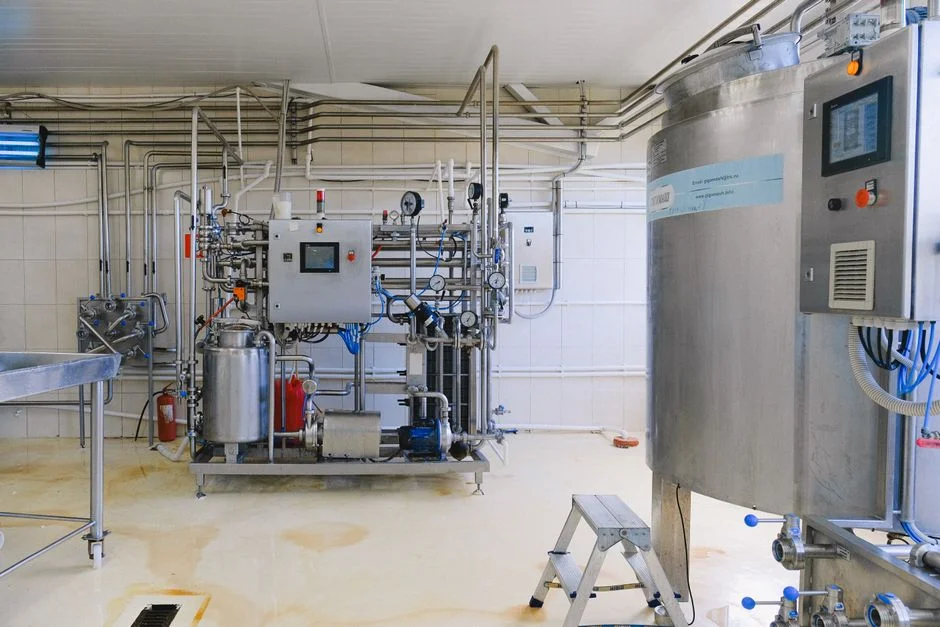
MBR and conventional activated sludge both depend on biological treatment; their main engineering divergence is how biomass and solids are separated and what operating obligations follow. The appropriate comparison for Hembree must use the same wastewater, endpoint, site constraints and sludge-disposal route.
| Evaluation item | Membrane bioreactor | Conventional activated sludge |
|---|---|---|
| Biological stage | Activated-sludge biology retained in the membrane bioreactor | Activated-sludge biology followed by clarification |
| Solids separation | Membrane filtration replaces reliance on a conventional clarifier | Clarifier performance governs the primary solids-removal step |
| Downstream implications | Can support a reuse-oriented train, subject to the required final endpoint | May require additional polishing if clarification cannot meet the endpoint |
| Footprint | HydropureWater’s catalog claims 60% smaller footprint than conventional systems; this is a manufacturer claim requiring site-layout validation | Requires space for the biological basin, clarifier, return-sludge system and related equipment |
| Operating attention | Aeration, membrane scouring, fouling control, cleaning, module replacement and instrumentation | Clarifier sludge withdrawal, return sludge, biological process control and sludge handling |
| Sludge stream | Captured solids are returned to the reactor, while excess solids are concentrated for separate handling | Produces a conventional settled-sludge stream |
| Metals treatment | No universal dissolved-metals advantage established by the supplied research | No universal dissolved-metals advantage established by the supplied research |
The MBR footprint claim comes from the HydropureWater verified product catalog and must be checked against the complete treatment train, not an isolated reactor arrangement. An integrated MBR combines activated sludge with submerged PVDF membrane filtration and is listed for capacities from 10 to 2,000 m³/day in the 2026 catalog. A site-specific design cannot be inferred from that catalog range.
For procurement, compare the integrated MBR membrane bioreactor system with an equivalent conventional train. If modules are supplied separately, evaluate the DF-series flat-sheet MBR modules together with reactor design, membrane scouring, controls, cleaning access and redundancy.
Select a Treatment Train That Can Handle Mine and Metals Variability
A biological platform will not compensate for missing equalization, uncontrolled chemistry or solids that exceed the separation system’s design duty. The treatment train should therefore be developed as a sequence before comparing MBR with conventional activated sludge.
- Screening and coarse removal: Remove trash, debris and oversized solids before the biological stage.
- Equalization and flow correction: Damp diurnal, seasonal and washdown variation and smooth episodic loads.
- pH and chemical control: Provide controlled dosing for the chemistry required by the influent and subsequent process blocks.
- Metals or solids pretreatment: Add precipitation, coagulation, flotation or filtration where characterization shows it is required.
- Biological treatment: Select MBR or conventional activated sludge according to biological suitability, hydraulics and endpoint.
- Solid separation: Use membrane filtration or clarification, followed by polishing if the endpoint requires it.
- Disinfection where required: Add the validated barrier needed for the discharge or reuse specification.
- Sludge handling: Dewater, store and dispose of or reuse the resulting solids using an available route.
Variable mining flows, episodic washdown and slug loads make equalization and load smoothing priorities before the biological comparison. For oil, grease, suspended solids or colloids, the HydropureWater catalog markets DAF for pretreatment applications involving those constituents. That is equipment context, not site performance evidence; actual removable fractions require representative testing.
Ultrafiltration should be included only where its separation duty matches the required endpoint. The catalog describes hollow-fiber PVDF membranes with a 0.03 μm pore size, automatic backwash and air scour, and identifies reverse osmosis pretreatment as an application. A UF water treatment system is therefore a design option for a defined solids-separation duty, not a default mining-wastewater process. A multi-media filter may provide upstream solids removal where the selected duty supports it.
Use a Site Decision Framework for Hembree
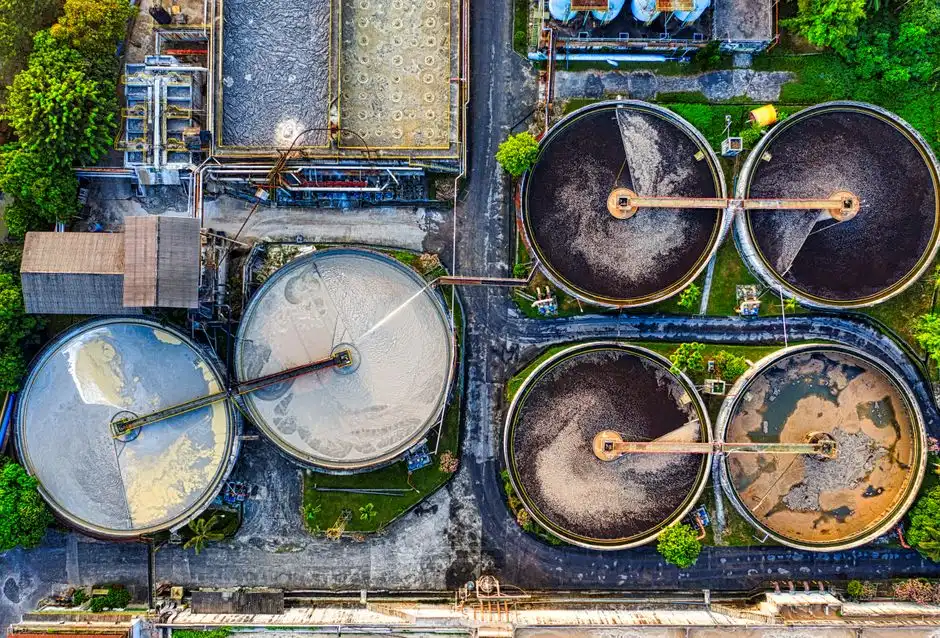
The MBR-versus-CAS decision follows from site conditions: MBR becomes the leading candidate when compact solids separation or a reuse endpoint has sufficient value, while conventional activated sludge remains the leading candidate when biological loading, hydraulics and site infrastructure support it. The following framework turns characterization into a procurement decision.
| Site condition | Leading direction | Required verification |
|---|---|---|
| Constrained land; defined reuse objective; solids carryover must be tightly controlled | Evaluate MBR as the leading candidate | Complete train layout, membrane flux basis, biological compatibility, cleaning access and redundancy |
| Stable flow and organic loading; suitable biology; adequate land; existing clarifier and sludge route | Evaluate conventional activated sludge as the leading candidate | Clarifier performance, endpoint without membrane polishing and total operating burden |
| Existing biological infrastructure is sound, but the final endpoint requires better solids separation | Evaluate a hybrid or staged train | Compatibility of existing biology with added membrane separation and changed hydraulic loading |
| Uncertain toxicity, metal speciation or episodic loading | Do not finalize the platform from historical averages | Representative pilot or bench testing and a metals mass balance |
The supplied S4 excerpt compares MBR and CASP process efficiency and microbial monitoring in tannery wastewater, while S3 examines conventional activated sludge versus MBR for winery wastewater treatment for water reuse. Neither is a substitute for Hembree pilot evidence or a site metals balance. The regional mining-wastewater MBR versus CAS comparison and the 2026 mining and metals wastewater MBR comparison provide contextual decision structure, but their locations do not establish Hembree conditions.
Require a pilot or bench test when historical data cannot represent the actual waste stream, especially where metal fractions, toxicity or slug loads drive the design. The test should produce evidence for biological inhibition, solids separation, membrane fouling potential, sludge generation and response to representative variability.
Build the Total-Cost and Supplier Evaluation Checklist
A valid lifecycle comparison requires separate five- and ten-year cash-flow estimates for both platforms on the same influent and endpoint. The supplied research provides no Hembree-specific price, so a defensible budget must come from project inputs and vendor quotations rather than a generic capacity rate.
- Request costs for civil works, membranes or clarifiers, blowers, pumps, pretreatment chemicals, sludge dewatering, energy, membrane cleaning or replacement, controls, operator labor, spare parts and disposal.
- State the design flow, peak flow, required process-removal targets, membrane flux basis, module configuration, redundancy and availability assumptions in the request for proposal.
- Compare the same downstream polishing and sludge-handling scope under both alternatives.
- Define warranty scope, membrane replacement assumptions, controls connectivity, operator training, spare-parts availability and remote or local service support.
- For the HydropureWater reference configuration, verify the stated 10 to 2,000 m³/day catalog capacity against the selected design and test the claimed 60% footprint reduction against the complete site layout.
Separate capital cost from lifecycle operating assumptions. Membrane replacement frequency, cleaning chemistry, labor, energy and downtime are not interchangeable between MBR and CAS. A sludge dewatering method must be evaluated consistently for both, including how each biological process changes concentrate or settled-sludge characteristics. Where a filter press is considered, the plate-and-frame filter press should be priced with the required sludge conditioning and disposal route rather than as an isolated accessory.
Supplier evaluation should also request demonstration data tied to comparable wastewater, the membrane or clarifier design basis, module redundancy, controls scope, commissioning responsibilities and service response. The objective is not to select the lowest equipment price; it is to compare delivered treatment performance and operating obligations at the same endpoint.
Frequently Asked Questions
How much will MBR versus conventional activated sludge cost for a Hembree mining-wastewater project?
The supplied research contains no Hembree-specific price, and a generic m³/day comparison would be misleading. Request five- and ten-year quotations for civil works, biological equipment, membranes or clarifiers, pretreatment, sludge dewatering, energy, chemicals, controls, labor, maintenance, replacement and disposal using the same design flow, peak flow and final endpoint.
Which supplier should be selected for mining and metals wastewater treatment?
Select the supplier whose demonstration data match the relevant wastewater behavior and whose design basis covers the site’s flow, loading, solids separation and sludge route. Request module or clarifier configuration, redundancy, membrane flux assumptions, controls scope, commissioning obligations, warranty terms, operator training, spares and service support before comparing commercial terms.
Does the 10 to 2,000 m³/day MBR catalog range determine the right Hembree plant size?
No. The range describes a catalog capacity, not a Hembree design flow. Size the plant from characterized average and peak flow, equalization performance, organic loading, metal and solids fractions, biological compatibility, required endpoint and operating redundancy. A capacity figure without those inputs is not a defensible selection.
Does MBR provide a general compliance advantage for metals-bearing wastewater?
No general advantage is established by the supplied research. Compliance depends on the permit-specific endpoint and demonstrated treatment of the actual Hembree waste stream. Metals speciation, toxicity, variability and pretreatment performance must be characterized, with pilot or bench evidence where historical data are inadequate; a further technical reference is the guide to how fabricated metals plants meet 2026 pretreatment limits.