Start with the Zeeland-area sewer permit, not a standard treatment package
Food and beverage plants near Zeeland meet sewer pretreatment limits by treating wastewater as a regulated industrial discharge, then verifying the treatment train against the current permit issued by the receiving sewer authority. For wastewater sent to a POTW, the facility is an indirect discharger subject to federal pretreatment standards under 40 CFR Part 403 and local requirements. Plants characterize flow, pH, BOD₅, COD, TSS, and fats, oils and grease; equalize production and CIP peaks; remove FOG and suspended solids; control pH; and add biological treatment or polishing when required.
The local permit and sewer-use ordinance—not a generic treatment package—determine the final design basis. Hixson identifies common federal thresholds of 250 mg/L for BOD and 250 mg/L for suspended solids, but these are not substitutes for the applicable Zeeland-area permit. Direct discharge to surface waters is a different pathway requiring an NPDES permit with facility-specific conditions, according to Hixson.
Before selecting equipment, identify the receiving authority, permit number, expiration date, discharge point, prohibited discharges, local numeric limits, monitoring frequency, sampling method, reporting forms, contingent limits, and production assumptions. Crystal Clean notes that local sewer districts may impose stricter limits than the federal floor and may specify monitoring, sampling, and reporting obligations. Its explanation of sewer pretreatment limits for industrial facilities is useful for understanding the interaction between federal and local rules, but it is not a Zeeland permit.
| Project record | Why it controls the design |
|---|---|
| Current industrial user discharge permit | Establishes the enforceable discharge conditions, monitoring duties, and reporting route. |
| Sewer-use ordinance and receiving-POTW guidance | Adds local prohibitions, fees, discharge-point restrictions, and technical guidance. |
| Applicable categorical standards | Identifies federal treatment expectations for the food-processing activity. |
| Production and CIP schedule | Defines hydraulic peaks, contaminant pulses, and pretreatment operating scenarios. |
Characterize the wastewater before the production team changes the recipe
Food-processing wastewater varies because production, product changes, clean-in-place cycles, and seasonal schedules change its flow, organic load, pH, and temperature. Crystal Clean reports that pH can move from acidic to alkaline as product processing alternates with chemical cleaning. Hixson reports that untreated food-processing effluent can be 10 to 100 times stronger than domestic wastewater in BOD₅ and COD terms, making organic load the central pretreatment issue. Beverage plants add sugars, yeast, and acids; Hixson cites typical brewery effluent of approximately 338 mg/L BOD₅ and approximately 1,118 mg/L COD, with relatively low nitrogen. These values characterize a source, not the Zeeland permit limit.
Build the sampling program around operating conditions rather than one blended sample. Monitor peak, average, and minimum flow; BOD₅; COD; TSS; FOG; pH; applicable nutrients; and temperature. Time samples against production, washdown, and CIP discharge, and separate continuous process wastewater from product-loss, sanitizer, caustic, and acidic cleaning streams. Otherwise, equalization and equipment sizing may reflect a misleading average. The broader workflow in an industrial wastewater compliance blueprint is not the local Zeeland permit, but its permit-first structure is applicable when organizing characterization work.
Use each result to make a design decision. Flow establishes equalization and treatment peaks; BOD₅ and COD quantify biological loading; TSS and FOG indicate the need for solids and grease removal; pH determines neutralization and biological-control requirements; and nutrients determine whether biological nutrient removal must be evaluated. USP Technologies identifies excess nitrogen and phosphorus as drivers of eutrophication, so include nutrient testing when the permit, watershed, or receiving system makes nutrient removal relevant.
| Characterization input | Decision supported | Escalation trigger |
|---|---|---|
| Flow by production and CIP phase | Equalization volume, pumping, and peak treatment capacity. | Peak or concentrated stream exceeds the selected train’s validated envelope. |
| BOD₅ and COD | Biological loading, aeration, or high-strength stream segregation. | Soluble-organics removal cannot meet the local limit. |
| TSS and FOG | Screening, DAF, clarification, and recovered-solids handling. | Skimming or solids capture is unreliable at peak conditions. |
| pH, alkalinity, and CIP chemistry | Equalization, neutralization, chemical demand, and materials review. | On-site neutralization cannot control the discharge reliably. |
Equalize and remove material that would overload the sewer
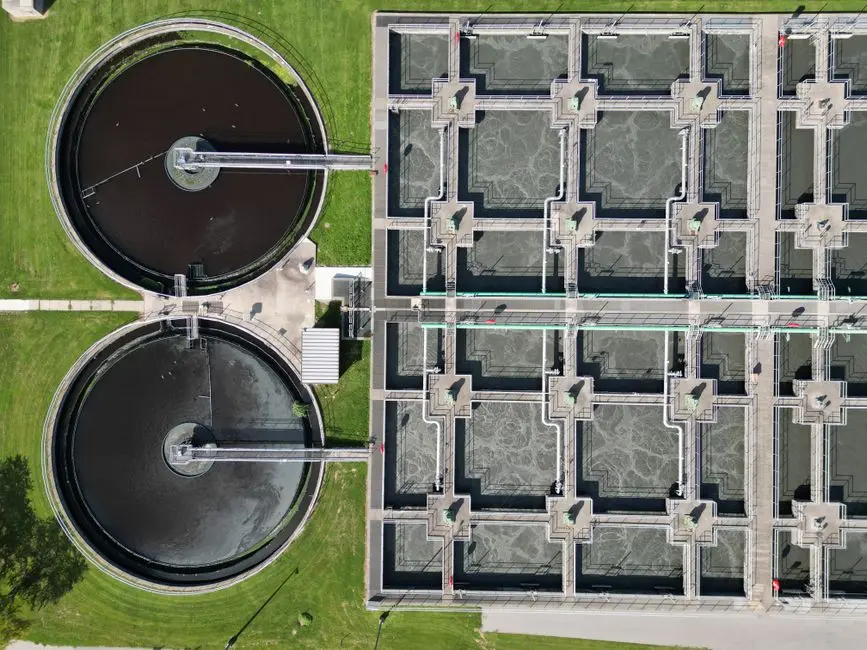
The physical pretreatment train should protect downstream equipment and biological treatment from particulate, grease, and hydraulic shock. Screening first removes food particles, packaging debris, and fibrous material that could obstruct pumps or biological stages. A rotary mechanical bar screen can address facilities requiring continuous fine screening. Flow equalization then buffers production surges and concentrated CIP discharges so downstream units receive a more stable flow and strength. Crystal Clean warns that systems designed around average conditions can fail during washdown and shift-change peaks.
DAF is the practical primary-treatment option when the wastewater contains suspended solids, FOG, oil and grease, or colloidal material. Hixson cites poultry results of up to 99% TSS removal, 85% BOD₅ reduction, and 98% phosphate removal with proper coagulant selection and operating parameters. An earlier poultry field study cited by Hixson reported 74% suspended-solids removal and 99% oil-and-grease removal under optimized conditions. These are application-specific results, not universal performance guarantees or permit demonstrations.
Select DAF using the actual waste profile, hydraulic peak, required skimming performance, chemical demand, recovered-solids handling, and available footprint—not TSS removal alone. Evaluate an industrial DAF system for food-processing pretreatment against those inputs. If a concentrated batch cannot be neutralized or treated reliably, consider source segregation, stronger pretreatment, or off-site disposal. A filter-press design can be evaluated for the resulting sludge; filter-press design for food-processing sludge provides a relevant technical reference.
| Stage | Primary function | Design evidence required |
|---|---|---|
| Screening | Remove food particles, packaging debris, and fibrous material. | Peak flow, retained-solids loading, extracted-material handling, and screen opening selection. |
| Flow equalization basin | Buffer production and CIP peaks. | Influent and effluent flow series, usable working volume, mixing, and standby provisions. |
| DAF or clarification | Remove FOG, oil, colloids, and suspended solids. | Mass loading, skimming rate, coagulant trials, solids handling, and validated site data. |
| Source control or off-site disposal | Remove unrepresentative high-strength or incompatible batches. | Batch chemistry, generation frequency, treatment authorization, and disposal records. |
Control pH and protect biological treatment from shock loads
Equalization can blend acidic and alkaline flows, while active neutralization adjusts pH before discharge. Which approach is appropriate depends on flow variability, chemical inventories, mixing, alkalinity, and the permit’s pH condition. Crystal Clean identifies equalization and active neutralization as alternatives for managing pH swings caused by product chemistry and CIP chemicals. Equalization alone may provide useful blending, but it should not be assumed to guarantee compliance during a concentrated discharge.
USP Technologies states that unstable or improper pH can interfere with nitrification, sludge sedimentation, and biological treatment, resulting in higher ammonia loads and poorer process performance. The control strategy should therefore close the operating loop. Measure pH continuously or at an approved frequency, pace chemical demand in relation to flow, record dose and flow, provide high- and low-level alarms, and define actions for a failed probe or an out-of-range reading. An automatic chemical dosing system should be evaluated on control response, chemical storage, operator access, maintenance, and fail-safe behavior.
Compare lifecycle risk rather than purchase price alone. Overfeeding can raise downstream salt loading, consume alkalinity, or move pH outside the biological process’s operating range. Chemical selection also affects worker exposure, corrosion, and chemical compatibility. A sedimentation tank can support solids handling, but it does not replace pH control. The acceptance test should use the plant’s actual acidic and alkaline cleaning-water characteristics, then confirm stable performance through the complete operating cycle.
Choose biological or advanced treatment only after the permit defines the target
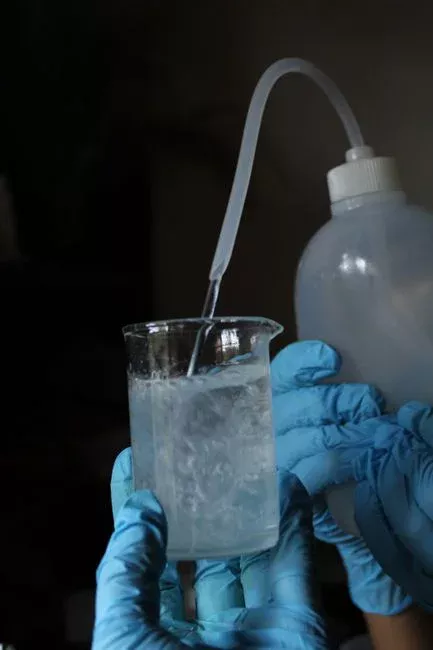
Biological treatment is required when physical separation and pH control cannot meet the local soluble-organics or nutrient objectives. Aerobic activated sludge and sequencing batch reactors reduce dissolved organics; anaerobic digestion is particularly relevant to concentrated, high-strength streams. Hixson reports COD removal of 89.8%–96.5% in food-processing applications for anaerobic treatment and methane yields of 0.27–0.33 liters CH₄ per gram of COD removed. Those results support a feasibility review for energy recovery, but they do not establish the performance of a specific food and beverage installation.
MBR combines activated sludge with membrane filtration when the permit requires very low suspended solids, the site is constrained, or reuse is an objective. Hixson cites beverage-facility pilot results with effluent COD of 16.9 mg/L, TSS of 3.8 mg/L, and 92.6% COD removal. Hixson also notes that MBR capital and energy costs are higher than conventional systems. An integrated MBR system for low-solids effluent should therefore be compared on total energy, membrane maintenance, controls, footprint, and demonstrated performance with the plant’s actual wastewater.
Evaluate biological nutrient removal when the local permit or receiving system targets nitrogen or phosphorus. Hixson links BNR need to watersheds with numeric nutrient criteria or TMDL restrictions. Reserve ultrafiltration or reverse osmosis for validated polishing or reuse duties; they do not replace upstream biological treatment of dissolved organics. Full reuse and zero-liquid-discharge systems require separate energy, recovery, residual-management, and discharge-feasibility analysis. The treatment-selection logic should remain explicit:
| If the compliance problem is… | Evaluate | Required verification |
|---|---|---|
| High FOG or suspended solids | DAF or clarification | Skimming, solids capture, recovered-waste handling, and peak-load tests. |
| High soluble organics | Activated sludge, SBR, or anaerobic treatment | Organic removal, process stability, sludge production, and energy review. |
| Very low TSS or COD | MBR | Site-specific effluent quality, membrane cleaning, energy use, and acceptance criteria. |
| Nitrogen or phosphorus limits | BNR | Nutrient removal performance and receiving-system requirements. |
| Reuse or zero discharge | UF, RO, evaporation, and crystallization | End-use quality, recovery, residual disposal, and mass-balance review. |
Verify performance with a compliance and commissioning plan
A commissioning plan converts treatment claims into permit evidence by tying startup and acceptance to the current industrial user discharge permit. It should cover influent characterization, equipment startup, hydraulic loading tests, control verification, performance sampling, operator training, and acceptance criteria. Hixson notes that advanced sensors and analytics can support faster response before exceedances become violations, but the plant still needs a defined monitoring frequency, calibration schedule, alarm logic, data ownership, and corrective-action escalation.
The permit-readiness file should include the sewer-use authorization, local limits, chain-of-custody records, laboratory reports, calibration records, operating logs, chemical and sludge-disposal records, deviation reports, and corrective-action evidence. Crystal Clean notes that discharge characteristics can change after a new product line, seasonal production change, or tighter local limit, so the compliance plan must identify when re-characterization and permit review are required.
Documented monitoring and response matter because Hixson reports that Hanover Foods Corporation agreed in 2025 to a $1.15 million civil penalty for more than 600 NPDES permit violations involving suspended solids, ammonia nitrogen, phosphorus, and temperature. The case concerns direct discharge, not a Zeeland POTW connection, but it demonstrates why continuous records and escalation cannot be separated from equipment performance.
| Commissioning stage | Evidence retained | Acceptance question |
|---|---|---|
| Baseline characterization | Representative samples, flow record, laboratory reports | Does the influent match the design basis? |
| Hydraulic and control testing | Peak-flow tests, trend records, alarm tests | Does the train remain stable and controllable under plant conditions? |
| Performance sampling | Chain of custody, analyses, deviations | Does each discharge condition satisfy the current permit? |
| Handover and compliance review | Training records, SOPs, calibration schedule, file index | Can staff demonstrate operation and reconstruct compliance? |
Use a treatment-selection matrix to control procurement risk
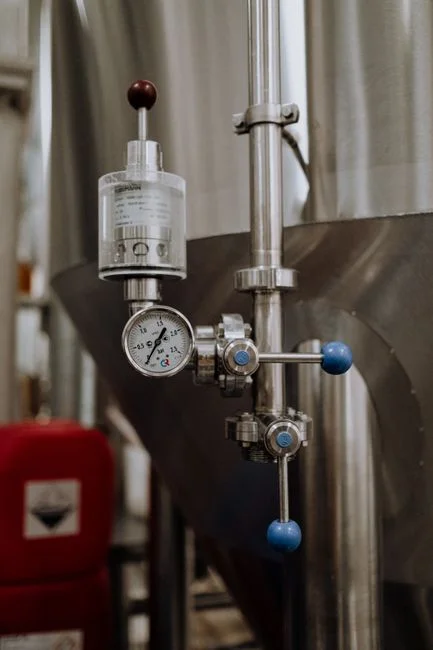
The equipment path should be selected by the contaminant and compliance problem, not by a technology list. DAF and MBR are complementary rather than interchangeable: DAF removes FOG and suspended material upstream, while M biologically removes dissolved organics and filters solids downstream. A clarification unit may be appropriate for settleable solids where it has been demonstrated to meet the required load and solids-capture objective.
Catalog capacity is a screening tool, not a design recommendation. HydropureWater’s DAF range covers 4–300 m³/h across 13 standard models and is intended for food-processing pretreatment; its integrated MBR system is available from 10 to 2,000 m³/day for industrial process-water and reuse applications. Neither range establishes adequacy for a Zeeland plant. Final sizing requires the waste profile, actual peak flows, operating envelope, performance guarantee, and acceptance protocol.
Require suppliers to demonstrate food-processing experience, verified performance for the proposed wastewater, control philosophy, operator training, spare-parts support, and commissioning support. Separate bids into equipment, civil work, installation, commissioning, chemistry, sludge removal, monitoring, training, energy, and long-term operating costs. The industrial water-treatment buyer guide provides broader procurement context, while an engineering method for sizing an MBR system illustrates the kind of wastewater-based sizing logic required for an industrial installation.
| Supplier deliverable | Minimum question for the buyer |
|---|---|
| Performance basis | Does the guarantee use the plant’s wastewater and operating envelope? |
| Controls and alarms | Are control narratives, fail states, trends, and alarm responses documented? |
| Commissioning | Are tests, acceptance criteria, samples, and retesting responsibilities defined? |
| Operations | Are training, manuals, maintenance tasks, chemicals, and spare parts included? |
| Total cost | Does the bid separate civil, installation, disposal, monitoring, energy, and lifecycle costs? |
Frequently Asked Questions
Which pretreatment limit should a food and beverage plant near Zeeland use?
Use the current limits in the plant’s industrial user discharge permit and applicable sewer-use ordinance, together with applicable federal pretreatment requirements. Hixson identifies 250 mg/L for BOD and 250 mg/L for suspended solids as common federal thresholds, but the local permit controls the facility’s design basis. First request the permit, expiration date, discharge point, local limits, prohibited discharges, monitoring frequency, sampling method, reporting forms, and any contingent limits from the receiving sewer authority.
Can DAF alone meet the local sewer limit?
DAF alone is appropriate only when the permit and wastewater profile show that the required removals are primarily for FOG, oil, suspended solids, or colloidal material. It does not by itself establish compliance for soluble organics or nutrients, and it cannot substitute for verified solids capture. If the limit targets BOD₅, COD, nitrogen, phosphorus, or very low TSS, evaluate biological treatment, BNR, MBR, or validated polishing. The DAF operating trial and site-specific performance data must demonstrate the contribution from each stage.
What information is needed to size a DAF or MBR system?
Provide the hourly flow record, peak production and CIP flows, BOD₅, COD, TSS, FOG, pH, temperature, applicable nutrients, and recovered-solids generation. Include wastewater variability, chemical demand, operating envelope, available footprint, and required effluent quality. Use the engineering method for sizing an MBR system as a methodological reference, but do not select equipment from catalog flow ranges alone.
How should a plant evaluate pretreatment suppliers and operating cost?
Ask for food-processing references, performance evidence under relevant conditions, a documented control philosophy, commissioning responsibilities, operator training, spare-parts support, and measurable acceptance criteria. For cost, require a bid that separates equipment, civil work, installation, commissioning, chemicals, sludge removal, monitoring, training, energy, and long-term maintenance. No research-supported equipment or operating quotation is available in the supplied material, so the plant should request a site-specific quotation rather than rely on a generic price.
Which operating changes require wastewater re-characterization?
Re-characterize the wastewater after a new product line, recipe change, CIP-chemical change, production-capacity increase, seasonal change, treatment-system modification, or revised local limit. Crystal Clean identifies product, seasonal, and regulatory changes as reasons to reassess discharge characteristics. The plant should compare the new BOD₅, COD, TSS, FOG, pH, flow, and applicable nutrient profile with the permit and current design basis, then document any required operating change or permit review.